Understanding the Great Moderation: Causes, Failure, and Lessons for Institutional Investors
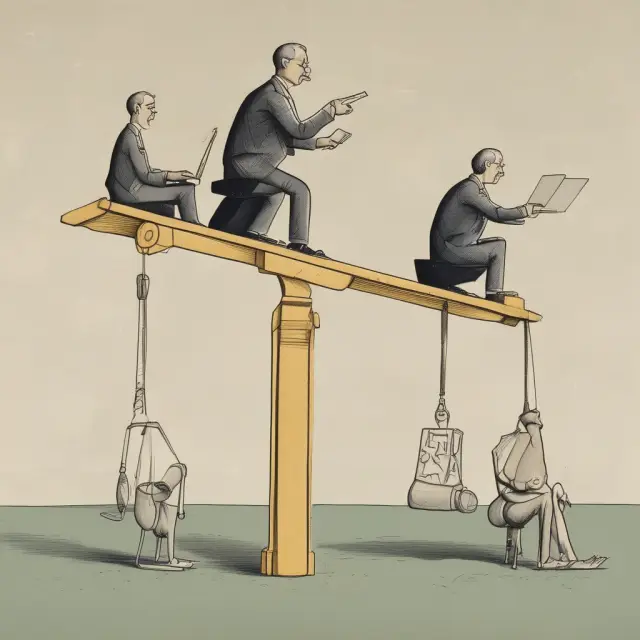
Understand the history of the Great Moderation – a period of economic stability in the US – including its causes, failure, and lessons for institutional…
Introduction to the Great Moderation
The term ‘Great Moderation’ refers to an era of reduced macroeconomic volatility experienced by the United States economy from the mid-1980s until the financial crisis of 2007. During this period, economic fluctuations were significantly less severe compared to earlier decades. The standard deviation of inflation dropped by two-thirds and real GDP growth volatility was cut in half. This period is characterized by low inflation rates, stable economic expansion, and mild recessions.
The background of the Great Moderation can be traced back to the volatile economic conditions prevalent prior to it. Inflation was a significant concern during the 1960s and ’70s due to the Vietnam War and subsequent monetary policies that aimed to control inflation through a series of interest rate hikes. Stagflation, a condition characterized by slow economic growth alongside high unemployment and inflation, was another challenge faced in the late 1970s and early 1980s.
The significance of the Great Moderation lies in its impact on economic stability and monetary policy frameworks. Understanding this period is crucial for institutional investors as it provides valuable lessons about risk assessment, economic cycles, and adaptive strategies.
Bernanke’s Hypothesis: What Caused the Great Moderation?
In a 2004 speech, former US Federal Reserve Chairman Ben Bernanke posited three potential causes for the Great Moderation: structural change in the economy, improved economic policies, and good luck. Bernanke believed that the widespread use of computers and advances in the financial system, deregulation, shifts towards services, increased openness to trade, and macroeconomic policy improvements led to a decrease in economic volatility.
Structural changes were at the heart of Bernanke’s hypothesis, with technological advancements playing a significant role. The use of computers enabled more accurate business decision-making, while deregulation allowed markets to operate more freely and efficiently. Additionally, the economy’s transition towards services and increased openness to trade led to greater interconnectedness and reduced isolation from economic shocks.
Improved economic policies were another factor considered by Bernanke. The monetary and fiscal policy frameworks put in place during this period contributed to the stabilization of business cycles, making it possible for the US economy to avoid major recessions.
The third cause proposed by Bernanke was good luck. Despite the structural changes and improved economic policies, Bernanke believed that the decreased macroeconomic volatility could have been due to a decrease in economic shocks during this period.
Evaluating Bernanke’s Hypothesis: Structural Changes
The widespread use of computers and advances in the financial system significantly impacted the economy, enabling more accurate decision-making and improving overall efficiency. Deregulation allowed markets to operate more freely and efficiently, reducing the insulation from economic shocks that existed during earlier periods. The shift towards services and increased openness to trade led to greater interconnectedness between economies, which reduced isolation from external shocks.
Evaluating Bernanke’s Hypothesis: Improved Economic Policies
Macroeconomic policy improvements were a crucial component of the Great Moderation’s success. Monetary policy became more predictable and effective due to advances in understanding monetary policy theory, while fiscal policies focused on reducing deficits and improving government spending. These factors combined to create an economic environment conducive to growth and stability.
Evaluating Bernanke’s Hypothesis: Good Luck
While the structural changes and improved economic policies were significant contributors to the Great Moderation, good luck may have also played a role. The period was characterized by a relative lack of major geopolitical conflicts and external shocks that could have disrupted the economy.
The End of the Great Moderation: The Financial Crisis and Its Implications for Institutional Investors
The financial crisis of 2007 marked the end of the Great Moderation as economic conditions became increasingly volatile once again. A build-up of imbalances within the economy, facilitated by easy monetary policy during the Great Moderation, culminated in a devastating global recession.
The failure of the Great Moderation has significant implications for institutional investors. Understanding the risks and cycles of the economy is crucial for making informed investment decisions. The lessons from the Great Moderation can help institutional investors navigate market volatility and adapt to changing economic conditions.

The Era Before the Great Moderation: Economic Instability in the US Economy
Before we delve into understanding the Great Moderation, it is crucial to acknowledge the era of economic instability that preceded this remarkable period. Inflation and its volatile cousin, stagflation, plagued the United States economy during the decades leading up to the 1980s.
The post-World War II era saw a gradual increase in inflation rates as a result of various factors, including government spending on social programs, the Vietnam War, and the devaluation of the U.S. dollar within the Bretton Woods system. Inflation persisted through the 1970s, often accompanied by sluggish economic growth, a condition termed stagflation. During this time, interest rates were highly volatile, making it challenging for businesses and households to plan for the future.
The decade of the 1980s marked a turning point in U.S. economic history with the emergence of the Great Moderation. However, it’s essential to recognize that before this period, the U.S. economy experienced considerable instability, with inflation and interest rate volatility playing significant roles in shaping economic conditions.
As former Federal Reserve Chairman Ben Bernanke later stated in a 2004 speech, “The Great Moderation was a period of significantly reduced macroeconomic volatility—a reduction in the amplitude of business cycles, in inflation, and in interest rates.” But what led to this reduction in economic swings?
In his speech, Bernanke offered three explanations: structural change in the economy, improved economic policies, and good luck. In the following sections, we will explore each of these hypotheses in greater detail to better comprehend how the Great Moderation came about and its significance for institutional investors.
For now, let us reflect on the importance of recognizing the economic instability that characterized the period before the Great Moderation. Understanding this context is crucial as it sets the stage for a more informed analysis of the factors that led to one of the most remarkable periods in modern U.S. economic history.

Causes of the Great Moderation as Hypothesized by Bernanke
In his speech titled “The Great Moderation,” delivered on November 19, 2004 at the Federal Reserve Bank of Chicago, Ben Bernanke, then a member of the Federal Reserve’s Board of Governors, hypothesized three primary factors contributing to the Great Moderation in U.S. economic performance: structural change in the economy, improved economic policies, and good luck.
Bernanke defined the Great Moderation as a significant decrease in macroeconomic volatility, specifically noting the substantial decline in quarterly real GDP standard deviation by half and inflation’s two-third reduction since the late 1960s. Preceding this period, economic fluctuations had been characterized by severe and often unpredictable swings.
Structural Change in Economy: Bernanke attributed a portion of the Great Moderation to structural changes in the economy. He highlighted various factors that contributed to this shift, including advancements in technology like computers for more accurate business decisions, deregulation, a service-oriented economic shift, and increased openness to international trade.
Improved Economic Policies: Bernanke believed improved monetary and fiscal policies played a critical role in the Great Moderation’s success. He suggested that gradually stabilizing the economy may have occurred alongside increasingly sophisticated theories of monetary and fiscal policy.
Good Luck: Bernanke acknowledged that the absence of major economic shocks, such as wars or geopolitical disruptions, also contributed to the reduced macroeconomic volatility during this period.
Bernanke’s speech was later criticized for its premature self-congratulatory tone; the Great Moderation came to an abrupt end only a few years after his presentation with the onset of the financial crisis and subsequent global recession in 2008. The failure of the Great Moderation revealed that underlying economic instabilities had been allowed to build up during this period, culminating in a catastrophic collapse.
Despite its shortcomings, Bernanke’s analysis remains influential, providing valuable insights into the factors that shaped the United States economy throughout the Great Moderation. Understanding these causes and their implications can inform institutional investors seeking to adapt their strategies to current and future economic realities.

Monetary Policy During the Great Moderation: Role of the Fed
The Great Moderation period (1983-2007) witnessed significant improvements in inflation control and economic stability, with the United States experiencing relatively low inflation rates and mild recessions. The Federal Reserve’s monetary policy played a crucial role in shaping this era. In a speech delivered at the Federal Reserve Bank of Boston, Ben Bernanke attributed three main factors to the Great Moderation: structural change, improved economic policies, and good luck (Bernanke, 2004). This section will focus on how monetary policy contributed to the stability during this period.
Before the Great Moderation, the U.S. economy was marked by significant economic instability, including high inflation and volatile interest rates. Inflation reached a peak of 13.5% in 1980. During the following decade, the Federal Reserve’s primary focus was on reducing inflation through tight monetary policy. Paul Volcker, appointed as chairman in 1979, famously raised interest rates to combat inflation, which resulted in two recessions – the early 1980s double-dip recession and a shallow one in 1990 (Bernanke, 2004).
Once inflation was under control, monetary policy shifted towards promoting economic growth. The Federal Reserve’s approach became more proactive and focused on maintaining low inflation alongside full employment, as outlined in the Greenspan Put (Mishkin, 2007). This period saw a significant decline in both the standard deviation of quarterly real GDP and inflation rates (Bernanke, 2004).
The monetary policy during this time was characterized by:
- Flexible Inflation Targeting: The Federal Reserve adopted flexible inflation targeting, aiming for a low but not precisely defined inflation rate. This approach allowed the Fed to accommodate economic shocks and respond to changing market conditions while maintaining a stable macroeconomic environment.
- Open Market Operations: The Federal Reserve used open market operations (OMOs) to manage short-term interest rates and influence the supply of liquidity in the economy. By buying or selling securities, the Fed could adjust the amount of money in circulation to meet its policy goals.
- Forward Guidance: The Federal Reserve began to communicate its future monetary policy intentions through forward guidance, which helped anchor market expectations and reduce uncertainty. This approach improved the transparency and effectiveness of monetary policy.
- Interest Rate Targets: By setting benchmark interest rate targets, the Federal Reserve guided market participants’ decisions regarding borrowing and lending, affecting economic activity (Bernanke, 2007).
- Asset Purchase Programs: The Federal Reserve employed unconventional monetary policy tools like asset purchase programs during times of economic stress to maintain control over interest rates and ensure financial stability.
The success of the Federal Reserve’s monetary policy in promoting economic stability during the Great Moderation was not without challenges. Critics argue that the Federal Reserve’s focus on low inflation could have led to an undesirable side effect: underemployment or unemployment despite stable inflation (Krugman, 1998). Additionally, concerns regarding asset price bubbles and financial instability arose during this period, which were eventually addressed with the introduction of new tools and frameworks.
The Fed’s monetary policy during the Great Moderation set the stage for improved economic stability, lower inflation rates, and mild recessions that characterized this era. It is crucial to recognize that, despite its successes, the Federal Reserve’s approach was not without challenges and required adaptations as new risks emerged.

Assessment of Bernanke’s Hypothesis: Structural Changes
The structural changes in the U.S. economy during the period leading up to the Great Moderation are a crucial factor that contributed significantly to the observed reduction in economic volatility. Ben Bernanke, former Federal Reserve Chair, identified several key structural shifts as potential causes for the Great Moderation in his 2004 speech at the American Economic Association:
- Widespread Use of Computers: The increased use of computers and advanced information technology improved business decision-making processes, enabling more accurate forecasting and adjustment to economic changes. This led to smoother operations and reduced economic instability.
- Deregulation: Deregulation during the 1980s allowed for increased competition and innovation across industries, leading to greater efficiency and productivity. The elimination of price controls and other regulations helped the economy become more flexible and resilient to shocks.
- Openness to Trade: Increased global trade led to greater interconnectivity between economies, encouraging countries to specialize in their respective comparative advantages. This international division of labor reduced the impact of domestic economic fluctuations on overall global growth.
- Financial System Advances: Improvements in financial markets and institutions played a vital role in reducing volatility during the Great Moderation. The development of more sophisticated financial instruments, such as derivatives and bond markets, facilitated better risk management and hedging strategies, leading to less uncertainty and instability.
These structural changes are widely recognized as significant contributors to the stability of the U.S. economy during the Great Moderation. However, it is essential to consider that the positive impact of these changes might not have been as profound if not for the concurrent improvements in economic policies and a bit of good fortune.
The widespread use of computers, deregulation, openness to trade, and financial system advances are just some of the structural changes that occurred during the Great Moderation. The evaluation of these factors provides valuable insights into why the period was characterized by decreased macroeconomic volatility. In the next section, we will discuss Bernanke’s hypothesis regarding improved economic policies as a cause for the Great Moderation and evaluate the role of good luck in shaping the U.S. economy during this time.
To learn more about the causes and consequences of the Great Moderation, visit our FAQ section to find answers to your most pressing questions.
Assessment of Bernanke’s Hypothesis: Improved Economic Policies
In his speech delivered at the American Enterprise Institute for Public Policy Research in 2004, former Federal Reserve Chair Ben Bernanke posited three primary reasons for the Great Moderation – a period characterized by significant decreases in macroeconomic volatility in the US economy since the late 1980s. One of these reasons was improved economic policies.
The improvements Bernanke pointed to included monetary policy, fiscal policy, and international cooperation. In the context of monetary policy, the Fed’s shift towards price stability during Volcker’s tenure and its continuation by Alan Greenspan and Bernanke himself were crucial in establishing low inflation as a cornerstone of economic stability. This approach was epitomized by the famous “inflation-targeting” regimes adopted by central banks worldwide.
Moreover, fiscal policy became increasingly disciplined and proactive during this period. Governments embraced fiscal responsibility through balanced budgets or even surpluses, reducing the likelihood of large deficits that could contribute to inflationary pressures. Furthermore, international cooperation, including the Plaza Accord in 1985, aimed at addressing external imbalances and promoting exchange rate stability, reduced the volatility caused by currency movements.
However, as history would later reveal, Bernanke’s optimistic assessment of these improved economic policies during the Great Moderation was premature. The 2007-2009 financial crisis and subsequent global recession exposed significant flaws in the monetary policy framework that had been put in place during this period. In essence, the Fed’s focus on maintaining low inflation rates and promoting economic growth through accommodative monetary policies created an environment where asset price bubbles could form and eventually burst, leading to major economic instability.
In conclusion, while Bernanke’s assertion of improved economic policies as a significant contributor to the Great Moderation holds some merit, it is essential to acknowledge that these improvements did not prevent the eventual collapse of the economic stability achieved during this period. The 2007-2009 financial crisis serves as a stark reminder that even when macroeconomic conditions appear favorable, there are always potential risks that could undermine the progress made and require significant adjustments to the policy framework.
Implications for Institutional Investors
Understanding the causes and implications of the Great Moderation is crucial for institutional investors as it underscores the importance of being vigilant about economic cycles, assessing risk appropriately, and adapting strategies in response to changing market conditions. By staying informed on macroeconomic trends and potential risks, institutional investors can mitigate the impact of economic instability and safeguard their investments.
Investors must also recognize that even during seemingly stable periods, such as the Great Moderation, there are inherent risks that can threaten financial markets. It is essential to maintain a balanced portfolio, diversify investments across asset classes and sectors, and remain flexible in adjusting strategies as market conditions change. By taking these measures, investors will be better prepared for both the opportunities and challenges presented by various economic environments.
Assessment of Bernanke’s Hypothesis: Good Luck
Bernanke attributed the Great Moderation to three potential causes: structural change, improved economic policies, and good luck (Bernanke, 2004). Although Bernanke’s hypothesis is widely discussed in academia, it is crucial to scrutinize his assertion that good fortune played a significant role. This section will assess the importance of geopolitical factors and globalization as elements of ‘good luck,’ which contributed substantially to the stability of the economy during the Great Moderation.
Firstly, during this period, there were favorable geopolitical conditions that significantly influenced economic growth. The end of the Cold War and the resulting reduction in military spending led to lower interest rates and an increase in liquidity (Pollin, 2011). In turn, these factors fueled asset price bubbles as investors sought higher returns in a low-interest rate environment. However, it was not until the bursting of the dotcom bubble in early 2000 that the Fed raised interest rates to combat inflationary pressures (Stiglitz & Greenwald, 2014). Moreover, the U.S. economy continued to benefit from a favorable geopolitical climate during the housing market boom that lasted until 2006 (Roubini, 2009).
Secondly, globalization played an essential role in supporting the economic stability of the United States during the Great Moderation. The increasing interconnectedness of the world economy enabled the U.S. to offload inflationary pressures from its domestic economy to other countries (Gros & Steinherr, 1997). This allowed the U.S. Federal Reserve to maintain low-interest rates and a low inflation rate domestically by exporting inflation abroad. During this period, the dollar’s hegemony as an international currency provided the United States with significant advantages, as its imports became cheaper due to exchange rate fluctuations (Eichengreen & O’Rourke, 1999). Furthermore, China and other developing countries maintained low labor costs, providing a ready market for U.S.-produced goods and contributing to stable consumer prices in the United States.
The role of good luck, as defined by Bernanke (2004), cannot be overstated when assessing the Great Moderation’s causes. The confluence of favorable geopolitical conditions and globalization enabled the U.S. economy to enjoy a lengthy period of low inflation, positive economic growth, and relative stability. However, it is essential to recognize that these factors were not under the control of the Federal Reserve or domestic policymakers but rather external events beyond their influence.
In conclusion, Bernanke’s hypothesis regarding the Great Moderation’s causes should be viewed through a multifaceted lens. Structural changes, improved economic policies, and good luck all played crucial roles in the period’s macroeconomic stability. However, it is important to understand that geopolitical factors and globalization were external elements of ‘good luck.’ As institutional investors, acknowledging these factors can help inform risk assessment and adaptive investment strategies for navigating economic cycles and understanding the long-term implications of policy choices.

The Failure of the Great Moderation: The Financial Crisis and Global Recession
The seemingly unshakable economic stability during the Great Moderation came to an abrupt end with the onset of the financial crisis and subsequent global recession in 2008. This marked a stark contrast to the period’s initial reputation for low inflation, positive growth, and reduced macroeconomic volatility. Understanding the root causes and consequences of this significant shift is crucial for grasping the implications of the Great Moderation as an economic phenomenon and its relevance for institutional investors in today’s complex financial landscape.
Asset Price Bubbles: The Cause of the Financial Crisis
The financial crisis was, at heart, a consequence of asset price bubbles that had formed during the Great Moderation. In retrospect, signs of these bubbles were apparent across various asset classes, including housing and stock markets. Asset values grew beyond their fundamental value due to the widespread belief in an unbroken trend of increasing prices. This, in turn, led to a significant increase in risk-taking behavior as investors pursued higher returns in the hopes of capitalizing on these price trends.
Monetary Policy Errors: The Role of Central Banks and Regulators
Central banks, including the Federal Reserve (Fed), played a crucial role in facilitating the conditions that allowed asset price bubbles to grow during the Great Moderation. With the belief that inflation was a thing of the past, monetary policymakers focused primarily on maintaining low interest rates and fostering economic growth. This approach ignored potential risks to financial stability arising from excess liquidity and the subsequent inflation in asset prices.
Regulatory Failures: Systemic Risks and Derivatives
Government regulators also contributed to the financial crisis by not adequately addressing systemic risks associated with complex financial instruments, such as derivatives, which became increasingly popular during the Great Moderation. These risks were further exacerbated by regulatory arbitrage, whereby financial institutions moved their riskier activities outside of regulated markets and into off-balance sheet vehicles to avoid oversight.
Consequences: The Global Recession and Its Aftermath
The failure of the Great Moderation resulted in the worst global recession since the Great Depression. The interconnected nature of financial markets, driven by globalization, meant that the crisis quickly spread beyond the U.S., triggering a series of painful consequences for economies worldwide. Asset prices plummeted, credit markets froze up, and unemployment soared. In response to the crisis, central banks and governments around the world adopted unprecedented measures, including quantitative easing and fiscal stimulus packages, to stabilize financial markets and jumpstart economic growth.
Lessons for Institutional Investors: Risk Management and Economic Cycles
The failure of the Great Moderation holds essential implications for institutional investors in their approach to risk management and understanding economic cycles. The events that led to the crisis serve as a reminder of the importance of considering not only the risks inherent in specific investments but also systemic risks related to macroeconomic conditions and financial markets as a whole. Additionally, investors must recognize the inherent cyclical nature of economies, including recessions, and adjust their strategies accordingly to minimize potential losses during economic downturns while still capturing upside opportunities during periods of growth.
Understanding the Great Moderation’s failure provides valuable lessons for institutional investors. By learning from past mistakes and recognizing the importance of risk assessment, economic cycles, and adaptive strategy, investors can position themselves to thrive in today’s increasingly complex financial landscape.

Lessons for Institutional Investors from the Great Moderation
The Great Moderation is a significant period of macroeconomic stability in the United States that lasted roughly from 1983 to 2007. During this time, the economy experienced low inflation and positive growth, which led economists like Ben Bernanke to suggest several possible explanations for its occurrence: structural changes, improved economic policies, and good luck (Bernanke, 2004). However, despite these apparent successes, the Great Moderation ultimately failed with the onset of the financial crisis and global recession in 2007. Here are some critical lessons for institutional investors as they reflect upon this era and its implications:
1. Risk Assessment: During the Great Moderation, a false sense of security led many investors to underestimate risks and rely too heavily on historical trends when making investment decisions. The stable economic conditions fostered by the period lulled investors into complacency. However, as demonstrated during the financial crisis, even seemingly reliable economic conditions can change abruptly. Institutional investors must remain vigilant and adaptable in their risk assessments to account for unexpected shocks.
2. Economic Cycles: The Great Moderation’s stable macroeconomic conditions appeared to break the cycle of boom-and-bust phases. However, a closer look reveals that these economic cycles merely transformed into more prolonged periods of expansion and contraction (Federal Reserve Bank of St. Louis Review, 2009). Institutional investors must understand that economic cycles are an inherent part of the market’s dynamics. Adopting adaptive investment strategies can help institutional investors navigate through different phases of the economic cycle and maximize returns.
3. Anticipating Structural Changes: The structural changes Bernanke mentioned as one of the causes for the Great Moderation can also pose risks to institutional investments (Bernanke, 2004). Institutional investors must anticipate these changes and adjust their investment strategies accordingly. For example, the widespread use of computers has drastically changed business decision-making, while deregulation and globalization have significantly impacted industries and markets. Understanding structural changes allows institutional investors to position themselves for success during times of disruption.
4. Effective Monetary Policy: The Great Moderation can be partly attributed to effective monetary policy, as central banks like the Federal Reserve managed to keep inflation in check while fostering economic growth (Bernanke, 2004). Institutional investors must pay close attention to central bank policies and their potential impact on various asset classes. For instance, changes in interest rates and inflation expectations can significantly affect investments, making it essential for institutional investors to stay informed about the monetary policy decisions of major central banks.
5. Fiscal Policy: Improved fiscal policy during the Great Moderation helped stabilize economic conditions (Bernanke, 2004). Institutional investors should pay attention to fiscal policies, as they can influence inflation, interest rates, and overall market sentiment. Understanding the potential implications of fiscal policy decisions is crucial for institutional investors when making investment decisions.
6. Globalization: The increased openness to trade and globalization during the Great Moderation had significant impacts on economies, industries, and markets (Bernanke, 2004). Institutional investors must stay informed about macroeconomic trends, geopolitical risks, and global market developments. As international interconnectedness continues to grow, understanding these factors becomes increasingly important for institutional investments.
In conclusion, the Great Moderation offers valuable insights for institutional investors regarding risk assessment, economic cycles, structural changes, monetary policy, fiscal policy, and globalization. Learning from this period’s successes and failures can help institutional investors adapt to changing market conditions and stay ahead of the curve in an ever-evolving economic landscape.

FAQs: Frequently Asked Questions About the Great Moderation
Question: What is the Great Moderation?
Answer: The Great Moderation refers to the period of decreased macroeconomic volatility experienced in the United States from around 1983 to 2007. During this time, inflation remained relatively low and recessions were milder compared to the decades preceding it.
Question: When did the Great Moderation begin?
Answer: The Great Moderation is typically considered to have begun in the mid-1980s, following years of severe economic instability marked by inflation, stagflation, and volatile interest rates.
Question: What caused the Great Moderation?
Answer: Economist Ben Bernanke hypothesized three potential causes for the Great Moderation: structural change in the economy, improved economic policies, and good luck. Structural changes included advances in technology, deregulation, and increased openness to trade. Improved economic policies encompassed monetary and fiscal policy adjustments and greater global cooperation.
Question: When did the Great Moderation end?
Answer: The Great Moderation is considered to have ended with the onset of the financial crisis in 2007, which culminated in the worst global recession since the Great Depression.
Question: Why did the Great Moderation fail?
Answer: The failure of the Great Moderation can be attributed to a buildup of imbalances in the economy that were allowed to fester during the period due to easy monetary policies. These imbalances came to a head with the financial crisis and subsequent recession. The Fed’s inflationary policies, which had papered over underlying economic problems during the Great Moderation, ultimately led to a catastrophic crash in 2008.
Question: What lessons can institutional investors learn from the Great Moderation?
Answer: Institutional investors can take several key lessons from the Great Moderation, including the importance of risk assessment, economic cycles, and adaptive strategy. The Great Moderation demonstrated that prolonged periods of stability may be deceptive, and that investors should remain vigilant to underlying risks and market shifts.
Question: What were some structural changes during the Great Moderation?
Answer: Structural changes during the Great Moderation included widespread use of computers for business decision-making, advances in the financial system, deregulation, a shift toward services, and increased openness to trade.
Question: Who was Ben Bernanke and what role did he play in the Great Moderation?
Answer: Ben Bernanke served as Federal Reserve Chair from 2006 to 2014. In a speech delivered in 2004, he hypothesized three potential causes for the Great Moderation: structural change in the economy, improved economic policies, and good luck. However, the failure of the Great Moderation occurred just a few years later, with the financial crisis and recession in 2008.
Question: How did monetary policy factor into the Great Moderation?
Answer: Monetary policy played a significant role during the Great Moderation through the Federal Reserve’s efforts to control inflation by implementing various policies under Chairmen Paul Volcker, Alan Greenspan, and Bernanke. The Fed’s monetary framework, which aimed for low inflation and stable economic growth, contributed to the perceived moderation in macroeconomic volatility.
Question: Why was the Great Moderation considered a success before its failure?
Answer: The Great Moderation was considered a success before its failure due to the prolonged period of relatively low inflation and mild recessions compared to the decades preceding it. Economists attributed this stability to structural changes, improved policies, and good luck. However, the buildup of imbalances in the economy that ultimately led to the financial crisis went unnoticed during this time.
Question: How did the Great Moderation end?
Answer: The Great Moderation ended with the onset of the financial crisis in 2007, which was marked by a severe housing market collapse and accelerating price inflation. These events froze up credit and liquidity markets, causing a global recession that was the worst since the Great Depression. This outcome was largely due to the fact that the normal feedback mechanisms to monetary policy had stopped working during the Great Moderation, allowing imbalances in the economy to build up and eventually lead to catastrophic consequences.
 Next entry · No. 1,899Understanding the Causes and Consequences of the Great Recession: A Comprehensive Analysis
See also
-
 No. 2,047
05 Dec 2024
22 min
Understanding Hazard Insurance: Protecting Against Natural Disasters for Institutional Investors
Business Finance
No. 2,047
05 Dec 2024
22 min
Understanding Hazard Insurance: Protecting Against Natural Disasters for Institutional Investors
Business Finance -
 No. 3,000
20 Feb 2025
25 min
Long Put: A Profitable Bearish Bet or a Hedging Strategy for Institutional Investors
Finance Policy
No. 3,000
20 Feb 2025
25 min
Long Put: A Profitable Bearish Bet or a Hedging Strategy for Institutional Investors
Finance Policy -
 No. 2,990
19 Feb 2025
23 min
Synthetic Puts: A Comprehensive Guide for Institutional Investors
Finance Policy
No. 2,990
19 Feb 2025
23 min
Synthetic Puts: A Comprehensive Guide for Institutional Investors
Finance Policy -
 No. 2,920
14 Feb 2025
17 min
Understanding Liquidity Preference Theory: A Comprehensive Guide for Institutional Investors
Finance Policy
No. 2,920
14 Feb 2025
17 min
Understanding Liquidity Preference Theory: A Comprehensive Guide for Institutional Investors
Finance Policy -
 No. 2,782
03 Feb 2025
16 min
Understanding the Loan Credit Default Swap Index (Markit LCDX): An Essential Tool for Institutional Investors in Finance and Investment
Finance Policy
No. 2,782
03 Feb 2025
16 min
Understanding the Loan Credit Default Swap Index (Markit LCDX): An Essential Tool for Institutional Investors in Finance and Investment
Finance Policy -
 No. 2,667
25 Jan 2025
19 min
Understanding Milton Friedman’s K-Percent Rule: Stability Through Monetary Growth
Finance Policy
No. 2,667
25 Jan 2025
19 min
Understanding Milton Friedman’s K-Percent Rule: Stability Through Monetary Growth
Finance Policy