Understanding The Great Leap Forward: A Misguided Economic Plan that Led to Mass Starvation in China
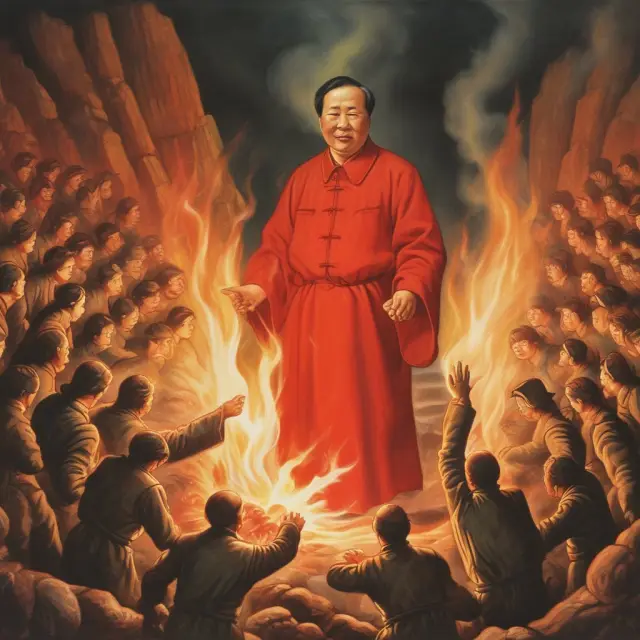
Explore the tragic history of China's Great Leap Forward: misguided agricultural and industrial policies resulting in mass starvation.
Background of the Great Leap Forward
The Great Leap Forward, a five-year plan launched by Chinese Communist Party chairman Mao Zedong in 1958, aimed to transform China from an agrarian economy into a modern industrial society, with ambitious goals for agricultural collectivization and rapid industrial expansion. This section delves into the background of this monumental campaign and its objectives.
In 1958, Mao Zedong announced his vision for a five-year plan that would revolutionize the People’s Republic of China. Moved by his belief in the Chinese people’s abilities to accomplish anything, he devised a strategy focused on two primary goals: collectivizing agriculture and widespread industrialization. The official objectives were to increase grain production and steel output.
This section lays the groundwork for understanding one of history’s most catastrophic economic undertakings, revealing its origin, motivation, and ambitious goals. By the end, readers will gain insight into the Great Leap Forward’s context and significance, setting the stage for a deeper exploration of its consequences in subsequent sections.
In summary, the Great Leap Forward was an ambitious plan initiated by Mao Zedong in 1958 to modernize China through agricultural collectivization and industrial expansion. The following sections will unravel the complexities surrounding this misguided economic initiative and its far-reaching implications on China’s society, agriculture, and economy.
Upcoming Sections
Section Title: Misguided Agricultural Policies
Description: Discover the agricultural collectivization process, privately owned farms abolished, large irrigation projects, and the disastrous farming practices that led to a sharp decline in grain production and mass starvation.
Section Title: Industrialization Gone Wrong
Description: Learn about backyard steel furnaces, massive increase in industrial production targets, and the devastating impact these decisions had on urban areas.
Section Title: Famine and its Devastating Consequences
Description: Explore the sequence of events that led to widespread famine and mass starvation, resulting in millions of deaths.
Section Title: The Economic Fallout of the Great Leap Forward
Description: Understand how the failed agricultural and industrial policies impacted China’s economy, causing significant challenges in food distribution, falsified harvest figures, and lack of international aid.
Section Title: Lessons from the Great Leap Forward
Description: Reflect on the importance of market economies, economic planning, and human cost in understanding the failures of centralized economic policies.
Section Title: Historical Context: The Chinese Cultural Revolution and its Impact on Society
Description: Delve into how the Great Leap Forward fits within China’s broader historical context and societal impact, setting a stage for modernization following its demise.
Section Title: The Aftermath: China’s Path to Modernization
Description: Discover the positive economic changes following the end of the Great Leap Forward, including industrial and agricultural growth and investment in infrastructure that paved China’s path to modernization.

The Genesis of the Great Leap Forward
In 1958, under the leadership of Mao Zedong, China embarked on an ambitious economic plan known as the Great Leap Forward. Its primary goals were to modernize the agrarian economy by collectivizing agriculture and industrializing rural areas. While Mao believed this initiative was crucial for transforming China into a competitive industrial nation, it ultimately led to disastrous consequences, causing widespread famine and death.
Mao’s motivation for initiating the Great Leap Forward was rooted in his confidence in the Chinese people’s ability to overcome any challenge. Following a tour of China, he expressed belief in their potential for great achievements – particularly in agriculture and industrial production. This belief fueled the ambitious target-setting that characterized the Great Leap Forward.
The plan began with agricultural collectivization, which aimed to pool resources, labor, and expertise from small rural farms into large collective units under the control of the Chinese Communist Party (CCP). The intention was to streamline agriculture by consolidating resources and improving efficiency. However, this change came at a significant cost. Private plot farming, an integral part of Chinese agricultural practices for centuries, was abolished. Rural farmers were forced to abandon their personal plots and work collectively on the larger farms.
Agricultural policies during this period led to several missteps that significantly impacted food production. Large-scale irrigation projects were initiated with little engineering expertise, resulting in substandard constructions that frequently failed. Additionally, unproven experimental farming methods were introduced across the country, causing crop yields to decline dramatically and leading to widespread starvation.
In an attempt to boost industrial production, backyard steel furnaces were erected on farms and in urban areas. The idea was to mass-produce steel using locally available resources, increasing China’s industrial capabilities. However, the resulting steel production lacked quality, primarily due to a lack of skilled labor and proper oversight. Additionally, the widespread production of low-quality steel consumed significant resources that could have been used for food production or other essential purposes.
Urbanization efforts during the Great Leap Forward added further strain on China’s economy. Millions of rural laborers were relocated to urban areas, causing an influx in urban populations and increased demand for resources, including grain. As a result, collective farm officials were pressured to increase grain production to meet urban demands, often resorting to falsifying harvest figures to meet unrealistic targets.
The Great Leap Forward resulted in the deaths of an estimated 30 to 45 million Chinese citizens due to starvation, execution, torture, forced labor, and suicide. This tragic event remains the largest episode of non-wartime mass killing in human history. The Great Leap Forward demonstrated the consequences of failed economic policies driven by excessive central planning and ideological zealotry, ultimately leading China back towards a market economy after its abandonment.

Misguided Agricultural Policies
The agricultural sector formed the backbone of China during the Great Leap Forward, accounting for approximately 70% of its economy and employing over 80% of the population at the time. The collectivization process began when private plot farming was abolished, and all farmers were forced to join collective farms where agricultural production, resource allocation, and food distribution were centrally controlled by the Communist Party.
Large-scale irrigation projects were initiated, but they lacked input from trained engineers and resulted in declining crop yields due to poorly constructed water projects and untested, experimental farming techniques. In 1958, Mao launched a nationwide campaign against sparrows, believing them to be the primary cause of grain crop damage. This decision led to the deaths of millions of sparrows, causing locust swarms that destroyed crops in their absence.
Grain production plummeted as a result, and famine soon set in across the countryside. Millions died from starvation, exposure, forced labor, and execution for failure to meet grain quotas or attempting to escape. In some areas, people resorted to eating tree bark and dirt, and in extreme cases, cannibalism.
The agricultural sector’s mismanagement was further compounded by the industrialization efforts that diverted resources from agriculture. The production of steel, a primary focus of the Great Leap Forward, consumed vast amounts of labor, raw materials, and energy. Backyard steel furnaces were built in both urban areas and on farms, with steel production targets set to double in the first year of the initiative. This led to the confiscation of metal equipment and tools and the melting down of household goods for fuel, further reducing agricultural output.
The urbanization process also created additional strain on the food distribution system, as more people moved from rural areas to work in cities, increasing demands on collective farms to produce grain for urban consumption. Collective farm officials falsified harvest figures, resulting in grain being shipped to the cities and exacerbating the food shortages that led to widespread famine.
Throughout this period, millions died while China remained a net exporter of grain as Mao refused international aid to present the illusion of success. The Great Leap Forward officially ended in 1961, leaving behind a devastated agricultural sector and a trail of destruction that took decades to recover from.

Industrialization Gone Wrong
The industrialization component of the Great Leap Forward was just as detrimental, if not more so, than agricultural collectivization. Backyard steel furnaces were established to rapidly increase steel production, surpassing even the ambitious targets set for agriculture. These makeshift furnaces produced mostly low-quality pig iron, resulting in no tangible economic benefit.
Mao Zedong, driven by his vision of industrializing China quickly, pushed for mass mobilization and an intensified urban focus. This resulted in significant population movements: millions were relocated from rural areas to urban centers, disrupting families, communities, and traditional ways of life. The labor force was redistributed, with men being sent off to work in the steel industry and women left behind to care for collectivized farms, which primarily consisted of elderly, disabled, or young individuals.
These massive shifts in resources, population, and production had a ripple effect on China’s economy. The urban areas, which already faced challenges in managing food distribution due to the collectivization efforts, now saw an influx of people requiring sustenance. This increased pressure on grain production and forced collective farm officials to falsify harvest figures.
To meet the unattainable industrial production targets, millions of surplus laborers were moved from agricultural areas to urban locations. The relocation process resulted in significant social disruption, further straining an already fragile economy. Resources and raw materials were reallocated to industrial projects, which failed to yield corresponding increases in manufacturing output due to the lack of coordination and planning inherent in central economic planning.
The steel industry became the focal point of this misguided industrialization push. Backyard furnaces, constructed on farms and in urban neighborhoods, were meant to boost production by utilizing local materials. The iron produced from these furnaces was of low quality and largely useless for China’s long-term industrial goals. To fuel these furnaces, existing metal equipment, tools, and household items were confiscated and melted down.
Mao Zedong’s unrealistic expectations for industrial growth, coupled with the mismanagement and chaos that ensued due to population shifts and resource reallocation, led to a significant decrease in overall economic output. As China continued to export grain despite its own dwindling food supply, millions faced starvation while urban areas remained relatively well-fed.
The Great Leap Forward ultimately ended in January 1961 when the disastrous consequences of these misguided policies became clear. The economic, social, and environmental devastation wrought by this ill-conceived campaign left a lasting impact on China, providing valuable lessons about the importance of market economies, effective economic planning, and the human cost of failed policies.

Famine and its Devastating Consequences
The Great Leap Forward campaign resulted in a famine that caused the death of an estimated 30-45 million people between 1958 and 1962. The calamitous event took place due to a combination of disastrous agricultural policies, flawed industrialization strategies, and natural factors.
Declining Grain Yields: One of the primary causes of the famine was the decline in grain production resulting from collectivized agriculture. China’s farmers were forced to abandon their private plots and work on collective farms, where they were subjected to centrally controlled food distribution and resource allocation by the Communist Party. Large-scale irrigation projects, which were poorly planned and executed, further decreased crop yields. An unintended consequence of a campaign to eradicate sparrows, as Mao believed they were a major pest on grain crops, resulted in locust swarms destroying fields, exacerbating the issue.
Failed Irrigation Projects: The failure of irrigation projects was another factor contributing to the famine. Large-scale irrigation projects, with little input from trained engineers, led to widespread destruction and damage to farmland, worsening the food supply situation. Millions lost their lives as a result of forced labor on these projects, as well as exposure to the elements.
Mass Starvation: The widespread famine led to mass starvation across the countryside, with people resorting to eating tree bark and dirt in order to survive. In some areas, cannibalism became a desperate last resort for those facing near certain death. Famine victims were often executed or tortured if they tried to escape or if they failed to meet grain quotas set by the Communist Party.
Societal Impact: The Great Leap Forward’s devastating consequences went beyond just the loss of life, breaking apart families and communities. Farmland was denuded of trees for fueling steel furnaces, and 30-40% of China’s housing stock was demolished to obtain raw materials for collective projects. Industrial production was severely impacted, with millions of laborers moved from farms to urban areas, straining food distribution systems and placing additional pressure on the remaining agricultural workforce to increase grain production for urban populations. Collective farm officials falsified harvest figures, further worsening the situation by diverting resources away from rural communities and towards cities.
Understanding the Impact of the Great Leap Forward: The catastrophic events during the Great Leap Forward serve as a grim reminder of the consequences of misguided economic policies and central planning. The human cost of this failed attempt at modernizing China’s agricultural sector was enormous, with millions losing their lives due to starvation and other causes. The social and societal repercussions went far beyond the immediate devastation, shaping the trajectory of China’s future economic development.
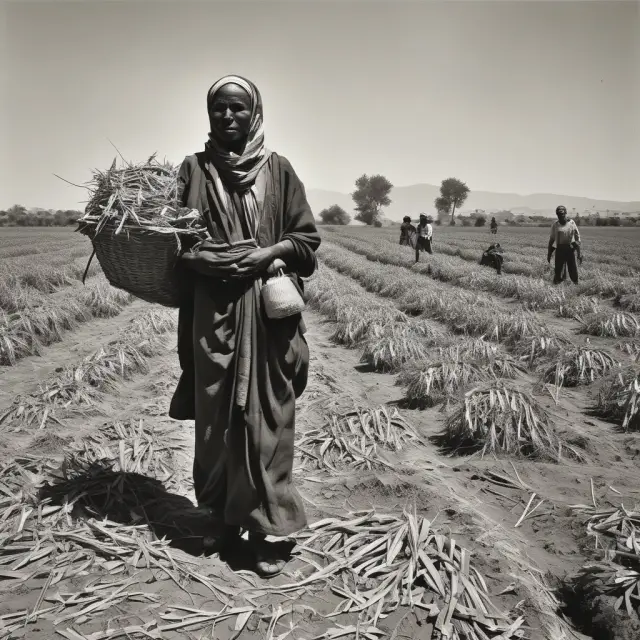
The Economic Fallout of the Great Leap Forward
Following the implementation of the Great Leap Forward (GLF) in 1958, China experienced a significant economic downturn with far-reaching consequences. This section will discuss the increased urban populations, food distribution challenges, falsified harvest figures, grain exports, and lack of international aid during this tumultuous period.
Increased Urban Populations
During the GLF campaign, millions of rural laborers were moved from farms to cities for industrialization projects. This sudden influx of people strained urban resources, including food supplies. The result was a significant increase in urban populations, further exacerbating the food distribution challenges and grain shortages that emerged during this period.
Food Distribution Challenges
The centralized economic planning of the GLF resulted in significant disparities between rural and urban areas. Collective farm officials frequently reported falsified harvest figures to meet unrealistic production targets, leading to widespread famine in rural communities while cities continued to receive adequate food supplies. This forced millions of people to leave their homes, increasing both internal migration and the burden on already strained urban resources.
Falsified Harvest Figures
To meet production goals set by Mao Zedong and the Chinese Communist Party, collective farm officials falsified harvest figures, diverting significant amounts of grain from rural areas to urban centers for industrialization efforts and to maintain public morale. This resulted in millions dying from starvation as food supplies were redirected away from those who desperately needed it most.
Grain Exports
Despite the widespread famine, Mao Zedong continued to export grain throughout the GLF period, believing that China’s industrial achievements would overshadow the human cost of these policies. This decision resulted in millions more deaths as China’s grain reserves were depleted and international relief efforts were not sought due to national pride.
Lack of International Aid
The Chinese government initially refused foreign aid during the GLF period, believing that their economic progress would surpass that of Western nations despite the mounting evidence of widespread famine. This decision further worsened the situation, as millions continued to die from starvation and related illnesses.
Understanding the devastating impact of the Great Leap Forward on China’s economy necessitates a deeper examination of its consequences. In the following section, we will explore the lessons that can be learned from this tragic period in history.

Lessons from the Great Leap Forward
The Great Leap Forward, a catastrophic period in Chinese history that unfolded between 1958 and 1962, is often remembered as one of the most tragic episodes in human history. The ambitious plan to rapidly transform China’s agrarian economy into an industrialized society resulted in tens of millions of deaths due to famine, overwork, and mass killings. Despite its ultimate failure, it presents a compelling case study for understanding the importance of market economies, economic planning, and their impact on human lives.
One significant lesson that can be derived from the Great Leap Forward is the importance of market economics in agricultural production. The abolition of private farming and collectivization under the Great Leap Forward led to disastrous consequences. Central control of agriculture not only resulted in declining crop yields but also caused a misallocation of resources, resulting in mass starvation. In contrast, modern economies rely on market forces that encourage competition and efficiency, leading to better resource allocation and higher productivity.
Another critical lesson from this period is the importance of proper economic planning. The Great Leap Forward’s top-down approach to industrialization failed due to a lack of coordination and insufficient understanding of the underlying realities. This led to massive resource misallocation, with millions of laborers shifted from agriculture to steel production, causing significant disruptions in food production that further exacerbated the famine.
Lastly, the human cost of failed economic policies should never be underestimated. The Great Leap Forward is a stark reminder of the devastating consequences that can result when well-intentioned policies are implemented without considering their potential unintended consequences. This tragic episode in history demonstrates the importance of balanced and thoughtful decision-making, as well as the need for transparency, accountability, and effective communication among policymakers to ensure that the welfare of the population is not jeopardized.
The Great Leap Forward can be seen as a cautionary tale for both China and the global community. Its lessons continue to resonate today as nations navigate the complexities of economic development and strive for balance between social, environmental, and economic considerations. Understanding this period in history helps us appreciate the importance of sound economic policies, effective planning, and respect for human life in shaping a prosperous future for all.
FAQs
What was the purpose of the Great Leap Forward program?
The primary goal of the Great Leap Forward program was to modernize China’s agricultural sector using communist economic ideologies. It aimed to eliminate private farming and collectivize agriculture, while simultaneously increasing industrial production in urban areas through massive steel production campaigns.
What caused the famine during the Great Leap Forward?
The famine during the Great Leap Forward was a result of several factors. The abolition of private farming led to mismanagement and decline in crop yields, while agricultural collectivization and industrialization placed additional stress on resources, ultimately leading to millions of deaths by starvation.
How many people died during the Great Leap Forward?
The death toll from the Great Leap Forward is estimated to be between 30 million and 45 million individuals. These numbers include those who died due to famine, forced labor, execution, and suicide.
What was the impact of the Great Leap Forward on China’s economy?
The net effect of the Great Leap Forward on China’s economy is debated among scholars, but it is generally believed that its negative consequences paved the way for future economic growth and development in the country. Despite causing significant damage to infrastructure, housing stock, and agricultural land, it ultimately laid the foundation for China’s eventual emergence as a dominant industrial power.

Historical Context: The Chinese Cultural Revolution and its Impact on Society
The Great Leap Forward is an essential part of understanding the complexities of modern Chinese history, as it unfolded during the tumultuous period known as the Chinese Cultural Revolution (1966-1976). This revolutionary period, instigated by Mao Zedong to counter perceived capitalist restoration in China, was marked by political turmoil, social upheaval, and economic disruption.
The Great Leap Forward, which began as a part of the Chinese Communist Party’s (CCP) Five-Year Plans (1958-1962), represented an ambitious effort to rapidly industrialize and modernize China through agricultural collectivization and urban industrial development. However, the tragic consequences of this initiative would lead to mass starvation, societal dislocation, and profound long-term changes.
The Great Leap Forward’s origins were rooted in Mao Zedong’s belief that China could leap from an agrarian economy to a modern industrial society within a short period. This conviction was based on his observations of the Soviet Union’s successes under Nikita Khrushchev, as well as his belief that the Chinese people were capable of extraordinary feats with proper organization and motivation.
In this context, it is essential to understand how the Great Leap Forward fits into the broader historical framework of China’s tumultuous Cultural Revolution. The two events are interconnected as they both embody Mao Zedong’s vision for a revolutionary, modernized China, with the Great Leap Forward serving as a prelude to the much larger and more prolonged Cultural Revolution.
The Great Leap Forward set in motion various societal changes that would shape China during the subsequent years of the Cultural Revolution and beyond. For instance, the widespread collectivization and urbanization initiated under this campaign laid the groundwork for the transformation of rural communities into agrarian labor forces for large industrial projects. Furthermore, it established a precedent for the CCP’s top-down approach to economic planning and central control of resources.
As China began to recover from the devastating consequences of the Great Leap Forward, these societal changes would continue to impact the country in various ways. The legacies of this transformative period would ultimately influence China’s development trajectory for decades to come.

The Aftermath: China’s Path to Modernization
After the Great Leap Forward, China faced significant economic challenges. The devastating consequences of this ill-fated campaign left the country in a state of disarray. However, as time progressed, the People’s Republic of China began implementing policies and strategies that would lead the nation to economic recovery and modernization.
Industrial Growth: Following the Great Leap Forward, China’s industrial sector went through a period of significant growth. The Chinese government shifted focus from large-scale steel production in backyard furnaces towards more efficient industrial plants. In 1965, the First Five-Year Plan emphasized the development of heavy industry and infrastructure projects.
Agricultural Reforms: Agriculture was a crucial sector that required immediate attention after the Great Leap Forward. In the late 1970s, Deng Xiaoping’s reforms introduced the Household Responsibility System. This new approach granted farmers more autonomy in managing their land and crops, which led to increased productivity and prosperity in rural areas.
Infrastructure Investment: After the Great Leap Forward, China recognized the importance of investing in infrastructure to support industrial growth and modernization efforts. Between 1978 and 1992, China spent around 35% of its total investment budget on infrastructure projects. This focus resulted in significant improvements in transportation, communication systems, and public utilities.
Foreign Investment: In the post-Great Leap Forward era, China welcomed foreign investments to fuel economic growth and technological advancements. The country joined the World Trade Organization (WTO) in 2001, which opened up its markets further and encouraged international trade.
The Great Leap Forward was a dark chapter in Chinese history, with devastating consequences for millions of lives. However, understanding the lessons from this era helped China take crucial steps towards modernization and prosperity. From agricultural reforms to industrial growth and infrastructure investment, China made strides towards becoming a leading economic powerhouse.
As we examine these transformative changes in China’s economy post-Great Leap Forward, it is evident that the nation has come a long way from its agrarian roots. Today, it stands as one of the world’s largest and most dynamic economies, demonstrating resilience and adaptability despite historical setbacks.
FAQ
What was the purpose of the Great Leap Forward?
The Great Leap Forward, initiated by Mao Zedong in 1958, aimed to modernize China’s agricultural sector using communist economic ideologies, primarily through collectivization and industrialization. Its ultimate goal was to rapidly transform China from an agrarian economy into a modern industrial society with the ability to compete with Western nations.
What caused the Great Leap Forward?
Mao Zedong believed that the Chinese people could accomplish anything and formulated this belief into a five-year plan with two primary goals: collectivizing agriculture and widespread industrialization, targeting increased grain and steel production.
How did the Great Leap Forward result in famine?
Misguided agricultural policies led to declining crop yields due to experimental techniques, irrigation projects, and campaigns to eliminate sparrows. Grain production fell sharply, leading to famine, which resulted in between 30 to 45 million deaths. Additionally, falsified harvest figures contributed to the crisis by diverting grain from rural areas to urban centers.
What was the economic impact of the Great Leap Forward?
The massive investment and reallocation of resources in industrialization without a corresponding increase in manufacturing output led to significant economic destruction and food distribution challenges, resulting in tens of millions of deaths due to famine. The net effect on China’s economy may have been positive in the long term by setting it on a course towards becoming a dominant industrial economy following the end of the program.
What was the death toll from the Great Leap Forward?
The exact number is unknown but estimated between 30 to 45 million individuals lost their lives as a result of starvation, execution, torture, forced labor, and suicide.
How did the Great Leap Forward impact China’s economy?
The net effect on China’s economy may have been positive in the long term as it set the country on a permanent course to becoming a dominant industrial economy following the end of the program. However, during this period, tens of millions died due to disease, famine, and other consequences of Mao Zedong’s failed attempt to convert small family farms into urbanized communes while urging them to produce industry instead of agriculture.
 Next entry · No. 1,898Understanding the Great Moderation: Causes, Failure, and Lessons for Institutional Investors
See also
-
 No. 1,902
23 Nov 2024
22 min
The Great Depression: Causes, Impact and Recovery
Economics
No. 1,902
23 Nov 2024
22 min
The Great Depression: Causes, Impact and Recovery
Economics -
 No. 1,834
12 Nov 2024
21 min
Understanding the Guinea Franc (GNF): The Currency of a Resource-Rich African Nation
Finance History
No. 1,834
12 Nov 2024
21 min
Understanding the Guinea Franc (GNF): The Currency of a Resource-Rich African Nation
Finance History -
 No. 1,826
11 Nov 2024
17 min
Understanding CME Globex: The World’s Largest Electronic Trading Platform for Derivatives
Finance History
No. 1,826
11 Nov 2024
17 min
Understanding CME Globex: The World’s Largest Electronic Trading Platform for Derivatives
Finance History -
 No. 1,811
10 Nov 2024
19 min
Understanding the Role and Impact of Government National Mortgage Association (Ginnie Mae)
Finance History
No. 1,811
10 Nov 2024
19 min
Understanding the Role and Impact of Government National Mortgage Association (Ginnie Mae)
Finance History -
 No. 694
22 May 2024
20 min
Understanding Collateralized Mortgage Obligations: Risks, Market History, and Current Regulations
Finance History
No. 694
22 May 2024
20 min
Understanding Collateralized Mortgage Obligations: Risks, Market History, and Current Regulations
Finance History -
 No. 1
24 Feb 2024
23 min
Navigating the Core of America’s Financial Stability: The Federal Reserve Act of 1913
Finance History
No. 1
24 Feb 2024
23 min
Navigating the Core of America’s Financial Stability: The Federal Reserve Act of 1913
Finance History