Understanding the Oscillator of Moving Average (OsMA): A Comprehensive Guide for Institutional Investors

Learn the ins and outs of the Oscillator of Moving Average (OsMA) – a powerful tool for institutional investors looking to make informed decisions based on…
Introduction to OsMA: An Overview
The Oscillator of a Moving Average (OsMA) is a technical analysis tool used by institutional investors to better understand the trends and momentum shifts in their portfolios. This indicator is derived from an oscillator, which is a statistical measure that displays the difference between two values. The most commonly used oscillator for calculating OsMA is the Moving Average Convergence Divergence (MACD), but other oscillators can be employed as well.
The OsMA provides insightful information by measuring the gap or distance between an oscillator and its moving average over a specific period of time. The underlying concept revolves around the fact that moving averages tend to lag behind price action due to their inherent smoothing effect. As such, the OsMA helps investors in understanding the relationship between these two values and provides essential information about potential trend reversals or confirmations.
Key Features and Significance of the Oscillator of a Moving Average:
- Bullish and Bearish Signals: A positive OsMA indicates an uptrend while a negative value suggests a downtrend.
- Trend Confirmation: The OsMA can help validate existing trends, offering additional confirmation before making investment decisions.
- Crossovers: Crossings of the zero line in either direction can signify potential buying or selling opportunities.
- Divergence: Discrepancies between price action and the OsMA may indicate a possible trend reversal.
- Trend Strength: High OsMA values provide insight into strong uptrends, while low values suggest falling prices.
- Multiple Time Frame Analysis: The indicator can be used across various time frames to assess different aspects of the market and portfolio performance.
- Enhanced Risk Management: By combining the OsMA with other indicators or fundamental analysis data, investors can improve risk management strategies.
Stay tuned for the next section where we dive deeper into the components of the OsMA and discuss how to calculate it using an example.
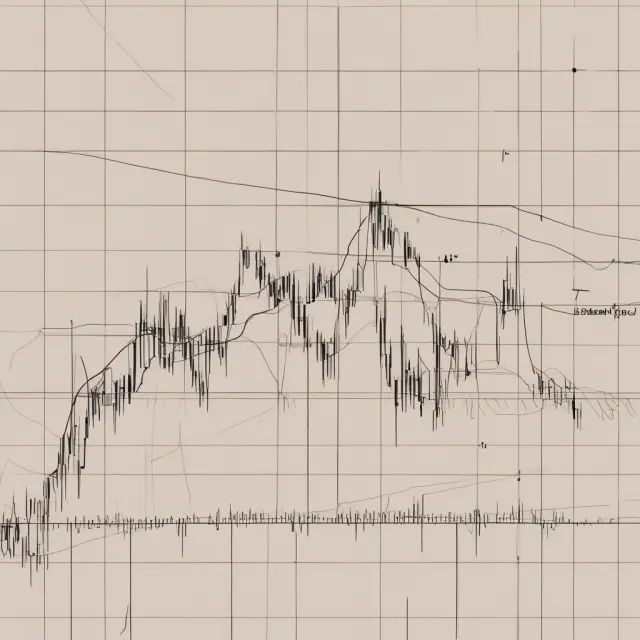
Understanding the Components of OsMA: Oscillator and Moving Average
The Oscillator of a Moving Average (OsMA) is a technical analysis tool that represents the relationship between an oscillator and its moving average. An oscillator is a momentum indicator, while a moving average is a trend-following indicator. Combining these two indicators creates an OsMA, which is particularly useful for institutional investors seeking to better understand market trends and make informed investment decisions.
Let us delve deeper into the components of this powerful tool:
1. Oscillator: An oscillator is a momentum indicator that calculates the difference between an asset’s closing price and its moving average, typically expressed as a percentage or a line chart. Some popular oscillators include Moving Average Convergence Divergence (MACD), Relative Strength Index (RSI), Stochastic Oscillator, and Cumulative Delta.
2. Moving Average: A moving average is an indicator that calculates the mean price of an asset over a specified period. It is typically plotted as a line on a chart and can be based on various types such as simple, exponential, or weighted moving averages. The most common time frames for moving averages range from 5 to 200 periods.
The OsMA combines the oscillator and moving average by determining their difference, which is then plotted as a histogram above or below the zero line. This value can provide important insights into market trends and momentum shifts.
Example: Let’s consider the MACD oscillator, which has a default 12-day exponential moving average (EMA) and a 26-day EMA for its signal line. The OsMA of this setup would represent the difference between the MACD line and the signal line as a histogram.
In summary, understanding the oscillator and moving average components is essential to effectively employing the OsMA in institutional investing strategies. By analyzing these indicators together, investors can make more informed decisions based on market trends, momentum shifts, and potential entry or exit points.
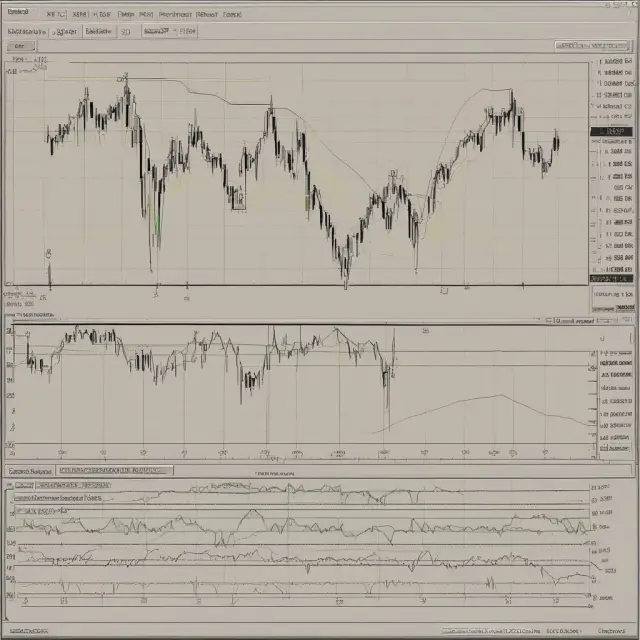
Calculating OsMA: Formula and Steps Involved
The Oscillator of a Moving Average (OsMA) is an essential technical analysis tool used by institutional investors to assess market trends and trends’ strength. It provides valuable insights into potential buy and sell signals based on the relationship between an oscillator’s values and their moving averages (MA). In this section, we delve deeper into the calculation process of OsMA for a better understanding of its significance and implications.
To calculate OsMA, you first need to select a preferred oscillator and moving average type. For instance, the most commonly used oscillator is the Moving Average Convergence Divergence (MACD), while Simple Moving Averages (SMA) are popular choices for MA calculations.
Step 1: Choose an Oscillator
An oscillator is a technical indicator that fluctuates around a zero line, providing insights into momentum and trend reversals. MACD, Stochastic Oscillator, and Relative Strength Index (RSI) are popular oscillators used in the financial markets. For this example, we’ll use the MACD as our oscillator since it is widely used and easy to understand.
Step 2: Define the Moving Average Type and Periods
Once you have chosen an oscillator, select a moving average type and the number of periods for calculation. The MA helps smooth out short-term price fluctuations and identify longer-term trends. Common MA types include Simple Moving Averages (SMA), Exponential Moving Averages (EMA), or Weighted Moving Averages (WMA). For this example, let’s assume a 12-day EMA for the MACD oscillator and a 26-day SMA as our moving average.
Step 3: Calculate the Oscillator Value
First, calculate the MACD line by subtracting the 26-day EMA from the 12-day EMA. Next, find the signal line or the 9-day SMA of the MACD line to obtain the final oscillator value (MACD_value).
Step 4: Calculate the OsMA Value
Now calculate the OsMA by taking the difference between the MACD_value and its moving average (OsMA_value = MACD_value – MA_value). Repeat this calculation at each time period to determine future OsMA values.
Positive OsMA values signify an uptrend, while negative values indicate a downtrend. The zero line can act as a crucial reference point for potential buy and sell signals, depending on market conditions and investor strategies.
Stay tuned for the next section where we discuss interpreting OsMA values in terms of uptrends, downtrends, and crossovers, providing examples to further enhance your understanding of this essential financial tool.
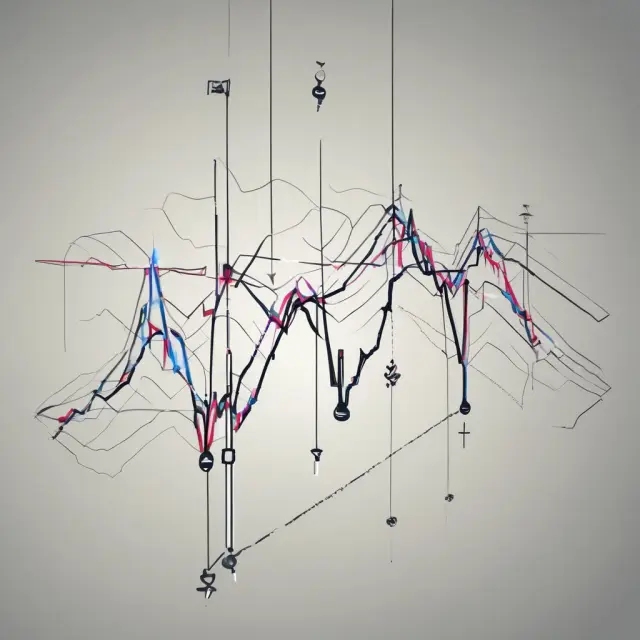
Interpreting OsMA Values: Uptrends, Downtrends and Crossovers
Understanding OsMA values is crucial to making informed investment decisions using this technical indicator. In the context of trends and trend strength, OsMA provides valuable insights. Values above zero typically indicate bullish sentiments, while those below zero suggest bearish tendencies. Moreover, crossovers of the zero line can serve as significant signals.
Crossover Signals: When to Buy or Sell?
An OsMA zero-line crossover occurs when the oscillator crosses above or below its moving average. This event may indicate a potential trend reversal, with the direction of the shift depending on whether the oscillator is crossing above or below the MA. Let’s examine how this information can be used to inform buying and selling decisions for institutional investors.
When the oscillator drops below the MA value, the OsMA will record a negative value and indicate that prices are falling (bearish). During an uptrend, such a condition might suggest an excellent opportunity for institutional investors to buy, expecting the price to rebound. Conversely, during a downtrend or bear market, these signals may not be as valuable since the overall trend direction is already negative.
In contrast, when the oscillator rises above the MA, the OsMA becomes positive and points towards an uptrend or bullish sentiment. Institutional investors can consider taking short trades during a downtrend or bear market to capitalize on this trend reversal signal. However, it’s important to note that not all crossovers result in successful trades. In fact, false signals and choppy markets might produce numerous poor trade attempts.
Strength of the Trend: High and Low OsMA Values
High values on the OsMA indicate a very strong uptrend since the oscillator is moving further away from the slower-moving MA. Institutional investors can take advantage of these conditions to initiate long positions, as they suggest that the market momentum is robust and likely to continue. On the other hand, low values signal that prices are falling rapidly and the oscillator is dropping quickly relative to the MA. These situations may warrant short selling or selling existing holdings, depending on the investor’s strategy.
The significance of OsMA values in interpreting trends and trend strength is crucial for institutional investors, as they can help inform buying and selling decisions based on market momentum and potential trend reversals. While not foolproof, understanding OsMA values and crossovers can provide valuable insights when used alongside other technical indicators and fundamental analysis strategies.

OsMA and Trend Confirmation: How it Helps Institutional Investors
Institutional investors rely on various technical indicators to identify trends and make informed investment decisions in the stock market. Among these technical indicators, the Oscillator of a Moving Average (OsMA) plays an essential role. The OsMA helps confirm trends by measuring the difference between an oscillator and its moving average over a given period.
To understand this concept better, let’s first discuss the significance of each component: an oscillator and its moving average. An oscillator is a momentum indicator that shows the relationship between the closing price and the price range. On the other hand, a moving average is a trend-following indicator that averages out the prices over a specific time period to identify trends.
One of the most commonly used oscillators for calculating OsMA is the Moving Average Convergence Divergence (MACD) indicator. The MACD comprises two lines: the MACD line and the signal line. The MACD line represents the difference between the 12-period Exponential Moving Average (EMA) and the 26-period EMA, while the signal line is a nine-day EMA of the MACD line.
To calculate the OsMA for the MACD indicator, simply subtract the MACD line from the signal line to obtain the histogram. The OsMA measures the divergence between these two lines and provides insight into potential trend reversals or continuations.
When the OsMA is positive, it suggests an uptrend, as prices are rising faster than the moving average. Conversely, a negative OsMA implies a downtrend, as the oscillator falls below its moving average. This information can help institutional investors confirm trends and potentially initiate trades based on these observations.
Moreover, crossover points of the zero line in the OsMA chart may represent significant trend changes. For instance, when an uptrend is confirmed by a positive OsMA crossing above the zero line, it could be a good entry point for long positions. Conversely, a downtrend can be identified by a negative OsMA crossing below the zero line, which could serve as a potential shorting opportunity.
In summary, understanding the Oscillator of a Moving Average and its role in confirming trends is vital for institutional investors seeking to make informed decisions based on technical indicators. By analyzing the OsMA chart alongside other trend-following and momentum indicators, investors can effectively evaluate market conditions and adapt their investment strategies accordingly.
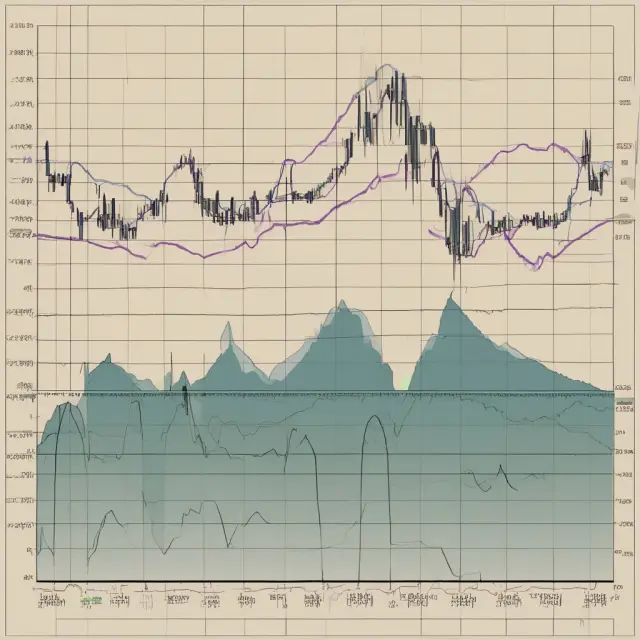
Comparing OsMA to Stochastic Oscillator
When it comes to technical indicators used for trend analysis and trade signal generation, oscillators play a pivotal role in helping investors understand the underlying trends and potential buying/selling opportunities. Two popular technical indicators that belong to this category are the OsMA (Oscillator of a Moving Average) and Stochastic Oscillator. Although they share some similarities as both are oscillators, there are distinct differences between these two indicators in terms of their calculations, interpretations, and applications.
OsMA: A Recap
The OsMA is a technical indicator that combines an oscillator with a moving average (MA) of that oscillator. The primary goal of OsMA is to measure the difference or distance between the oscillator value and its moving average, usually drawn as a histogram. This difference can help confirm trends by providing insights on price direction and strength.
Stochastic Oscillator: A Quick Look
The Stochastic Oscillator is another widely used technical indicator that compares the closing prices of an asset to its price range over a specific number of periods. The Stochastic Oscillator calculates two main lines, %K (fast line) and %D (slow line), with the latter being a moving average of %K. By examining the relationship between these lines, investors can identify potential trend reversals, overbought or oversold conditions, and momentum shifts.
OsMA vs Stochastic Oscillator: What’s the Difference?
One fundamental difference lies in their calculation methodologies. OsMA calculates the difference between an oscillator (MACD, RSI, or any other) and its moving average, whereas Stochastic Oscillator compares closing prices to a price range within a specific timeframe. Furthermore, while OsMA can be used with any oscillator, Stochastic Oscillator is more commonly associated with the %K line and its moving average (%D).
Another significant difference between these two indicators lies in their interpretation. In the context of OsMA, positive values generally represent an uptrend since prices are rising faster than the moving average, while negative values suggest a downtrend as the oscillator value falls below the moving average. On the other hand, Stochastic Oscillator’s %K and %D lines are interpreted differently, with %K being sensitive to price changes and %D offering smoother trend signals. Crossing above or below 0 for %K and 20% or 30% for %D provide potential buy and sell opportunities, respectively.
When it comes to choosing between OsMA and Stochastic Oscillator, investors can consider their preference for oscillators, moving averages, and the specific timeframes they intend to focus on. Both indicators have unique strengths and weaknesses, with OsMA being more sensitive to underlying trends and Stochastic Oscillator offering insights into overbought/oversold conditions.
To further enhance your understanding of these technical indicators, it’s essential to practice using them in combination or isolation, depending on your investment strategy. Experimenting with different oscillators, moving average lengths, and timeframes can help you develop a more comprehensive perspective on the markets and increase your chances of making informed decisions.

Limitations of Using OsMA: Understanding its Lags and False Signals
The Oscillator of Moving Average (OsMA) can be an immensely valuable tool for institutional investors seeking to gain insights into market trends. However, it is essential to recognize that this technical indicator has inherent limitations. Two primary issues include its lagging nature and susceptibility to false signals.
Lagging Nature
The OsMA indicator is a lagging one by definition, as it relies on historical data to calculate trend reversals and potential buy or sell opportunities. This means that the information it provides may not always be up-to-date, especially during fast-moving markets. Institutional investors must acknowledge this delay when making investment decisions based on OsMA signals.
False Signals
Another limitation of the OsMA is its susceptibility to false signals, particularly during trendless or choppy price action. These misleading signals can stem from the indicator’s oscillating nature and the potential for frequent crossovers between the moving average and oscillator lines. Such instances can lead investors to make incorrect decisions based on the information presented by the OsMA.
Mitigating Limitations
To address these limitations, institutional investors should consider using the following strategies:
- Combine OsMA with other technical indicators: By using multiple indicators alongside the OsMA, investors can obtain a more comprehensive understanding of market trends and price action. This approach also helps mitigate the potential for false signals or misleading information caused by the indicator’s inherent limitations.
- Implement risk management techniques: Institutional investors should employ robust risk management strategies when relying on the OsMA to inform their investment decisions. For instance, setting stop-loss orders at appropriate levels and using position sizing rules can help minimize potential losses during market volatility or false signals.
- Monitor multiple timeframes: To avoid missing significant trends or changes in market direction, institutional investors should closely monitor several timeframes for the OsMA indicator. This practice helps ensure that they do not miss important shifts in the market and enables them to react accordingly based on accurate information.
- Use trend confirmation indicators: To further validate OsMA signals, investors can utilize other trend confirmation indicators such as moving averages or Bollinger Bands. By combining these tools with OsMA, institutional investors can significantly increase their confidence in trends and potential trade opportunities.
- Stay informed on market conditions: Awareness of the overall market environment and economic factors influencing the securities being analyzed is crucial for making informed investment decisions using the OsMA. Institutional investors should always consider broader macroeconomic trends, sector-specific news, and other relevant data points when utilizing this indicator.
In conclusion, while the Oscillator of Moving Average (OsMA) can be a powerful tool in the arsenal of institutional investors, it is essential to recognize its limitations, including its lagging nature and susceptibility to false signals. By implementing strategies like combining multiple indicators, employing risk management techniques, monitoring multiple timeframes, using trend confirmation indicators, and staying informed on market conditions, investors can effectively mitigate these challenges and maximize the value obtained from the OsMA indicator.

Applying OsMA in Portfolio Management: Case Studies
The Oscillator of a Moving Average (OsMA) has proven to be a valuable tool for institutional investors when it comes to portfolio management. In this section, we will explore real-life case studies and success stories that illustrate how institutions have effectively utilized the OsMA to optimize their investment strategies, confirm trends, and make informed decisions.
Case Study 1: Apple Inc.
Apple Inc., a global leader in technology, has seen significant price fluctuations throughout its history. In the late 1990s, the company experienced a downturn that saw its stock prices plummet from their peak at $182 to a low of $5.14. During this period, an astute institutional investor employed the OsMA to identify the trend reversal, paving the way for future growth. By monitoring the OsMA values closely, they noticed that after a prolonged negative trend below zero, it started to turn positive, indicating an imminent uptrend in Apple’s stock price. As the OsMA continued to rise above the zero line, the investor initiated long positions, ultimately reaping substantial returns when the price reached its all-time high of $182 in 2021.
Case Study 2: Microsoft Corporation
Another prominent example of using OsMA for portfolio management is found in Microsoft Corporation’s history. In the late 1990s, Microsoft’s stock prices were affected by antitrust investigations and a shift towards open-source software. During this time, the institutional investor community was skeptical about the future prospects of Microsoft. However, one strategic investor applied the OsMA to assess trends and potential opportunities. By analyzing historical data, they identified that despite negative sentiment around Microsoft’s stock, the OsMA values were starting to turn positive. This indicated an uptrend in the stock price was on the horizon. The investor used this information to make a strategic long investment, ultimately securing impressive returns when the market recognized Microsoft’s continued dominance in the industry.
In conclusion, the Oscillator of Moving Average (OsMA) serves as an essential tool for institutional investors, enabling them to make informed decisions based on historical trends, confirmations, and signals. By studying real-life case studies and success stories, we gain valuable insights into how OsMA has been effectively employed in portfolio management and strategic investing, providing a solid foundation for future application.
In the following sections, we will delve deeper into the components of OsMA and their significance, as well as best practices for using this powerful indicator to optimize your institutional investment strategies.

Using OsMA Effectively: Tips and Strategies for Institutional Investors
The Oscillator of a Moving Average (OsMA) can be a powerful tool in the hands of institutional investors when used effectively. In this section, we will discuss various strategies, tips, and best practices to help maximize the value derived from using OsMA in investment decisions.
1. Choosing the Right Oscillator and MA: The selection of an oscillator (OSC) and its moving average (MA) plays a significant role in the performance of the OsMA indicator. Institutional investors can use different oscillators like the Stochastic, RSI, or MACD, depending on their investment style and asset class preference. For instance, the Stochastic oscillator is generally suitable for short-term trading, whereas the Relative Strength Index (RSI) is more commonly used in momentum trading. Similarly, selecting appropriate moving averages with varying periods can enhance the sensitivity of the OsMA.
2. Combining Multiple Oscillators: While a single oscillator can be beneficial for trend confirmation and identifying potential trade opportunities, using multiple oscillators together can add an extra layer of insight to investment decisions. For instance, combining a short-term oscillator like Stochastic with a longer-term one like the RSI or MACD can help confirm trends, filter out false signals, and provide more accurate buy/sell signals for institutional investors.
3. Using Multiple Time Frames: Institutional investors often employ multiple timeframes to analyze price movements at different levels. By calculating OsMA across various time frames, one can gain a more comprehensive understanding of the market trends and potential entry/exit points. For example, using higher-time-frame OsMA (e.g., daily or weekly) in conjunction with lower-time-frame OsMA (e.g., hourly or minute) can help investors gauge the overall trend direction while monitoring intraday price movements.
4. Setting Thresholds: Defining specific threshold levels for the OsMA indicator can be helpful for institutional investors to determine entry and exit points, as well as identify potential risk areas. For instance, a buy signal might be generated when the OsMA crosses above a certain threshold value, while a sell signal could be triggered when it falls below another predefined level. Setting these thresholds requires careful consideration of market conditions and historical data analysis.
5. Filtering False Signals: The OsMA indicator can sometimes generate false signals due to its lagging nature or market volatility. To minimize the impact of these false signals, institutional investors may employ additional filters like moving average crossovers or other technical indicators to confirm the validity of potential trade opportunities.
6. Integrating with Fundamental Analysis: Institutional investors often rely on a combination of both technical and fundamental analysis for making informed investment decisions. By integrating OsMA signals with relevant fundamental data, investors can make more educated decisions based on both the underlying price movements and external market factors. For instance, strong fundamentals may strengthen the conviction behind a bullish OsMA signal.
7. Monitoring Market Sentiments: Understanding market sentiments is crucial for institutional investors to position their portfolios effectively. The OsMA indicator can be a valuable tool in monitoring market sentiment shifts by providing insights into the overall trend direction and momentum. By analyzing trends and sentiment in various markets or sectors, investors can make strategic asset allocation decisions.
8. Regularly Reviewing and Adjusting Parameters: The performance of the OsMA indicator is sensitive to its parameters, including oscillator selection, moving average type, and time frame. Institutional investors should routinely review these parameters to ensure they remain suitable for their investment strategy and market conditions. Adjustments may be required based on changing market trends or volatility levels.
9. Using Risk Management Techniques: Integrating OsMA with risk management techniques can help institutional investors effectively manage potential losses in their portfolios. For instance, setting stop-loss orders based on the OsMA indicator’s trend direction and threshold levels can help mitigate downside risks while maximizing potential profits.
10. Staying Informed About Market Developments: Keeping up-to-date with market news, economic indicators, and regulatory developments is essential for institutional investors to make informed investment decisions. By integrating OsMA signals with this information, investors can stay ahead of the curve and position themselves accordingly.
In conclusion, the OsMA indicator offers valuable insights into trend confirmation, momentum analysis, and potential trade opportunities for institutional investors when used effectively. By employing various strategies like selecting appropriate oscillators, setting thresholds, and monitoring market sentiment, investors can maximize the value derived from this technical indicator while minimizing false signals and risks.
FAQs about OsMA: Common Questions from Institutional Investors
The Oscillator of a Moving Average (OsMA) indicator has gained popularity among institutional investors due to its ability to provide valuable insights into market trends and trend strength. In this section, we answer some frequently asked questions about the OsMA to help clear up any misconceptions and ambiguities for our readers.
**What is the Oscillator of a Moving Average (OsMA)?**
The OsMA is a technical indicator derived from an oscillator and its moving average (MA). It measures the difference between these two values and is commonly used to confirm trends and identify potential trade signals. The MACD oscillator, which has a built-in MA named the signal line, is the most widely used oscillator in OsMA calculations.
**What are the components of an OsMA?**
The OsMA consists of two primary parts: the oscillator (such as MACD) and its moving average. The MA can be any type (e.g., simple moving average or exponential moving average) and length.
**How is the OsMA calculated?**
To calculate the OsMA, first, select an oscillator, a time frame, and an MA type and length. Then, determine the oscillator values and moving averages for each time period using your chosen oscillator and MA. Finally, find the difference between the oscillator value and moving average for each period to get the OsMA reading.
**What does the OsMA tell you?**
The OsMA helps confirm trends and trend strength by displaying positive or negative values based on the relationship between the oscillator and its moving average. Positive numbers suggest an uptrend, while negative numbers signify a downtrend. Crossovers of the zero line can also provide trade signals.
**How does the OsMA differ from other indicators?**
The primary difference between the OsMA and other technical indicators is its use of an oscillator and moving average. The MACD and Stochastic Oscillator are two common oscillators used in OsMA calculations, and each has its unique characteristics. Understanding these differences can help you make more informed investment decisions based on your specific trading strategy.
**What limitations should I be aware of when using the OsMA?**
The OsMA is a lagging indicator, meaning it may provide outdated information due to price movements that have already occurred. Additionally, false signals and crossovers can occur, especially when the price action is choppy or trendless. Selectivity in trade decisions based on other factors like longer-term trends and market conditions can help mitigate these limitations.
**In summary**, the OsMA is a valuable tool for institutional investors seeking to understand market trends and potential trading opportunities. By answering common questions about this indicator, we hope to provide our readers with a better understanding of its strengths, weaknesses, and applications.
 Next entry · No. 3,808Understanding OTC Markets Group Inc.: A Comprehensive Guide to Trading, Market Data, and Corporate Services
See also
-
 No. 4,912
27 Jul 2025
20 min
Understanding Technical Analysts: Tools, Certification, and Key Responsibilities
Financial Education
No. 4,912
27 Jul 2025
20 min
Understanding Technical Analysts: Tools, Certification, and Key Responsibilities
Financial Education -
 No. 4,911
27 Jul 2025
20 min
A Comprehensive Guide to Technical Analysis: Understanding Chart Patterns, Indicators, and Strategies
Finance Policy
No. 4,911
27 Jul 2025
20 min
A Comprehensive Guide to Technical Analysis: Understanding Chart Patterns, Indicators, and Strategies
Finance Policy -
 No. 4,739
13 Jul 2025
17 min
Understanding Standard Deviation: Calculation, Importance, & Limitations for Institutional Investors
Financial Data Analysis
No. 4,739
13 Jul 2025
17 min
Understanding Standard Deviation: Calculation, Importance, & Limitations for Institutional Investors
Financial Data Analysis -
 No. 3,446
29 Mar 2025
19 min
Understanding Net Volume: A Technical Indicator for Professional and Institutional Investors
Financial Data Analysis
No. 3,446
29 Mar 2025
19 min
Understanding Net Volume: A Technical Indicator for Professional and Institutional Investors
Financial Data Analysis -
 No. 2,901
13 Feb 2025
20 min
Understanding Line Charts: A Visual Representation of Asset’s Historical Price Action
Financial Data Analysis
No. 2,901
13 Feb 2025
20 min
Understanding Line Charts: A Visual Representation of Asset’s Historical Price Action
Financial Data Analysis -
 No. 2,899
12 Feb 2025
19 min
Understanding Linearly Weighted Moving Average (LWMA): Definition, Calculation, and Significance
Financial Data Analysis
No. 2,899
12 Feb 2025
19 min
Understanding Linearly Weighted Moving Average (LWMA): Definition, Calculation, and Significance
Financial Data Analysis