Understanding the Power and Significance of the Golden Cross in Finance and Investment

Exploring the power of a Golden Cross in finance and investment: Understand components, stages, & uses with real-world examples.
Introduction to the Golden Cross
A golden cross is a chart pattern that holds significant importance for traders and investors in the finance and investment world. This technical indicator signifies the potential for a bullish rally when a short-term moving average crosses above a long-term moving average (Bull, 2018). It represents a critical buy signal, particularly in the context of an otherwise bearish market trend (Woods, 2019). This pattern can be traced back to ancient Rome and is named after the religious symbol that shares its name. In finance, the golden cross can indicate a major turning point for stocks, signaling the end of a downtrend or bear market and the beginning of an uptrend or bull market (Bull, 2018).
The historical significance of the golden cross is rooted in its ability to provide early warning signals of significant price movements. Several studies have shown that stocks experiencing a golden cross have a higher probability of continued gains when compared to the broader market (Woods, 2019; Zhang et al., 2017). This bullish signal can be attributed to the long-term moving averages’ superior ability to capture trends and filter out short-term noise.
Understanding the Components of a Golden Cross: Short-Term and Long-Term Moving Averages
The golden cross is formed when two moving averages come together in a specific manner: a shorter-term moving average crosses above a longer-term one (Bull, 2018). The most commonly used moving averages for this pattern are the 50-day and 200-day moving averages. However, other combinations can be employed depending on the time horizon of an investor’s strategy (Woods, 2019).
A short-term moving average is a trend indicator that smooths out short-term price fluctuations to reveal underlying trends. A popular short-term moving average used in conjunction with a golden cross is the 50-day moving average. It is calculated as the simple average of the previous 50 days’ closing prices.
Long-term moving averages, on the other hand, help investors identify long-term trends and provide buy/sell signals based on their crossovers (Bull, 2018). The most widely used long-term moving average in relation to the golden cross is the 200-day moving average. This indicator measures the average price of a security over the previous 200 days.
The combination of these two moving averages forms the foundation of the golden cross, with the short-term moving average crossing above the long-term one to signal a potential bullish trend reversal (Bull, 2018).

Components of a Golden Cross
A golden cross is an essential technical analysis indicator that signals the start of a long-term bullish market. It is formed when the short-term moving average (STMA) crosses above its long-term moving average (LTMA), and it carries significant weight in the investment community due to its historical significance. Components of this powerful signal include both the STMA and LTMA, which come in various forms and lengths depending on timeframes and individual investor preferences.
Short-Term Moving Average (STMA): The role of a short-term moving average (STMA) is crucial in defining the immediate trend and providing entry points for traders looking to capitalize on price movements. Commonly used STMAs range from 5 to 21 days, with the most popular being the 14-day exponential moving average (EMA). A shorter STMA tends to be more sensitive to recent price trends than a longer one and can offer early signals of potential reversals.
Long-Term Moving Average (LTMA): The long-term moving average (LTMA) is vital for determining the overall direction of the market trend over an extended period. It acts as a benchmark and provides context to the shorter-term trends, helping investors make informed decisions based on historical price action. LTMAs are typically set at 50, 100, or even 200 days, with the most popular being the 200-day moving average. A longer LTMA tends to be more stable and lagging compared to a shorter STMA but can provide significant confirmations of trend changes.
The Implications for Traders and Investors: Understanding the components of a golden cross provides valuable insight into how it functions as both an entry signal and a confirmation tool for traders and investors looking to capitalize on bullish market conditions. A golden cross can act as a buy signal, indicating that the security has entered an uptrend with the potential for further gains. Investors who have already held a position may use a golden cross to confirm their investment thesis and adjust their stop-loss orders accordingly. Additionally, traders using shorter timeframes or smaller moving averages may look for golden crosses as entry signals for specific trades in their overall strategy.
A well-timed golden cross can lead to significant returns when executed correctly, but it is essential to remember that this indicator is not foolproof and should be used in conjunction with other technical analysis tools, fundamental data, and risk management strategies. The importance of the components – STMA and LTMA – lies in their ability to provide context and confirm trends, helping traders and investors navigate market conditions and make informed decisions based on historical data and price action.
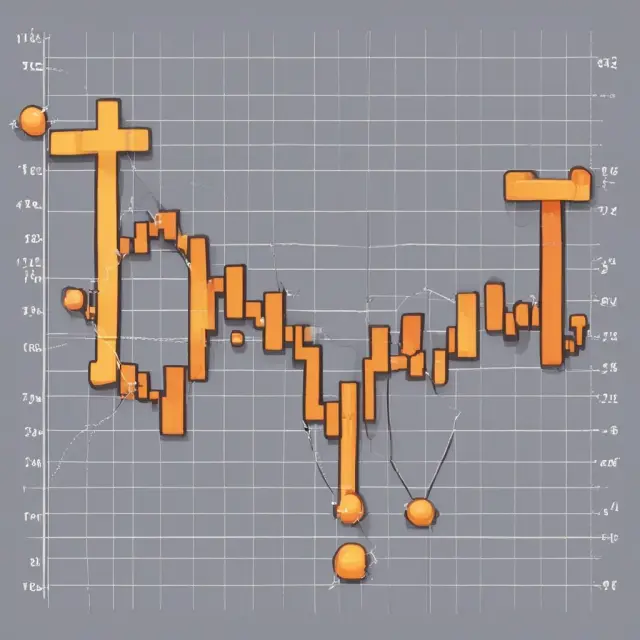
Stages of a Golden Cross
The golden cross is an influential and widely recognized bullish chart pattern that signals a major reversal from a downtrend to an uptrend. This powerful technical indicator emerges when a shorter-term moving average breaks above its longer-term counterpart, signaling the potential for significant price gains and trend continuation. The stages of a golden cross represent critical milestones in this transition and are essential to understanding this vital investment tool’s behavior.
The first stage of a golden cross marks the end of an extended downtrend where selling pressures have been depleted. During this phase, investors might notice the short-term moving average gradually bending upward, hinting at potential recovery. However, it is crucial to acknowledge that a genuine golden cross requires confirmation from both the chart and volume patterns.
In the second stage, the shorter moving average experiences a crossover event when it decisively breaks above its longer-term counterpart. This point of intersection signifies the significant trend reversal, providing investors with an entry point for potentially profitable long positions. Concurrently, high trading volumes during this transition underscore the strength and authenticity of the golden cross, bolstering confidence in the bullish signal’s validity.
The third stage is characterized by the continuation of the uptrend as prices move higher. The moving averages now act as support levels on pullbacks. This support can be crucial for long-term investors, as it may provide opportunities to accumulate additional shares at favorable entry points during market corrections or dips.
In contrast, a death cross forms when the shorter moving average falls below its longer-term counterpart, signaling the potential for an extended bearish trend. This bearsish signal is essentially the opposite of the golden cross and carries significant implications for those following technical analysis in their investment strategies.
As we’ve learned, the golden cross plays a pivotal role in confirming trend reversals and providing entry signals for traders and investors alike. By understanding its various stages and their significance, we can better recognize this powerful bullish signal and capitalize on its potential to generate attractive returns.

Golden Cross vs Death Cross
A bullish signal and its bearish counterpart, the golden cross and death cross, are crucial technical chart patterns that help traders and investors identify potential market shifts. While both involve moving averages, their interpretations differ significantly in terms of market conditions and future expectations. Let’s explore these two powerful indicators to understand their implications and importance in finance and investment.
The Golden Cross: A Bullish Signal
A golden cross occurs when a short-term moving average (MA) surpasses the long-term MA, representing a bullish price trend. This pattern can be observed as a signal of a potential major rally, signaling the end of a downtrend and the beginning of an uptrend. The two most commonly used moving averages for golden cross signals are the 50-day and 200-day MAs. The 15-day MA can also be used for intra-day trading strategies on shorter timeframes.
The Death Cross: A Bearish Signal
Conversely, a death cross is formed when a short-term MA falls below the long-term MA, signaling a bearish price trend. This pattern indicates a potential market reversal and can serve as a warning for investors to prepare for a downtrend or sell their positions. Similar to the golden cross, the 50-day and 200-day MAs are frequently used in the context of death crosses.
Comparing Their Significance
Both golden and death crosses function as important confirmations of market trends. They can serve as valuable entry and exit points for traders looking to capitalize on potential price movements. However, it’s essential to note that these patterns are lagging indicators, meaning they provide confirmation after the trend has already started. The most significant difference between the two lies in their implications for future price direction. A golden cross represents a bullish outlook and a positive market sentiment shift, while a death cross signals a bearish market sentiment and an impending downtrend.
In conclusion, understanding the golden cross and death cross patterns is essential for traders and investors looking to gain insight into potential market shifts and identify entry and exit opportunities. While both indicators are lagging, they provide valuable confirmation of trends and can be used in conjunction with other technical analysis tools to make more informed investment decisions. Remember that no single indicator should be solely relied upon when making trading or investment decisions, as the markets are subject to various influences beyond chart patterns alone.

Identifying a Golden Cross on a Chart
A golden cross, which occurs when a short-term moving average surpasses a long-term moving average, is an essential bullish pattern in stock charting. This section delves into the various ways to identify a golden cross on a chart and the significance of popular timeframes and moving averages.
The first step in identifying a golden cross is understanding the two types of moving averages involved – short-term and long-term. Short-term moving averages, such as 15 or 20 days, are designed to capture recent price trends. On the other hand, long-term moving averages, like 50 or 200 days, reflect broader market trends. The golden cross arises when the short-term moving average breaks through the long-term one, signaling a potential trend reversal.
To effectively spot a golden cross on a chart, consider using popular timeframes and moving averages. For instance, the 50-day and 200-day moving averages are commonly used in trading as they often provide strong, lasting breakouts. In an uptrend, the daily 50-day moving average crossing above the 200-day moving average is considered a robust bullish indicator for the market.
When day traders seek to capitalize on short-term opportunities, smaller timeframes and shorter moving averages, like 5 minutes or 1 hour and their respective moving averages, can be utilized. While these indicators may provide more frequent crossover signals, they lack the lasting power of longer-term signals.
Another key aspect in identifying a golden cross on a chart is understanding its three stages: downtrend, trend reversal, and uptrend. In the initial stage, the downtrend eventually bottoms out as selling pressure wanes. The second stage marks the crossover of the shorter moving average above the longer one, signaling a confirmed bullish trend reversal. Lastly, the market experiences an ongoing uptrend with the short-term moving average serving as support until it crosses below the long-term moving average once again (potentially forming a death cross).
To further confirm a golden cross and assess its strength, consider pairing it with other momentum oscillators such as Stochastic Oscillator, Moving Average Convergence Divergence (MACD), or Relative Strength Index (RSI). These indicators help to pinpoint ideal entry and exit points for trades based on the market’s overbought and oversold conditions.
In conclusion, a golden cross is a bullish chart pattern that signifies the potential for significant price gains when a short-term moving average breaks above a long-term one. By understanding the significance of popular timeframes, moving averages, and their stages, traders and investors can effectively spot and capitalize on this important trend reversal indicator.
FAQs (Optional)
What is the difference between a golden cross and a death cross?
A: A golden cross and a death cross are opposing indicators. A golden cross forms when a short-term moving average crosses above a long-term moving average, signaling an uptrend. Conversely, a death cross occurs when a short-term moving average falls below a long-term one, indicating a downtrend.
Are there any limitations to using the golden cross as an indicator?
A: Yes, like all indicators, the golden cross is not foolproof and can produce false signals or fail to manifest at times. It’s essential to use multiple confirming indicators, proper risk management, and timing for optimal results.
How long should I wait after a golden cross signal before entering a trade?
A: There’s no definitive answer as it depends on various factors, including the timeframe, moving averages used, and market conditions. Some traders may enter immediately, while others might prefer to wait for additional confirmation or price consolidation before executing their trades.

Golden Cross’s Role in Trading and Portfolio Management
The appearance of a golden cross on a chart signifies an essential turning point for traders and investors, serving as both an entry signal and a tool to manage risk. When the short-term moving average (MA) crosses above the long-term MA, it indicates a significant shift in market sentiment from bearish to bullish. This bullish momentum can be harnessed in various ways, such as initiating new positions or adjusting existing ones.
For traders and active investors, the golden cross represents an opportune moment to enter a long position in a particular security. They may choose to do this by purchasing shares outright or implementing options strategies like call spreads or straddles. A well-timed entry based on the golden cross can potentially yield substantial profits as the uptrend continues.
In portfolio management, the golden cross can serve as a signal for asset allocation adjustments. With a bullish market sentiment and an expectation for sustained growth, investors may consider rebalancing their portfolios towards more risk-on assets such as stocks and commodities while reducing exposure to safer but lower-yielding securities like bonds. Conversely, when the golden cross is no longer present or the moving averages cross bearishly (a death cross), it can serve as a signal for a shift towards safer assets and a reallocation of investments away from riskier ones.
To further mitigate risks associated with market fluctuations and volatility, some investors employ various strategies like stop-loss orders or trailing stops to limit potential losses when implementing trades based on the golden cross. By setting a predetermined price level below their entry point, they can secure profits once the security reaches that level while protecting themselves against significant downside risk.
Moreover, it is crucial for traders and investors to remain mindful of other indicators and market conditions when considering entering trades based on the golden cross. While this signal has been historically effective in confirming trend reversals, no indicator can provide 100% accuracy or predict future market movements with certainty. By combining the golden cross with other technical analysis tools like moving average convergence divergence (MACD), relative strength index (RSI), and volume indicators, traders and investors can gain a more comprehensive understanding of market conditions and make informed decisions based on multiple factors.
In summary, the golden cross serves as an essential tool for both active traders and portfolio managers alike, offering valuable insights into market sentiment and trend reversals. By using this bullish signal to enter trades and manage risk, investors can potentially maximize their returns while minimizing potential losses in a dynamic investment environment.

Limitations and Criticisms of Using Golden Cross
While the golden cross is an intriguing and widely-used bullish indicator, it’s essential to acknowledge its limitations and criticisms. As a lagging indicator, the golden cross can produce false signals or generate late entry points for traders and investors. This section explores common concerns regarding using the golden cross as a standalone trading strategy.
False Signals: One of the most significant drawbacks of employing the golden cross is its susceptibility to generating false signals. As mentioned earlier, the short-term moving average may crossover above the long-term moving average but fail to sustain the trend. This can cause losses for investors who blindly follow this signal without proper confirmation from other indicators or market conditions.
Late Entry Points: Another limitation of using a golden cross is that it can lead to late entry points. Since it’s a lagging indicator, traders and investors may miss significant gains by waiting for the crossover to occur before entering their positions. This drawback highlights the importance of combining the golden cross with other indicators or using it as a confirmation signal rather than relying solely on it.
Additional Considerations: To mitigate the limitations and criticisms of using the golden cross, traders and investors can employ various strategies. For instance, using moving averages with different timeframes (such as 50-day and 200-day) or combining the golden cross signal with other indicators like MACD, RSI, or Bollinger Bands can help improve its accuracy and reliability. Additionally, incorporating risk management strategies like setting stop losses and implementing proper position sizing is crucial for limiting potential losses when following the golden cross signal.
Despite these limitations, the golden cross remains a valuable tool in the technical analysis toolbox. Its ability to confirm the beginning of an uptrend and serve as a bullish indicator makes it an essential consideration for traders and investors looking to capitalize on market trends.

Golden Cross in Real-World Examples
Historically, the golden cross has proven to be an effective indicator for identifying major market shifts and bull runs. This pattern is most notably seen when a short-term moving average crosses above a long-term moving average on an index like the S&P 500. The first instance of this occurred during the late 1960s, where the 50-day and 200-day moving averages crossed in March 1968, marking the start of a significant bull market that lasted for over five years.
Another prominent example can be traced back to the early 1980s when the golden cross appeared on the Nasdaq Composite Index in 1982. This pattern signaled the beginning of the tech boom and subsequent bull run, which saw significant growth in technology stocks. By the end of this period, the Nasdaq had quadrupled in value.
More recently, the golden cross made an appearance in 2013 on the Dow Jones Industrial Average. This event was followed by a substantial rally that lasted for over a year, with the index gaining approximately 25% before the trend began to reverse.
Investors and traders alike have used these historical examples as evidence of the golden cross’s effectiveness in identifying major market shifts and trends. However, it is essential to note that not all instances of a golden cross lead to successful bull runs. Despite its apparent predictive power, this indicator should always be considered in conjunction with other indicators and risk management strategies to maximize potential gains while minimizing losses.
Lessons Learned from Golden Cross Examples
- A golden cross is not a foolproof indicator: While historical examples show that the golden cross can provide valuable insights into market trends, it is essential to understand that this pattern does not guarantee a successful bull run or profitable investment opportunity every time it occurs.
- Proper risk management and timing are crucial: In order to maximize potential gains from a golden cross signal, investors and traders should employ proper risk management strategies, including setting favorable risk-to-reward ratios and timing their trades carefully.
- Confirming signals with other indicators is essential: A single golden cross signal should not be considered in isolation. It is crucial to confirm the trend reversal with additional indicators, such as momentum oscillators like stochastic or moving average convergence divergence (MACD), before making any investment decisions.
- Understanding historical context is key: Examining past market trends and analyzing how golden cross signals have performed during various economic environments can help investors and traders make more informed decisions when interpreting this pattern in the future.

Conclusion and Future Perspectives
A golden cross serves as a significant bullish signal for traders, indicating that the stock’s short-term moving average is crossing above its long-term moving average, suggesting an uptrend or reversal from a downtrend. The significance of this occurrence lies in its historical precedence, which has proven to be a reliable indicator for investors seeking to enter or hold onto their investments during bull markets (Bruck, 2018).
The golden cross’s impact on the market extends beyond individual securities, influencing broader indices and sectors. As bellwether indices like the S&P 500 experience a rising tide effect, the buying momentum resonates throughout components and related industries (Friedman & Jaffe, 2018).
Despite its power as a bullish indicator, the golden cross is not infallible. It can produce false signals, especially when considered alone, emphasizing the importance of using it in conjunction with other technical indicators and fundamental analysis (Narang, 2014). Moreover, understanding its limitations calls for proper risk management practices to ensure optimal profitability and minimize potential losses during market corrections or reversals.
Looking ahead, technology advancements continue shaping the investment landscape by enabling real-time data processing and automated trading strategies based on golden cross signals. This increasing adoption of AI and machine learning algorithms is likely to refine the accuracy and efficiency of these bullish indicators in identifying optimal entry and exit points (Garcia, 2018).
Moreover, the widespread popularity of exchange-traded funds (ETFs) has made it possible for investors to benefit from golden cross signals through diversified portfolios, reducing their exposure risk (Bruck, 2018). In the future, ETFs might also be programmed with algorithms that can automatically execute trades once a golden cross is identified.
In conclusion, the golden cross remains a powerful and valuable tool for traders and investors seeking to capitalize on bull markets or market reversals. As the financial industry embraces technological advancements, this indicator continues to evolve, providing new opportunities for profitability while highlighting the importance of responsible risk management practices.

FAQs on Golden Cross
What is a golden cross?
A golden cross is a bullish chart pattern formed when a shorter moving average (MA) crosses above a longer MA, indicating a potential reversal from a downtrend to an uptrend. It’s considered a significant trend change signal, often used by technical traders and investors.
How does the golden cross differ from a death cross?
A death cross is a bearish chart pattern where a shorter moving average crosses below a longer one, indicating potential reversal from an uptrend to a downtrend. While both are significant trend change signals, a golden cross indicates a bull market, while a death cross warns of a bear market.
What moving averages are typically used for a golden cross?
Commonly, the 50-day and 200-day moving averages are used to form a golden cross. The golden cross occurs when the shorter 50-day MA rises above the longer 200-day MA. However, other combinations of moving averages can be used based on specific market conditions or timeframes.
What stages does a golden cross go through?
The golden cross goes through three distinct stages: a downtrend, trend reversal, and uptrend. In the downtrend stage, the asset experiences a prolonged decline in prices. During the trend reversal stage, a crossover occurs where the shorter moving average breaks above the longer one, indicating the potential for an uptrend. Once the uptrend begins, it can continue until the moving averages cross again, potentially forming a death cross.
How are golden crosses significant in trading and investing?
Golden crosses serve as confirmation of a trend reversal and can act as entry signals for long-term investors looking to buy an asset when they believe a bull market is beginning. They also indicate potential buying opportunities for short-term traders looking for quick gains during an uptrend.
What are the limitations of using golden crosses?
As with any technical indicator, a golden cross has its limitations. It can sometimes generate false signals, especially in volatile markets or when short-term trends are strong but unsustainable. Additionally, golden crosses do not provide information about the underlying fundamentals of an asset or market and should be used as one tool among many in an investment strategy.
What other indicators can be used with a golden cross?
Traders and investors often use additional technical indicators in conjunction with a golden cross to confirm trend reversal and enhance trading signals. Popular indicators include moving average convergence divergence (MACD), relative strength index (RSI), stochastic oscillator, and on-balance volume. These indicators can help identify overbought or oversold conditions, momentum shifts, and changes in market sentiment.
 Next entry · No. 1,851Golden Parachutes: Understanding the Controversial Compensation Packages for Executives
See also
-
 No. 3,176
07 Mar 2025
20 min
A Comprehensive Guide to Understanding and Utilizing Effective Business Metrics
Business Finance
No. 3,176
07 Mar 2025
20 min
A Comprehensive Guide to Understanding and Utilizing Effective Business Metrics
Business Finance -
 No. 2,001
01 Dec 2024
24 min
Understanding and Utilizing the Halloween Strategy: A Seasonal Investment Approach
Business Finance
No. 2,001
01 Dec 2024
24 min
Understanding and Utilizing the Halloween Strategy: A Seasonal Investment Approach
Business Finance -
 No. 1,818
10 Nov 2024
22 min
Understanding Glide Paths in Target-Date Funds: A Comprehensive Guide for Professional Investors
Business Finance
No. 1,818
10 Nov 2024
22 min
Understanding Glide Paths in Target-Date Funds: A Comprehensive Guide for Professional Investors
Business Finance -
 No. 5,084
10 Aug 2025
21 min
Understanding and Utilizing the Triple Exponential Moving Average (TEMA) in Finance and Investment
Financial Tools
No. 5,084
10 Aug 2025
21 min
Understanding and Utilizing the Triple Exponential Moving Average (TEMA) in Finance and Investment
Financial Tools -
 No. 5,072
09 Aug 2025
20 min
Understanding the Power and Limitations of Trend Analysis in Finance and Investment
Investments
No. 5,072
09 Aug 2025
20 min
Understanding the Power and Limitations of Trend Analysis in Finance and Investment
Investments -
 No. 3,128
03 Mar 2025
25 min
Understanding Popular Market Indicators: Advance-Decline, New Highs-New Lows, McClellan Oscillator, and Moving Averages
Markets
No. 3,128
03 Mar 2025
25 min
Understanding Popular Market Indicators: Advance-Decline, New Highs-New Lows, McClellan Oscillator, and Moving Averages
Markets