Understanding the QStick Indicator: A Technical Analysis Tool for Trend Identification

Discover how the QStick Indicator can be used for trend identification in financial markets. Learn its calculation, usage, and limitations.
Introduction to the QStick Indicator
The Qstick Indicator, also known as the Quick Stick or Trend Momentum Indicator, is a technical analysis tool developed by Tushar Chande with an aim to identify and measure trends within financial markets. This powerful indicator calculates a moving average of the difference between the opening price (Open) and closing price (Close) for a specific number of periods. The Qstick Indicator can offer valuable insights into buying and selling pressure and help traders make informed decisions regarding potential trend reversals or continuations.
Calculating the QStick Indicator
To calculate the Qstick Indicator, begin by recording the differences between each closing price and opening price over a specified number of periods. After collecting these data points, determine which moving average (Exponential Moving Average (EMA) or Simple Moving Average (SMA)) best suits your investment strategy. A longer timeframe results in smoother indicator values and fewer signals, making it more suitable for identifying overall trends. Conversely, a shorter period offers more responsive signals but may generate false positives and negatives.
The calculation formula for the QStick Indicator is as follows:
QSI = EMA (or SMA) of (Close – Open)
where:
EMA = Exponential moving average
SMA = Simple moving average
Close = Closing price for the period
Open = Opening price for the period
An optional step is to calculate an SMA of the Qstick calculations. This generates a signal line, which can be set at three periods as a common default.
Understanding the Meaning and Interpretation of the QStick Indicator
The primary objective of the QStick Indicator is to measure buying and selling pressure by analyzing the relationship between the closing and opening prices. When the indicator is trending upwards, it signifies that the price is closing higher than the opening price on average, suggesting growing buying pressure. Conversely, a downward trend indicates that the price is closing lower than the opening price on average, illustrating selling pressure.
Buy and sell signals are generated when the Qstick Indicator crosses above or below specific levels:
– A buy signal is triggered when the indicator moves above the zero line. This indicates that buying pressure is increasing and may signify an upcoming trend reversal or continuation.
– A sell signal occurs when the indicator falls below the zero line, indicating weakening buying pressure and a potential price downturn.
The signal line (SMA of Qstick) can serve as another important reference level for detecting potential trade opportunities. When the indicator crosses above or below this line, it can offer confirmation of the emerging trend or reversal. The three-period moving average is typically used for generating these signals but other periods may also be employed depending on your trading strategy.
Incorporating Filters to Improve QStick Indicator Signals
To further refine and enhance the accuracy of your trades using the Qstick Indicator, consider integrating filters like the Relative Strength Index (RSI), Moving Average Convergence Divergence (MACD), or Bollinger Bands. These additional indicators can help filter false signals and confirm trend reversals or continuations, reducing potential losses from whipsaws and increasing overall profitability.
Calculating the QStick Indicator
The Qstick Indicator, developed by Tushar Chande, is a technical analysis tool that calculates a moving average of the difference between the open and closing prices (Chande, 2011). By examining this average, traders can identify trends in market data. To calculate the QStick indicator, you’ll first need to understand its underlying formula:
QSI = EMA or SMA of [Close – Open]
Here, Close represents the closing price for a given period, and Open stands for the opening price for that same period. An Exponential Moving Average (EMA) or Simple Moving Average (SMA) can be used for calculating the QStick indicator. The choice between EMA and SMA depends on your preference for smoother signals with fewer trades, or more frequent signals, respectively.
To calculate the Qstick Indicator
- Start by recording the differences between each period’s closing price and opening price.
- Decide on the number of periods you want to use in your EMA or SMA. More periods result in a smoother indicator with fewer signals but better for identifying overall trends.
- Once sufficient (Close-Open) data points have been collected, calculate the EMA or SMA based on the recorded differences.
- As an optional step, calculate an SMA of the Qstick values to create a signal line. A common period for this is three.
When a QStick value crosses above the zero line or your chosen trigger line, it can generate a trade signal. A rising indicator indicates that the price closes higher than it opens, on average. Conversely, when the indicator falls below the zero line, it suggests that the closing prices are lower than opening prices, on average.
By incorporating this insightful technical tool into your trading strategy, you’ll gain a deeper understanding of market trends and be better equipped to make informed decisions. In the following sections, we will explore the significance of the Qstick Indicator and its comparison with other trend indicators like the Rate of Change (ROC) indicator.
References:
Chande, Tushar. Encyclopedia of Technical Market Indicators. John Wiley & Sons, 2011.
What Does the Qstick Indicator Tell You?
The Qstick indicator is a technical analysis tool designed to help identify trends in financial markets by measuring buying and selling pressure using the difference between closing and opening prices. This powerful indicator, developed by Tushar Chande, provides valuable insights for investors and traders seeking to make informed decisions based on market trends.
Calculating the Qstick Indicator involves determining the moving average (EMA or SMA) of the difference between the closing price and opening price for a specified number of periods. By examining these differences, the indicator offers unique insights into the underlying trend direction. A rising Qstick indicates that the price is closing higher than it opened on average, while a falling Qstick indicates the opposite.
Trade signals are generated based on crossovers between the Qstick indicator and its signal line or zero-line. When the Qstick crosses above the zero line, it can be interpreted as a buy signal because buying pressure is increasing. Conversely, when the indicator moves below the zero line, it may indicate a sell opportunity due to decreasing buying pressure.
The use of a simple moving average (SMA) or exponential moving average (EMA) of Qstick values as a signal line can further enhance the effectiveness of this tool. This signal line, typically set at three periods, provides additional confirmation for entry and exit points in the market.
It is important to note that the Qstick Indicator may generate false signals when grappling with divergences or anomalies such as price gaps. In these cases, the indicator’s interpretation becomes more complex, requiring a deeper understanding of trend dynamics and potential reversals.
When the price is rising but the Qstick is falling, it could suggest that momentum is weakening, potentially leading to a trend reversal or a period of consolidation. Conversely, when the price is falling and the Qstick is rising, this may signal the emergence of buying momentum in the price, indicating an imminent uptrend.
Understanding these nuances will enable investors and traders to make more informed decisions based on the trends indicated by the Qstick Indicator, providing a valuable addition to their technical analysis toolkit.

QStick Indicator vs Rate of Change (ROC)
The Qstick indicator and the Rate of Change (ROC) are two popular technical analysis tools used for trend identification and momentum determination in the financial markets. While both indicators share a common goal, their methodologies, calculations, and interpretations differ significantly. Understanding these differences can help traders make more informed decisions when choosing between them.
The Qstick indicator is calculated by taking an ‘n’ period moving average of the difference between the closing price (Close) and opening price (Open). Specifically, it measures the average difference between the closing prices and opening prices for a specified period:
QSI = EMA or SMA of (Close – Open)
The Exponential Moving Average (EMA) and Simple Moving Average (SMA) can be employed for Qstick calculation. An SMA is smoother than an EMA, generating fewer signals but offering a clearer depiction of the overall trend. In contrast, the EMA generates more trade signals due to its more responsive nature.
The ROC indicator, on the other hand, calculates the difference between the current closing price and the closing price ‘n’ periods ago. This value is then divided by the close ‘n’ periods ago and multiplied by 100. The resulting percentage represents the rate of change in price over a specified time frame:
% ROC = ((Closing Price – Closing Price ‘n’ Periods Ago) / Closing Price ‘n’ Periods Ago) * 100%
Both indicators provide essential insights into market trends; however, their interpretations differ. The Qstick indicator measures buying and selling pressure by averaging the difference between closing and opening prices over a specified period, generating signals based on zero-line or signal-line crossovers. A rising Qstick indicates that closing prices are consistently higher than opening prices, implying an uptrend; conversely, a falling Qstick suggests that closing prices are lower than opening prices, signaling a downtrend.
The ROC indicator focuses on the rate of change in price over a specific time frame, providing insights into momentum and trend strength. A positive value indicates an upward trend, while a negative value suggests a downward trend. When the ROC line crosses above zero, it can be interpreted as a bullish signal, indicating a potential trend reversal or acceleration. Conversely, when the ROC line falls below zero, it may indicate a bearish trend reversal or continued downtrend.
Although both indicators serve similar purposes, they cater to different trader preferences and market conditions. Traders seeking to identify longer-term trends may prefer the Qstick indicator due to its emphasis on buying and selling pressure. On the other hand, traders focusing on short-term momentum and trend acceleration might find the ROC indicator more suitable for their needs.
It is essential to remember that no single technical indicator can provide an infallible prediction of market movements. Both indicators should be used as part of a broader trading strategy, incorporating fundamental analysis and risk management practices. By understanding their differences and strengths, traders can leverage the Qstick indicator and Rate of Change (ROC) for better informed investment decisions.

Limitations of the Qstick Indicator
While the Qstick Indicator provides valuable insights into buying and selling pressure by calculating a moving average of the difference between closing and opening prices, it does come with certain limitations. This section delves deeper into understanding the potential drawbacks and limitations when using this technical analysis tool.
One major limitation of the Qstick Indicator is that it only looks at historical data without being inherently predictive. The indicator’s movements typically lag behind the actual price movements, making it less effective in capturing trends in real-time. Moreover, the Qstick Indicator may produce anomalies when the price gaps significantly but the intraday price action moves in the opposite direction. These divergences between the price and the indicator can be misleading, potentially indicating a late reversal in price rather than an actual one.
Additionally, during choppy market conditions with frequent whipsawing of the price across the zero line or signal line, numerous losing trades may result from using the Qstick Indicator alone as a standalone tool for making trading decisions. To overcome these limitations and improve the accuracy of trade signals generated by the Qstick Indicator, incorporating other technical indicators or filters may be necessary.
Despite these limitations, understanding the Qstick Indicator’s strengths and weaknesses can provide valuable insights in identifying trends and momentum shifts within financial markets. When used as part of a comprehensive trading strategy, the Qstick Indicator can help confirm trend direction, and identify potential entry and exit points for trades.
In summary, while the Qstick Indicator offers unique benefits in measuring buying and selling pressure, it is crucial to be aware of its limitations, such as lagging price movements, potential divergences, and susceptibility to choppy market conditions. By combining this technical analysis tool with other indicators or filters, traders can create a more robust trading strategy that maximizes the strengths of the Qstick Indicator while minimizing its weaknesses.
Using the QStick Indicator for Trend Identification
The QStick Indicator is a powerful technical analysis tool that can help investors and traders identify trends in financial markets by analyzing the average difference between closing and opening prices over a specified period. In this section, we will explore how to effectively use the QStick Indicator for trend identification through an example of its application on the S&P 500 ETF (SPY).
First, let us review the calculations involved in determining the QStick value:
- Calculate the difference between the closing and opening prices for each period.
- Decide on the number of periods to use for calculating the Exponential Moving Average (EMA) or Simple Moving Average (SMA) of these differences.
- Apply the EMA or SMA to obtain the QStick value. Optionally, calculate an SMA of the Qstick values to create a signal line.
Now that we have a better understanding of how to calculate and interpret the QStick Indicator, let’s examine its application for trend identification using the example of SPY:
In our chart, you can see the 20-period QStick Indicator applied to the price of SPY. In the left half of the chart, the price is fairly choppy with frequent zero-line crossovers that did not generate profitable trade signals or identify the trend conclusively. However, in the right half of the chart, the price becomes more trending and the QStick Indicator performs better at identifying the trend. During this period, the indicator remained above zero when the price trend was up, and below zero when the price trend was down.
In order to make use of this information for trend identification, traders can follow these guidelines:
- When the QStick Indicator is consistently trading above its signal line, it indicates a strong uptrend and may be an ideal time to consider buying stocks or other assets.
- Conversely, when the QStick Indicator is below its signal line, it suggests a downtrend and could be an opportunity for selling.
Keep in mind that no indicator is foolproof, and the QStick Indicator may produce false signals or anomalies. Therefore, it’s essential to combine this tool with other indicators and fundamental analysis to confirm trends and make well-informed investment decisions. Additionally, the use of proper risk management strategies will help mitigate potential losses when encountering unfavorable market conditions.
Applying Filters to Improve Qstick Indicator Signals
The Qstick Indicator is a valuable technical analysis tool for identifying trends in financial markets; however, it may generate false signals under certain market conditions. In this section, we’ll discuss strategies for enhancing the accuracy of the Qstick Indicator signals to optimize trading decisions.
One common technique to refine the Qstick Indicator involves employing moving averages or exponential moving averages (EMAs) as filters. By overlaying a short-term and long-term moving average on top of the Qstick values, you can increase the robustness of the indicator signals.
The rationale behind this method is that trend reversals often occur when price momentum slows down or shifts from bullish to bearish, and moving averages help visualize these turning points more clearly. For instance, a long-term moving average (e.g., 50-day) can be used as a reference line to distinguish between potential long-term trends and short-term price movements.
A short-term moving average (e.g., 14-day), on the other hand, can help filter out noise and identify more precise entry and exit points. By using both moving averages in conjunction with the Qstick Indicator, you can create a powerful combination that enhances signal accuracy while minimizing false alarms.
Another method to improve Qstick Indicator signals is by setting up specific threshold levels or conditions for entering trades. For example, some traders may prefer waiting for a confirmed trend reversal before acting on the indicator signals. This could involve looking for a clear divergence between price and the Qstick values or waiting for the Qstick indicator to break a critical support or resistance level.
Moreover, it’s essential to consider the underlying asset or market conditions when assessing the validity of Qstick Indicator signals. For instance, markets that are particularly volatile or prone to sudden price swings may generate frequent false signals due to intraday price movements and gaps. In such cases, traders might need to employ additional filters, like Bollinger Bands or other technical indicators, to validate the Qstick signals and increase their confidence in entering a trade.
Lastly, it’s crucial to be aware of the limitations of using the Qstick Indicator as a standalone tool for making trading decisions. As mentioned earlier, the indicator may generate false signals during periods of volatile market conditions or significant price gaps. In these cases, it’s recommended to consider other fundamental and technical analysis tools to supplement the information provided by the Qstick Indicator.
In summary, applying filters, such as moving averages, threshold levels, and confirming price action patterns, can help improve the accuracy and robustness of Qstick Indicator signals. By utilizing these techniques, traders can effectively capitalize on trend reversals while minimizing potential losses from false signals.
How to Interpret QStick Indicator Divergences
One significant aspect of using the Qstick indicator is understanding divergences between its values and price movements. Divergence refers to a situation when the price trend and indicator trend are moving in opposite directions, which can potentially signal a potential reversal or continuation of the current trend. In this section, we’ll delve deeper into how to interpret Qstick Indicator divergences.
Firstly, it’s important to understand that not all divergences indicate a significant trend reversal. Divergence may occur due to temporary market fluctuations, which can be misleading, causing false signals. To mitigate the risk of relying solely on indicator divergences, it is recommended to consider other technical indicators or fundamental analysis when making trading decisions.
Price and Qstick Indicator Divergence Types
There are two primary types of divergence: bearish and bullish. Bearish divergence occurs when the price makes higher highs but the QStick indicator forms lower highs, which can signal a potential trend reversal to the downside. Conversely, bullish divergence is observed when the price produces lower lows while the Qstick indicator displays higher lows, indicating that buying pressure may be increasing, potentially leading to an upward trend.
Interpreting Bearish Divergence
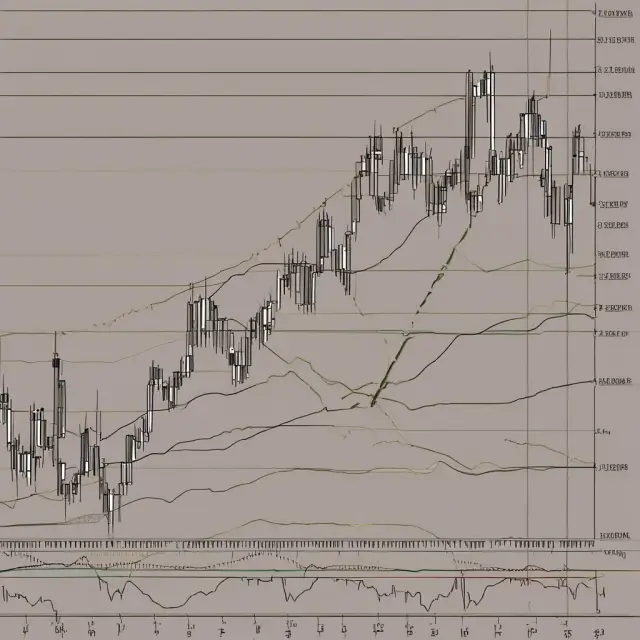
Bearish divergence between price and the QStick Indicator can be seen in Figure 1. In this example, prices reach a new high at point A, but the indicator fails to make a new high and instead forms a lower high (point B). This may indicate that selling pressure is increasing, potentially leading to a downward trend. Traders may use this information to initiate short positions, targeting potential support levels to set stop loss orders and profit targets.
Figure 1: Bearish divergence between price and the Qstick Indicator.
Interpreting Bullish Divergence
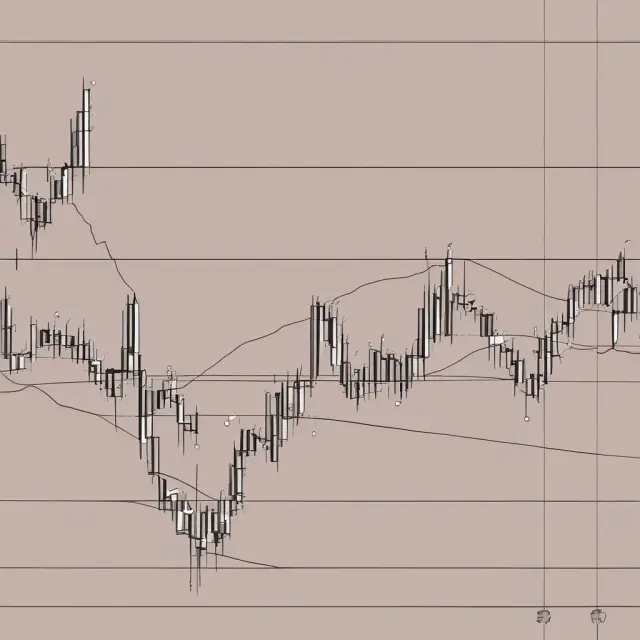
Bullish divergence occurs when price makes lower lows but the indicator displays higher lows (as shown in Figure 2). This may suggest that buying pressure is growing, potentially leading to an uptrend. Traders can take advantage of this information to enter long positions or increase their existing positions, targeting potential resistance levels and setting protective stop loss orders.
Figure 2: Bullish divergence between price and the Qstick Indicator.
In conclusion, understanding divergences between price and technical indicators like the QStick Indicator can offer valuable insights into market trends, helping traders make informed decisions. However, it’s essential to remember that not all divergence signals are accurate, so proper risk management techniques should always be employed when implementing trading strategies based on divergence.
In the next section, we will discuss advanced applications of the Qstick Indicator and its potential limitations.
The Role of the Signal Line in the Qstick Indicator
The QStick indicator is a powerful trend identification tool developed by Tushar Chande to determine the overall price direction based on the difference between closing and opening prices. However, it can be enhanced further by incorporating an additional element – a signal line, which provides valuable information for potential buy or sell signals. Let’s explore the significance of the signal line in the Qstick indicator and its role in generating profitable trades.
The QStick indicator calculates an exponential moving average (EMA) or simple moving average (SMA) of the difference between closing and opening prices. As explained earlier, a rising QStick value indicates that the price is closing higher than it opened, on average. Conversely, a falling QStick value suggests that the price is closing lower than it opened, on average.
While the Qstick indicator itself provides essential trend information, its trading signals can be refined and strengthened by adding a signal line. The signal line in the context of the QStick indicator is an EMA or SMA of the calculated QStick values. This added layer helps filter out noise and false signals generated in volatile markets or choppy price action, allowing you to focus on more reliable trend reversals.
A common period for setting up the signal line is three periods; however, it can be adjusted based on your personal preferences and market conditions. When the Qstick value crosses above the signal line, this indicates that buying pressure has increased significantly, suggesting a potential uptrend. This crossover can serve as a buy signal. Conversely, if the Qstick value falls below the signal line, this signals selling pressure is rising and could indicate an impending downtrend. In this case, it would be prudent to look for shorting opportunities.
Incorporating the signal line enhances the accuracy of the QStick indicator by reducing the occurrence of false signals. It provides a more robust trading strategy for investors and traders as the combined analysis helps in identifying potential trend reversals and momentum shifts with higher confidence.
It’s important to note that while the QStick indicator is an essential tool for trend identification, it’s not infallible. As with all technical indicators, it should be used in conjunction with other confirming signals or fundamental analysis to make informed trading decisions and minimize risk. In the following sections, we will delve deeper into advanced applications of the Qstick indicator and strategies for filtering its signals to improve performance. Stay tuned!

Advanced Applications of the Qstick Indicator
The QStick Indicator has proven its worth as a reliable trend identification tool in various financial markets and trading strategies. While it’s most commonly used for stocks and ETFs, the versatile nature of this indicator allows for its application to other financial instruments like Forex, Futures, or Cryptocurrencies. In this section, we will explore some advanced applications of the QStick Indicator to expand your trading arsenal.
Forex Market: For those involved in the forex market, applying the Qstick Indicator provides an edge when looking for trends in currency pairs. The indicator’s ability to measure buying and selling pressure effectively helps in determining the direction of a trend within volatile currency markets. By analyzing the price movements against various time frames, traders can use the QStick Indicator to confirm or negate existing trends while also identifying potential reversals.
Futures Market: Futures trading requires close monitoring of market trends and volatility levels. The Qstick Indicator proves valuable in this context by helping identify trend direction and momentum shifts within the futures markets. Using the indicator alongside other technical indicators like Relative Strength Index (RSI) or Moving Average Convergence Divergence (MACD), traders can enhance their analysis and decision-making processes in a complex and dynamic market environment.
Cryptocurrency Market: Cryptocurrencies are known for their high volatility, making trend identification challenging. The QStick Indicator offers an edge when analyzing price movements within this market. By using the indicator to identify buying and selling pressure shifts, traders can capitalize on emerging trends or reversals in popular cryptocurrencies like Bitcoin or Ethereum. Moreover, pairing it with other indicators like Bollinger Bands can provide additional confirmation for potential trades.
Using Multiple Time Frames: One effective strategy for advanced QStick Indicator usage is analyzing the indicator across different time frames to enhance trend identification and confirmation. For instance, a 10-day Qstick applied on a weekly chart could confirm an ongoing bullish or bearish trend in a stock or ETF. Similarly, a shorter period like a 5-day Qstick can help identify potential reversals within a shorter time horizon. This multi-timeframe approach provides traders with a clearer perspective on price movements and enables them to make more informed decisions based on the current market conditions.
Applying Filters: Filtering the QStick Indicator signals can improve their reliability, especially during choppy markets or false signals. One common filter involves using multiple time frames, such as the one mentioned above. Another approach includes applying a moving average to the QStick indicator values. For example, a 30-day moving average applied to the Qstick can help smooth out short-term price noise and provide more consistent buy or sell signals. Additionally, incorporating additional technical indicators like RSI or MACD can enhance signal accuracy and improve overall trade performance.
In conclusion, the QStick Indicator is a powerful tool for trend identification and momentum analysis in various financial markets. By exploring advanced applications of this indicator, traders and investors can expand their understanding and adapt it to diverse trading strategies. From Forex and Futures to Cryptocurrencies, the versatile nature of the Qstick Indicator makes it an essential addition to any technical analysis toolkit.

FAQs about the QStick Indicator
The QStick Indicator is a technical analysis tool developed by Tushar Chande to identify trends based on the relationship between closing and opening prices over an ‘n’ period. The indicator can generate buy and sell signals through zero-line or signal-line crossovers. In this section, we will answer some frequently asked questions (FAQs) about the QStick Indicator, its calculation, interpretation, and usage.
What is the purpose of the QStick Indicator?
The primary objective of the QStick Indicator is to measure buying and selling pressure by calculating a moving average of the difference between closing and opening prices over a specified number of periods. It aims to provide traders with information about the overall trend direction, generating buy and sell signals based on zero-line or signal-line crossovers.
How do I calculate the QStick Indicator?
- Determine the ‘n’ period for your moving average (EMA or SMA)
- Calculate the difference between the closing price and opening price for each period
- Apply an EMA or SMA to the calculated differences
- If desired, add a simple moving average of QStick calculations as a signal line
What does a rising QStick Indicator tell me?
A rising QStick Indicator signals that the closing prices are generally higher than the opening prices on average, indicating increasing buying pressure and potentially bullish trending. A falling QStick Indicator suggests the opposite – declining buying pressure and potential bearish trends.
What is the difference between the QStick Indicator and Rate of Change (ROC) indicator?
Both indicators aim to measure price direction, but they differ in their calculations:
- The QStick Indicator takes an average of differences between closing and opening prices over a specific period.
- In contrast, the ROC indicator calculates the percentage change between the current price and the previous ‘n’ periods’ price.
What are some limitations of using the QStick Indicator?
- The QStick Indicator only uses historical data, which may not be inherently predictive, and its movements typically lag behind actual price changes.
- It can generate anomalies when there are large price gaps but minimal intraday price action. This may cause divergences between the price and indicator.
- The signals generated by the QStick Indicator might not always be ideal, requiring additional filters to improve their effectiveness.
- In choppy markets, the indicator may generate numerous false signals due to frequent zero-line or signal-line crossovers.
 Next entry · No. 4,189Understanding Quarter-to-Date (QTD): An Essential Analysis Tool for Institutional Investors
See also
-
 No. 4,911
27 Jul 2025
20 min
A Comprehensive Guide to Technical Analysis: Understanding Chart Patterns, Indicators, and Strategies
Finance Policy
No. 4,911
27 Jul 2025
20 min
A Comprehensive Guide to Technical Analysis: Understanding Chart Patterns, Indicators, and Strategies
Finance Policy -
 No. 3,020
22 Feb 2025
22 min
Understanding Low Volume Pullbacks in Finance and Investment
Business Finance
No. 3,020
22 Feb 2025
22 min
Understanding Low Volume Pullbacks in Finance and Investment
Business Finance -
 No. 2,718
29 Jan 2025
17 min
Understanding the Klinger Oscillator: A Powerful Technical Indicator for Trend Identification and Reversal Signals
Financial Data Analysis
No. 2,718
29 Jan 2025
17 min
Understanding the Klinger Oscillator: A Powerful Technical Indicator for Trend Identification and Reversal Signals
Financial Data Analysis -
 No. 2,286
25 Dec 2024
19 min
Understanding and Interpreting the Ichimoku Kinko Hyo Technical Indicator
Market Trends
No. 2,286
25 Dec 2024
19 min
Understanding and Interpreting the Ichimoku Kinko Hyo Technical Indicator
Market Trends -
 No. 4,916
27 Jul 2025
22 min
Understanding Technical Indicators: A Comprehensive Guide for Institutional Investors
Business Finance
No. 4,916
27 Jul 2025
22 min
Understanding Technical Indicators: A Comprehensive Guide for Institutional Investors
Business Finance -
 No. 4,752
14 Jul 2025
16 min
Understanding the Stochastic Oscillator: A Momentum Indicator for Overbought and Oversold Conditions
Financial Tools
No. 4,752
14 Jul 2025
16 min
Understanding the Stochastic Oscillator: A Momentum Indicator for Overbought and Oversold Conditions
Financial Tools