Understanding Wall Street: A Comprehensive Guide for Institutional Investors

Get a comprehensive understanding of Wall Street's history, role in finance, and influence on society. Learn about the New York Stock Exchange, key figures…
Introduction to Wall Street
Wall Street is an iconic name synonymous with finance and investment. It’s a street located in Lower Manhattan, New York City, where some of the world’s largest financial institutions have historically set up their headquarters. Although the globalization and digitization of finance have led to an increase in remote work and dispersed offices across the United States, Wall Street remains a symbol of the financial industry.
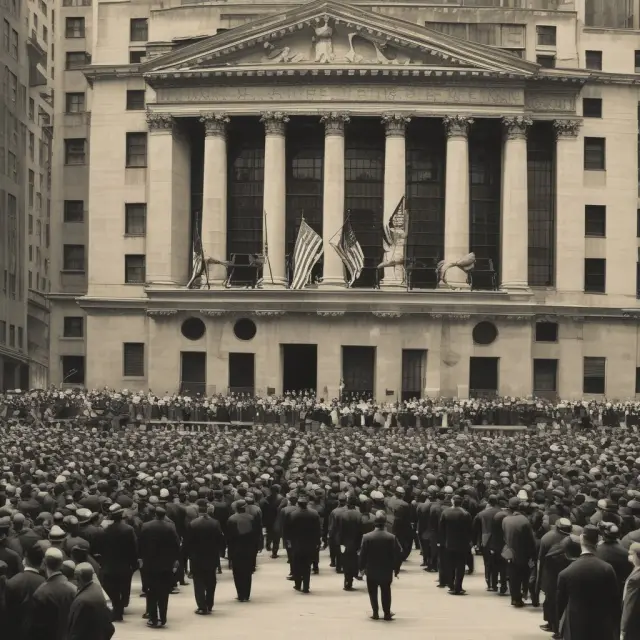
The history of Wall Street dates back to its Dutch roots when colonists built a wall for protection against the British and Native Americans. Over time, it became a hub for trade due to its strategic location near New York’s ports. In 1792, the Buttonwood Agreement was signed by 24 brokers and merchants on Wall Street, marking the beginning of organized securities trading in the United States. The NYSE, located at the heart of Wall Street, is now home to major stock exchanges, banks, brokerages, and financial services firms that contribute significantly to the US economy and employ hundreds of thousands of people.
Wall Street is a global economic powerhouse with cultural influences extending beyond finance. Movies, TV shows, books, and art have portrayed its allure as an exciting, wealthy, and powerful lifestyle. However, it also bears negative connotations, representing greed and unscrupulous behavior during times of economic downturns.
Understanding Wall Street’s history, significance, and role in the financial industry is essential for institutional investors seeking to navigate this complex ecosystem. This section aims to provide a comprehensive introduction to Wall Street, diving into its historical origins, the New York Stock Exchange, and its impact on society and the economy.
History of Wall Street: Rooted in Trade and Trading
The history of Wall Street is closely intertwined with the history of New York City. In 1653, Dutch colonists built a wall to protect themselves from British intruders and Native Americans, marking the beginning of what would later become Wall Street. The location was ideal due to its proximity to the Hudson River and New York Harbor, making it a natural hub for trade.
Wall Street’s significance in finance began with the Buttonwood Agreement, signed on May 17, 1792, by 24 brokers and merchants gathered under a buttonwood tree near 68 Wall Street. This agreement laid the foundation for organized securities trading in the United States and eventually led to the formation of the New York Stock Exchange (NYSE) in 1817.
The New York Stock Exchange: The Heart of Wall Street
Founded on April 14, 1817, the NYSE is the world’s oldest continuous stock exchange and the largest equities-based exchange globally. It began as a simple gathering place for brokers to trade stocks representing companies like the Bank of New York and war bonds. Today, it lists some of the biggest corporations, including Amazon, Google, Apple, and Exxon, and employs thousands of people in various roles.
The NYSE’s influence extends beyond its headquarters on Wall Street, shaping the US and global economy through its role as a marketplace for companies to raise capital and investor sentiment indicators like the Dow Jones Industrial Average (DJIA) and Standard & Poor’s 500 Index (S&P 500).
Wall Street’s Impact on Society: Economic and Cultural Significance
Wall Street is not just an economic powerhouse; it also has significant cultural influences. The financial district in Lower Manhattan continues to attract visitors from around the world, inspiring movies, TV shows, books, and art that portray the excitement, wealth, and power associated with Wall Street.
However, this symbol of financial prowess is not without controversy. During times of economic turmoil, such as the 2008 global financial crisis, Wall Street has been criticized for representing greed and unscrupulous behavior that can negatively impact Main Street and individual investors. Despite these criticisms, Wall Street remains an essential component of the US economy and a source of fascination for many.
In conclusion, understanding the history and significance of Wall Street is crucial for institutional investors seeking to navigate the complex world of finance and investment. By exploring its origins, the NYSE’s role as the heart of Wall Street, and its economic and cultural impact, we gain valuable insights into this powerful financial ecosystem.

History of Wall Street
Wall Street, a street in New York City’s Financial District, is an integral part of the global financial industry. Its history dates back to the Dutch colonial period when settlers built a wall for protection from enemies (hence its name). Over time, Wall Street became synonymous with finance and investing due to the presence of numerous financial institutions based there.
The origins of Wall Street as a hub for stock trading began in 1792 with the signing of the Buttonwood Agreement by 24 brokers and merchants under a buttonwood tree on Wall Street. This agreement established the first formal securities exchange, setting common commission rates and laying the groundwork for the New York Stock Exchange (NYSE).
The NYSE grew significantly over time, moving to various locations before settling at its iconic address between Broad and Wall Streets in 1865. Surrounding Wall Street were other major exchanges such as the New York Mercantile Exchange, New York Board of Trade, New York Futures Exchange (NYFE), and American Stock Exchange, now known as NYSE American Options. Financial giants like House of Morgan also set up shop nearby.
As New York City surpassed London to become the world’s leading financial center in the late 19th and early 20th centuries, Wall Street became a symbol of wealth, power, and often, controversy. Despite its reputation for elitism and perceived conflict with Main Street (individual investors and small businesses), Wall Street remains a vital part of the American and global economy.
Over the centuries, significant events on and around Wall Street have shaped not only the financial industry but also society at large. The Wall Street Crash in 1929 led to the Great Depression, while other events like the Black Monday crash (1987), dot-com bubble (early 2000s), and the 2008 global financial crisis highlighted the power of Wall Street’s influence.
Today, Wall Street continues to evolve, adapting to technological advancements and regulatory changes. Despite challenges, its role as a global center for finance remains undisputed.
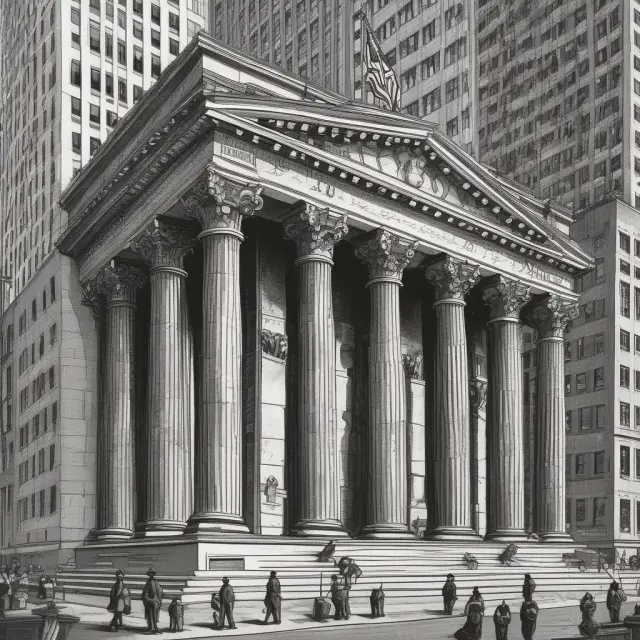
Wall Street Today: Companies and Institutions
Wall Street has evolved significantly since its early days as a center of trade in colonial New York. Today, Wall Street symbolizes not just the financial industry but also the global economy at large. This section will explore some of the major companies, institutions, stock exchanges, and organizations that have established a presence on or around Wall Street and play significant roles within it.
Major Financial Institutions
Several of the world’s largest financial institutions call Wall Street home, including:
- JPMorgan Chase & Co.: The multinational banking and financial services company is the largest bank in the United States by total assets and has its corporate headquarters at 270 Park Avenue, New York City. It was formed in 2000 from the merger of J.P. Morgan & Co. and Chase Manhattan Corporation.
- Goldman Sachs: The global investment bank and financial services company is headquartered at 85 Broad Street in New York City. Established in 1869, it has a rich history as an underwriter for government bonds during World War I and became a leading player in the securitization of mortgages that fueled the housing market boom before the 2008 financial crisis.
- Morgan Stanley: Another global financial services firm, Morgan Stanley is headquartered at 1585 Broadway in New York City. Founded in 1935 as a spin-off from J.P. Morgan & Co., it is one of the few remaining investment banks to have a presence on both Wall Street and the NYSE floor.
Stock Exchanges
The two major stock exchanges based in New York City, the New York Stock Exchange (NYSE) and Nasdaq, are crucial components of Wall Street’s financial ecosystem:
- The New York Stock Exchange (NYSE): Founded in 1792, the NYSE is the world’s largest stock exchange by market capitalization. It serves as a primary listing venue for many large-cap and well-known companies across various industries.
- Nasdaq: Initially founded as the National Association of Securities Dealers Automated Quotations in 1971, Nasdaq operates a global electronic system for buying and selling securities. It is home to many technology and growth companies, with more than 3,000 listed.
Significant Organizations
Several prominent organizations are based on or around Wall Street:
- Federal Reserve Bank of New York: The New York Federal Reserve serves as one of the twelve regional banks of the Federal Reserve System and plays a vital role in implementing monetary policy for the United States. It is headquartered at 33 Liberty Street, New York City.
- Securities and Exchange Commission (SEC): Established in 1934, the SEC is an independent federal agency responsible for enforcing securities laws, regulating the stock market, and protecting investors. It has its headquarters at 100 F Street, NW, Washington, D.C., but maintains an office in New York City at 120 Broadway.
The Impact of Wall Street on Society and the Economy
Wall Street’s reach extends far beyond the financial sector. Its influence can be seen in media, entertainment, and art:
- Movies: Films like “Wall Street,” “Boiler Room,” and “Margin Call” have captured the public imagination by showcasing the fast-paced lives of Wall Street professionals and their power struggles.
- Books: Bestsellers like “Liar’s Poker,” “Barbarians at the Gate,” and “The Big Short” offer insight into the inner workings of Wall Street and its impact on society.
- Art: Iconic works such as J.M.W. Turner’s “The Fighting Temeraire” and Edward Hopper’s “Nighthawks” have captured the essence of Wall Street, both historically and figuratively.
In conclusion, Wall Street represents more than just a street in lower Manhattan—it symbolizes the financial industry and the global economy. This section has explored some of the major companies, institutions, stock exchanges, and organizations that call Wall Street home and have shaped its history and impact on society. Understanding the role these entities play can provide valuable context for both institutional investors and those interested in the world of finance.
Stay tuned for our next section where we will discuss the heart of Wall Street: The New York Stock Exchange (NYSE).

The NYSE: The Heart of Wall Street
As a symbol of American finance and investment, the New York Stock Exchange (NYSE) holds significant cultural and historical importance. Established in 1792 when 24 brokers gathered under a buttonwood tree to trade securities, the NYSE has since grown into the largest equities-based exchange globally. Let’s delve deeper into this influential financial institution located on Wall Street.
The NYSE: A Brief History
The New York Stock Exchange’s origins date back to 1792 when the Buttonwood Agreement was signed. This pivotal event marked the beginning of organized securities trading in the United States. The agreement established a common commission rate for brokers and dealers, which ultimately led to the establishment of the NYSE in 1817. Since then, the NYSE has experienced several transformations and expansions. For instance, it moved to its current location at the intersection of Broad Street and Wall Street in 1903 and underwent significant technological advancements over the years.
The Role of the NYSE in Today’s Economy
As a critical component of Wall Street, the NYSE serves as a leading global platform for trading securities. Companies from various sectors list their stocks on the exchange to access capital and attract investors. The exchange facilitates transactions between buyers and sellers, providing transparency, liquidity, and an efficient marketplace. Additionally, it sets essential benchmarks like the Dow Jones Industrial Average (DJIA) and the S&P 500 Index, which guide investment strategies worldwide.
Key Players on the NYSE
Some of the world’s most influential financial institutions and iconic companies call the NYSE home. Notable names include Goldman Sachs, JPMorgan Chase, IBM, Microsoft, Apple, and ExxonMobil, among others. These corporations represent a diverse range of industries and sectors, underlining the exchange’s significance in the global economy.
The Impact of the NYSE on Wall Street and Beyond
The NYSE plays a vital role in shaping the financial landscape, not only for Wall Street but also for the broader society. Its influence extends far beyond securities trading as it often sets trends that reverberate through industries, markets, and economies. The exchange’s historical significance is further emphasized by its status as a barometer of economic health and investor sentiment.
A Look into the Future
As the financial industry evolves, so does the NYSE. It continues to innovate and adapt to emerging technologies, such as AI, blockchain, and automation. By staying at the forefront of these developments, the NYSE ensures its continued relevance and influence in an increasingly competitive global marketplace.
In conclusion, the New York Stock Exchange (NYSE) represents a crucial element of Wall Street and the financial world at large. Its rich history, influential role in securities trading, and status as a trendsetter have solidified its position as a symbol of American finance and investment.
Impact on Economy and Society
Wall Street’s cultural and economic significance stretches far beyond its physical location in lower Manhattan. The term “Wall Street” has come to symbolize the financial industry and the players within it, influencing both the U.S. economy and society at large.
Historically, Wall Street served as a hub for banking and investment firms, with many prominent institutions establishing their headquarters on or near the iconic street. While this geographic concentration has lessened due to globalization and digitization, Wall Street remains synonymous with the financial sector.
Economic Importance
The United States, being the world’s largest economy, is home to some of the most significant financial institutions. The Financial District in New York City, which houses the New York Stock Exchange (NYSE), is a critical component of this economic powerhouse. The NYSE, one of the world’s largest stock exchanges, lists numerous prominent companies such as Amazon, Google, Apple, and Exxon. Wall Street’s impact extends beyond the U.S., with numerous financial firms conducting business on an international scale, extending loans, and financing major projects.
Cultural Significance
The influence of Wall Street transcends economics, shaping popular culture through movies, TV shows, books, and more. The allure of Wall Street’s fast-paced lifestyle and high stakes has led to films like “Wall Street,” “Margin Call,” “Boiler Room,” and “Barbarians at the Gate.” These media depictions often portray wealth and power, creating an intriguing image in the collective consciousness.
Key Figures
Iconic figures from Wall Street have left indelible marks on both the financial industry and society. Warren Buffett, Jamie Dimon, Carl Icahn, Bernie Madoff, George Soros, and Larry Fink are just a few names that have become synonymous with the street’s reputation for power, wealth, and influence.
Impact on Society
The intersection of Wall Street and society is complex and multifaceted. During times of economic turmoil, such as the 2008 financial crisis, Wall Street has been criticized for unscrupulous behavior and perceived greed. However, its impact on the global economy, from creating jobs to funding infrastructure projects, cannot be ignored.
Historical Events
Events that occurred on or around Wall Street have shaped both the investment industry and broader society. The 1889 founding of The Wall Street Journal, the country’s first financial newspaper, is one such example. This influential publication has played a critical role in shaping the narrative surrounding Wall Street for generations. Other significant events include the establishment of the NYSE in 1792 and the Black Tuesday crash of 1929.
In conclusion, understanding Wall Street’s historical significance, its current role, and its impact on society is essential for anyone interested in finance or investing. Whether it’s through movies, media, or personal investment, the allure and influence of Wall Street continue to captivate and inspire.

Wall Street vs. Main Street: Perception vs. Reality
The term “Wall Street” is often used interchangeably with the broader financial industry, yet it holds a specific meaning that distinguishes it from other financial sectors, particularly those that serve individual investors and small businesses. The dichotomy between Wall Street and Main Street stems from their respective focuses, motivations, and interests. Understanding this distinction can help investors make more informed decisions.
Historically, Wall Street has been the epicenter of major financial institutions, brokerages, investment banks, and stock exchanges such as the New York Stock Exchange (NYSE). It is where large corporations and institutional investors come to raise capital, issue securities, and trade stocks and bonds. The term “Wall Street” represents an exclusive world of high finance, characterized by its rapid pace, complex financial instruments, and substantial stakes.
In contrast, Main Street refers to the smaller businesses and individual investors outside Wall Street’s inner circle. These entities focus on managing their day-to-day operations, building a customer base, and generating revenue rather than trading securities for profit or issuing debt or equity to institutional investors. Main Street represents the broader economy where the majority of Americans work and live.
However, it is essential to recognize that the relationship between Wall Street and Main Street is not as adversarial as it may seem. Institutional investors and individual investors are not mutually exclusive groups; they often overlap. Furthermore, institutional investors play a crucial role in financing and supporting businesses on Main Street by providing capital, expertise, and market access.
The misconception of a clear-cut divide between Wall Street and Main Street can create misunderstandings about the financial industry’s role and its impact on everyday people and businesses. In reality, both entities are interconnected and influence each other in significant ways. By recognizing this interdependence, investors can develop a more nuanced understanding of the financial markets and make more informed decisions.
For instance, institutional investors might look to Main Street for investment opportunities. They analyze economic trends, consumer behavior, and company performance to identify promising investments. They then invest in companies that align with their investment objectives and risk tolerance. Institutional investments can lead to increased capital inflows, which in turn may help businesses expand, innovate, and create jobs.
Furthermore, institutional investors serve an essential role as market makers and liquidity providers. By providing continuous buy-and-sell orders for securities, they help ensure the efficient functioning of markets. Institutional participation can also lead to increased transparency and improved reporting standards, which benefits individual investors on Main Street by providing them with better information and more accurate pricing.
The relationship between Wall Street and Main Street is not a new phenomenon. Historically, significant events have highlighted their interconnectedness. For instance, during the 1929 stock market crash, when shares plummeted in value, individual investors on Main Street were affected just as much as institutional investors on Wall Street. Similarly, during the dot-com bubble of the late 1990s, both institutional and individual investors suffered losses.
More recently, the COVID-19 pandemic underscored the interconnectedness between Wall Street and Main Street. Institutional investors responded to the economic downturn by providing support to Main Street businesses through various relief programs such as loans, grants, and investments. In turn, the revival of these businesses contributed to the overall recovery of the economy.
In conclusion, while the terms “Wall Street” and “Main Street” are often used interchangeably or in opposition, it is essential to recognize their interdependence. Wall Street represents the exclusive world of high finance, while Main Street embodies the broader economy where businesses and individuals operate every day. By understanding this relationship, investors can develop a more informed perspective on financial markets and make better-informed decisions.
Keywords: Wall Street, Institutional Investors, NYSE, Financial Markets, High Finance, Individual Investors, Main Street, Interdependence.

Wall Street’s Influence on Movies, Media, and Art
Wall Street is a globally recognized term synonymous with the financial industry, its influence stretching beyond economic significance to cultural impact. Through movies, TV shows, books, and art, Wall Street has captured our collective imagination, often portraying an exhilarating lifestyle filled with wealth, power, and unscrupulous behavior.
Movies: The Silver Screen’s Version of Wall Street
Wall Street has been a popular topic in movies for decades. Some notable examples include Oliver Stone’s “Wall Street” (1987), which introduced the world to Gordon Gekko’s iconic line, “Greed is good.” This film showcased the aggressive, fast-paced lifestyle of Wall Street traders and their ruthless pursuit of profit. Another example is “Margin Call” (2011), a thriller set during the 2008 financial crisis, highlighting the high stakes involved in making critical decisions that can impact millions of investors and even entire economies.
TV Shows: The Small Screen’s Wall Street
Television has also embraced Wall Street as a popular topic. “Billions,” a series created by Brian Koppelman and David Levien, delves into the world of hedge fund managers, their clients, and their conflicts with regulators. It provides an intriguing look at the intricacies and complexities behind high finance and the power struggle between those who have money and those trying to regulate it.
Books: Wall Street Chronicles
From “Liar’s Poker” by Michael Lewis, detailing his experiences as a bond salesman in Salomon Brothers during the 1980s, to “Barbarians at the Gate” by Roger Lowenstein, which tells the story of RJR Nabisco’s leveraged buyout in 1989, Wall Street has provided fertile ground for engaging narratives that have captivated readers around the world.
Art: Interpreting Wall Street Through Creativity
Wall Street’s influence extends to the art world as well. Artists such as Jean-Michel Basquiat, Damien Hirst, and Tom Wesselmann have explored themes related to finance, capitalism, and greed in their works. One famous piece is Basquiat’s “Skull Crown With Cane” (1982), which features a skull wearing a stock market price ticker as a crown and cane. This artwork highlights the perceived power, wealth, and even danger associated with Wall Street.
Conclusion: The Enduring Allure of Wall Street
From its humble beginnings as a Dutch settlement to its current status as a global financial hub, Wall Street has captured our attention and imagination in various ways. Whether it’s through movies like “The Wolf of Wall Street” or books such as “Flash Boys,” the allure of Wall Street continues to captivate us, providing a window into a world filled with wealth, power, and complexity.
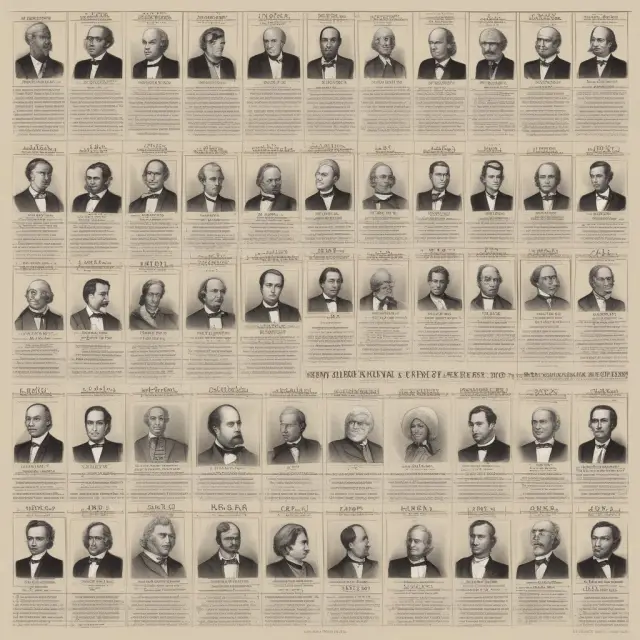
Key Figures and Iconic Events on Wall Street
Wall Street’s rich history is filled with influential figures and iconic events that have shaped the financial industry and left lasting impressions on society. Let us explore some of these landmarks in Wall Street lore.
1. The Buttonwood Agreement (1792)
The origins of organized securities trading can be traced back to 1792 when, under a buttonwood tree at 68 Lower Broadway, New York City, 24 brokers and merchants signed the Buttonwood Agreement. This agreement established the first formal securities exchange in America. The pact created a commission-based trading system, which remains in place today, and set the stage for the creation of the New York Stock Exchange (NYSE).
2. The NYSE: A World Leader
The New York Stock Exchange, founded in 1817 as “The New York Stock & Exchange Board,” is an enduring symbol of Wall Street’s influence on the global economy. Its trading floor, located at the corner of Wall and Broad Streets, has been a hub for financial innovation since its inception. The exchange listed some of America’s first securities, such as war bonds and the stocks of institutions like the Bank of New York. Over time, it grew to become the world’s largest stock exchange by market capitalization.
3. Wall Street Icons: Pioneers, Innovators, and Transformers
Wall Street has been home to a multitude of influential figures who have left their mark on the financial industry. Some of these individuals include:
- Edwin Lefevre, an American journalist and writer known for his 1923 book “Reminiscences of a Stock Operator,” which provided a compelling look into the world of Wall Street trading.
- Jesse Livermore, a stock market speculator often referred to as the “Great Bear” and the “Boy Plunger.” He made—and lost—multiple fortunes throughout his career.
- Warren Buffett, the Oracle of Omaha, is one of the most successful investors in history. He built Berkshire Hathaway into a multibillion-dollar conglomerate and is known for his value investing philosophy.
4. Wall Street’s Infamous Moments: From Panic to Triumph
Wall Street has faced its fair share of challenges, including financial crises and scandals. Some of the most notable events include:
- The Panic of 1907: This was a precursor to the stock market crash in 1929 and was caused by a combination of factors, including overproduction, speculation, and fragile banking systems.
- The Crash of 1929: Known as Black Tuesday, this event marked the end of the Roaring Twenties and led to the Great Depression. The stock market decline began on October 24, 1929, and continued throughout the next day.
- The Savings and Loan Crisis (S&L): This crisis, which lasted from 1986 to 1995, was caused by a combination of mismanagement, poor regulation, and risky investments. The result was an estimated $120 billion in losses for the S&L industry and required a federal bailout.
As Wall Street continues to evolve, its rich history serves as both a reminder of the past and a guide for navigating the future. These influential figures and iconic events have shaped the financial industry, leaving a lasting impact on society.
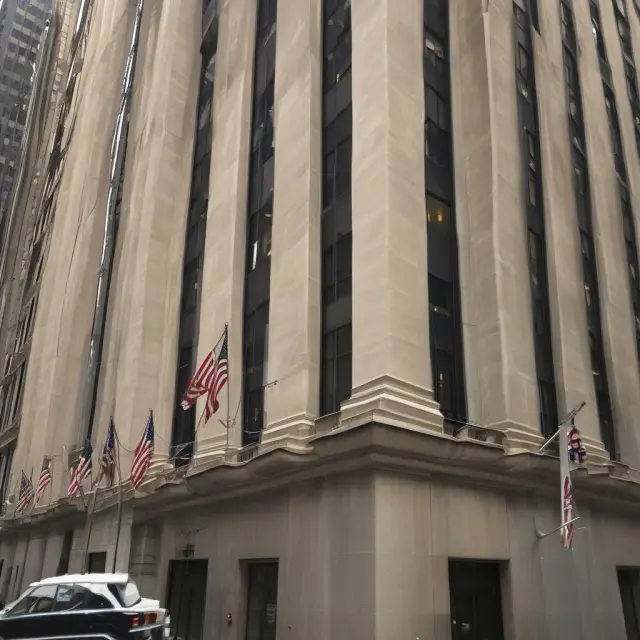
Regulation and Compliance on Wall Street
Maintaining fairness and transparency is crucial within the financial industry. To ensure these principles, regulatory bodies oversee the operations and conduct of various financial institutions and markets on Wall Street. In this section, we delve into the legal frameworks governing Wall Street and discuss compliance measures in place to protect investors and the broader financial system.
The Securities Act of 1933: Paving the Way for Transparency
One of the first major legislative acts following the stock market crash of 1929 was the Securities Act of 1933, also known as the “Truth in Securities” act. This landmark legislation aimed to restore investor confidence by mandating full disclosure of all material information concerning publicly-traded securities offerings. The act requires issuers to provide comprehensive information about their companies and securities being offered for sale, including financial statements, risks, and other important details. By providing this transparency, investors can make informed decisions on investment opportunities.
The Securities Exchange Act of 1934: Establishing the SEC
Building on the foundations laid by the Securities Act of 1933, the Securities Exchange Act of 1934 was enacted to oversee the activities of securities exchanges, broker-dealers, and investment companies. It created the U.S. Securities and Exchange Commission (SEC), a federal agency responsible for implementing and enforcing securities laws. The SEC plays an essential role in regulating Wall Street by setting standards for trading practices, disclosure requirements, and market integrity.
The Sarbanes-Oxley Act of 2002: Bolstering Corporate Governance
In response to accounting scandals like Enron and WorldCom, the Sarbanes-Oxley Act of 2002 was passed, enhancing corporate governance and financial reporting standards. This legislation introduced new requirements for public companies regarding their internal controls over financial reporting (ICFR) to ensure accurate financial statements and prevent fraudulent activities.
Regulatory Bodies: The Key Players in Wall Street Compliance
Several regulatory bodies play a crucial role in monitoring the actions of various financial institutions on Wall Street to maintain market stability and investor protection. Some of these organizations include:
- The Financial Industry Regulatory Authority (FINRA) – FINRA is a non-government organization that regulates member brokerage firms and exchange markets. Its primary mission is to protect investors and ensure market integrity through its rulemaking, enforcement, and educational initiatives.
- The Commodity Futures Trading Commission (CFTC) – Established in 1974, the CFTC is responsible for regulating commodities futures trading markets in the U.S. It enforces rules to prevent fraudulent activities, manipulation, and other unfair practices.
- The Federal Deposit Insurance Corporation (FDIC) – While not strictly a Wall Street regulatory body, the FDIC plays an important role by insuring deposits in banks and saving institutions that are on the brink of failure to maintain stability within the financial system.
- The Office of the Comptroller of the Currency (OCC) – The OCC charters, regulates, and supervises all national banks and federal savings associations. It ensures these institutions comply with applicable laws, regulations, and risk management practices.
- The Federal Reserve System – As the central bank of the United States, the Federal Reserve System conducts monetary policy to maintain price stability and maximum employment. It also regulates and supervises banks and financial institutions within its jurisdiction.
- The National Association of Securities Dealers Automated Quotations (NASDAQ) – NASDAQ is a stock exchange that sets the rules for its member firms, ensuring they comply with securities laws and regulations. It also regulates trading practices to maintain fairness and transparency within its markets.
Conclusion
Regulation and compliance are essential aspects of maintaining trust, stability, and fairness in the financial industry on Wall Street. Various regulatory bodies have been established to ensure that financial institutions adhere to strict guidelines, disclose necessary information, and maintain market integrity. The SEC, FINRA, CFTC, FDIC, OCC, and the Federal Reserve System are just a few of the key organizations that oversee the operations of Wall Street entities. Their efforts help protect investors and preserve the long-term health of the financial markets.
FAQs for Institutional Investors
What is the role of the SEC in regulating Wall Street?
Answer: The SEC is a federal agency responsible for enforcing securities laws, setting trading practices, and maintaining market integrity on Wall Street through rulemaking, enforcement, and educational initiatives.
How does the Sarbanes-Oxley Act impact financial reporting?
Answer: The Sarbanes-Oxley Act introduced new requirements for public companies to have robust internal controls over financial reporting (ICFR) to ensure accurate financial statements and prevent fraudulent activities.
Which regulatory body oversees broker-dealers?
Answer: FINRA is the non-government organization responsible for regulating member brokerage firms and exchange markets, ensuring they comply with securities laws and maintain fair trading practices.
What is the function of the CFTC in the financial industry?
Answer: The CFTC regulates commodities futures trading markets in the U.S., enforcing rules to prevent fraudulent activities, manipulation, and other unfair practices within these markets.

Wall Street’s Future: Challenges and Opportunities
As we delve deeper into the 21st century, Wall Street is facing numerous challenges and opportunities that could redefine the financial landscape. The pace of technological advancements and regulatory changes has been accelerating at an unprecedented rate, forcing traditional players to adapt or perish. In this section, we’ll explore some of these trends and discuss their potential impact on institutional investors.
Digital Transformation: The Rise of Fintech and AI
The financial sector is being transformed by technology. Digital platforms, mobile applications, and artificial intelligence (AI) are disrupting traditional business models, creating new opportunities for growth. Fintech firms, in particular, have been making waves with their innovative solutions to the challenges faced by both retail and institutional investors. From robo-advisors that use algorithms to manage portfolios to blockchain technology that enables secure, transparent transactions, digital innovation is changing the game.
AI’s role in financial services is becoming increasingly prominent, particularly in risk management, asset allocation, and trading strategies. Its ability to analyze vast amounts of data and identify patterns that would be impossible for humans to detect makes it an indispensable tool for institutional investors. However, this reliance on technology also raises questions about the future role of human analysts, traders, and advisors.
Regulatory Changes: Navigating the New Landscape
With the financial sector undergoing such rapid change, regulators are struggling to keep up. While some view increased regulation as necessary to protect consumers and ensure market stability, others argue that it stifles innovation and competition. In recent years, we’ve seen a push towards greater transparency, standardization, and accountability in financial markets. This trend is expected to continue with the implementation of regulations like the European Union’s Markets in Crypto-Assets (MiCA) and the U.S.’s Digital Asset Market Structure (DAMS) Act.
Brexit: Impact on Wall Street
The United Kingdom’s decision to leave the European Union in 2016 has had far-reaching consequences for financial markets, particularly for those based in London and New York. With the UK no longer part of the EU single market, banks and other financial institutions have had to reassess their strategies and adapt to new regulations. Some firms have already relocated parts of their operations to continental Europe to maintain access to the EU market. This trend is likely to continue, with estimates suggesting that up to 7,000 jobs could be moved from London to New York in the next few years.
The Future of Wall Street: Challenges and Opportunities
Despite these challenges, there are also numerous opportunities for institutional investors on Wall Street. The digital transformation is creating new markets and platforms that offer unprecedented access to information, analytics, and trading tools. Moreover, regulatory changes could lead to increased transparency and standardization, making it easier for investors to compare performance across different firms and strategies.
Additionally, the ongoing trend towards passive investing has created a significant demand for low-cost index funds and exchange-traded funds (ETFs). Institutional investors are increasingly turning to these vehicles to diversify their portfolios and gain exposure to various asset classes. This shift could further disrupt traditional active management models, forcing firms to adapt or risk losing market share.
In conclusion, Wall Street’s future is uncertain but full of potential. While the challenges posed by digital transformation, regulatory changes, and geopolitical events are significant, they also present opportunities for institutional investors willing to embrace innovation and adapt to the new landscape. As we move forward, it will be essential for investors to stay informed about these trends and understand how they can best position themselves to capitalize on emerging opportunities while mitigating risks.
FAQ about Wall Street for Institutional Investors
Institutional investors, particularly those new to the world of finance and investing on Wall Street, may have several questions regarding the inner workings, significance, and impact of Wall Street on their portfolios. In this FAQ section, we aim to address some common queries related to Wall Street and its relevance for institutional investors.
Question 1: What is Wall Street, and why is it called so?
Answer: Wall Street is a street located in the lower Manhattan area of New York City synonymous with the financial industry. Historically, Wall Street has been home to many major financial institutions, brokerages, investment banks, and the New York Stock Exchange (NYSE). The name “Wall Street” dates back to the Dutch colonial period when settlers built a wooden wall there to protect against invasions from the British and Native Americans.
Question 2: What is the significance of Wall Street for institutional investors?
Answer: Wall Street represents the heart of the U.S. financial system and global markets, offering numerous opportunities and risks for institutional investors. It is home to major financial institutions and exchanges like the NYSE and Nasdaq, where many large-cap companies list their stocks for trading. Understanding Wall Street’s operations can provide valuable insights into investment trends, regulatory frameworks, and economic factors that impact institutional portfolios.
Question 3: What are some major financial institutions located on or around Wall Street?
Answer: Major financial institutions based on or near Wall Street include JPMorgan Chase & Co., Goldman Sachs, Morgan Stanley, Citigroup, BlackRock, and the Federal Reserve Bank of New York. These institutions play critical roles in areas like asset management, investment banking, securities trading, and monetary policy.
Question 4: What impact does Wall Street have on society?
Answer: Wall Street not only shapes financial markets but also has significant cultural influence through movies, books, TV shows, and the media. Its importance extends beyond the financial industry as it influences individual investors (Main Street) by providing investment opportunities and setting market trends that can impact their portfolios.
Question 5: How is Wall Street’s role evolving with digitization?
Answer: With the rise of digital platforms, fintech companies, and automated trading systems, the traditional concept of Wall Street as a physical location for financial institutions is changing. However, its importance remains relevant as a symbol of the broader financial markets and an indicator of global economic trends.
Question 6: What role does the NYSE play on Wall Street?
Answer: The New York Stock Exchange (NYSE) is the largest equities-based exchange in the world and serves as the primary venue for trading securities between buyers and sellers. It has historical significance, given its founding in 1792, and continues to shape U.S. financial markets and influence global economic trends.
Question 7: What is Wall Street’s role during times of economic uncertainty?
Answer: During periods of economic turmoil or crisis, such as the 2008 financial crisis, Wall Street can be a scapegoat for societal frustrations. However, it also plays an essential role in helping to stabilize markets and provide liquidity through bailouts, government intervention, and innovative financial solutions.
Question 8: How does regulation impact Wall Street?
Answer: Regulation is crucial for maintaining market integrity, investor protection, and fairness in the financial system. Institutions operating on Wall Street must adhere to various regulatory frameworks such as the Securities Act of 1933, the Securities Exchange Act of 1934, and the Dodd-Frank Act. Understanding these regulations can help institutional investors navigate the complex web of rules governing financial markets.
By addressing these frequently asked questions, this section aims to provide valuable insights for institutional investors looking to understand the significance of Wall Street and its role in shaping their portfolios and the broader financial landscape.
 Next entry · No. 5,594Understanding the Walmart Effect: Impact on Businesses, Suppliers, and Consumers
See also
-
 No. 4,514
25 Jun 2025
21 min
Rogue Traders: The Dark Side of Wall Street
Business Finance
No. 4,514
25 Jun 2025
21 min
Rogue Traders: The Dark Side of Wall Street
Business Finance -
 No. 5,916
18 Oct 2025
18 min
Understanding Zombie Debt: A Guide for Professional Investors
Business Finance
No. 5,916
18 Oct 2025
18 min
Understanding Zombie Debt: A Guide for Professional Investors
Business Finance -
 No. 5,908
17 Oct 2025
26 min
Understanding Zero Plus Ticks in Finance and Investment: An Essential Guide for Institutional Investors
Business Finance
No. 5,908
17 Oct 2025
26 min
Understanding Zero Plus Ticks in Finance and Investment: An Essential Guide for Institutional Investors
Business Finance -
 No. 5,890
16 Oct 2025
23 min
Understanding Zero-Coupon Inflation Swaps: A Comprehensive Guide for Institutional Investors
Business Finance
No. 5,890
16 Oct 2025
23 min
Understanding Zero-Coupon Inflation Swaps: A Comprehensive Guide for Institutional Investors
Business Finance -
 No. 5,887
16 Oct 2025
22 min
Zero-Bound Interest Rate: Understanding How Central Banks Can Push Rates Below Zero
Business Finance
No. 5,887
16 Oct 2025
22 min
Zero-Bound Interest Rate: Understanding How Central Banks Can Push Rates Below Zero
Business Finance -
 No. 5,863
14 Oct 2025
21 min
Understanding Yield Maintenance: A Prepayment Penalty for Institutional Investors
Business Finance
No. 5,863
14 Oct 2025
21 min
Understanding Yield Maintenance: A Prepayment Penalty for Institutional Investors
Business Finance