Understanding West Texas Intermediate (WTI): The Key Oil Benchmark for North America

Understand the significance and importance of West Texas Intermediate (WTI) as a leading North American oil benchmark. Learn about its origins, pricing…
What is West Texas Intermediate (WTI) Crude Oil?
West Texas Intermediate (WTI) is a specific grade of light, sweet crude oil that holds significant importance in the North American market as one of the primary benchmarks for oil pricing. With sulfur content ranging between 0.24% and 0.34%, WTI is classified as a high-quality oil due to its low density, making it easy to refine. As the underlying commodity of New York Mercantile Exchange’s (NYMEX) oil futures contract, WTI plays a crucial role in determining global crude oil prices.
Origins and Significance
WTI is predominantly sourced from Texas and transported through pipelines to the Midwest and the Gulf of Mexico for refining purposes. The primary delivery point for physical exchange and price settlement for WTI is Cushing, Oklahoma, where it serves as a major storage and transportation hub. This crucial hub consists of 35 pipelines (20 inbound and 15 outbound) and 16 storage terminals with 90 million barrels of capacity—accounting for approximately 13% of US oil storage. The Cushing hub, often referred to as “The Pipeline Crossroads of the World,” is essential for WTI’s role in global oil pricing.
As a Global Oil Benchmark
WTI competes with Brent crude as one of the leading global benchmarks for oil pricing. While two-thirds of the world’s oil contracts utilize Brent as a benchmark, both WTI and Brent are high-quality oils in their own right. Their primary difference lies in their sulfur content: WTI has a sulfur content between 0.24% and 0.34%, whereas Brent falls between 0.35% to 0.40%. The lower the sulfur content, the easier it is to refine. A sulfur content below 0.5% is considered sweet, making WTI an ideal choice for gasoline production and Brent suitable for diesel.
While these crude oil varieties can often trade at comparable price points, their individual supply and demand markets dictate their respective prices. With the US shale boom resulting in increased WTI production, the price of WTI generally trades at a discount to Brent due to the added transportation costs for shipping WTI overseas to compete with Brent crude pricing.
In conclusion, West Texas Intermediate (WTI) is an essential component of global oil markets as one of the primary benchmarks for North American crude oils. Its significance stems from its high quality and ease of refinement, which results in a consistent demand for this light, sweet crude oil in both local and international markets.

Sources and Origins of WTI Crude Oil
West Texas Intermediate (WTI) is a high-quality, light sweet crude oil that serves as the primary benchmark for pricing crude oil in North America. Its origins can be traced back to the Permian Basin, primarily in Texas, making it an essential oil grade both domestically and internationally. The production of WTI is characterized by its low sulfur content (0.24-0.34%), which renders it easier to refine than many other crude oils. This light and sweet crude oil has become a significant global benchmark due to its high quality, making it essential for understanding the dynamics of the oil market.
The production process for WTI begins with extraction from inland Texas sources before being transported through pipelines towards refineries in Midwest and Gulf of Mexico regions. Cushing, Oklahoma, serves as the primary delivery point for physical exchange and price settlement for WTI crude oil. The Cushing hub acts as a crucial crossroads for 35 pipelines (20 inbound and 15 outbound) and 16 storage terminals, with an impressive 90 million barrels of storage capacity, representing about 13% of the US oil storage.
Cushing’s significance stems from its strategic location as a vital hub for pipelines and refineries. The inbound and outbound pipeline capacity amounts to 6.5 million barrels per day, which is an essential factor influencing WTI pricing. The unique nature of Cushing as the primary delivery point allows WTI crude oil producers to hedge against price volatility by selling futures contracts on the New York Mercantile Exchange (NYMEX), providing a safety net for producers and helping maintain market stability.
The accessibility of WTI from the inland Texas sources offers various benefits over other crudes, making it an attractive choice for refineries. Refineries in the Midwest and Gulf of Mexico regions can efficiently process WTI due to its low sulfur content, which is vital for producing high-value gasoline and diesel products.
In conclusion, WTI crude oil, originating from Texas sources, has evolved into a primary global benchmark due to its quality and importance within the North American oil market. Its ease of refining and transportation, along with its significance as the underlying commodity for NYMEX’s oil futures contract, further underscores its importance in the industry. Understanding WTI’s origins and production process provides valuable insight into its role as a crucial component within the global oil market.
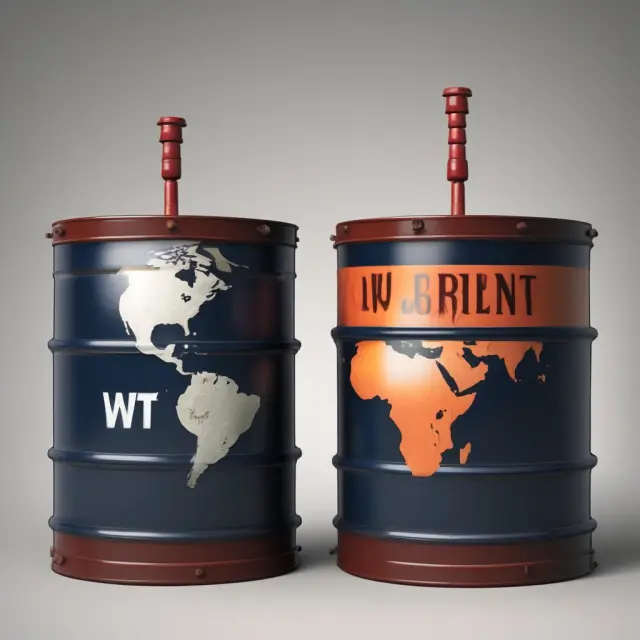
WTI as a Global Oil Benchmark: Comparison to Brent Crude
West Texas Intermediate (WTI) and Brent crude oil are two major benchmarks that play significant roles in setting global oil prices. While both oils have their unique attributes, it is essential to understand the differences between them to grasp their importance and relevance in the oil market.
First, let’s establish some basic definitions. WTI represents West Texas Intermediate, a grade of crude oil sourced primarily from Texas. In contrast, Brent Crude originates from the North Sea offshore drilling locations. Both benchmarks are light sweet oils, which means they have low sulfur content and are easy to refine. However, their market demand, pricing, and quality differ significantly.
WTI serves as the underlying commodity for New York Mercantile Exchange’s (NYMEX) oil futures contract and is considered a high-quality oil due to its lower sulfur content compared to other crude oils. Its significance lies in North America since it is sourced primarily from Texas and travels through pipelines for refining in the Midwest and Gulf of Mexico. The delivery point for physical exchange and price settlement for WTI is Cushing, Oklahoma, which functions as a storage and transportation hub and accounts for 13% of U.S. oil storage.
On the other hand, Brent Crude is considered the global benchmark for two-thirds of the world’s oil contracts based on North Sea oil. It has a slightly higher sulfur content than WTI but still qualifies as light sweet crude. The underlying factor driving the popularity of Brent over WTI is that it serves as a marker for many international oil transactions, as most of the global oil trade happens between countries outside North America.
The prices of both benchmarks are often compared by evaluating the Brent-WTI spread – the difference in price between the two crude oils. While theoretically, WTI should trade at a premium due to its higher quality, this is not always the case. Since the shale boom and increased production of WTI in the U.S., the price differential between Brent and WTI has narrowed significantly. Additionally, transporting WTI overseas to compete with Brent crude in international markets can be expensive, making it less competitive from a pricing standpoint.
In conclusion, understanding the differences and similarities between WTI and Brent crudes is vital for investors and market participants involved in the oil industry. Though both benchmarks are considered high-quality light sweet oils, they cater to distinct markets, trading volumes, and price dynamics based on their geographical origins and the unique supply and demand factors influencing each one.
Keywords: West Texas Intermediate (WTI), Brent crude, oil benchmark, New York Mercantile Exchange, sulfur content, light sweet oil, high-quality, global oil trade, shale boom, pricing, Cushing hub, North American market.
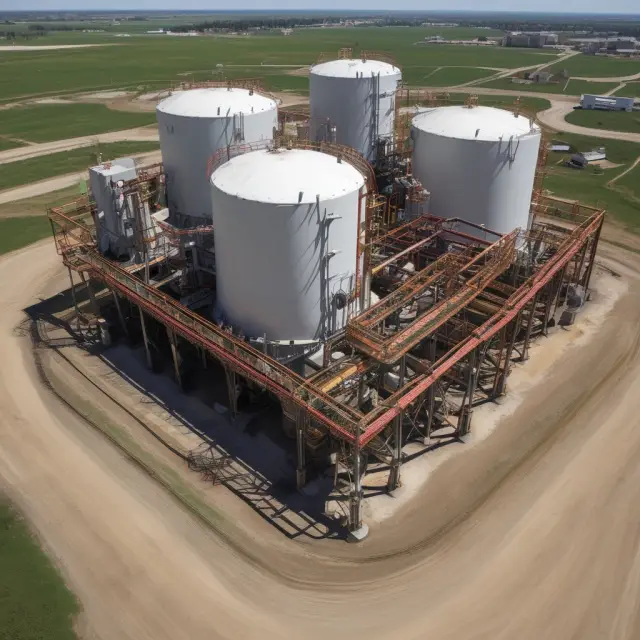
Cushing Hub: Delivery Point for Physical Exchange and Price Settlement
West Texas Intermediate (WTI) crude oil, a significant global benchmark, sources its deliveries primarily from Texas. The critical junction for the physical exchange and price settlement of WTI is Cushing, Oklahoma. This location acts as a crucial storage and transportation hub, allowing it to significantly impact WTI pricing.
Cushing Hub: A Pivotal Location
The significance of Cushing lies in its role as the primary delivery point for WTI’s physical exchange and price settlement. In the world of oil trading, having a clear benchmark that sets the industry standard is crucial. Cushing serves this purpose for WTI by allowing buyers and sellers to meet and transact based on a standardized price. This essential function helps maintain market efficiency, as it provides a reliable pricing mechanism.
Cushing Hub: Storage and Transportation
The Cushing hub consists of 35 pipelines that carry 20 inbound and 15 outbound lines, accommodating an impressive daily throughput capacity of 6.5 million barrels. With over 90 million barrels of storage capacity at its disposal, Cushing is an integral component of the U.S. oil storage system, accounting for approximately 13% of the country’s total capacity.
The hub’s vast storage capabilities are not only a safeguard against supply disruptions but also essential in managing inventory levels and balancing fluctuating demand. Cushing’s strategic position within the United States makes it an ideal location for domestic storage due to its proximity to key oil refineries and markets.
Cushing Hub: Impact on WTI Pricing
The role of Cushing hub in pricing is a vital aspect that sets it apart from other oil benchmarks. As mentioned earlier, the price of crude oil is primarily determined by supply and demand dynamics. However, the physical delivery mechanism at Cushing ensures that market participants can transact based on a standardized price, providing greater certainty when buying or selling WTI contracts.
Moreover, given its central location in the U.S. oil infrastructure network, Cushing serves as a crucial pricing reference for both domestic and international crude markets. As WTI is primarily sourced from Texas, the transportation of this oil to other markets can be costly. The prices at Cushing, therefore, reflect the actual cost of delivering the crude to various end-users, which is an essential consideration when setting a benchmark price for WTI.
Conclusion:
Understanding West Texas Intermediate (WTI) and its connection with Cushing hub sheds light on the intricacies of global oil markets. The significance of a delivery point like Cushing lies in its role as a physical exchange and price settlement location, enabling efficient transactions between buyers and sellers, ensuring a standardized pricing mechanism for WTI crude oil, and impacting WTI prices by reflecting the actual cost of delivering crude to end-users.
Understanding the Significance of WTI Crude Oil in North America
West Texas Intermediate (WTI) is a high-quality, light sweet crude oil that plays a pivotal role in the North American oil market. This grade of crude oil, extracted primarily from Texas, has been the underlying commodity for the New York Mercantile Exchange’s (NYMEX) oil futures contract since 1983. WTI is often compared to Brent Crude, which serves as an international benchmark, due to their similar high-quality characteristics and differences in pricing. In this section, we delve into the importance of West Texas Intermediate (WTI) crude oil in North America and its relationship with gasoline production and other benchmarks like Brent crude.
Origins and Sources: WTI originates from Texas, mainly from the Permian Basin, and is transported through pipelines to refineries in the Midwest and Gulf of Mexico for processing. The Cushing hub in Oklahoma serves as a significant delivery point for physical exchange and price settlement for WTI crude oil, making it an essential component of North American oil production and trade.
Impact on Gasoline Production: WTI crude oil is well-suited for gasoline production, being a light sweet crude with low sulfur content (between 0.24% and 0.34%) that is easily refined. The availability of abundant WTI reserves in North America has made the U.S. one of the largest producers of gasoline worldwide, impacting both the local and global oil markets.
Comparison to Brent Crude: West Texas Intermediate (WTI) crude oil and Brent crude are two high-quality oil benchmarks with similarities in their light sweet nature. The primary difference between them lies in their geographical origins and market demand. While WTI serves as the North American benchmark, Brent sets the price for two-thirds of oil contracts globally.
Brent crude, extracted from the North Sea, is typically used as a reference for international crude oil prices due to its lower sulfur content (between 0.35% and 0.40%) compared to WTI. Theoretically, WTI should trade at a premium given its superior quality. However, factors such as transportation costs, production levels, geopolitical events, and global economic conditions can influence their pricing discrepancies, leading to the Brent-WTI spread.
In recent years, the shale boom in the U.S., which resulted in a surge of WTI production, has caused the price to trade at a discount to Brent crude due to transportation costs and market demand differences. This pricing disparity between the two benchmarks highlights their unique role in the oil markets and emphasizes the significance of understanding each one’s specific market fundamentals.
In conclusion, West Texas Intermediate (WTI) crude oil plays a crucial role in North America as a high-quality, easily refined light sweet crude oil with significant reserves. Its impact on gasoline production and relationship with other benchmarks such as Brent crude further underscore its importance for investors, producers, and consumers alike. Understanding the significance of WTI crude oil offers valuable insights into the North American oil market and the broader implications of global oil pricing.

Factors Affecting WTI Crude Oil Prices
West Texas Intermediate (WTI) crude oil is a vital component of the global energy landscape, serving as a crucial benchmark for North American oil prices. Several factors influence the price movements of WTI, which are worth exploring to better understand this essential commodity’s pricing dynamics. In this section, we’ll delve into the significant drivers that impact WTI crude oil prices:
1. Supply and Demand: Like all commodities, WTI is subjected to market forces of supply and demand. If the global demand for oil outstrips its supply, then the price will rise; conversely, when there’s an oversupply relative to the demand, prices may decrease.
2. Geopolitical Events: Tensions in major oil-producing regions can significantly affect WTI crude oil prices. For example, geopolitical instability in the Middle East or Venezuela could lead to supply disruptions and result in price fluctuations.
3. Economic Conditions: Global economic conditions play a substantial role in shaping the demand for WTI crude oil. In particular, indicators like Gross Domestic Product (GDP) growth, interest rates, and inflation can influence the demand for oil, which, ultimately, affects its price.
4. Technological Advancements: The advent of fracking technology has revolutionized the oil industry in recent years, particularly in the United States. This technological breakthrough led to a surge in domestic production, subsequently influencing WTI’s pricing dynamics and its relationship with other crude benchmarks like Brent.
5. Storage Capacity: The availability and utilization of storage capacity can influence the price of oil. When storage facilities are at full capacity, prices tend to increase due to the potential for supply disruptions. Conversely, low storage levels indicate a sufficient supply, leading to lower prices.
6. OPEC Production Decisions: The Organization of Petroleum Exporting Countries (OPEC) is an influential factor in the global oil market. Its decisions regarding production levels can significantly impact WTI crude oil prices. For instance, if OPEC announces a production cut, it could lead to price increases due to decreased supply.
By taking into account these factors, investors and traders can better understand the pricing dynamics of West Texas Intermediate (WTI) crude oil and make more informed decisions.

Investing in WTI: Futures Contracts and ETFs
West Texas Intermediate (WTI) Crude Oil is a significant benchmark in the global oil market, with its underlying commodity being traded on the New York Mercantile Exchange (NYMEX). Investors interested in gaining exposure to the price movements of WTI can consider investing through either futures contracts or exchange-traded funds (ETFs).
Futures Contracts
Futures contracts are a financial derivative that obligates both parties to buy and sell a specific quantity of an asset at a predetermined price on a future date. In the context of WTI, futures contracts allow investors to speculate on the direction of oil prices or hedge against potential losses in their physical oil positions. The most popular WTI crude oil futures contract is offered by NYMEX and trades under the symbol CL. The contract size for this futures agreement is 1,000 barrels, and each contract represents a price per barrel (BBL).
ETFs:
Exchange-traded funds (ETFs) offer investors an alternative way to gain exposure to WTI crude oil by investing in a basket of securities that closely tracks the underlying commodity’s performance. WTI ETFs are designed to provide investors with the price movement of WTI crude oil, but it is essential to note that these funds do not hold physical crude oil. Instead, they invest in futures contracts or other financial instruments that track the underlying commodity. Two popular WTI ETFs available for trading on major stock exchanges are the United States Oil Fund LP (USO) and the United States 12-Month Oil Fund LP (USL). These funds allow investors to gain exposure to WTI crude oil price movements without having to deal with the logistical complexities of buying, storing, or transporting physical crude oil.
Pros and Cons
Investing in WTI through futures contracts offers several advantages, such as direct exposure to the underlying commodity’s price movement and potentially lower costs due to the elimination of storage expenses. However, it comes with additional risks and complexities such as rollover costs, expiration dates, and margin requirements. On the other hand, ETFs offer a more accessible investment option that is easier to manage for many investors due to their transparency, liquidity, and lower entry barriers compared to futures contracts. However, they may come with slightly higher management fees and potentially lower returns due to the operational expenses of managing an ETF.
In conclusion, understanding the role West Texas Intermediate (WTI) plays as a key oil benchmark and its importance in the North American market requires acknowledging various ways investors can gain exposure to this commodity. By utilizing futures contracts or WTI-focused ETFs, one can effectively participate in the price movements of the underlying asset while managing their risk preferences and investment goals.

West Texas Intermediate vs. Other Crude Oils: A Comparative Analysis
West Texas Intermediate (WTI) crude oil is a prominent benchmark in the global oil market, with its unique properties and origins differentiating it from other key crude oils like Brent, Dubai, and Urals. In this section, we’ll explore how WTI compares to these three crudes in terms of quality, price, and trading volumes.
Quality Comparison
WTI is a light sweet crude oil, containing between 0.24% and 0.34% sulfur, making it a “sweet” oil. The lower the sulfur content, the easier an oil is to refine. Brent, on the other hand, has a higher sulfur content of between 0.35% to 0.40%. WTI and Brent are both high-quality oils; however, WTI is considered better suited for gasoline production due to its lower density (specific gravity) and sweetness. In contrast, Dubai crude oil has a higher density (heavier) and higher sulfur content, making it more suitable for producing diesel and other heavy products. Lastly, Urals crude oil falls between WTI and Brent in terms of quality, with a lower sulfur content than Dubai but slightly higher than WTI.
Price Comparison
WTI crude oil prices are significantly influenced by its proximity to major U.S. refineries and the Cushing Hub delivery point. WTI is priced competitively compared to Brent due to lower transportation costs, as most of its production remains in North America. Dubai and Urals crudes face higher transportation costs due to their Middle Eastern origins and long-distance shipping, which affects their respective pricing. As a result, the Brent crude oil price usually trades at a premium compared to WTI due to global market dynamics, supply-demand factors, and geopolitical events.
Trading Volumes Comparison
WTI crude oil has a significant impact on the U.S. oil industry with its high trading volumes. The NYMEX WTI futures contract is the primary benchmark for North American crude oil. However, Brent crude oil holds an edge in global markets as the underlying commodity for more than two-thirds of the world’s oil contracts. Dubai and Urals crudes also have considerable influence on their respective regions due to their significant production volumes and trading activities.
Understanding the differences between WTI and other crude oils provides valuable context when examining the broader oil market landscape. Keep in mind that these comparisons are not definitive, as the price dynamics of each crude oil can shift depending on various factors like supply-demand balance, geopolitical events, and global economic conditions.

The Role of OPEC and WTI Crude Oil Prices
Organization of Petroleum Exporting Countries, commonly known as OPEC, is a cartel consisting of twelve member countries. Founded in Baghdad, Iraq, on September 14, 1960, the primary purpose of OPEC was to secure fair and stable prices for its oil-producing member states in order to protect their economies from external volatility. Since then, it has evolved into an essential player in global energy markets, influencing the price of crude oils such as West Texas Intermediate (WTI).
OPEC’s impact on WTI crude oil prices can be understood through its role in managing and regulating global oil supply levels. In 2014, when OPEC decided to maintain production levels despite a decrease in demand due to oversupply, the price of WTI dropped significantly from over $100 per barrel to under $50 per barrel. This event, known as the oil price war, caused widespread disruption within the oil industry and highlighted the significant power that OPEC holds in shaping crude oil markets.
OPEC’s influence on WTI can also be seen through its strategic production cuts. In late 2016, OPEC reached an agreement with other major producers outside of the cartel like Russia to reduce their collective output by approximately 1.8 million barrels per day for six months in a bid to restore market balance and support oil prices. As a result, the price of WTI rebounded from under $50 to over $60 per barrel within weeks.
Moreover, OPEC’s role extends beyond production levels as it also monitors and provides forecasts on future supply and demand trends for various crude oils including WTI. This information is crucial for investors seeking to capitalize on price movements in the oil market. In short, the interplay between OPEC and WTI crude oil prices reflects an ongoing balancing act between global supply and demand dynamics.
In conclusion, West Texas Intermediate (WTI) crude oil plays a vital role as a benchmark for North American oil markets due to its high quality, ease of refinement, and geographical location. As we have seen, WTI’s price is influenced by various factors including geopolitical events, global economic conditions, and the actions of organizations like OPEC. Understanding these factors can help investors make informed decisions when investing in oil futures contracts or exchange-traded funds that are tied to WTI crude oil. Stay tuned for our next article where we’ll dive deeper into the world of oil investing by exploring popular investment strategies and trends in the energy sector.
FAQ: Frequently Asked Questions about West Texas Intermediate (WTI)
Question: What is West Texas Intermediate (WTI) crude oil?
Answer: West Texas Intermediate (WTI) is a high-quality, light sweet crude oil that serves as the primary benchmark for North American oil prices. It is sourced primarily from the Permian Basin in west Texas and has a sulfur content between 0.24% and 0.34%, making it easier to refine than other oils. WTI’s main delivery point is at Cushing, Oklahoma, and is considered the underlying commodity for NYMEX’s oil futures contract.
Question: Where does West Texas Intermediate (WTI) crude come from?
Answer: West Texas Intermediate (WTI) crude oil originates primarily from the Permian Basin in west Texas, which is one of the world’s most productive basins for light-oil reserves. It then travels through pipelines to Midwest and Gulf of Mexico regions for refining.
Question: How does West Texas Intermediate (WTI) differ from Brent crude?
Answer: While both WTI and Brent are high-quality, light sweet oils, they come from different sources. WTI is primarily sourced in North America, particularly the United States, while Brent comes mainly from Europe’s North Sea. The primary delivery points for each are also different—Cushing, Oklahoma for WTI, and the North Sea for Brent. Their pricing can differ due to various factors, including their individual supply and demand markets.
Question: Why is Cushing, Oklahoma, important in relation to West Texas Intermediate (WTI) crude oil?
Answer: Cushing, Oklahoma, is a significant hub for the storage, transportation, and distribution of crude oil. It serves as the delivery point for WTI’s physical exchange and price settlement and has a capacity of 90 million barrels, accounting for approximately 13% of U.S. oil storage. Cushing is also known as “The Pipeline Crossroads of the World” due to its central location in the pipeline network system.
Question: What makes West Texas Intermediate (WTI) an essential oil benchmark?
Answer: WTI’s importance comes from it being a high-quality, easily refined oil that serves as the primary benchmark for North American oil prices. Its underlying futures contract on NYMEX and its delivery point at Cushing make it a crucial reference price for buyers and sellers in the North American oil market. Additionally, WTI is often compared to Brent crude, another significant global oil benchmark, with their pricing differences influencing the oil markets worldwide.
Question: How does West Texas Intermediate (WTI) relate to shale oil?
Answer: The shale boom in the U.S. has led to a production increase of WTI crude, which is primarily derived from shale formations in the Permian Basin. As a result, WTI’s price often trades at a discount to Brent crude due to its increased availability and different demand dynamics. Additionally, transporting WTI overseas for sale against Brent could be costly, making it less competitive in pricing terms.
 Next entry · No. 5,829Understanding the World Trade Organization (WTO): History, Functions, Advantages, Disadvantages, Leadership, and Importance
See also
-
 No. 3,701
19 Apr 2025
18 min
The OPEC Basket: Understanding the OPEC Reference Basket of Crude
Energy Finance
No. 3,701
19 Apr 2025
18 min
The OPEC Basket: Understanding the OPEC Reference Basket of Crude
Energy Finance -
 No. 3,700
19 Apr 2025
19 min
Understanding the Role and Impact of the Organization of the Petroleum Exporting Countries (OPEC)
Energy Finance
No. 3,700
19 Apr 2025
19 min
Understanding the Role and Impact of the Organization of the Petroleum Exporting Countries (OPEC)
Energy Finance -
 No. 3,567
08 Apr 2025
21 min
Understanding North Sea Brent Crude Oil: Investment Opportunities and Market Overview
Energy Finance
No. 3,567
08 Apr 2025
21 min
Understanding North Sea Brent Crude Oil: Investment Opportunities and Market Overview
Energy Finance -
 No. 5,917
18 Oct 2025
20 min
Identifying Zombie ETFs: Spotting the Signs Before It’s Too Late
Business Finance
No. 5,917
18 Oct 2025
20 min
Identifying Zombie ETFs: Spotting the Signs Before It’s Too Late
Business Finance -
 No. 5,860
13 Oct 2025
22 min
Yield-Based Options: Understanding the Unique Investment Instrument for Profiting and Hedging in a Rising Interest Rate Environment
Business Finance
No. 5,860
13 Oct 2025
22 min
Yield-Based Options: Understanding the Unique Investment Instrument for Profiting and Hedging in a Rising Interest Rate Environment
Business Finance -
 No. 5,836
11 Oct 2025
18 min
Understanding XRT: Ex-Rights Trading and Its Role in Finance
Business Finance
No. 5,836
11 Oct 2025
18 min
Understanding XRT: Ex-Rights Trading and Its Role in Finance
Business Finance