A Comprehensive Guide to Understanding and Utilizing the True Strength Index (TSI) in Finance and Investment
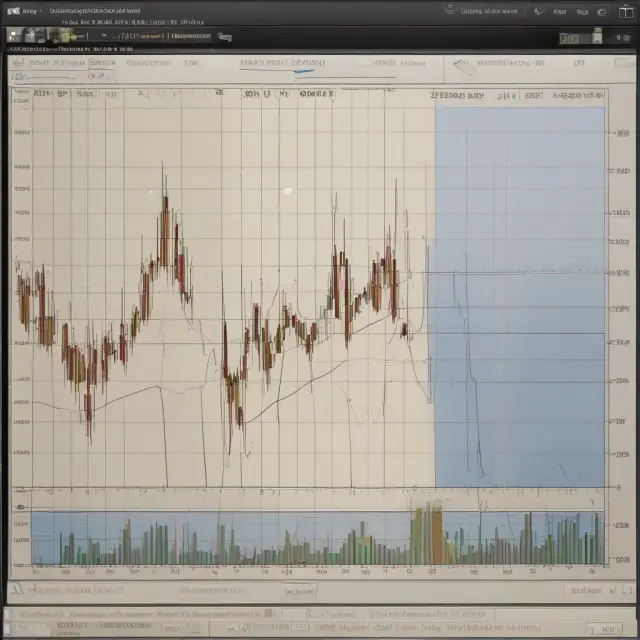
Learn about TSI - a powerful momentum indicator for identifying trends, reversals, overbought/oversold conditions & divergence.
Introduction to the True Strength Index (TSI)
The True Strength Index (TSI) is an essential technical momentum oscillator used by traders and investors for identifying trends, reversals, overbought/oversold conditions, and divergence in financial markets. Developed by J. Welles Wilder Jr., this versatile indicator can significantly aid in understanding the price action and market dynamics of assets across various timeframes. In this section, we explore the fundamentals of TSI, its calculation process, and how to interpret its signals effectively.
Understanding the Calculation Process of the True Strength Index (TSI)
To begin, let us examine the steps required for calculating the TSI. The primary components of this indicator include Price Change Double Smoothed (PCDS), Absolute Price Change Double Smoothed (APCDS), Positive Carry (PC), Absolute Price Change (APC), and Centerline. These elements work together to generate valuable insights into market momentum.
First, we’ll cover the basic calculations for Price Change Double Smoothed (PCDS):
- Identify the price change, which is the current close price minus the previous close price (CCP – PCP).
- Calculate a 25-period Exponential Moving Average (EMA) for the Price Change. This EMA is referred to as PC.
- Apply a 13-period EMA to the PC to create the Positive Carry, denoted by PCS.
- Double smooth the PC by applying a second 13-period EMA to the PCS. The resulting value is now our Price Change Double Smoothed (PCDS).
Next, we move on to Absolute Price Change Double Smoothed (APCDS):
- Identify Absolute Price Change (APC), which is simply the absolute value of the price change.
- Calculate a 25-period EMA for Absolute Price Change, denoted as APC.
- Apply a 13-period EMA to the APC to generate Absolute Price Change Smoothed (APCS).
- Double smooth the APCS by applying a second 13-period EMA, yielding our Absolute Price Change Double Smoothed value (APCDS).
Finally, calculate the True Strength Index:
TSI = [(PCDS / APCDS) x 100] %
By dividing PCDS by APCDS and multiplying the result by 100%, we obtain a percentage value ranging between +100% and -100%. This final value is our TSI.
In the following sections, we will delve deeper into how to utilize this index for analyzing various aspects of financial markets. Stay tuned!
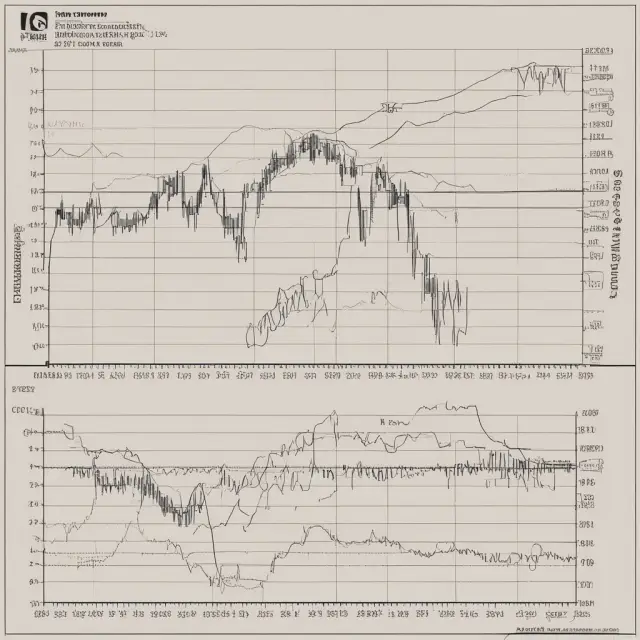
Understanding the Calculation Process of the True Strength Index (TSI)
The True Strength Index (TSI) is a popular technical momentum indicator that assists traders in identifying overbought and oversold conditions, trend direction changes via centerline crossovers, and short-term price momentum with signal line crossings. To calculate the TSI, several components need to be determined: Price Change Double Smoothed (PCDS), Absolute Price Change Double Smoothed (APCDS), Positive Carry (PC), Absolute Price Change (APC), Absolute Price Change Smoothed (APCS), and Centerline. Let’s discuss the calculation process for each of these components.
Price Change Double Smoothed (PCDS)
The first step is to calculate the price change, which represents the difference between the current close price (CCP) and the prior close price (PCP). Once this value has been determined, it is then smoothed twice – once with a 13-period Exponential Moving Average (EMA) to obtain Price Change Smoothed (PCS), and again with a 25-period EMA to create PCDS.
Absolute Price Change Double Smoothed (APCDS)
The next step is to calculate the absolute price change, which is simply the absolute value of the price change. Similar to the price change double smoothed calculation, it is then smoothed twice: first with a 13-period EMA to generate Absolute Price Change Smoothed (APCS), and then with a 25-period EMA to create APCDS.
Positive Carry (PC)
The positive carry represents the difference between the PCDS and APCDS. This component demonstrates how much more the price has changed compared to its absolute value, indicating whether bullish or bearish trends are dominating.
Absolute Price Change (APC)
The absolute price change is simply the absolute value of the price change between two consecutive periods.
Centerline:
Finally, the centerline is calculated by dividing the PCDS by the APCDS and multiplying it by 100 to get a percentage. This line serves as a benchmark for interpreting TSI values.
In conclusion, calculating the True Strength Index (TSI) involves determining several components such as Price Change Double Smoothed (PCDS), Absolute Price Change Double Smoothed (APCDS), Positive Carry (PC), Absolute Price Change (APC), and the Centerline. Each component plays a critical role in providing insights into overbought/oversold conditions, trend direction changes via centerline crossovers, and short-term price momentum with signal line crossings.

Identifying Overbought/Oversold Conditions with TSI
The true strength index (TSI) plays a crucial role in determining potential overbought and oversold conditions by revealing the balance of power between bulls and bears in an asset’s price action. By observing the indicator’s movement within positive and negative territories, traders can gain insights into potential trend reversals.
Positive Territory: A bullish edge is evident when the TSI lies above zero (positive), indicating that buying pressure outweighs selling pressure. Assets in this territory have been advancing, and a bullish sentiment prevails. However, it’s important to remember that an overbought condition does not automatically mean it’s time to sell. Overbought levels can vary depending on the asset and market conditions; extreme levels may signal potential trend reversals but do not guarantee them.
Negative Territory: Conversely, a bearish sentiment is indicated when the TSI lies below zero (negative), suggesting that selling pressure is greater than buying pressure. In this case, assets have been declining or are in a downtrend, and traders might consider short-selling opportunities or seeking to sell their holdings. Similar to overbought levels, oversold conditions do not always result in an immediate reversal.
To make the most out of TSI analysis, it’s essential to monitor price action closely for other signals or confirmation before entering any trades based on overbought/oversold conditions. For instance, traders may wait for a pullback within the trend or the occurrence of other technical indicators to validate the TSI’s warnings.
Extreme Levels: By observing the historical price action and TSI levels, traders can establish reference points for overbought (-30) and oversold (+30) extremes. These benchmarks serve as guidelines for identifying potential trend reversals or continuation. However, it’s important to remember that these thresholds might not always be consistent from one asset or market to another.
Apart from identifying overbought/oversold conditions, traders can utilize the TSI’s signals in conjunction with other analysis tools such as trend lines and support/resistance levels for more accurate entry and exit points.
Signal Line Crossovers in TSI
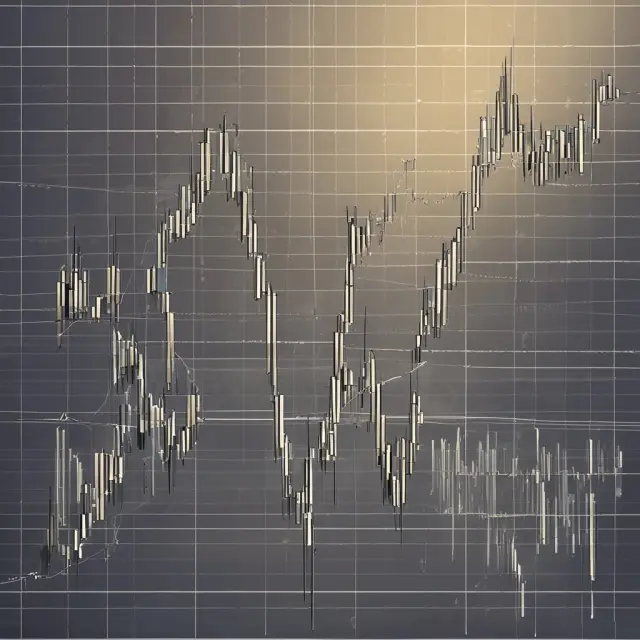
One of the essential aspects of utilizing the True Strength Index (TSI) lies in understanding and acting upon signal line crossovers. The indicator includes a default signal line, which is typically calculated as a seven- to 12-period exponential moving average (EMA). When the TSI crosses above this signal line, it may indicate a buy opportunity, while crossing below could signify a sell or shorting chance. However, these signals should be treated with caution due to their frequency.
Buying Signals: A bullish crossover occurs when the TSI crosses above its signal line. As the price trend is generally considered positive in this situation, traders may use this signal as an entry point for a long position. A buy signal can also serve as confirmation of an existing uptrend and potentially extend gains.
Selling Signals: Conversely, a bearish crossover takes place when the TSI drops below its signal line. This signal might encourage traders to consider entering a short or selling position based on a downturn in price momentum. However, it is essential to remember that these signals occur quite frequently and should be used with caution and additional confirming indicators.
Interpreting Signal Line Crossovers: The optimal use of TSI signal line crossovers depends on various factors such as the overall market condition, trend strength, and other technical analysis tools. Traders can employ different strategies based on the context of these signals. For example, they may prefer buying signals when the TSI is above its centerline (above zero), or they might favor selling signals when the TSI is in overbought territory. In general, it’s crucial to consider multiple indicators and price action confirmations before entering positions based on a single signal line crossover.
Additionally, keep in mind that frequent crossovers could result in whipsaw effects, causing unnecessary trades that might not be profitable or aligned with your investment objectives. Therefore, it’s essential to monitor the overall trend and price movements carefully when considering trade signals derived from TSI signal line crossovers.

Centerline Crossovers in TSI
The True Strength Index (TSI) is an essential technical indicator used by traders to gain insights into the strength of price momentum. One significant way the TSI provides such information is through centerline crossovers. This section will delve deeper into understanding how these crossovers work and their role in determining directional bias for entering trades.
Centerlines, also known as zero lines or midlines, serve as a pivotal reference point within the TSI indicator. When the TSI value is above zero, it indicates that the bulls are in control of the underlying asset’s price momentum. Conversely, when the indicator falls below zero, it suggests the bears dominate the trend. By closely monitoring these centerline crossovers, traders can gain a clearer perspective on potential directional shifts in the market.
When the TSI crosses above the zero line (positive territory), it could be seen as an early indicator of a bullish trend. This event signifies that buying pressure is increasing and may suggest further upside momentum for the asset’s price. On the other hand, when the TSI drops below the centerline into negative territory, this might indicate bearish conditions or weakening price momentum. Traders may interpret this as a potential warning signal of an impending downward trend.
Some traders employ a more aggressive approach and solely base their entry decisions on TSI’s position in relation to its zero line. For example, they might consider entering long positions only when the indicator is above its centerline. In contrast, they may adopt a bearish stance and consider short positions only when the indicator is below it.
However, it is essential to note that interpreting TSI’s behavior based on centerline crossovers alone may be misleading at times due to the following reasons:
1. Frequent oscillations: The TSI tends to fluctuate frequently between positive and negative territory, causing numerous crossovers. This phenomenon can lead to whipsaw signals, making it necessary for traders to consider multiple confirming signals before entering a position.
2. False signals: While centerline crossovers can provide valuable insights into underlying trend shifts, they may sometimes generate false signals. These instances can lead to missed opportunities or unnecessary trades, emphasizing the importance of utilizing other technical analysis tools in combination with TSI for confirmation.
In conclusion, understanding the significance of centerline crossovers within the True Strength Index (TSI) is a crucial aspect of employing this momentum indicator effectively. While they can provide important insights into trend direction, it’s vital to remain vigilant and consider multiple confirming signals before entering a trade position to mitigate potential false signals.
Utilizing Breakouts and Divergence with True Strength Index (TSI)
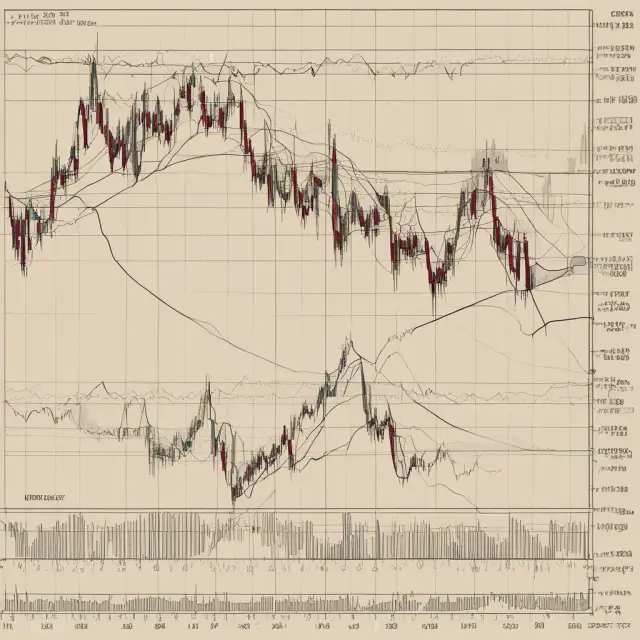
The True Strength Index (TSI) can also provide insightful information through its identification of trend shifts, reversals, and divergence. This section will delve deeper into understanding these concepts and their significance in making informed trading decisions.
Trend Shifts: The TSI, with the help of support and resistance levels derived from price action analysis or other technical indicators, can be used to identify potential trend shifts. For example, a significant break below a long-term trendline could indicate that the trend may be reversing and signal an opportunity for entering short positions. Similarly, a bullish divergence, where the TSI forms a higher high while the price forms a lower low, could hint at an upcoming price recovery and suggest entering long positions.
Price Reversals: Divergences, as mentioned earlier, can offer insight into potential price reversals. Bullish divergence occurs when the TSI makes a higher high while the price experiences a lower low. Contrarily, bearish divergence arises when the TSI forms a lower high while the price records a higher high. In such instances, traders may consider taking a contrarian position by selling in a bullish divergence scenario or buying during a bearish divergence situation to potentially capitalize on the anticipated price movement.
Limitations of Divergence: It’s important to acknowledge that divergences are not perfect timing signals and should be used with caution. False divergence, where the TSI provides a signal despite no actual trend reversal occurring, can lead to significant losses if entered into blindly. Therefore, it is essential to employ multiple indicators or confirmation through other analytical techniques to increase the probability of profitable trades based on these signals.
In conclusion, understanding how to use the TSI effectively involves more than just knowing about overbought and oversold conditions or signal line crossovers. By recognizing trends shifts, reversals, and divergences, traders can potentially maximize their profit potential while minimizing potential losses. Always remember that no single indicator can provide 100% accuracy in predicting market movements, so it’s crucial to employ a holistic approach when analyzing the markets and making investment decisions.
Comparing TSI vs. Other Technical Indicators
The True Strength Index (TSI) is just one of the many tools available for identifying trends and potential price movements in financial markets. When it comes to comparing the TSI with other popular technical indicators, such as the moving average convergence divergence (MACD), it’s essential to understand each indicator’s unique characteristics and applications.
Both the TSI and MACD are momentum oscillator indicators used for determining trend direction and identifying potential reversals. However, they differ significantly in their calculations and approaches. The TSI is a ratio-based oscillator that measures the relationship between price changes and their magnitude over time, while the MACD calculates the difference between two moving averages.
The TSI indicator’s primary focus is on identifying overbought and oversold conditions by smoothing price changes using exponential moving averages (EMAs). In contrast, the MACD indicator emphasizes momentum trends through its calculation of the relationship between short-term and long-term moving averages.
When comparing these two indicators, it’s essential to consider their strengths and weaknesses. For instance, TSI excels in providing a clear visual representation of price momentum and trend direction, while MACD is more effective at identifying potential reversal points and momentum shifts. Moreover, both indicators can be used together for complementary analysis, enhancing overall trading insights.
It’s also important to note that no single indicator is foolproof or infallible, and their interpretation should always be validated using other technical tools, fundamental analysis, and market context. A well-rounded approach to market analysis will help traders make informed decisions by reducing the risk of relying on any one tool too heavily.
In conclusion, while both TSI and MACD are valuable indicators for financial markets analysis, they provide different insights and require varying interpretations for effective trading strategies. By understanding their unique features and combining them with other analytical tools, traders can improve their ability to make informed investment decisions and adapt to ever-changing market conditions.
Limitations of True Strength Index (TSI)
Although the True Strength Index (TSI) is a valuable tool in identifying trends and momentum for traders and investors, it comes with its own set of limitations. Understanding these constraints can help minimize potential losses and enhance overall trading performance.
False Signals
One critical limitation is the occurrence of false signals. TSI may provide misleading information on trend direction shifts or reversals at times. For example, during a strong uptrend, the TSI may cross below the centerline several times, indicating weak momentum, but then the price continues to move upwards. In such instances, it’s essential for traders not to be swayed by false signals and maintain their positions based on other confirmation factors like price action or support/resistance levels.
Inconsistent Signal Line Crossovers
Another challenge with TSI is the frequent occurrence of signal line crossovers, which might lead to whipsaws and confusion for traders. As previously discussed, when the indicator line crosses above the signal line, it indicates a potential buy opportunity, while crossing below signals selling opportunities. However, given that these crossovers happen quite frequently, it’s crucial to exercise caution when acting upon them. Traders should consider implementing additional filters and confirming signals through other indicators or methods before taking any trades based on TSI signal line crossovers.
Divergence
Lastly, divergence between price and the TSI indicator is another challenge. While divergence can be a powerful tool for identifying potential trend reversals, it isn’t always a reliable timing mechanism. Divergence can take an extended period before materializing as actual price movements, which might lead to missed opportunities or incorrect trade decisions if traders rely solely on the divergence signal. Additionally, divergence doesn’t necessarily indicate a reversal in all cases; sometimes it may merely signify a consolidation or correction within the existing trend.
To maximize the potential benefits from TSI while minimizing its limitations, it is essential to:
- Use multiple indicators and confirmation methods for making informed trading decisions.
- Be aware of false signals and price divergence’s unreliability.
- Utilize proper risk management techniques, including stop-loss orders and position sizing.
- Stay updated with market news and developments to contextualize the TSI signals within the broader market environment.

Applying the True Strength Index (TSI) for Institutional Trading
The True Strength Index (TSI) has proven its worth to individual traders; however, how does it fit into institutional investment strategies? In this section, we delve deeper into TSI usage for larger financial institutions and funds.
Institutional trading is a complex process that demands rigorous analysis, meticulous risk management, and efficient execution. The True Strength Index offers various advantages when employed in their strategic planning. With its ability to identify trends, reversals, overbought/oversold conditions, and divergence, TSI can complement other analytical tools and strategies for institutional trading.
Firstly, TSI helps institutions gauge overall market trends by determining the strength of an ongoing trend. When the TSI is strongly in positive territory (above centerline), it suggests a bullish trend with high momentum; conversely, when the indicator is deeply negative, it indicates a bearish trend. This information can aid in deciding which sectors to invest or divest from, based on the market’s direction.
Secondly, TSI offers valuable insights for large-scale portfolio rebalancing. Institutional investors can use TSI divergence between asset classes as an indicator of potential sector shifts. For example, if the S&P 500 index shows bullish divergence against the NASDAQ Composite Index, it may signal that the NASDAQ is overbought and could be experiencing a pullback, while the broader market continues to rise, providing opportunities for rebalancing.
Another application of TSI in institutional trading relates to risk management. By monitoring TSI readings, traders can gauge potential entry or exit points based on overbought/oversold conditions and signal line crossovers. This approach allows institutions to minimize portfolio exposure when market conditions are unfavorable, while maximizing returns during more favorable periods.
Lastly, the True Strength Index can be utilized for advanced hedging strategies. For instance, institutional traders may employ TSI in constructing pairs or ratio trades between two related assets based on divergence and crossover signals. Such strategies can help manage risk by offsetting potential losses from underperforming assets with gains from their counterparts.
In conclusion, the True Strength Index is a versatile technical indicator that offers numerous advantages for institutional trading. By identifying trends, reversals, overbought/oversold conditions, and divergence, TSI can provide valuable insights into market dynamics, enabling informed strategic decisions, risk management, and efficient portfolio allocation. Institutional traders should consider integrating the True Strength Index alongside other analytical tools to ensure a well-rounded understanding of financial markets and their underlying trends.
FAQs:
How does TSI compare to other oscillators like Stochastic Oscillator or Relative Strength Index?
Answer: Each oscillator has its unique characteristics and use cases, so it is essential to understand the differences between them before choosing which one to use based on your trading strategy. While TSI is more focused on momentum and directional changes, Stochastic Oscillator relies on price range analysis and RSI is a momentum indicator measuring the strength of price movements in relation to recent gains or losses.
What is the optimal setting for calculating the True Strength Index?
Answer: The most common settings for TSI are 13, 8, and 3 periods, but traders can adjust these values depending on their preferred time frame and trading strategy.
How often should I check the True Strength Index readings?
Answer: Frequency of checking the TSI readings depends on your investment style, market conditions, and trading objectives. Some traders may prefer real-time monitoring for short-term strategies, while others may only review weekly or monthly charts for long-term investment plans.
Can I use the True Strength Index for cryptocurrency trading?
Answer: Yes, TSI can be applied to cryptocurrencies and other digital assets as well as traditional securities. However, it’s essential to note that the overbought/oversold levels might differ between various markets due to their inherent volatility and liquidity differences.

Conclusion: Maximizing Profit from Using the True Strength Index (TSI)
The True Strength Index (TSI) is a powerful technical indicator with numerous benefits for investors and traders in the financial markets. Its unique ability to identify trends, reversals, overbought/oversold conditions, and divergence makes it a versatile tool that complements other analysis methods. However, like all indicators, it’s essential to understand its strengths, limitations, and best practices for using it effectively to maximize profit.
TSI operates based on the principle of calculating price change double smoothed (PCDS) and absolute price change double smoothed (APCDS), which are later used to determine overbought and oversold conditions through positive and negative territory, signal line crossovers, centerline crossovers, and divergence. By interpreting these signals correctly, traders can make informed decisions for entering or exiting positions.
However, it’s crucial to remember that no indicator is perfect, and TSI has its limitations. False signals can occur, leading to potential losses if not carefully managed. Frequent signal line crossovers might require additional filtering for high-quality entries. Centerline crosses may lead to delayed entry or exit points due to the lagging nature of the indicator. Divergence is an unreliable timing tool that should be used cautiously, ideally in conjunction with other indicators and analysis methods.
To make the most out of TSI, consider the following best practices:
- Use it as a complementary tool alongside other technical analysis indicators and fundamental analysis.
- Set realistic entry and exit points based on confirmation from multiple signals.
- Understand the limitations of TSI and adjust your strategy accordingly.
- Utilize higher time frames for more significant trends or consider multiple timeframes for a more comprehensive understanding of the market.
- Monitor price action, volume, and other market conditions to confirm signals.
- Implement proper risk management practices to mitigate potential losses.
By combining these best practices with TSI’s unique features, you’ll be well on your way to maximizing profit in your investment or trading strategy. Remember that no one indicator guarantees success; instead, it serves as a valuable addition to a well-rounded approach to financial analysis and decision-making.

FAQ
**1. What is the True Strength Index (TSI)?**
The True Strength Index (TSI) is a technical momentum oscillator that assists traders in identifying trends, reversals, overbought/oversold conditions, and divergence by analyzing an asset’s price movements.
**2. How does TSI differ from other indicators?**
While both the TSI and moving average convergence divergence (MACD) indicator serve to enhance trend analysis, they have distinct differences in their formulas. The TSI focuses on smoothing price changes to create a technical oscillator, whereas MACD measures the separation between two moving averages.
**3. What are the components of the True Strength Index calculation?**
The TSI calculation involves Price Change Double Smoothed (PCDS), Absolute Price Change Double Smoothed (APCDS), Positive Carry (PC), Absolute Price Change (APC), and Centerline. Each component is smoothed using Exponential Moving Averages (EMA) of varying lengths.
**4. What do positive and negative TSI values signify?**
Positive TSI values indicate bullish momentum, with the bulls being more in control of the asset’s price movements. Negative TSI values suggest bearish momentum, where the bears have a stronger influence over the price trend.
**5. What are some uses for the True Strength Index (TSI)?**
Traders use TSI to identify:
– Overbought/oversold conditions
– Potential trend reversals through centerline or signal line crossovers
– Price momentum shifts with breakouts and divergence
**6. What is the role of the Centerline in TSI?**
The Centerline represents the neutral zone for TSI, which separates bullish from bearish momentum. Some traders use the centerline as a directional bias, entering long positions only when the indicator is above zero and considering short positions if it falls below zero.
**7. What are signal line crossovers in True Strength Index (TSI)?**
Signal lines, usually 7-to-12 period EMAs of the TSI line, provide buy/sell signals when the indicator crosses above or below them. However, since these occurrences can be frequent, it’s essential to use signal line crossovers with other indicators and signals for confirmation before making a trade decision.
**8. What is divergence in TSI?**
Divergence between the price and True Strength Index (TSI) indicator may suggest potential reversals in the asset’s price trend, but it should be used cautiously as it’s an unreliable timing signal that requires confirmation from other indicators or analysis methods.
**9. Are there limitations to using TSI?**
Yes, false signals and frequent occurrences of crossovers can make it challenging for traders to rely solely on the True Strength Index (TSI) for making trading decisions. Additionally, divergence may not always be a reliable indicator and should not be used as the sole basis for entering or exiting positions.
**10. How can I apply TSI in institutional trading?**
Institutional traders employ more advanced techniques using TSI, such as incorporating multiple indicators, various timeframes, or utilizing customized settings to create a comprehensive and informed investment strategy.
 Next entry · No. 5,103Total Shareholder Return (TSR): Understanding This Investment Performance Metric
See also
-
 No. 5,913
18 Oct 2025
21 min
Mastering the Zig Zag Indicator for Trend Identification and Filtering Noise in Finance
Financial Tools
No. 5,913
18 Oct 2025
21 min
Mastering the Zig Zag Indicator for Trend Identification and Filtering Noise in Finance
Financial Tools -
 No. 5,738
03 Oct 2025
18 min
Understanding Williams %R – A Powerful Momentum Indicator for Technical Analysis
Markets
No. 5,738
03 Oct 2025
18 min
Understanding Williams %R – A Powerful Momentum Indicator for Technical Analysis
Markets -
 No. 5,112
12 Aug 2025
18 min
Understanding Tweezer Patterns in Technical Analysis
Markets
No. 5,112
12 Aug 2025
18 min
Understanding Tweezer Patterns in Technical Analysis
Markets -
 No. 5,087
10 Aug 2025
23 min
Understanding Triple Tops: Identifying and Trading This Chart Pattern
Market Trends
No. 5,087
10 Aug 2025
23 min
Understanding Triple Tops: Identifying and Trading This Chart Pattern
Market Trends -
 No. 5,774
06 Oct 2025
20 min
A Comprehensive Guide to Understanding and Utilizing Worden Stochastics in Finance and Investment
Business Finance
No. 5,774
06 Oct 2025
20 min
A Comprehensive Guide to Understanding and Utilizing Worden Stochastics in Finance and Investment
Business Finance -
 No. 5,731
03 Oct 2025
19 min
Mastering Wilder’s DMI (ADX) Indicator: A Powerful Tool for Trend Analysis in Finance and Investment
Business Finance
No. 5,731
03 Oct 2025
19 min
Mastering Wilder’s DMI (ADX) Indicator: A Powerful Tool for Trend Analysis in Finance and Investment
Business Finance