Understanding Moving Average Convergence/Divergence (MACD) in Finance and Investment

Understand the Moving Average Convergence Divergence (MACD) indicator for financial analysis, including calculation, interpretation, & application in trading.
Introduction to MACD
Moving Average Convergence/Divergence (MACD) is a popular momentum indicator in finance and investment that calculates the relationship between two Exponential Moving Averages (EMAs). This powerful tool provides valuable insights into the direction and potential reversals of market trends by analyzing the interaction between these EMAs. In this section, we delve deeper into the definition, purpose, and significance of MACD.
The MACD line is created by subtracting a 26-period EMA from a 12-period EMA. The resulting difference is then plotted as the MACD line on a chart. A nine-day Exponential Moving Average (EMA) is used as the “signal line,” which is then overlaid on top of the MACD line to generate buy or sell signals. When the MACD line crosses above the signal line, it signifies a bullish trend and may indicate a good opportunity for buying. Conversely, when the MACD line falls below the signal line, it suggests a bearish trend and could be an indication of selling.
The MACD indicator is particularly effective when used with daily periods, where the traditional settings of 26/12/9 days are typically employed. By examining the interactions between these EMAs and their relationship to price movements, investors can gain a better understanding of market trends and potential reversals.
One important aspect of MACD is its ability to help determine overbought or oversold conditions in a security. This information can be crucial for identifying the strength of a directional move and warning of potential price reversals. Additionally, MACD can help investors identify bullish or bearish divergences between a security’s price and the indicator itself, which may indicate a potential failure and reversal of the current trend.
Stay tuned for the following sections in this article where we will explore the MACD formula and calculation, understand the roles of the MACD line and signal line, analyze overbought and oversold levels using the histogram, compare MACD with RSI, interpret signals in finance, and discuss common limitations and false signals.
In the next section, we dive deeper into the MACD formula and calculation to gain a clearer understanding of how this powerful indicator generates valuable insights for traders and investors.
MACD Formula and Calculation
Moving Average Convergence/Divergence (MACD) is a popular momentum indicator used in trading and investing for determining trend direction and potential reversals. The calculation of MACD involves two Exponential Moving Averages (EMAs), the MACD line, Signal Line, and Histogram. Let us delve deeper into the process:
1. EMA Calculation: An Exponential Moving Average is a type of moving average that assigns greater weight to more recent data points. In MACD, we use two EMAs with different lengths, 12-period and 26-period, to compute the indicator.
– The 12-Period EMA (Short Term EMA): Subtract the current value from the value of the previous period’s 12-EMA, then divide by the difference between the current data point and the preceding data point in the series:
12-period EMA = [(Current Data Point * Multiplier) + (Previous 12-Period EMA * (1 – Multiplier))] / ((1 + Multiplier)
– The 26-Period EMA (Long Term EMA): Apply a similar process using the same formula, but with a longer time period and a lower multiplier to give greater weight to older data:
26-period EMA = [(Current Data Point * Multiplier) + (Previous 26-period EMA * (1 – Multiplier))] / ((1 + Multiplier) ^ 26)
2. MACD Calculation: Subtract the long term EMA from the short term EMA to obtain the MACD line:
MACD = Short Term EMA – Long Term EMA
3. Signal Line: A nine-day EMA is plotted on top of the MACD line as a reference, called the Signal Line:
Nine-Day EMA = [(Current Data Point * Multiplier) + (Previous 9-Day EMA * (1 – Multiplier))] / ((1 + Multiplier) ^ 9)
4. Histogram: The histogram is a chart that displays the difference between MACD and its Signal Line, providing an additional visual representation of price momentum:
Histogram = MACD – Signal Line
MACD indicators can be interpreted based on the following key aspects: crossovers, divergences, and trend strength. In the next sections, we will discuss how to read and interpret these signals effectively for informed investment decisions.
Understanding MACD Line and Signal Line
The Moving Average Convergence Divergence (MACD) line is calculated by subtracting the 26-period Exponential Moving Average (EMA) from the 12-period EMA. A nine-day EMA, known as the signal line, is plotted on top of the MACD line to serve as a trigger for buy or sell signals. The significance and interpretation of these two lines lie in their relationship.
When the MACD line crosses above its signal line, it generates a bullish signal. This crossover suggests that buying momentum is increasing and may indicate that the security’s price will follow suit. Conversely, when the MACD line falls below its signal line, it produces a bearish signal. This occurrence indicates weakening buying momentum and could suggest that the security’s price might start declining.
Understanding both lines’ roles and their behavior is crucial for traders looking to capitalize on trend reversals or strengthening momentum. The MACD line functions as an indicator of underlying trend direction, while the signal line acts as a filter for potential trading signals. Let us examine some instances where these lines generate buy or sell signals and how they can be used for effective trading strategies.
Bullish Signal: When the MACD Line Crosses Above the Signal Line
A bullish signal is generated when the MACD line crosses above its signal line, indicating that buying momentum is strengthening. Traders may take this as an opportunity to buy the security in anticipation of a potential price increase. This crossover can serve as a confirmation of an existing trend or the reversal of a downtrend.
Bearish Signal: When the MACD Line Crosses Below the Signal Line
Conversely, when the MACD line crosses below its signal line, it generates a bearish signal, signaling weakening buying momentum and potential price declines. Traders may sell or short the security based on this signal. It can also indicate an ongoing downtrend’s continuation or a reversal of an uptrend.
The MACD line and signal line relationship is an essential tool for technical analysis, providing traders with valuable insights into potential trend reversals and momentum shifts. As always, it’s crucial to confirm these signals using other indicators before making any investment decisions, ensuring that the trade setup aligns with your overall risk tolerance and trading strategy.
MACD Histogram: Overbought and Oversold Levels
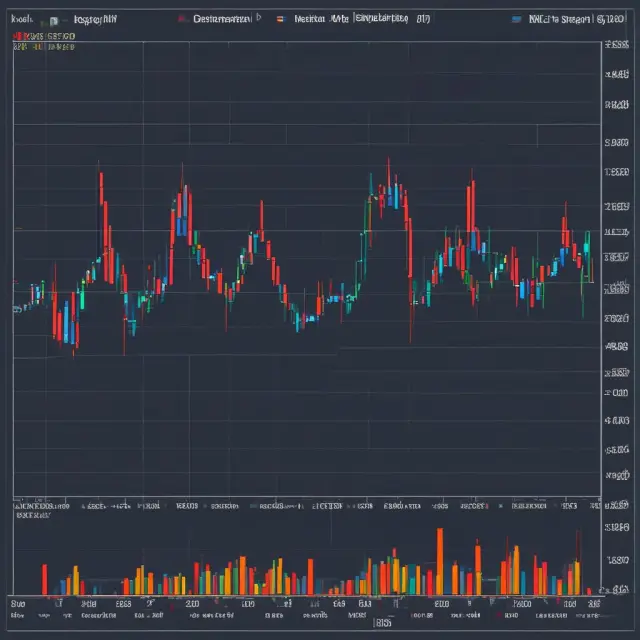
The histogram within the Moving Average Convergence Divergence (MACD) indicator plays a crucial role in understanding overbought and oversold conditions. Analyzing these levels can help identify potential price reversals or divergences, which are significant indicators for traders and investors alike.
First, let’s clarify the terms overbought and oversold. When a security is considered to be overbought, it suggests that there has been excessive buying activity in the market, potentially leading to a price reversal or correction. Conversely, an oversold condition indicates that selling pressure is high, possibly signaling a potential price rebound.
In the context of MACD, the histogram can help determine these conditions by showing the difference between the MACD line and the signal line. When the histogram is above zero (the baseline), it suggests bullish momentum, indicating an uptrend or upward pressure on the security’s price. If the histogram is below zero, bearish momentum prevails, implying a downtrend or downward pressure on the security’s price.
Understanding overbought and oversold levels using MACD histogram can provide valuable insights into a security’s trend and potential reversals. For instance:
1. Overbought Conditions: When the histogram exceeds a certain threshold, it may indicate an overbought condition. This occurs when the bullish momentum becomes too strong and results in excessive buying pressure, which can eventually lead to a correction or pullback in price. A bearish divergence, where the security forms new highs while MACD fails to make new highs or even declines, may further strengthen the likelihood of an upcoming correction.
2. Oversold Conditions: Conversely, when the histogram falls below a specific level, it can indicate an oversold condition. This situation arises when selling pressure is excessive, potentially leading to a potential rebound in price as buyers enter the market to take advantage of attractive entry points. A bullish divergence, where the security forms new lows while MACD makes higher lows, may signal an impending trend reversal or continuation of the uptrend.
By examining both overbought and oversold conditions using MACD histograms, traders can enhance their decision-making process and capitalize on potential buying and selling opportunities, as well as identify emerging trends that could shape the market’s future direction.
To further confirm MACD signals, it is recommended to combine this indicator with other indicators like the Directional Movement Index (ADX) system. By verifying trend conditions using ADX, traders can improve their confidence in making accurate trading decisions based on the information provided by both MACD and ADX.

MACD vs. RSI: Similarities and Differences
When analyzing financial markets, traders and investors often use multiple technical indicators to gain a comprehensive perspective of market conditions. Two widely-used momentum indicators are the Moving Average Convergence/Divergence (MACD) and Relative Strength Index (RSI). Although they share some similarities, these two indicators differ in their functions and calculations.
The MACD indicator measures the relationship between two Exponential Moving Averages (EMAs), specifically a 12-period EMA and a 26-period EMA. The MACD line is calculated by subtracting the long-term EMA from the short-term EMA, with the result plotted as a blue line. A nine-day EMA called the signal line is then drawn on top of the MACD line to generate buy/sell signals based on crossovers or divergences.
On the other hand, the RSI indicator measures the average gain and loss of an asset’s price over a specified period (usually 14 periods), providing insight into potential overbought or oversold conditions. The RSI oscillates between 0 and 100, with values above 70 indicating overbought conditions, while those below 30 are considered oversold.
Both indicators help traders identify trend direction and momentum shifts; however, the MACD focuses on EMA relationships, whereas the RSI looks at price changes in relation to recent highs and lows. These two indicators can provide complementary insights when used together, as they often give conflicting signals due to their distinct approaches to measuring market conditions.
When interpreting MACD and RSI data, it is essential to consider their strengths and limitations. The MACD’s ability to generate buy/sell signals using crossovers and divergences makes it a versatile tool for identifying potential trend reversals or continuations. However, the MACD may generate false signals during sideways price movements or consolidation periods, necessitating confirmation from other technical indicators like the Average Directional Index (ADX).
The RSI is useful in determining overbought and oversold levels but lacks the ability to provide buy/sell signals directly. To overcome this limitation, some traders use RSI divergences or apply moving averages to RSI data for confirmation. The RSI’s sensitivity to price swings can make it less suitable for volatile assets, leading traders to prefer MACD for more stable securities.
In summary, while the Moving Average Convergence/Divergence (MACD) and Relative Strength Index (RSI) share some similarities as trend-following momentum indicators, their unique calculations and approaches offer valuable complementary insights into market conditions. To maximize trading success, traders often use both indicators in combination with other technical tools to validate signals and confirm trends.

Interpreting MACD Signals in Finance
Moving Average Convergence/Divergence (MACD) offers valuable insights for identifying potential buy and sell opportunities based on crossovers between two moving averages—the MACD line and the signal line. This section will delve deeper into understanding bullish and bearish signals generated by this popular trend-following momentum indicator.
First, it is essential to comprehend that MACD signals are not definitive buy or sell indicators; rather, they serve as potential entry points for traders to initiate further analysis or confirmation from other technical indicators or market conditions.
Bullish Signals
A bullish MACD signal occurs when the MACD line crosses above its signal line. This crossover can indicate a reversal in the prevailing trend, or a continuation of an uptrend. Many traders wait for confirmation from the Directional Movement Index (ADX) before entering a position based on a bullish MACD signal to minimize false signals.
Bearish Signals
Conversely, a bearish MACD signal emerges when the MACD line crosses below its signal line. This crossover may suggest a trend reversal or continuation of a downtrend. As with bullish signals, confirmation from an indicator like the ADX can add credibility to a bearish MACD signal.
Historically, investors and traders have relied on MACD for several reasons:
- Trend identification: MACD helps assess the direction of a security’s price trend by revealing crossovers between its long-term and short-term moving averages.
- Buy or sell signals: Bullish and bearish crossovers can provide guidance on potential entry points for buying or selling securities based on the prevailing market trends.
- Overbought/oversold conditions: The MACD histogram offers insights into overbought and oversold conditions, which may hint at possible price reversals.
- Divergence analysis: Bullish and bearish divergences between a security’s price trend and the MACD indicator can indicate potential reversals or continuations of existing trends.
MACD is most commonly used in conjunction with other technical indicators to strengthen the overall trading strategy. As previously mentioned, the ADX provides valuable confirmation when combined with MACD signals to help traders minimize false alarms. Additionally, investors and traders may consult additional trend-following or momentum indicators, such as stochastic oscillators or Bollinger bands, for added support in their analysis of market trends.
In summary, MACD offers valuable insights into the direction of a security’s price trend by revealing crossovers between its long-term and short-term moving averages. Bullish and bearish signals generated from this momentum indicator can serve as potential entry points for further confirmation from other technical indicators or market conditions. The importance of understanding MACD lies in its ability to help investors and traders make more informed decisions in their financial endeavors.
MACD Divergence: Bullish and Bearish
One significant use of the Moving Average Convergence/Divergence (MACD) indicator lies in detecting potential trend reversals through bullish and bearish divergences. Divergence occurs when a new high or low in price is not confirmed by a new high or low in MACD, suggesting that a trend may be weakening or potentially reversing.
Bearish Divergence: When the Price Lags Behind MACD
A bearish divergence happens when prices form a higher high, but the MACD line and its histogram fail to make a new high. This discrepancy indicates that the momentum of the security is waning and might signal an impending downturn. Bearish divergences can be identified by observing the following conditions:
- A higher price peak in the security without a corresponding new high in MACD or its histogram.
- The MACD line crossing below the signal line, confirming the bearish signal.
- A declining momentum indicated by a bearish divergence in the MACD histogram.
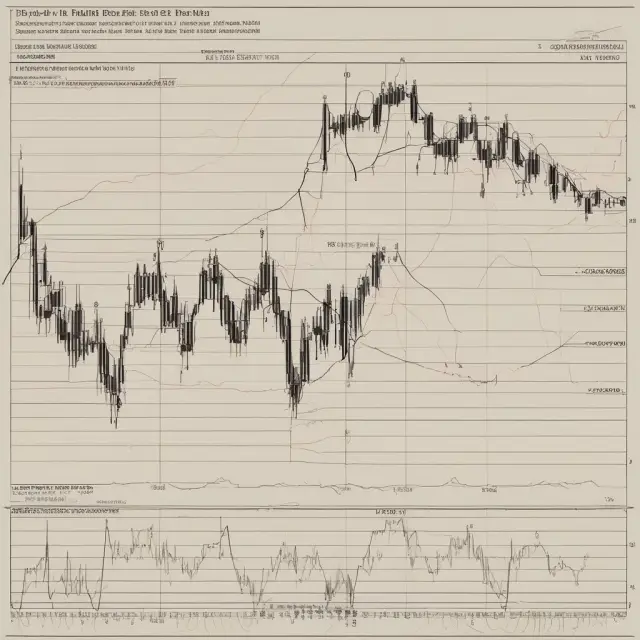
An example of bearish divergence is shown above with the price (red line) forming a higher high compared to MACD and its histogram (blue line). When MACD crosses below the signal line, it indicates a potential trend reversal towards a downturn.
Bullish Divergence: When Price Leads MACD
Conversely, bullish divergence occurs when prices form a lower low, but the MACD line and its histogram fail to make a new low. This discrepancy suggests that the downward trend in the security might weaken or reverse, as the momentum is now favoring a potential upturn. Bullish divergences can be identified by observing the following conditions:
- A lower price trough in the security without a corresponding new low in MACD or its histogram.
- The MACD line crossing above the signal line, confirming the bullish signal.
- An increasing momentum indicated by a bullish divergence in the MACD histogram.
An example of bullish divergence is illustrated above with the price (red line) forming a lower low compared to MACD and its histogram (blue line). When MACD crosses above the signal line, it suggests that the potential downtrend could weaken or even reverse and lead to an upturn.
Confirming MACD Signals with DMI (Directional Movement Index)
While MACD divergences can provide valuable insights into potential trend reversals, they are not foolproof indicators. False signals may occur due to price consolidation, ranging markets or trendless conditions. To minimize false signals and confirm MACD crossovers or divergences, it’s essential to consider the Directional Movement Index (DMI) and its key component, the Average Directional Index (ADX). By using both indicators together, you can increase the reliability of your analysis while minimizing false signals.
The ADX is designed to determine if a trend exists in either direction (bullish or bearish), while MACD measures the momentum between two moving averages. The ADX will provide confirmation when a significant trend is present, making it an effective tool in conjunction with MACD for verifying crossovers and divergences.

Using MACD for Confirmation in Trading
While Moving Average Convergence/Divergence (MACD) provides valuable insights into security trends with its crossovers and divergences, confirmation of these signals is crucial to minimize false moves. Traders often rely on the Directional Movement Index (DMI) system and its primary component, the Average Directional Index (ADX), for signal verification. Let’s explore how using MACD with ADX can enhance trading decisions.
MACD’s Signals vs. Confirmation
MACD provides buy and sell signals through line crossovers and divergences based on the relationship between two exponential moving averages (EMAs). However, these signals may not always be accurate. False moves or reversals can occur, leading to missed opportunities or losses. To mitigate this risk, traders frequently look to other indicators for confirmation before entering a trade.
The DMI system, specifically the ADX, is a trend-following momentum indicator that determines if a trend is present and in which direction it’s moving. When the ADX reading is above 25, it signals an existing trend (up or down), while readings below 20 indicate no clear trend. In this context, ADX serves as an essential confirmation tool for MACD signals to ensure their validity.
Bullish and Bearish Crossovers
Both bullish and bearish crossovers in the MACD indicator can benefit from confirmation using the ADX. For instance, a bullish crossover occurs when the MACD line crosses above its signal line, indicating an upward trend. If the prevailing market trend aligns with this bullish signal (as indicated by the ADX), it increases the likelihood of a profitable investment opportunity. Conversely, if the ADX shows no trend or a bearish trend during a bullish MACD crossover, it may be prudent to wait for confirmation before entering a trade, as the market might not be ready for an upward move.
On the other hand, a bearish crossover occurs when the MACD line falls below its signal line, signaling a downtrend. A downward trend in the market (confirmed by the ADX) increases the likelihood that the bearish MACD signal will lead to profitable short positions. However, if the ADX suggests an uptrend during a bearish MACD crossover, it might be wise to delay entering a short position until the trend reverses.
Understanding Divergence
MACD divergence refers to instances where the price chart and MACD indicator produce conflicting signals or trends. For example, when a security reaches new highs but the MACD does not, it creates a bearish divergence. If an investor observes a bullish trend in the market (confirmed by the ADX) during a bearish divergence, they may wait for further confirmation before making a trade, as the MACD might be signaling a potential reversal that could result in missed opportunities or losses.
In conclusion, using MACD with the DMI system and its ADX component can significantly improve trading decisions by providing reliable confirmation of signals generated from the MACD indicator. Traders who incorporate this approach into their strategies have a better chance of capitalizing on accurate buy and sell signals while minimizing potential risks associated with false moves or reversals.
FAQs:
What is the difference between MACD and RSI?
MACD measures the relationship between two EMAs, whereas RSI calculates average price gains and losses over a given period. They both provide valuable insights into momentum but may sometimes give conflicting signals.
How do I confirm MACD crossovers with ADX?
To confirm MACD crossovers with the ADX, check if the trend is present and in the expected direction. A bullish MACD crossover gains credibility when it aligns with a prevailing uptrend indicated by the ADX. Conversely, if the ADX signals an upward trend during a bearish MACD crossover, traders may choose to wait before entering a position.
How often should I check MACD and ADX for confirmation?
Traders typically monitor these indicators daily or weekly depending on their trading strategy and investment horizon. Regularly checking the signals and confirmations can help improve overall accuracy and performance in the market.

MACD: Limitations and False Signals
Understanding MACD’s limitations is crucial for traders and investors to avoid potential false signals or divergences that could negatively impact their portfolios. One of the main challenges with MACD lies in its susceptibility to generating false signals due to price consolidation, sideways movements, or range-bound trends following a significant trend direction.
False positives occur when MACD may signal an upcoming reversal but fails to materialize, which can result in missed opportunities or unnecessary losses. To mitigate this risk, it’s important to consult other trend-following indicators like the Directional Movement Index (DMI) system and its key component, the Average Directional Index (ADX). By using MACD in conjunction with these indicators, traders can improve their chances of identifying genuine reversals while reducing the likelihood of false signals.
For instance, when MACD shows a bearish divergence but the ADX indicates an existing trend, it may be wise to hold off on initiating a bearish trade and wait for further confirmation. Conversely, if MACD is displaying bullish crossover and the ADX has already shown a peak and reversal, traders may consider entering a long position confidently.
Another common limitation of MACD is its lack of clear-cut overbought/oversold levels. While some investors prefer to use arbitrary thresholds based on historical data or price action, others advocate using the indicator as a trend-following tool without relying too heavily on these levels. Instead, focusing on the relationship between MACD and the signal line along with price movement can help traders make informed decisions about entering or exiting positions.
In summary, understanding the limitations of Moving Average Convergence/Divergence (MACD) is essential for investors and traders to minimize false signals and effectively use this indicator in their financial strategies. By combining MACD with other reliable trend-following indicators such as the Directional Movement Index (DMI) system, traders can enhance their overall performance while mitigating potential risks associated with MACD’s susceptibility to false positives.
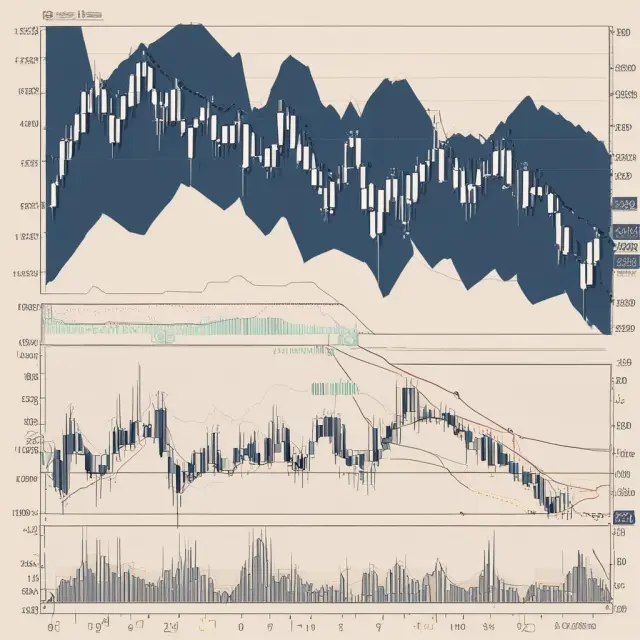
Example: MACD Crossovers and Divergence in Action
Understanding Moving Average Convergence/Divergence (MACD) signals can help traders identify potential buying or selling opportunities based on the relationship between two moving averages. Let’s delve deeper into real-life examples of MACD crossovers and divergences, emphasizing their importance in confirming trends and generating profits.
First, let us examine an example of bullish MACD crossovers:
In the chart above (Figure 1), you can observe the price of Apple Inc. (AAPL) from October 2021 to January 2022. In this instance, the price experiences a downtrend between mid-October and late December, with both the MACD line and signal line following the same descending trend. However, as the price starts to recover in January, so does the relationship between the MACD and signal lines, ultimately resulting in a bullish crossover when the MACD line crosses above the signal line (denoted by arrow A). This bullish crossover can be an indicator of a potential trend reversal or a continuation of the existing uptrend.
Figure 1: Bullish MACD Crossover in Apple Inc. (AAPL)
In some cases, traders might wait for confirmation from other indicators, like the Directional Movement Index (ADX), to further strengthen their belief in a trend reversal before making any investment decisions. A bullish crossover is more reliable when it coincides with the prevailing trend—for example, after a downtrend followed by a bullish divergence and a confirmed upturn in the ADX.
Now, let us explore an example of MACD bearish divergence:
In Figure 2, you will find another chart depicting the price movements of Tesla Inc. (TSLA) between June and September 2021. During this period, the price shows a steady uptrend from mid-June to early August. However, as MACD line forms higher highs while the price forms lower highs in late August (denoted by arrow B), a bearish divergence emerges. This discrepancy can signal potential weakness in the trend and even a potential reversal.
Figure 2: Bearish Divergence in Tesla Inc. (TSLA)
Bearish divergences, as well as bullish ones, require confirmation from other indicators before making any investment decisions based on them. For instance, traders might look for a bearish cross in the ADX line to validate the bearish divergence and confirm a potential downtrend. If an investment decision is made based solely on MACD, it is essential to note that false signals can occur. The importance of confirmation lies in reducing risk by minimizing the likelihood of being caught off guard by market movements.
By studying these examples, you gain a better understanding of how MACD crossovers and divergences can help traders make informed decisions based on trend analysis. To further deepen your knowledge of MACD, continue exploring its various aspects, such as calculating MACD, understanding MACD lines, and comparing it with other indicators like RSI.

FAQs on Moving Average Convergence Divergence (MACD)
What exactly is Moving Average Convergence/Divergence (MACD)?
MACD is a trend-following momentum indicator that compares the difference between two exponential moving averages (EMAs): a 26-period EMA and a 12-period EMA. The MACD line represents this difference, while the signal line—a nine-day EMA of the MACD line—acts as a trigger for buy or sell signals.
How are EMAs calculated in MACD?
An exponential moving average (EMA) is a type of moving average that places more weight on recent data points by applying an exponentially decreasing multiplier to older data. In MACD, a 12-period and 26-period EMA are calculated separately using the same formula but with different periods.
How does MACD generate buy/sell signals?
MACD generates buy or sell signals when its line crosses above or below the signal line (nine-day EMA) respectively. For instance, a bullish signal is generated when MACD line crosses above the signal line, indicating it’s time to buy. Conversely, a bearish signal occurs when the MACD line falls below the signal line, suggesting selling the asset may be a good idea.
What are overbought and oversold conditions in MACD?
Overbought and oversold conditions are used to measure the strength of a directional move and potential price reversals based on historical data. In MACD, these concepts relate to when the histogram is above or below the baseline (zero line). High values indicate bullish momentum while low values suggest bearish momentum.
How does MACD compare to other indicators such as RSI?
MACD and RSI are both used for momentum analysis but differ in their approaches. While MACD measures the difference between two EMAs, RSI looks at gains versus losses within a specific timeframe. Both can be used together for a more comprehensive technical picture, as they sometimes provide contrasting signals or confirmations of each other.
What are the limitations of using MACD in trading and investing?
MACD is not immune to false signals or divergences, which may lead to incorrect interpretations and potential losses. To minimize these risks, traders often consult other indicators like the Directional Movement Index (ADX) to confirm trends before entering a position based on MACD signals. Additionally, sideways movements in asset prices may cause MACD to produce false divergences that do not result in price reversals.
Can MACD be used for any type of security or market?
MACD can be applied to various securities such as stocks, commodities, currencies, or indexes. However, the settings (e.g., EMA periods) may need adjustment depending on the specific asset class and market conditions.
 Next entry · No. 3,036Understanding the Macro Environment: An Essential Factor for Institutional Investors
See also
-
 No. 2,718
29 Jan 2025
17 min
Understanding the Klinger Oscillator: A Powerful Technical Indicator for Trend Identification and Reversal Signals
Financial Data Analysis
No. 2,718
29 Jan 2025
17 min
Understanding the Klinger Oscillator: A Powerful Technical Indicator for Trend Identification and Reversal Signals
Financial Data Analysis -
 No. 2,669
25 Jan 2025
18 min
Understanding the Kairi Relative Index (KRI): A Technical Analysis Tool for Buy and Sell Signals
Financial Tools
No. 2,669
25 Jan 2025
18 min
Understanding the Kairi Relative Index (KRI): A Technical Analysis Tool for Buy and Sell Signals
Financial Tools -
 No. 4,188
29 May 2025
20 min
Understanding the QStick Indicator: A Technical Analysis Tool for Trend Identification
Market Trends
No. 4,188
29 May 2025
20 min
Understanding the QStick Indicator: A Technical Analysis Tool for Trend Identification
Market Trends -
 No. 3,020
22 Feb 2025
22 min
Understanding Low Volume Pullbacks in Finance and Investment
Business Finance
No. 3,020
22 Feb 2025
22 min
Understanding Low Volume Pullbacks in Finance and Investment
Business Finance -
 No. 2,899
12 Feb 2025
19 min
Understanding Linearly Weighted Moving Average (LWMA): Definition, Calculation, and Significance
Financial Data Analysis
No. 2,899
12 Feb 2025
19 min
Understanding Linearly Weighted Moving Average (LWMA): Definition, Calculation, and Significance
Financial Data Analysis -
 No. 4,752
14 Jul 2025
16 min
Understanding the Stochastic Oscillator: A Momentum Indicator for Overbought and Oversold Conditions
Financial Tools
No. 4,752
14 Jul 2025
16 min
Understanding the Stochastic Oscillator: A Momentum Indicator for Overbought and Oversold Conditions
Financial Tools