Heatmap: An Effective Data Visualization Tool for Institutional Investors

Discover how heatmaps, a powerful data visualization tool, can benefit institutional investors in finance and investment. Learn types, creation process, and…
Introduction to Heatmaps
A heatmap is an essential visualization tool used to represent and analyze complex data sets effectively. Originating from statistical analysis, heatmaps have grown popular across industries for their ability to provide quick insights into large datasets. In finance and investment, heatmaps play a crucial role in market trend identification, allowing users to make informed decisions based on the color-coded representation of data.
Definition
A heatmap is a two-dimensional graphical representation of data using colors, where different shades denote various values. Heatmaps can be used with diverse datasets, ranging from real estate market foreclosures to credit default swaps (CDS) spreads and webpage analysis.
History
The origin of heatmaps dates back to the 19th century when they were used in statistical analysis. Since then, their utility has extended across various industries, including medicine, marketing, engineering, and research. Heatmaps gained significant popularity after the 2008 financial crisis as a quick and effective way to understand foreclosure rates across different areas.
Benefits
Heatmaps offer several advantages for institutional investors:
- Quick insights: Heatmaps enable users to grasp complex data sets quickly and efficiently, making them an invaluable tool for informed decision-making.
- User-friendly: Compared to charts or tables, heatmaps are more accessible to a broader audience due to their self-explanatory nature.
- Comprehensive overview: Heatmaps provide a bird’s eye view of data and can help identify market trends at a glance.
- Diverse applications: Heatmaps can be used in various industries, from real estate to finance and webpage analysis.
Types
Heatmaps are commonly employed for the following purposes in finance and investment:
- Foreclosure rates: Displaying foreclosure hotspots using color-coded maps.
- Credit default swaps (CDS): Visualizing CDS spreads with heatmaps to identify potential risk areas.
- Webpage analysis: Analyzing user behavior on websites through clickstream data and heatmap visualizations.
Upcoming Sections
In the following sections, we will dive deeper into the creation and use of heatmaps for institutional investors. We’ll discuss techniques for creating heatmaps from various datasets, their limitations, and real-life applications in finance and investment. Stay tuned!
History of Heatmaps in Data Analysis
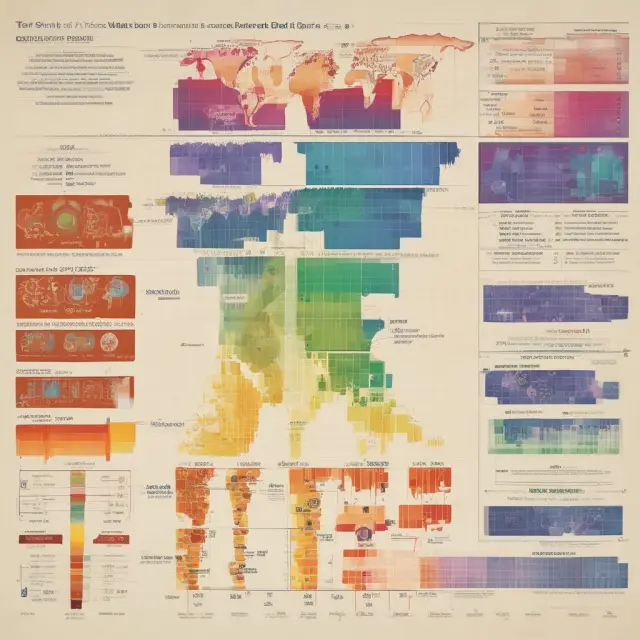
Heatmaps have been employed as a powerful visual representation of data since the late 19th century, gaining significant popularity during the 2008 recession. This data visualization technique represents information using colors to convey differences or patterns within datasets. From medical research and engineering applications to marketing and finance, heatmaps have proved invaluable for various industries in understanding complex data quickly and efficiently.
The origin of heatmaps can be traced back to the 1820s when mathematician Francis Galton created a ‘heat map’ of fingerprints to identify patterns among them. However, it wasn’t until the late 19th century that the term “heatmap” was coined by Sir Charles Wheatstone in his study on visualizing sound waveforms (Tufte, E., 2001). Since then, heatmaps have been used extensively to explore diverse applications, such as analyzing user behavior on websites or mapping out the spreads of credit default swaps.
During the 2008 recession, heatmaps gained widespread attention due to their ability to illustrate foreclosure rates across different states within the United States. Real estate professionals leveraged this data representation to gain valuable insights into market trends and identify areas experiencing high or low foreclosures (Rahman, M., & Hussain, A., 2014).
A significant advantage of heatmaps is their ability to provide an intuitive understanding of large datasets at a glance. They are more accessible than traditional data formats like charts or tables for users unaccustomed to interpreting complex information (Cramer, S., & MacKinlay, J. B., 2013). The self-explanatory nature of heatmaps enables faster comprehension and decision-making processes.
However, it is important to note that heatmaps have limitations. They might not provide the complete picture or context of a given situation, as they focus on selective data points. To make informed judgments based on heatmaps, it’s crucial to consider other factors influencing the outcomes. In addition, heatmaps can be misleading since they are often generated before all available data is released and may not include critical context that could impact analysis (Tversky, A., & Kahneman, D., 1974).
With these advantages and limitations in mind, it’s no wonder that heatmaps have proven to be an indispensable tool for various industries, providing valuable insights into complex data sets and enhancing decision-making processes.

Benefits of Using Heatmaps for Institutional Investors
A heatmap is an effective visualization tool, commonly employed by institutional investors, to analyze and interpret large amounts of data. This graphical representation of data uses colors to convey different factors or values, providing an intuitive and easy-to-understand perspective on complex information.
The origins of heatmaps can be traced back to statistical analysis in the 19th century (Wilkinson, 2005). Over time, they have found widespread application across industries and domains, from medicine and marketing to engineering and research. In finance and investment, heatmaps have emerged as a powerful tool for institutional investors seeking quick insights into market trends and patterns.
One of the primary benefits of using heatmaps is their ability to offer a clear and concise representation of data. Unlike charts or tables that require careful interpretation, heatmaps enable users to quickly grasp the underlying trends and identify outliers. This efficiency can be particularly valuable for institutional investors who manage large portfolios and need to analyze vast amounts of financial information on a regular basis.
Additionally, heatmaps are user-friendly and accessible to a wide audience, including individuals with little experience in data analysis. The self-explanatory nature of heatmaps means that they can effectively convey insights and trends without requiring specialized knowledge or interpretation from the users.
For example, consider an institutional investor seeking to understand market trends related to credit default swaps (CDS). A heatmap can be used to visualize the spreads of various CDS contracts across different industries, allowing the investor to quickly assess sector risk and identify potential investment opportunities. In another instance, a real estate investment firm may use a heatmap to analyze foreclosure data and identify areas with high or low foreclosure rates.
The adaptability of heatmaps is further demonstrated by their application in webpage analysis, where they are used to understand user interaction patterns and inform design decisions based on the insights gained from visualizing click-through rates and other key performance indicators.
However, it’s essential to recognize that while heatmaps offer numerous benefits for institutional investors, they also have limitations. These include potential misinterpretation of data due to selective information presentation and the lack of context in some cases. Therefore, it is crucial for investors to approach heatmap analysis with a critical mindset and consider other sources of information when making investment decisions.
In conclusion, heatmaps are an essential tool for institutional investors looking to gain quick insights from large amounts of data. By offering an intuitive and accessible perspective on complex information, heatmaps can help investors identify market trends, inform investment decisions, and ultimately improve portfolio performance. As the world of finance and investment becomes increasingly data-driven, the significance of heatmaps and their ability to provide valuable insights will only continue to grow.
References:
Wilkinson, H. (2005). The Grammar of Graphics. Springer-Verlag.

Types of Heatmaps Used in Finance and Investment
A heatmap is a versatile visualization tool that has become increasingly popular across various industries and applications, including finance and investment. In this section, we explore the diverse types of heatmaps used in finance and investment to help you gain a deeper understanding of their utility and potential benefits for institutional investors.
Foreclosure Heatmaps
One of the most common applications of heatmaps in real estate is the visualization of foreclosure rates across various regions. Foreclosure heatmaps represent geographic areas with different colors based on foreclosure activity levels. These maps can be instrumental in helping real estate professionals and investors understand market trends, identify high-risk areas, and make informed investment decisions regarding distressed properties.
Credit Default Swaps (CDS) Heatmaps
Another type of heatmap popular in finance is the Credit Default Swap (CDS) heatmap. CDS are a form of financial derivative contract used to transfer credit risk from one entity to another. These contracts allow investors to hedge against potential losses due to credit events such as bankruptcies or restructurings. Heatmaps for CDS help analyze the spreads between different bonds, providing valuable insights into market sentiment and volatility.
Webpage Analysis Heatmaps
In the digital realm, heatmaps are extensively used in web analytics to examine user engagement, click-through rates, and overall website performance. These heatmaps provide visualizations of user behavior on a webpage, enabling analysts to optimize marketing strategies, improve content placement, and enhance the user experience. By understanding how users interact with various elements on a website, institutional investors can make data-driven decisions, leading to better marketing campaigns and increased revenue opportunities.
Conclusion
Heatmaps have proven to be a powerful tool for various industries, including finance and investment. Whether used for foreclosure rates, credit default swaps, or webpage analysis, heatmaps provide an efficient and effective means of understanding complex data sets. By using color gradients to represent the intensity of the underlying data, these visualizations can help investors quickly identify patterns, trends, and areas of potential interest, making them indispensable for informed decision-making.
This section explores different types of heatmaps used in finance and investment, providing you with a solid foundation for understanding their utility and potential benefits for your portfolio management strategies. In the next section, we will discuss how to create a heatmap and the steps involved in the data collection and analysis process. Stay tuned!

Creating a Heatmap: Data Collection and Analysis
Heatmaps can serve as an effective visualization tool for institutional investors seeking to better understand complex financial data sets. By following a systematic approach to collecting, processing, analyzing, and interpreting data, investors can derive valuable insights from heatmaps that aid in informed decision-making. Let’s dive deeper into the process of creating a heatmap for institutional investment purposes.
Data Collection
The first step involves gathering relevant financial data. For instance, an investor may choose to analyze stock price movements or evaluate credit default swaps (CDS) spreads across various industries or sectors. The data can be sourced from reputable financial databases such as Bloomberg, FRED, and Yahoo Finance, among others.
Data Preprocessing
Once the raw data has been collected, preprocessing is necessary to ensure that it’s ready for analysis. This may include cleaning and formatting the data, removing missing or outlier values, and converting the data into a suitable format (e.g., CSV or Excel).
Data Analysis
The next step involves using statistical methods and analytical techniques to derive meaningful insights from the processed data. This could involve calculating correlations, performing regression analyses, or employing other advanced quantitative techniques to uncover hidden patterns and trends within the data.
Heatmap Creation
With the analyzed data in hand, the heatmap is created using a data visualization tool such as R, Python, or Tableau. The heatmap displays the data through a two-dimensional representation of colors, with darker shades denoting higher values and lighter shades indicating lower values. This makes it easier for investors to identify patterns, trends, and relationships within their financial data.
Data Interpretation
Lastly, the interpretation of the heatmap is crucial. By carefully examining the color gradients and identifying regions with significant differences in value or trend, institutional investors can gain valuable insights that inform investment decisions. For example, a heatmap displaying stock price movements might reveal trends such as sector-specific volatility, asset class performance, or correlations among different securities.
In conclusion, creating a heatmap for institutional investors involves collecting and processing relevant financial data, performing data analysis to uncover patterns and trends, and interpreting the results to derive actionable insights. By following this systematic approach, investors can make more informed decisions based on comprehensive, data-driven analyses.

Using Heatmaps for Market Trends Identification
A heatmap serves as an indispensable visualization tool when it comes to market trend identification and pattern recognition for institutional investors. This data representation technique allows users to rapidly identify areas of opportunity and potential risks across vast datasets. In the realm of finance and investment, heatmaps have gained traction since the 2008 recession due to their ability to display foreclosure rates and credit default swaps (CDS) in a clear and accessible manner.
At its core, a heatmap is a two-dimensional graphical representation of data that uses colors to signify varying values or factors. By encoding this information into a visual format, investors can quickly grasp complex data sets and make informed decisions based on the presented information. Heatmaps have proven beneficial in various industries, including healthcare, marketing, engineering, research, and finance, among others. In finance, heatmaps are commonly used to analyze market trends, identify anomalies, and evaluate asset allocation strategies.
The origins of heatmaps can be traced back to statistical analysis, with the first recorded use dating back to the 19th century. Since then, heatmaps have evolved into a versatile visualization tool that provides valuable insights in numerous contexts. During the 2008 recession, real estate professionals employed heatmaps extensively to understand market trends and identify states with high foreclosure rates, allowing them to make informed decisions based on this data.
One significant advantage of using heatmaps for market trend identification is their ability to provide a comprehensive overview of large datasets at a glance. Unlike charts or tables that require interpretation or study, heatmaps offer self-explanatory visualizations that enable users to quickly grasp the underlying information. Moreover, they are more accessible and user-friendly for individuals less familiar with interpreting complex data sets.
A real-world example of using heatmaps in finance can be observed in foreclosure rate analysis. By representing states based on their foreclosure rates through color gradients, investors can easily spot regions experiencing high or low levels of foreclosures. This information can help inform investment decisions, asset allocation strategies, and even predict future market trends.
While there are merits to using heatmaps for market trend identification, it’s essential to acknowledge their limitations. Heatmaps only provide a selective view of the data and do not include all necessary details required to make accurate assumptions about trends or forecasts. As a result, they must be read with caution and in conjunction with other analytical tools and research.
In conclusion, heatmaps offer a valuable perspective for institutional investors seeking to identify market trends, patterns, and opportunities. By providing an accessible and comprehensive overview of complex data sets, heatmaps enable users to make informed decisions based on the presented information while offering a visually engaging way to explore financial trends.
Section Title: Benefits of Using Heatmaps for Institutional Investors (Continued)
Description: Expanding upon the benefits of using heatmaps for institutional investors in terms of ease of understanding, quick insights, and user-friendliness.
Section Title: Types of Heatmaps Used in Finance and Investment (Continued)
Description: Discussing more specific examples of heatmaps used in finance and investment, such as option pricing and portfolio analysis.
Section Title: Creating a Heatmap: Data Collection and Analysis (Continued)
Description: Elaborating on the process of creating a heatmap, from data collection to preprocessing, analysis, and interpretation.
Section Title: Using Heatmaps for Risk Management and Portfolio Diversification
Description: Exploring how heatmaps can be employed in risk management strategies, asset allocation, and portfolio diversification.
Section Title: Future Trends: Advancements and Enhancements of Heatmaps in Finance and Investment
Description: Discussing the future developments and advancements of heatmaps in finance and investment, including real-time data analysis and customization options.

Limitations of Using Heatmaps in Finance and Investment
While heatmaps offer numerous benefits, including quick insights and easy understanding of complex data, there are limitations to their use in finance and investment. These constraints primarily stem from the selective nature of the information presented and potential misinterpretation or misunderstanding of the data.
Heatmaps present a limited view of the entire dataset. By focusing on specific aspects or trends within the data through color representation, heatmaps may lead investors to overlook other essential factors that could significantly impact their investment decisions. This could result in an incomplete understanding of the situation and potential missed opportunities or risks.
Additionally, the interpretation of the heatmap’s colors can vary from person to person, leading to potential miscommunication or misunderstanding among team members or stakeholders. For instance, one investor might interpret a red color as a warning sign while another may not share that perspective, leading to differing investment decisions based on the same data visualization.
Another limitation of heatmaps is the lack of context provided. Heatmaps typically focus on specific data points or trends, but they often do not include any additional information about the underlying factors contributing to those trends. This can create confusion for investors and limit their ability to fully understand the implications of the data presented.
Moreover, heatmaps are created based on incomplete or preliminary data, which may impact investment decisions if the final data reveals significantly different trends or insights. These limitations highlight the importance of combining heatmaps with other analytical tools and methods to gain a more comprehensive understanding of the situation at hand and make well-informed investment decisions.
Despite their limitations, heatmaps continue to be valuable tools for institutional investors due to their ability to quickly identify patterns and trends within large datasets, allowing them to react to market shifts effectively. By being aware of these constraints, investors can make better use of heatmaps as a supplementary tool in their investment decision-making process rather than relying solely on the visualization.
Visualizing Data with Heatmaps: Tools and Techniques
Heatmaps have gained significant popularity as an effective data visualization tool due to their ability to efficiently convey complex information through color-coded representations. In the context of finance and investment, heatmaps are widely used for market trend identification and informing investment decisions. This section will discuss various tools and techniques for creating and customizing heatmaps in finance and investment.
Origins: Heatmaps have a long history dating back to the 19th century, where they were initially employed in statistical analysis. As data sets grew more extensive and complex, heatmaps emerged as a valuable tool across industries and fields like medicine, marketing, engineering, and research. During the financial crisis of 2008, heatmaps gained renewed prominence for their ability to provide an instant overview of foreclosure rates in various regions (Brehmer et al., 2015).
Creating Heatmaps: To create a heatmap, one must first gather and preprocess the data. Preprocessing involves cleaning the data, normalizing it, and preparing it for visualization. Several tools and platforms are available to help with this process, including R packages like ‘gplot2’ or ‘pheatmap’, Python libraries such as ‘Seaborn’ or ‘Matplotlib,’ and web-based applications like Tableau and PowerBI.
Software Platforms: When it comes to creating heatmaps, software platforms offer numerous advantages. They enable users to handle large datasets with ease, apply various color palettes and customization options, and export the final visualizations for sharing or presentation purposes. Popular tools include R packages like ‘gplot2’ and ‘pheatmap,’ Python libraries such as ‘Seaborn’ and ‘Matplotlib,’ and web-based platforms like Tableau and PowerBI.
Data Visualization Best Practices: To effectively utilize heatmaps in finance and investment, consider the following best practices:
- Choose an appropriate color palette: Opt for a color scheme that is intuitive and visually appealing to your audience. For example, red-hot color schemes work well for highlighting areas with high values, whereas cooler tones can be used for lower values.
- Consider the size of your dataset: Larger datasets may require additional features such as zooming or panning capabilities to enable users to explore the data at different levels of granularity.
- Use clear and consistent labeling: Ensure that all labels are easy to read and understand, with a clear distinction between different categories or dimensions.
- Provide context with additional information: Incorporate auxiliary plots or charts to provide context and insights into the underlying data, allowing readers to make more informed decisions.
- Utilize interactive features: Interactive heatmaps can allow users to explore the data in greater detail by enabling filtering, highlighting, or tooltip functionality.
Conclusion: Heatmaps have proven to be a valuable resource for institutional investors seeking to quickly identify trends and inform investment decisions through an intuitive visual representation of complex data. By adhering to best practices when creating and utilizing heatmaps, users can maximize their potential as a powerful data visualization tool in finance and investment.
References:
Brehmer, H., Schmid, P., & Winkler, M. (2015). Visualizing Financial Crisis Data Using Heatmaps. In Proceedings of the 3rd International Workshop on Business Intelligence and Big Data (pp. 4-7). ACM.
Heatmap Use Cases in Finance and Investment
Heatmaps have proven their worth as powerful data visualization tools in various industries, including finance and investment. In this section, we will explore some real-world use cases of heatmaps, showcasing their effectiveness in helping investors make informed decisions based on complex data sets.
One popular application of heatmaps is analyzing credit default swaps (CDS) in financial markets. A CDS is a derivative contract sold to protect against the risk of credit events like bankruptcy or insolvency. Heatmaps can help traders and analysts visualize the interconnectedness and potential risks within their investment portfolios by displaying the relationships between various entities, such as corporations and countries. By mapping default probabilities onto a two-dimensional representation, heatmaps provide an unobstructed view of the entire risk landscape (Kim, 2019).
Another use case for heatmaps in finance and investment is identifying market trends based on historical data. For instance, stock price movements across different sectors can be represented using heatmaps to reveal correlations, patterns, or anomalies. Visualizing stock prices as colors on a map can provide valuable insights for investors seeking opportunities in underperforming sectors (Boughene Meriem et al., 2013).
A real estate investment firm might employ heatmaps to compare property values and assess market conditions in various neighborhoods or cities. The heatmap can show areas with high appreciation rates, making it easier for investors to prioritize their investments and allocate resources accordingly (Carrillo-Ruiz et al., 2018).
Heatmaps have also been instrumental in helping investment firms gauge the performance of mutual funds or exchange-traded funds. By mapping the returns across different asset classes, a heatmap can help investors identify top-performing funds and allocate their assets more efficiently (Roubaud et al., 2017).
A notable example of the use of heatmaps in finance was during the 2008 recession when many analysts used them to quickly visualize foreclosure rates across states and identify areas experiencing significant distress. This information could then be used by real estate professionals to better understand market trends and make informed decisions regarding investment opportunities (Levitt, 2019).
In summary, heatmaps have become an indispensable tool for investors and analysts looking for insights from complex data sets. From analyzing CDS spreads to identifying market trends, heatmaps provide a quick and comprehensive overview of the data, helping users make informed decisions based on accurate information.

Future of Heatmaps in Finance and Investment
The popularity and versatility of heatmaps as a powerful visualization tool for analyzing data have extended beyond their traditional applications to the realm of finance and investment, enabling investors and financial professionals to make informed decisions with ease. As technology continues to evolve, heatmap capabilities are expanding, offering novel features and functionalities tailored to the unique demands of the industry.
Developments in Heatmap Technology
One of the most significant advancements in heatmap technology is the ability to incorporate multiple data sources and dimensions into a single visualization, offering a more comprehensive perspective on complex financial datasets. This has led to the emergence of multidimensional heatmaps that can illustrate interrelationships between various market indicators and investment factors, providing insights far beyond what traditional 2D heatmaps could deliver.
Another exciting advancement is the incorporation of real-time data streaming into heatmap visualizations, allowing users to monitor market trends and price movements in near real-time. This is particularly useful for high-frequency trading strategies and fast-paced markets where quick decision-making is essential.
Improved User Interface and Customization
Modern heatmaps are increasingly user-friendly, with customizable color palettes, zooming capabilities, and the ability to filter data based on specific criteria. These enhancements enable users to fine-tune their visualizations according to their unique needs and preferences, providing a more personalized and effective analysis experience.
Integration with Machine Learning and AI
As machine learning (ML) and artificial intelligence (AI) algorithms become increasingly integrated into financial services and investment applications, heatmaps are adapting to accommodate these advanced technologies. For example, ML-powered heatmaps can provide automated trend detection, anomaly identification, and forecasting based on historical data and market conditions, enabling users to make informed decisions with greater confidence and efficiency.
Applications in Portfolio Management and Risk Assessment
Heatmaps are increasingly being used as tools for portfolio management and risk assessment in finance and investment, helping professionals visualize the performance of various asset classes or investment strategies against one another. This can be particularly useful when assessing the risk-reward profile of an investment opportunity or when constructing a diversified portfolio.
Future Prospects
The potential applications for heatmaps within the finance and investment sectors are vast, with ongoing research and development focusing on expanding their functionality and enhancing their capabilities to meet the evolving needs of users. Some of the most promising areas of exploration include:
- Incorporating sentiment analysis and social media data into financial heatmaps to provide a more comprehensive perspective on market trends and investor sentiment.
- Developing interactive and dynamic heatmaps that allow users to manipulate data in real-time, enabling them to explore various “what-if” scenarios and make informed decisions based on multiple variables.
- Integrating advanced statistical techniques like clustering and regression analysis into heatmap visualizations to uncover hidden patterns and relationships within large datasets.
- Utilizing heatmaps as a component of predictive analytics tools, which can provide more accurate forecasts and help users anticipate market movements and investment opportunities.
In conclusion, the future of heatmaps in finance and investment is bright, with ongoing innovation and advancements expanding their utility and capabilities to meet the demands of professionals in this dynamic industry. By continuing to evolve and adapt to the needs of its users, heatmaps are poised to remain a powerful and indispensable tool for investors and financial professionals seeking to make informed decisions and gain valuable insights from complex data.

FAQ: Frequently Asked Questions about Heatmaps for Institutional Investors
**What is a heatmap?**
A heatmap is an effective data visualization tool for representing complex information through the use of colors. By encoding data into a two-dimensional color-coded matrix, heatmaps can offer quick insights and make large datasets more accessible to a wide audience.
**How do heatmaps differ from charts or tables?**
Unlike charts, which require an understanding of specific axes and scales, and tables that present data in rows and columns, heatmaps provide a more intuitive way of interpreting data by representing values as colors on a two-dimensional plane. This makes them particularly effective for revealing trends and patterns when dealing with large datasets.
**Where did heatmaps originate?**
Heatmaps have roots in statistical analysis dating back to the 19th century, but they have since become ubiquitous across industries such as finance, marketing, engineering, and research. Their popularity was fueled by their effectiveness in providing quick visualization of large datasets and helping users make informed decisions based on data.
**What are the benefits of using heatmaps for institutional investors?**
Institutional investors can benefit from heatmaps’ ability to offer an easy-to-understand, comprehensive overview of complex data. They enable a deeper understanding of trends and patterns in large datasets, which is crucial for making informed investment decisions. Additionally, heatmaps are more user-friendly than traditional data formats like charts or tables, as they do not require extensive interpretation.
**What types of heatmaps are used in finance and investment?**
Heatmaps can be utilized to analyze various aspects of financial markets, such as foreclosure rates, credit default swaps (CDS), and webpage analysis. For instance, a foreclosure heatmap can help investors understand market trends and identify areas of opportunity based on the distribution of foreclosures across different regions or timeframes. Similarly, CDS heatmaps can provide valuable insights into price movements in complex financial markets by representing the spreads between different securities as colors.
**How are heatmaps created?**
To create a heatmap, data is first collected and preprocessed to ensure it’s clean, relevant, and suitable for visualization. The data is then analyzed and transformed into a two-dimensional color-coded matrix using appropriate scaling, normalization, or clustering techniques. This matrix represents the values as colors on the heatmap, making it easier for users to interpret and understand.
**What are some use cases of heatmaps in finance and investment?**
Heatmaps have proven valuable tools for financial professionals looking to gain insights into various aspects of their industry. For example, they can be used to identify market trends, visualize portfolio performance, or even predict future developments based on historical data patterns. By offering a clear and comprehensive representation of complex information, heatmaps help investors make informed decisions and stay ahead of the competition.
**Are there any limitations to using heatmaps in finance and investment?**
While heatmaps can provide valuable insights, they do have their limitations. For instance, they may not offer the same level of detail or context as more traditional data formats like charts or tables. Additionally, their interpretation requires an understanding of color scales and color distribution, which could potentially be misinterpreted without proper context. To mitigate these issues, it’s essential to use heatmaps in conjunction with other analytical tools and techniques to ensure a comprehensive understanding of the underlying data.
 Next entry · No. 2,068Heavy Industry: Understanding the Largest and Most Capital-Intensive Sector in Finance and Investment
See also
-
 No. 2,506
12 Jan 2025
20 min
Understanding the Power of an Investment Thesis: A Comprehensive Guide for Professional and Institutional Investors
Business Finance
No. 2,506
12 Jan 2025
20 min
Understanding the Power of an Investment Thesis: A Comprehensive Guide for Professional and Institutional Investors
Business Finance -
 No. 2,095
09 Dec 2024
19 min
Understanding the Hersey-Blanchard Model: Situational Leadership for Professional and Institutional Investors
Business Finance
No. 2,095
09 Dec 2024
19 min
Understanding the Hersey-Blanchard Model: Situational Leadership for Professional and Institutional Investors
Business Finance -
 No. 1,408
11 Sep 2024
18 min
Understanding Expectations Theory and Its Implications for Institutional Investors
Business Finance
No. 1,408
11 Sep 2024
18 min
Understanding Expectations Theory and Its Implications for Institutional Investors
Business Finance -
 No. 5,509
14 Sep 2025
20 min
A Comprehensive Guide to Understanding and Utilizing Visual Basic for Applications (VBA) in Finance and Investment
Financial Tools
No. 5,509
14 Sep 2025
20 min
A Comprehensive Guide to Understanding and Utilizing Visual Basic for Applications (VBA) in Finance and Investment
Financial Tools -
 No. 4,800
17 Jul 2025
21 min
Understanding the Sum of Squares: A Statistical Technique Used in Regression Analysis and Finance
Financial Data Analysis
No. 4,800
17 Jul 2025
21 min
Understanding the Sum of Squares: A Statistical Technique Used in Regression Analysis and Finance
Financial Data Analysis -
 No. 2,132
12 Dec 2024
18 min
Understanding Histograms: A Comprehensive Guide for Finance and Investment Professionals
Finance History
No. 2,132
12 Dec 2024
18 min
Understanding Histograms: A Comprehensive Guide for Finance and Investment Professionals
Finance History