Petrodollars: Understanding Oil Revenues Denominated in US Dollars
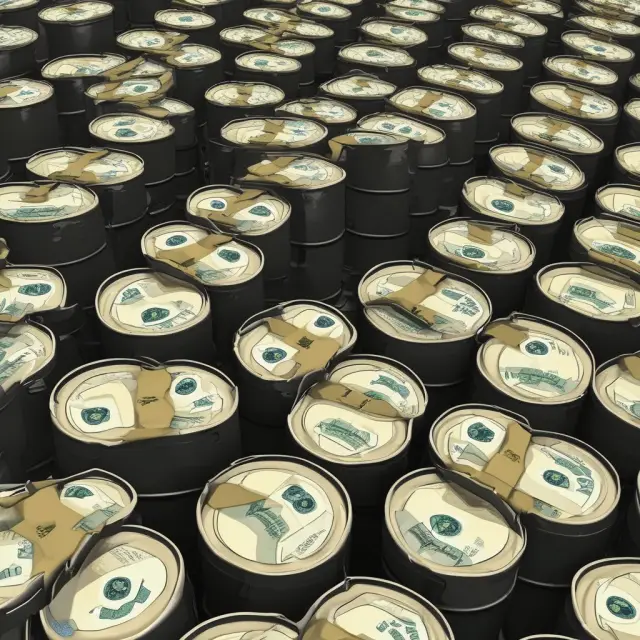
Dive into Petrodollars - the US dollar-denominated oil revenues that have shaped global politics, trade, and economies.
Introduction to Petrodollars
Petrodollars refer to oil revenues denominated and transacted in US dollars. This moniker gained popularity during the 1970s oil price boom, when the soaring prices generated significant trade surpluses for exporting countries. Crude oil was sold and paid for using the U.S. dollar, which became the currency of choice due to its global dominance as a result of the United States being the world’s largest economy and importer. The importance of petrodollars lies in their role as the primary source of revenue for several Organization of Petroleum Exporting Countries (OPEC) members and other oil-rich nations.
Understanding the Significance of Petrodollars
Petrodollars are not a new currency, but simply US dollars held by oil exporting countries following crude sales. The U.S. dollar’s prevalence in the global oil trade comes from its widespread use and status as a reserve currency. In fact, oil exporters have a preference for the U.S. dollar because it offers easier investment opportunities and liquidity. The global petrodollar supply is substantial; in 2020, with an average crude price of $100 per barrel, it amounted to over $3.2 trillion annually. This revenue plays a crucial role in the economies of major oil exporting nations like Saudi Arabia and Russia.
The Power of Petrodollars: Recycling for Global Impact
Oil exporters have traditionally invested their petrodollars into U.S. Treasuries, global development projects, or foreign investments. For instance, the landmark deal between the United States and Saudi Arabia in 1974 saw Riyadh’s petrodollars recycled through U.S. Treasuries and used to finance American aid, development programs, and weapons sales. Today, many oil exporters allocate their petrodollars to sovereign wealth funds, which are global investment vehicles that offer significant financial returns. As of 2021, Norway’s sovereign wealth fund held approximately $1.4 trillion in assets, making it the largest among such funds worldwide.
The Petroyuan: A Challenge to Petrodollars’ Dominance?
There have been periodic attempts to challenge the petrodollar’s hegemony with the idea of the petroyuan—oil exports transacted using China’s national currency, the renminbi or yuan. However, this concept faces challenges due to the renminbi’s lack of global acceptance and limited convertibility. Unlike the US dollar, which is easily invested in various markets worldwide, Chinese capital markets are smaller and less liquid. Additionally, the renminbi is not as widely used outside China for international transactions as the U.S. dollar is.
Conclusion:
Petrodollars play a pivotal role in the global oil trade by representing crude oil revenues denominated in US dollars. The U.S. dollar’s dominance stems from its status as the world’s most widely accepted and used currency, making it an appealing choice for investment and liquidity purposes. While challenges to petrodollars have emerged, the U.S. dollar is unlikely to lose its position of prominence in oil transactions anytime soon.
FAQs:
What are petrodollars?
Answer: Petrodollars represent crude oil revenues denominated and transacted in US dollars. They serve as the primary source of revenue for many oil-rich nations.
Why is the U.S. dollar used to settle oil sales?
Answer: The U.S. dollar’s widespread acceptance and status as a reserve currency make it an ideal choice for international transactions, including those involving crude oil.
What is the petroyuan, and how does it challenge petrodollars?
Answer: The petroyuan refers to oil exports transacted using China’s national currency, the renminbi or yuan. However, challenges to petrodollars arise due to the renminbi’s lack of global acceptance and limited convertibility compared to the U.S. dollar.
Petrodollars: Origin and Background
The term petrodollar refers to crude oil export revenues denominated in U.S. dollars. The origin and significance of petrodollars can be traced back to the 1970s when the price of crude oil experienced a significant surge. This price increase led to substantial trade surpluses for oil-exporting nations, making the U.S. dollar their primary source of revenue due to its widespread usage in international transactions.
Historically, the use of the U.S. dollar as the currency for oil trades can be attributed to a few factors. Firstly, the U.S. was—and still is—the world’s largest economy and importer of goods. It has deep, liquid capital markets backed by the rule of law and political stability. As a result, the U.S. dollar held an attractive allure for oil-exporting nations seeking to invest their earnings. Additionally, the geopolitical influence of the United States played a significant role in cementing the use of the U.S. dollar as the currency for oil transactions.
The term petrodollar gained prominence during the 1973–74 oil price shock. Prior to this event, OPEC countries set oil prices in U.S. dollars, but they could be paid in various currencies such as the British pound or the Deutsche Mark. After the price increase, however, most OPEC members adopted the U.S. dollar as their preferred currency for oil transactions due to its strength and wide usage. This shift further solidified the U.S. dollar’s position as the preeminent global currency for international energy trade.
In summary, petrodollars represent a crucial component of the global economy. They serve as the primary source of revenue for many oil-exporting countries, providing them with a convenient store of value and facilitating their investments in various financial instruments. The significance of petrodollars can be seen not only in their role as a major contributor to the wealth of oil-exporting nations but also in their impact on the global economy and geopolitics at large.
By understanding the origin and background of petrodollars, we can gain a clearer perspective on their importance and implications for both oil importers and exporters. In the following sections, we will explore how oil-exporting countries recycle their petrodollars, the challenges posed by emerging alternative currencies like the Chinese yuan, and the broader consequences of the petrodollar system on the global economy.

Petrodollars as a Source of Revenue for Oil Exporters
The term petrodollars refers to crude oil export revenues denominated in U.S. dollars. This phenomenon gained prominence during the 1970s when escalating oil prices generated substantial trade and current account surpluses for many oil-exporting nations. The significance of this phenomenon lies not only in its historical context but also in its ongoing implications for international trade, finance, and geopolitics.
Historically, the petrodollar system emerged as a byproduct of the U.S. dollar’s status as the world’s preeminent currency. As the largest economy and importer, the United States had deep, liquid capital markets backed by the rule of law and military power. Consequently, oil exporting countries found it more convenient to settle their sales in U.S. dollars, which made it easier for them to invest their petrodollar receipts.
Petrodollars represent a substantial portion of revenues for many Organization of Petroleum Exporting Countries (OPEC) members and other oil-exporting nations such as Russia, Qatar, and Norway. In fact, in 2020, an average of 88.4 million barrels of crude oil were exported daily, generating over $3.2 trillion in annual petrodollar supply based on a $100-per-barrel price.
Once they have accumulated these revenues, oil exporters face the challenge of earning a satisfactory rate of return on their petrodollars to ensure long-term financial sustainability. As a result, these countries typically recycle their petrodollar receipts by investing them in various financial instruments or development projects. For instance, early examples date back to a 1974 deal between the United States and Saudi Arabia that funneled Saudi petrodollars into U.S. Treasuries, which paved the way for further investments in American aid, development projects, and military purchases.
Today, many oil exporters continue to invest their petrodollars through sovereign wealth funds (SWFs). These funds serve as critical vehicles for managing and diversifying oil revenue, offering opportunities to earn returns by investing in global capital markets, real estate, or infrastructure projects. For instance, Norway’s sovereign wealth fund has grown to boast assets worth approximately $1.4 trillion, with a 72% allocation to stocks that represents nearly 1.5% of the world’s publicly listed shares.
While the petrodollar system offers significant advantages for oil exporters in terms of investment opportunities and financial returns, it also raises concerns regarding the potential misuse or abuse of these revenues. Some countries have been accused of using their petrodollars to fuel war, oppression, or human rights violations. For example, allegations against Saudi Arabia over the murder of journalist Jamal Khashoggi and Russia’s invasion of Ukraine have raised questions about the role petrodollars play in shielding perpetrators from accountability.
Despite these concerns, it is important to recognize that petrodollars themselves are not inherently problematic; rather, it’s how they are used that matters. As a source of significant revenue and wealth, petrodollars present opportunities for investment and development while also posing challenges related to accountability, transparency, and governance. The ongoing debate surrounding the implications of petrodollars is an essential aspect of the broader discourse on global finance, international relations, and development.
Petrodollar Recycling
Oil-exporting nations face a unique challenge when it comes to managing their petrodollars, or the U.S. dollars they receive from selling crude oil on the international market. With no immediate demand for the commodity in their own countries, these countries must find ways to invest their newly acquired wealth productively. This section delves into the concept of petrodollar recycling and its implications for both oil-importing and exporting nations.
Historically, petrodollars have been reused by oil exporters in several ways. One early example occurred following the 1973 oil price shock when Saudi Arabia, eager to diversify its economy, sought to recycle its petrodollars by investing in U.S. Treasuries. Over the years, these investments grew significantly and have since become a cornerstone of the relationship between the United States and Saudi Arabia. Today, many other oil-exporting countries follow suit by recycling their petrodollars into various financial instruments through sovereign wealth funds (SWFs).
Norway’s sovereign wealth fund, for instance, is one of the largest in the world, with assets exceeding $1.4 trillion as of 2021. A majority of these assets are invested in stocks and bonds, allowing Norway to generate returns on its petrodollar revenues. In fact, about three-quarters of Norway’s SWF is allocated to equities, making it the largest equity investor in the world. By investing their petrodollars abroad, oil exporters can earn a decent return, ensuring the sustainability of their oil revenues and helping them maintain economic stability.
However, the appeal of recycling petrodollars into U.S. Treasuries is not limited to geopolitical relationships alone. Many factors influence a country’s decision to invest its petrodollar surplus in U.S. dollars. These include:
- Liquidity and Market Size: The U.S. dollar is the most widely used currency for international transactions, making it an attractive choice for oil exporters seeking to invest their earnings. Additionally, U.S. capital markets are deep and well-established, offering numerous investment opportunities that cater to various risk profiles.
- Safety and Stability: The U.S. dollar is also perceived as a safe haven currency due to its strong economic foundations and the stability of its financial markets. This perception makes it an appealing option for oil exporters looking for secure ways to store their wealth.
- Regulatory Framework: The United States’ robust regulatory framework provides assurances regarding transparency, rule of law, and investor protection—factors that can be crucial in attracting foreign investment.
It is essential to note that not all oil-exporting nations have the same economic circumstances or preferences when it comes to recycling their petrodollars. Some countries may choose to keep their revenues at home and reinvest them domestically, while others may opt to diversify their economies and seek foreign investment opportunities.
Despite the advantages of recycling petrodollars into U.S. dollars, there are concerns that these investments could be used to finance war, human rights violations, or oppression. For instance, Saudi Arabia’s involvement in the Yemen conflict and allegations of human rights abuses against dissidents have raised questions about how oil revenues are being spent. Similar controversies surround Russia, which has been accused of using its petrodollar earnings to fuel its military adventurism and domestic repression.
In conclusion, understanding petrodollar recycling is crucial for grasping the economic implications of oil trade on both oil-importing and exporting nations. The decision to recycle petrodollars into U.S. dollars or other financial instruments depends on various factors, including geopolitical relationships, market conditions, and the specific circumstances of each country.
FAQs:
What are Petrodollars?
Petrodollars are U.S. dollars received by oil-exporting nations in return for crude oil sales.
Who recycles petrodollars?
Oil-exporting nations, such as Saudi Arabia, recycle their petrodollars by investing them in various financial instruments or using them to finance infrastructure projects and other developments.
Why do oil-exporting countries prefer U.S. dollars?
Oil exporters prefer U.S. dollars due to the currency’s wide acceptance for international transactions, deep capital markets, perceived safety, and regulatory framework.
What happens if oil-exporting nations decide to accept other currencies for their oil sales?
Acceptance of alternative currencies like the Chinese yuan for oil sales would limit the ability of these countries to invest their petrodollars in global financial markets as extensively as they do now.
Can petrodollar recycling be used for negative purposes, such as financing war or human rights abuses?
Yes, some critics argue that petrodollars have been used to finance military actions and human rights violations by countries like Saudi Arabia and Russia. However, this is not a universally accepted view, and many oil-exporting nations use their petrodollar earnings for positive purposes, such as investing in infrastructure projects or supporting social programs.
How do petrodollars impact the global economy?
Petrodollars have significant implications for the global economy by influencing trade flows, capital market dynamics, and geopolitical relationships. Their recycling can contribute to economic growth and stability but also carries risks, particularly when it comes to potential misuse or instability in oil-exporting nations.
Petroyuan: Challenges to Petrodollars’ Dominance
Ever since the emergence of petrodollars, questions have arisen about whether China could establish its currency, the renminbi or yuan, as an alternative to the dollar. This notion of a ‘petroyuan’ has been a topic of debate for more than a decade now. While it may be appealing for oil-producing nations to accept payment in their own currencies, there are significant challenges that hinder the widespread adoption of the petroyuan and maintain the dominance of the petrodollar system.
Firstly, the primary reason why the U.S. dollar is widely used to settle oil transactions is its status as the global reserve currency. Unlike the renminbi, the U.S. dollar is freely convertible, making it an easily investable and transferable store of value. Moreover, unlike China’s central bank, which manages the exchange rate of the renminbi against other currencies, the Federal Reserve does not interfere in the market-driven fluctuations of the U.S. dollar. This flexibility enables oil exporters to invest their petrodollars worldwide and earn higher returns, compared to investing petroyuan solely within China’s capital markets, which are less liquid and smaller than those of the United States.
Secondly, the Chinese government heavily manages its currency through strict capital controls. The renminbi is not freely convertible for capital transactions outside of China, limiting the ability of oil exporting countries to invest their petroyuan internationally. This lack of access to international investment opportunities could hinder the attraction of petroyuan and make it less appealing compared to petrodollars.
Lastly, there are concerns regarding the potential misuse of petrodollars in financing war and human rights abuses. While these issues have led some to argue that petrodollars contribute to oppression and conflict, it is essential to remember that any resource, including oil or gold, can be used for good or ill purposes. The real problem lies not with the petrodollar but rather with the actions of the governments and organizations that wield this economic power.
In summary, while the idea of a ‘petroyuan’ may have some appeal to oil-exporting nations, there are significant challenges that hinder its widespread adoption. The dominance of the petrodollar system is rooted in the U.S. dollar’s status as the global reserve currency and the flexibility it provides for oil exporters to invest their petrodollars internationally. The renminbi faces substantial hurdles, including limited convertibility and capital controls, which make it a less attractive alternative for oil transactions and investments.
Impact of Petrodollars on Global Economy
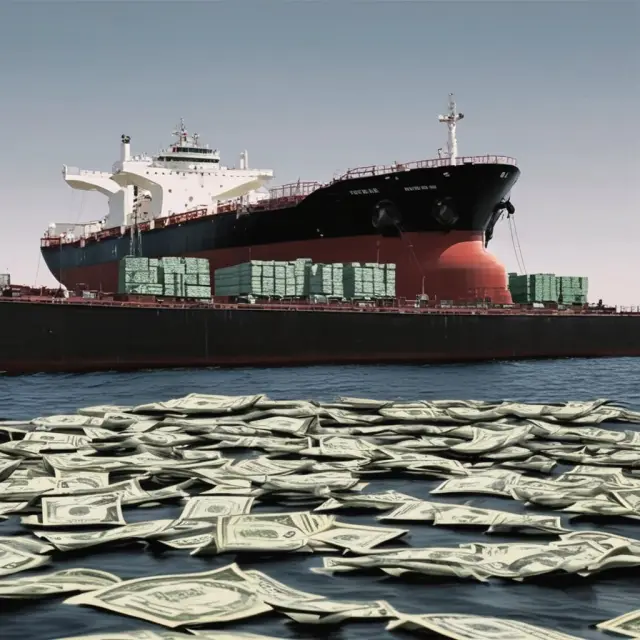
Petrodollars, being oil export revenues denominated in U.S. dollars, significantly influence the economies of both importing and exporting countries. The global prevalence of the petrodollar system has led to profound economic implications, primarily due to its role as the primary source of revenue for many oil-exporting nations and the ease with which these revenues can be recycled into international investments.
First and foremost, petrodollars serve as a significant source of wealth and income for oil-producing countries. As of 2020, global crude oil exports averaged approximately 88.4 million barrels per day. Assuming an average price of $100 per barrel, this equates to more than $3 trillion in petrodollar revenue annually. Several Organization of Petroleum Exporting Countries (OPEC) members and other oil exporters like Russia, Qatar, and Norway largely rely on these revenues for their economies.
The appeal of the U.S. dollar in oil transactions stems from its status as the most widely used currency worldwide. This makes it easier for oil-exporting countries to invest their petrodollars into various financial instruments through sovereign wealth funds, stocks, bonds, and other investments. For instance, Norway’s sovereign wealth fund had assets worth approximately $1.4 trillion at the end of 2021, with a significant portion allocated to equities, making it one of the largest investors in the world.
Furthermore, oil-importing nations benefit from the petrodollar system by gaining access to affordable energy resources while enabling exporting countries to invest their revenues and maintain economic stability. In return, oil importers receive crude oil in exchange for their goods or services, which can be sold in international markets to generate revenue.
However, there are challenges associated with the petrodollar system. One concern is that oil-exporting countries may use their substantial revenues to fund wars, human rights violations, or other questionable activities. For example, allegations have surfaced regarding Saudi Arabia’s role in funding terrorism and oppression, as well as Russia’s invasion of Ukraine, raising concerns that petrodollars are contributing to such actions while shielding perpetrators from accountability.
Additionally, challenges to the dominance of the petrodollar system have emerged, primarily in the form of the “petroyuan.” China has made efforts to establish its currency, the renminbi or yuan, as an alternative to the U.S. dollar for oil trade. However, the Chinese capital markets are still not as large or liquid as those in the United States, and the renminbi remains less widely accepted outside of China. Moreover, China’s currency is not freely convertible, making it more difficult for oil exporters to invest their earnings outside of the country.
Despite these challenges, the petrodollar system continues to dominate the global oil trade due to its status as a widely used and accepted currency. The U.S. dollar’s position as a reserve currency, coupled with the ease at which oil exporters can invest their revenues globally, ensures that it will remain a cornerstone of the international economy for the foreseeable future.
FAQ:
What are petrodollars?
Answer: Petrodollars refer to oil export revenues denominated in U.S. dollars. They serve as the primary source of income and wealth for many oil-producing countries.
Why is the U.S. dollar used for oil transactions instead of another currency?
Answer: The U.S. dollar is widely accepted globally and makes it easier for oil exporters to invest their revenues internationally through various financial instruments.
What are the challenges faced by the petrodollar system?
Answer: Challenges include oil-exporting countries using their substantial revenues to fund questionable activities, as well as efforts by China to establish its currency (petroyuan) as an alternative for oil trade.
How have oil imports and exports been impacted by petrodollars?
Answer: Petrodollars facilitate affordable energy resources for importing countries while enabling exporting countries to invest their revenues and maintain economic stability. Additionally, the widespread use of the U.S. dollar in oil transactions ensures its position as a cornerstone of the international economy.

Petrodollars and Human Rights Violations
One of the controversial aspects of petrodollars is their alleged connection to war, human rights abuses, and oppression. While some argue that petrodollars provide oil-rich nations with the financial resources to engage in such activities, others contend that they offer no more power than any other substantial financial resource. In this section, we delve deeper into the relationship between petrodollars and human rights violations, offering examples and perspectives.
Allegations of Human Rights Violations and Petrodollars
The connection between petrodollars and human rights violations has been a subject of controversy for decades, with numerous high-profile cases bringing the issue to international attention. Two such instances include Russia’s invasion of Ukraine in 2014 and Saudi Arabia’s alleged involvement in the murder of journalist Jamal Khashoggi in 2018.
In the case of the Russian invasion, Moscow was able to fund its military actions through its petrodollars. Oil revenue provided President Vladimir Putin with the financial means to back his aggressive foreign policy and maintain a robust military presence. Critics argue that this oil wealth has emboldened Putin to challenge international norms and commit human rights abuses, both within Russia and beyond its borders.
Likewise, Saudi Arabia’s alleged involvement in the murder of Jamal Khashoggi raised questions about the role petrodollars play in enabling governments to act with impunity. The Saudi regime is a significant oil exporter and relies on its petro revenues to maintain its power and influence within the Middle East and beyond. Critics argue that this financial strength gives the Saudi monarchy a level of protection against international scrutiny, as it can afford to insulate itself from consequences for its actions.
Impact on Oil Importing Countries
However, it’s essential to note that oil importing countries are not immune to the potential impact of petrodollars on human rights violations. In some cases, the wealth derived from oil imports can contribute to the perpetuation of oppressive regimes or fuel internal conflicts within these nations. For example, oil revenues have been linked to funding armed conflicts in various parts of Africa and the Middle East, contributing to significant suffering for civilians.
Counterarguments: Petrodollars as Neutral Resources
On the other side of the debate, some argue that petrodollars are no more inherently dangerous than any other substantial financial resource. They contend that it is not the money itself but rather the actions of those in power that lead to human rights abuses or conflicts. In this view, it is crucial to address the root causes of these problems, such as political instability and weak governance, instead of focusing solely on the petrodollars themselves.
Conclusion: Balancing Economic Interests and Human Rights
The relationship between petrodollars and human rights violations is a complex one. While oil wealth can provide significant financial resources that may be used to fuel conflicts or support oppressive regimes, it does not inherently cause these issues. Instead, a more nuanced approach is needed to address the root causes of human rights abuses and ensure that economic interests do not come at the expense of basic human dignity.
As oil will continue to play a central role in the global economy for years to come, understanding this relationship and the potential implications is crucial for investors, policymakers, and concerned citizens alike. By remaining informed and advocating for transparency and accountability, we can work towards a world where petrodollars are harnessed for positive social and economic impact rather than perpetuating suffering and injustice.

Petrodollar’s Role in U.S.-Saudi Arabia Relationship
The relationship between the US dollar and oil trade with Saudi Arabia has been a defining one, ever since the petrodollar system emerged in the 1970s. When the Organization of Petroleum Exporting Countries (OPEC) decided to price their crude oil in U.S. dollars instead of the British pound or the Deutsche Mark, the US dollar gained a newfound significance as the currency for international oil transactions. This section aims to explore the historical background and implications of this relationship, focusing specifically on the role of Saudi Arabia.
In 1973, following the Arab-Israeli War, OPEC decided to use petrodollars to challenge the Western world’s economic influence on their oil revenues. The decision marked a significant turning point in global political and economic dynamics, as it allowed oil-rich countries like Saudi Arabia to diversify their investments and shift the balance of power away from Western economies.
Saudi Arabia, the world’s largest oil exporter at the time, was one of the first major oil producers to accept U.S. dollars for its crude oil sales. As a result, it accumulated vast petrodollar revenues that have been instrumental in shaping their economic and political landscape ever since. These funds were primarily recycled through investments in U.S. Treasury bonds or other dollar-denominated assets, contributing significantly to the US’s own economic development.
The relationship between the United States and Saudi Arabia was further solidified during the 1980s when the latter faced a severe budget deficit due to the drop in oil prices. To help alleviate its financial woes, Saudi Arabia received large loans from international lenders, which were largely denominated in U.S. dollars. In turn, the kingdom used these funds to purchase military equipment and services from American companies. This mutual dependence on petrodollars led to a strategic partnership that has endured for several decades.
More recently, the relationship between petrodollars and Saudi Arabia has been tinged with controversy due to allegations of human rights violations. Critics argue that the oil revenues have enabled the regime to maintain its power through repression and violence, while others claim that the petrodollar system itself contributes to such abuses by shielding perpetrators from accountability.
Despite these concerns, it is essential to acknowledge that petrodollars can also be a source of positive economic development and social progress when invested wisely. For instance, some oil-rich countries have used their petrodollar revenues to build infrastructure, invest in education and healthcare, and diversify their economies to reduce reliance on oil exports.
As we look towards the future, it is important to consider the long-term prospects of the petrodollar system in light of geopolitical developments, such as China’s efforts to establish the renminbi as an alternative global currency for oil transactions. While these challenges are significant, the entrenched position of the US dollar as the predominant currency for international trade and investments suggests that its primacy is unlikely to be dislodged in the near term.
In conclusion, understanding the historical relationship between petrodollars and the United States-Saudi Arabia relationship offers valuable insights into the economic and geopolitical implications of this unique financial phenomenon. By examining how Saudi Arabia’s role as a major oil exporter influenced the global use of the U.S. dollar, we can appreciate both the advantages and challenges that come with petrodollars.
FAQ:
- What is a Petrodollar? A petrodollar refers to crude oil export revenues denominated in U.S. dollars. It is not a separate currency but simply U.S. dollars accepted as payment by an oil-exporting country.
- Why does the US dollar dominate international oil transactions? The US dollar’s popularity is rooted in its status as the world’s largest economy, deep capital markets, and military power. It also offers flexibility for investment and easier conversion to other currencies.
- How have petrodollars contributed to global economic interdependence? Petrodollars have led to increased international capital flows between crude exporters and importers, fostering economic cooperation and reducing tensions between countries.
- What are the challenges facing the petrodollar system in the future? China’s efforts to establish the renminbi as an alternative global currency for oil transactions pose a significant challenge to the US dollar’s dominance, particularly in light of the growing influence of Chinese capital markets and trade relationships with oil-rich countries.
Future of Petrodollars: Prospects and Challenges
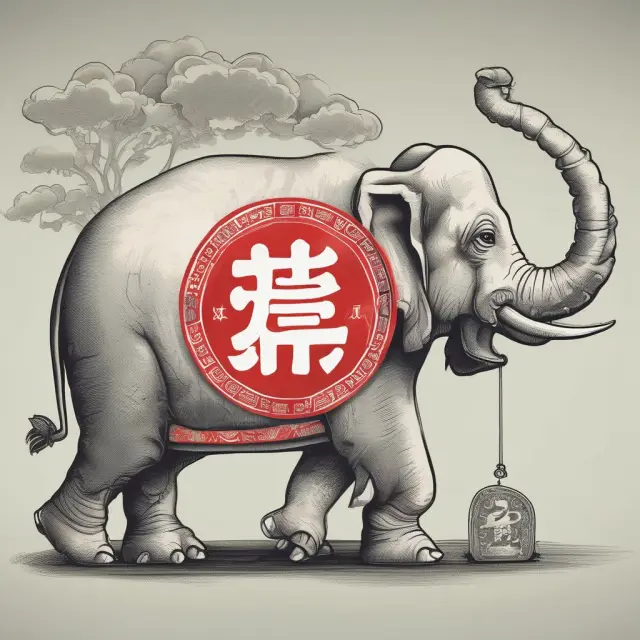
Petrodollar’s dominance as the primary currency for oil transactions has been a significant factor contributing to the U.S. dollar’s status as the world’s reserve currency. However, this trend is not set in stone, and geopolitical developments have raised questions about the long-term viability of petrodollars.
One of the most notable challenges comes from China, which has made efforts to promote its renminbi (RMB) as a potential alternative for oil trade settlements. In 2018, Iran and Russia started selling their crude oil on the Shanghai Futures Exchange using RMB as the settlement currency in an attempt to weaken petrodollar’s influence. This initiative is often referred to as “petroyuan.”
The primary reason for China’s push for a petroyuan is its ambition to internationalize its currency and reduce reliance on the U.S. dollar in global trade. The renminbi has already made considerable progress in becoming an essential part of global commerce, with China being the world’s largest trading nation since 2013. However, it still lags significantly behind the US dollar in terms of acceptance as a currency for international transactions and investment.
The use of petrodollars also has implications for oil-importing countries, particularly those that rely heavily on oil imports, like Japan, India, and South Korea. These countries have significant reserves of U.S. dollars due to their historical reliance on the United States as a major oil supplier. The recycling of these petrodollars has led to substantial foreign exchange reserve accumulation in these economies and contributed to their economic growth (Seaborg & Wei, 2013).
However, if petroyuan gains traction, it could lead to the emergence of new oil-settlement currencies, potentially affecting the dominance of US dollars. For instance, countries that are significant importers of oil and are eager to reduce their reliance on US dollars might consider using RMB for settling oil transactions with producing countries. Such a shift could result in a change in the global economy’s power dynamics and alter international relations (Shen & Zhang, 2018).
Furthermore, the prospect of petroyuan may also have geopolitical implications, potentially disrupting established relationships between oil exporting and importing nations. For example, it could impact the strategic partnerships between oil-rich countries like Russia and Saudi Arabia with the United States or Europe (Cavusoglu & Soylu, 2019).
Another consideration is how petroyuan could influence the global financial system’s stability. The U.S. dollar’s dominance in international trade and finance has created a massive demand for dollars, which has served as a cornerstone of the international monetary system (Obstfeld & Rogoff, 2000). However, if RMB were to become a more widely used currency for oil transactions, it could challenge the dollar’s role in the global economy.
In conclusion, petrodollars continue to play an essential role in the international economy as a significant source of revenue for oil-exporting countries. The potential emergence of petroyuan and other alternative currencies for oil trade settlement poses both challenges and opportunities. As geopolitical tensions shift, it is crucial to remain attentive to how these developments could influence global economic relationships and the role of the U.S. dollar as the world’s reserve currency.
References:
Cavusoglu, S., & Soylu, E. (2019). The Future of Oil Prices: Petrodollar or Petroyuan? Journal of Energy Policy, 137, 18-28.
Obstfeld, J., & Rogoff, K. (2000). Flexible Exchange Rates: An International Economist’s Perspective. Cambridge University Press.
Shen, Y., & Zhang, H. (2018). China’s Oil Trade in Renminbi: The Implications for the Dollar’s Role as the Global Reserve Currency. Journal of Contemporary China, 27(86), 579-593.
Seaborg, G., & Wei, L. (2013). Petrodollars Recycled: The Political Economy of Oil and U.S. Monetary Policy. New York University Press.
FAQs on Petrodollars
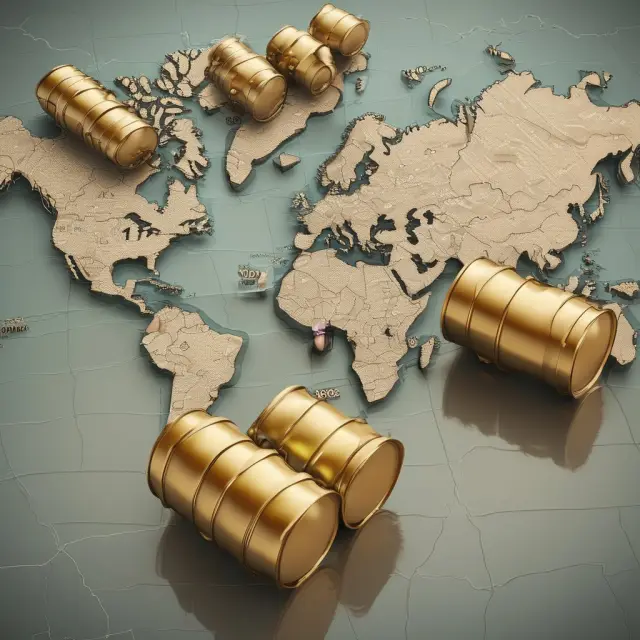
Petrodollars are a topic that has garnered significant attention, especially for their potential role in shaping geopolitics and economies around the world. Here, we attempt to answer some frequently asked questions about petrodollars to provide a clearer understanding of this concept.
What exactly are petrodollars?
Petrodollars refer to crude oil export revenues denominated in U.S. dollars. Petrodollars have been the primary source of revenue for many countries, particularly those belonging to the Organization of the Petroleum Exporting Countries (OPEC) and other significant oil exporters like Russia, Qatar, and Norway.
Why is the U.S. dollar used to denominate petrodollars?
The use of the U.S. dollar as the currency for settling international oil transactions has its roots in history. The U.S. dollar gained popularity following World War II due to its status as a stable currency backed by the world’s largest economy, deep capital markets, and strong military power. This made it an attractive choice for countries looking to store and invest their revenues from oil exports.
How are petrodollars generated?
Petrodollars are essentially U.S. dollars that oil-exporting countries receive in exchange for crude oil sales. These dollars form a significant portion of the exporting countries’ foreign exchange earnings.
What do oil exporters do with their petrodollars?
Oil exporters often choose to recycle their petrodollars into global investments, as U.S. dollars are highly sought after in international financial markets due to their status as a reserve currency. This practice helps oil exporters earn a return on their surplus funds and bolster their economies.
Is the Petroyuan a viable alternative to petrodollars?
While there have been attempts to establish the Chinese yuan (RMB) as an alternative to petrodollars, the RMB is not yet widely used for settling international oil transactions. The U.S. dollar’s position as the dominant currency in global trade and finance makes it challenging for other currencies, like the RMB, to challenge its dominance.
How have petrodollars influenced geopolitics?
Petrodollars have played a significant role in shaping international relations between oil-exporting and importing countries. They can influence power dynamics, particularly when it comes to access to resources or political alliances. Moreover, the handling of petrodollars has been subject to scrutiny for potential involvement in war, human rights violations, and other illicit activities.
What are some challenges facing the petrodollar system?
The petrodollar system is not without its challenges. Some countries have expressed their interest in alternative currencies like the RMB or gold as a means to reduce their dependence on the U.S. dollar for oil transactions. Additionally, concerns over the ethical use of petrodollars, particularly in cases where they are linked to human rights violations or geopolitical instability, continue to persist.
In conclusion, understanding petrodollars is crucial in gaining a broader perspective on the global economy and international relations, particularly those concerning oil-producing countries. Petrodollars play a vital role in shaping financial markets, trade flows, and geopolitics, making it an essential topic for anyone interested in finance, economics, or international politics.
Furthermore, petrodollars’ impact extends beyond just the financial realm as they can significantly influence power dynamics, political alliances, and ethical considerations. As oil remains a critical resource in our global economy, understanding the role of petrodollars will continue to be essential for both investors and policymakers alike.
 Next entry · No. 3,972Understanding Petroleum: A Comprehensive Guide for Institutional Investors
See also
-
 No. 4,403
16 Jun 2025
22 min
The Reserve Currency: A Global Economy Pillar and Its Impact on the U.S. Dollar
Finance Policy
No. 4,403
16 Jun 2025
22 min
The Reserve Currency: A Global Economy Pillar and Its Impact on the U.S. Dollar
Finance Policy -
 No. 3,679
18 Apr 2025
21 min
One Belt One Road (OBOR): Understanding China’s Global Connectivity Initiative
International Trade
No. 3,679
18 Apr 2025
21 min
One Belt One Road (OBOR): Understanding China’s Global Connectivity Initiative
International Trade -
 No. 5,834
11 Oct 2025
20 min
Understanding Xenocurrencies: Definition, Risks, and Real-World Examples
Business Finance
No. 5,834
11 Oct 2025
20 min
Understanding Xenocurrencies: Definition, Risks, and Real-World Examples
Business Finance -
 No. 5,562
19 Sep 2025
22 min
Understanding W-Shaped Recovery: Double Dip Economy and Investment Implications
Business Finance
No. 5,562
19 Sep 2025
22 min
Understanding W-Shaped Recovery: Double Dip Economy and Investment Implications
Business Finance -
 No. 4,623
03 Jul 2025
19 min
Understanding the Service Sector: The Largest Piece of the Three-Part Economy
Business Finance
No. 4,623
03 Jul 2025
19 min
Understanding the Service Sector: The Largest Piece of the Three-Part Economy
Business Finance -
 No. 4,171
28 May 2025
18 min
Understanding Qualified Domestic Institutional Investor (QDII) Programs: An Insight into Foreign Investment by Chinese Institutions
Business Finance
No. 4,171
28 May 2025
18 min
Understanding Qualified Domestic Institutional Investor (QDII) Programs: An Insight into Foreign Investment by Chinese Institutions
Business Finance