Understanding Petroleum: A Comprehensive Guide for Institutional Investors

An in-depth guide for institutional investors on the formation, extraction, investment opportunities, advantages, alternatives and regulations of the…
Introduction to Petroleum
Petroleum, also known as crude oil, is a naturally occurring liquid substance found beneath the earth’s surface. This non-renewable resource is formed over millions of years from the decomposition of organic matter. Petroleum is an essential commodity that powers our modern world, providing energy for transportation, heating, and manufacturing industries.
The Importance and Uses of Petroleum
Petroleum holds immense significance in today’s world due to its versatility. Its most common use is as a fuel for vehicles, but it also provides heat through natural gas and fuel oil, powers industry with petrochemicals, and serves as the building block for plastics and synthetic fibers.
The Extraction of Petroleum
Petroleum is extracted from reservoirs deep beneath the earth’s surface through various drilling techniques such as directional drilling or exploratory drilling. Once extracted, it undergoes refining to convert crude oil into usable fuels and products like gasoline, diesel, jet fuel, and heating oil.
Investing in Petroleum
Institutional investors have several avenues to invest in the petroleum industry. They can choose to directly buy stocks or exchange-traded funds (ETFs) of oil companies or indirectly through mutual funds focusing on energy sectors. Some popular investments include Vanguard Energy Fund and Fidelity Select Natural Gas Fund.
Understanding Petroleum’s Classification
Petroleum is classified based on its geographic location, sulfur content, and API gravity (density). The three primary categories are light, medium, and heavy crude oil. Companies engaged in different stages of the petroleum industry are upstream (exploration and production), midstream (transportation and storage), and downstream (refining, marketing, and distribution).
Pros and Cons of Petroleum
Petroleum provides essential energy sources but comes with environmental concerns. While it offers a high power ratio and is easily transportable, its extraction process can harm the environment, as demonstrated by incidents like underwater drilling leaks and fracking affecting water tables. The use of petroleum releases carbon into the atmosphere, contributing to global warming.
Alternatives to Petroleum
Renewable energy sources like solar, wind, and hydroelectric power are increasingly becoming popular alternatives for petroleum in electricity production, and biofuels made from renewable plant matter offer a potential substitute for gasoline and diesel fuels.
In conclusion, petroleum is a vital resource that powers our modern world with its various uses in transportation, heating, and manufacturing industries. However, it poses environmental concerns that necessitate exploring alternative energy sources like solar, wind, and biofuels to reduce the dependence on fossil fuels.
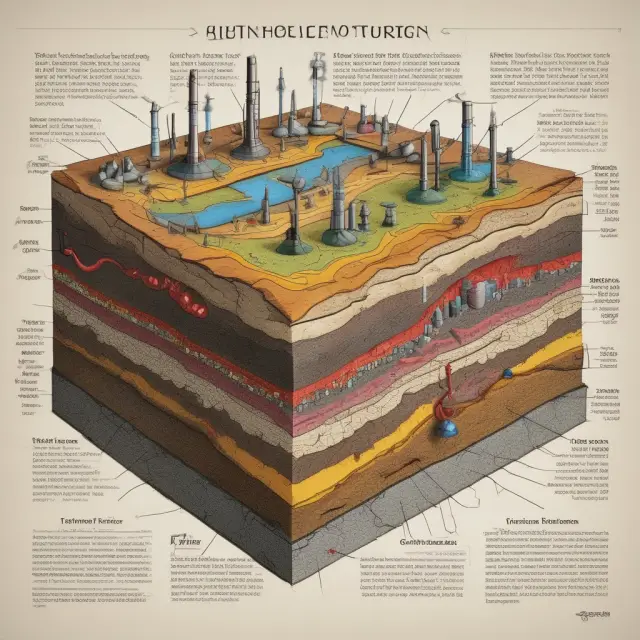
The Formation of Petroleum: Geological Perspective
Petroleum is a non-renewable resource that forms through geological processes beneath the earth’s surface. It originated millions of years ago when ancient organisms, including plankton and algae, were buried under sediment layers. As more sediment built up, it created an environment where heat and pressure could build, transforming organic matter into hydrocarbons. Over time, these hydrocarbons accumulated in porous rocks forming reservoirs.
This transformation process begins when organic materials are deposited in anoxic environments, which lack oxygen. In the absence of oxygen, the organic matter undergoes diagenesis, a natural decay process that breaks down complex organic molecules into simpler ones, such as methane and ethane. These gases can then migrate through porous rocks until they are trapped by impermeable formations or caprocks, forming a reservoir.
Petroleum is classified based on its density (API gravity) and viscosity. Lighter oils have higher API gravities and are easier to extract. Heavier oils, such as bitumen and tar sands, have lower API gravities and require more energy to extract. The geological conditions that influence petroleum formation include the presence of organic matter, adequate sealing capacity, porosity and permeability, and heat and pressure.
The study of petroleum geology involves understanding these conditions and using various techniques to locate reservoirs and estimate their oil-in-place, or how much oil is contained within them. Seismic reflection surveys, drilling, and modeling are some methods used in petroleum exploration to determine the size, location, and potential yield of a reservoir. Once discovered, companies extract the petroleum using various techniques such as drilling, hydraulic fracturing (fracking), or steam injection.
It is essential for institutional investors to understand these geological processes when considering investments in the petroleum industry. By understanding the formation and characteristics of petroleum, they can make informed decisions about which companies to invest in and anticipate potential risks and opportunities. Additionally, keeping abreast of advancements in exploration techniques and technologies can lead to profitable investments.
In conclusion, the petroleum industry is a vital contributor to the global economy and will continue to be so for the foreseeable future. Understanding how it is formed through geological processes is essential for investors looking to enter this sector. The ability to evaluate the potential of reservoirs and the companies that explore and extract them can lead to significant financial rewards. As the world transitions towards renewable energy sources, investments in petroleum may become increasingly complex, making a solid understanding of its formation process indispensable.

The Extraction and Processing of Petroleum
Petroleum is a finite resource extracted from beneath the earth’s surface through drilling. The process of extracting and processing petroleum involves several steps, each of which is essential for obtaining usable fuel. In this section, we will discuss the extraction process and its various methods, as well as the refining and separation techniques used to produce different types of fuels.
Exploration and Drilling
The first step in the petroleum production process is exploration, which involves identifying potential reservoirs through geological surveys and drilling test wells. Once a suitable location has been identified, an exploratory well is drilled to assess the quantity and quality of oil present. If commercial quantities are found, a production well is drilled and equipped with machinery to extract the crude oil.
Methods of Extraction
There are various methods for extracting petroleum from reservoirs depending on their location and characteristics. The most common methods include:
- Developmental drilling: In this process, oil reserves have already been discovered and wells are drilled to produce the known reserves.
- Exploratory drilling: This method is used when new oil fields are being explored, and a single well is drilled to determine if commercial quantities of crude oil are present.
- Directional drilling: In this advanced technique, a single well can be used to extract oil from multiple reservoirs or formations by drilling in different directions.
Refining and Separation
Once the crude oil has been extracted, it is transported to refineries for processing into usable fuels. The refining process involves heating the crude oil to separate it into its various components based on their molecular weights and densities. Lighter fractions such as gasoline and jet fuel are separated at the top of the distillation column, while heavier fractions like diesel and bunker fuel settle at the bottom. The final product can then be blended according to specifications for different markets and applications.
Understanding the Processes and Their Significance
The extraction and processing of petroleum is a complex process that involves many steps, from exploration to refining. Familiarity with these processes is crucial for investors seeking to understand the dynamics of the petroleum industry and its various investment opportunities. The next section will delve into the different ways institutional investors can invest in petroleum, including stocks, exchange-traded funds (ETFs), mutual funds, and oil futures.

Investing in Petroleum: Opportunities for Institutional Investors
Institutional investors have long recognized the importance of petroleum in the global economy and have sought to invest in this sector through various financial instruments. While there are different ways to invest in petroleum, institutional investors typically opt for stocks, exchange-traded funds (ETFs), mutual funds, or oil futures. Each investment instrument carries its unique advantages and disadvantages, making it essential for institutional investors to understand the underlying risks and rewards of each.
Stocks: Investing in Petroleum Companies
One of the most direct ways to invest in petroleum is by purchasing stocks of companies involved in exploration, production, refining, transportation, or distribution of oil and natural gas. Institutional investors can consider investing in major integrated oil companies such as ExxonMobil (XOM), Chevron Corporation (CVX), Royal Dutch Shell (RDS.A), BP PLC (BP), and ConocoPhillips (COP). These companies are involved in all stages of the supply chain, from exploration and production to refining and distribution. By investing in these stocks, institutional investors gain exposure to the entire petroleum value chain and can benefit from the company’s operational performance and financial results.
Exchange-Traded Funds (ETFs): Indirect Investing in Petroleum
Another way for institutional investors to gain exposure to the petroleum sector is by investing in ETFs that track a specific index or sector related to oil and gas companies. Some popular options include iShares U.S. Oil & Gas Exploration & Production ETF (IEO), Energy Select Sector SPDR Fund (XLE), and Vanguard Energy ETF (VDE). These funds provide investors with diversified exposure to various companies in the energy sector, which can help mitigate the risks associated with investing in individual stocks. However, it’s important to note that the performance of these funds may be influenced by broader market trends rather than the specific financials of the underlying companies.
Mutual Funds: Investing through Mutual Funds
Institutional investors may also consider mutual funds as a viable option for investing in petroleum. Unlike ETFs, mutual funds invest in a mix of securities and are managed by professional fund managers. These funds can offer institutional investors access to a diversified portfolio of stocks, bonds, or other securities related to the petroleum industry. Some popular mutual funds include Vanguard Energy Fund (VGENX), TIAA-CREF Stock Account – Equity Index 500 – Energy Sector (TCESX), and Fidelity Select Natural Resources Portfolio (FSRNX). Mutual funds may offer benefits such as professional management, diversification, and lower transaction costs compared to individual stocks. However, they often come with higher expense ratios than ETFs and may be less liquid due to redemption fees or minimum investment requirements.
Oil Futures: Hedging and Speculation in Petroleum Prices
Institutional investors may also choose to invest in oil futures as a hedge against price volatility or as a means of speculating on future price movements. Oil futures represent a standardized contract for the purchase or sale of a particular quantity and quality of crude oil at a future date. Institutional investors can use these contracts to protect themselves from potential losses due to price fluctuations in the underlying commodity, or they may attempt to profit from changes in oil prices through speculation. The CME Group’s New York Mercantile Exchange (NYMEX) is one of the primary markets for crude oil futures and options trading.
In conclusion, petroleum remains a crucial component of the global economy and offers various investment opportunities for institutional investors. By understanding the different investment instruments available, such as stocks, ETFs, mutual funds, or oil futures, institutional investors can develop a well-diversified and robust investment portfolio while capitalizing on the sector’s growth potential. Ultimately, thorough research and analysis are essential to making informed decisions regarding the best investment strategy for your institution.

The Petroleum Industry: Classification and Market Dynamics
Petroleum is a non-renewable resource that plays a significant role in powering our economy and daily lives. To better understand the importance of petroleum and its influence on financial markets, we need to delve deeper into its classification and market dynamics.
Classification:
1. Geological Perspective: Petroleum is formed when organic materials, such as algae, zooplankton, and plants, are buried deep within the earth and subjected to high temperatures and pressures over millions of years. The specific composition and properties of petroleum depend on the geologic conditions in which it was formed, including temperature, pressure, and geochemical factors. Petroleum can be classified based on its density, with lighter oils having a lower API gravity (American Petroleum Institute gravity) and heavier oils having a higher API gravity.
2. Geographic Classification: Petroleum is also classified based on where it is found geographically, with major oil-producing regions including the Middle East, North America, South America, Africa, Europe, and Asia Pacific. The distribution of petroleum reserves varies significantly among these regions.
Market Dynamics:
1. Supply and Demand: Petroleum is a global commodity traded on international markets, with prices determined by the balance between supply and demand. The Organization of the Petroleum Exporting Countries (OPEC), a group of 13 countries, plays a significant role in influencing the global petroleum market by controlling approximately 40% of the world’s oil reserves and around 60% of its total production.
2. Investment Opportunities: Institutional investors can gain exposure to the petroleum industry through various investment vehicles, including stocks, exchange-traded funds (ETFs), mutual funds, and oil futures contracts. Investing in petroleum offers both risks and rewards, making it essential for investors to closely monitor market trends and geopolitical factors that can impact supply and demand.
3. Alternative Energy Sources: With growing concerns over the environmental impact of petroleum use and increasing awareness of renewable energy sources, there is a push for alternatives to fossil fuels. Renewable energy sources such as solar, wind, and hydroelectric power are becoming more cost-effective and accessible, which could potentially disrupt the traditional petroleum industry.
4. Geopolitical Influence: The petroleum industry has significant geopolitical implications due to the concentration of oil reserves in certain regions and the strategic importance of oil as a global commodity. Countries with substantial oil reserves often hold considerable power and influence on the world stage, making understanding the geopolitics of petroleum a crucial aspect of investment analysis.
In conclusion, the petroleum industry plays a critical role in our economy, providing energy for transportation, heating, and industrial processes. Understanding its classification, market dynamics, and investment opportunities can help institutional investors make informed decisions when allocating capital to this sector. As we move towards a more sustainable future, alternative energy sources will continue to gain prominence, making it essential to stay up-to-date with the latest trends and developments in both petroleum and renewable energy markets.

Pros and Cons of Petroleum
Petroleum, or crude oil, has long been a cornerstone of the global economy due to its vast array of uses, from fueling transportation vehicles to heating homes. However, despite its numerous benefits, petroleum also comes with significant drawbacks that have sparked a growing debate over its continued use and the merits of alternative energy sources. In this section, we will explore both the advantages and disadvantages of using petroleum as an energy source, examining its environmental impacts, the challenges of extraction, and the emergence of renewable alternatives.
Advantages of Petroleum:
Stable Energy Source: Petroleum is a reliable energy source that provides a consistent level of power with minimal disruptions, making it an essential component of modern society. Its availability has enabled the development of industries such as transportation and manufacturing, which have propelled economic growth and technological advancements.
Easy to Extract: Compared to other energy sources like wind or solar, petroleum is relatively straightforward to extract using drilling techniques that have been refined over decades. This ease of access has contributed to its widespread use and affordability, making it a go-to choice for many countries and industries.
Versatile Uses: Petroleum’s uses extend far beyond fueling transportation vehicles and heating homes. It is also used as a raw material for the production of plastics, fertilizers, and other essential products, further underscoring its importance in various industries.
High Power Ratio: The energy density of petroleum is high, meaning it contains more energy per unit weight compared to other fuels, making it an efficient choice for transportation. Furthermore, its ability to be easily transported through pipelines and tankers has facilitated the global distribution of this vital resource.
Disadvantages of Petroleum:
Environmental Concerns: The environmental impact of petroleum is a significant concern. The process of extracting it can be damaging, with practices like fracking and offshore drilling posing risks to ecosystems and local communities. Moreover, the combustion of petroleum releases greenhouse gases, contributing to climate change and air pollution.
Carbon Emissions: Petroleum’s most notable disadvantage is its carbon footprint. When burned for energy, it releases large amounts of carbon dioxide (CO2), a potent greenhouse gas that traps heat in the Earth’s atmosphere and contributes to global warming. This emission is a primary cause of climate change and has prompted numerous governments and organizations to transition to cleaner, renewable energy sources.
Limited Supply: Petroleum is a finite resource that will eventually run out. As reserves dwindle, the pressure on countries and companies to find new sources and exploit existing ones becomes increasingly intense, potentially leading to unsustainable practices and geopolitical tensions.
Alternatives to Petroleum:
Renewable Energy Sources: The increasing concern over petroleum’s environmental impact has fueled a surge in the development of renewable energy sources like wind, solar, and hydroelectric power. These alternatives do not produce carbon emissions during use, making them a more sustainable choice for generating electricity and reducing greenhouse gas emissions. Moreover, these technologies are becoming increasingly cost-competitive with traditional fossil fuels, making them an attractive option for countries and companies looking to reduce their dependence on petroleum.
In conclusion, while petroleum plays a crucial role in powering the global economy, its environmental impact and finite nature have sparked a growing debate over its long-term viability as an energy source. Renewable alternatives offer a more sustainable solution, providing cleaner energy sources with minimal emissions and a reduced carbon footprint. As governments and organizations increasingly recognize the importance of reducing greenhouse gas emissions, the shift towards renewables is expected to continue, paving the way for a more sustainable future.

Alternatives to Petroleum: Renewable Energy Sources
Petroleum’s dominance in the world’s energy sector is slowly waning, with renewable energy sources gaining increasing popularity. Renewable energy sources like wind, solar, hydroelectricity, and geothermal power are increasingly becoming viable alternatives to petroleum for generating electricity and producing fuel. In this section, we will explore the most prominent renewable energy sources and how they compare to petroleum.
Wind Energy: Wind energy is generated by harnessing the power of wind using wind turbines. This renewable energy source has gained significant traction in recent years due to its cleanliness, cost-effectiveness, and abundance. According to the American Wind Energy Association (AWEA), wind energy capacity grew by 26% from 2019 to 2020, with a total installed capacity of 113 GW in the United States alone.
Solar Energy: Solar energy is generated using photovoltaic cells that convert sunlight into electricity. It has been growing at an impressive rate, with the International Energy Agency reporting that solar PV capacity increased by 25% in 2020 to reach 873 GW, surpassing coal as the world’s largest source of electricity capacity.
Hydroelectricity: Hydroelectric power is generated through the movement of water in rivers or from dam reservoirs. It is a mature renewable energy technology with significant installed capacity worldwide. The United States, China, Brazil, and Canada are some of the countries with the largest hydroelectric power capacity, according to the International Energy Agency.
Geothermal Energy: Geothermal energy is generated by tapping into the Earth’s internal heat. It has the potential to provide a constant and reliable source of electricity, especially in areas with high geothermal activity. The United States, Indonesia, Turkey, and Mexico are some of the countries that have significant geothermal power capacity.
Comparison to Petroleum: Renewable energy sources offer several advantages over petroleum as an energy source. They emit little or no greenhouse gases during operation, making them a cleaner alternative to petroleum. Additionally, they are renewable and offer a more sustainable long-term solution to the world’s energy needs compared to petroleum, which is a non-renewable resource. Moreover, renewable energy sources have the potential to provide energy security by reducing dependence on imported fossil fuels.
However, renewable energy sources also face challenges. Wind and solar energy are intermittent and require storage solutions to ensure a consistent power supply. Hydroelectricity and geothermal energy can have negative environmental impacts, such as the displacement of communities or damage to ecosystems.
In conclusion, while petroleum remains a dominant source of energy, renewable energy sources offer several advantages and are increasingly becoming viable alternatives. As technology advances and costs continue to decrease, it is expected that renewable energy will play an increasingly larger role in the world’s energy mix.

Petroleum Reserves and Geology: Exploration and Production
The discovery and extraction of petroleum is a complex process that requires extensive knowledge of geological structures and the application of advanced technology to locate and extract oil and natural gas reserves. Petroleum is found beneath the Earth’s surface in porous and permeable rock formations, primarily shale, sandstone, or limestone.
The first step in petroleum exploration is identifying potential reservoirs through geological research. Geologists, chemists, and engineers use seismic reflection techniques to study subsurface structures and map the distribution of hydrocarbons. A reservoir’s oil-in-place, which represents the volume of crude oil that can be extracted from a particular deposit, is an essential factor in determining its economic viability.
Exploration drilling involves drilling a well to test for the presence and size of petroleum reserves. If hydrocarbons are discovered, further evaluation is necessary to determine the commercial potential of the reservoir. Developmental drilling, which focuses on extracting oil from known reservoirs, and exploratory drilling, which aims to discover new reserves, are common techniques in the industry.
Directional drilling, a method used to drill vertically to known sources of oil or horizontally through reservoirs, is increasingly being employed to maximize recovery rates. Hydraulic fracturing, also called fracking, is another technique used to extract oil and natural gas from shale formations by injecting high-pressure water, sand, and chemicals into the rock.
Once crude oil has been extracted, it undergoes a refining process to convert it into various petroleum products such as gasoline, diesel fuel, jet fuel, and petrochemicals. Petroleum is classified according to its geographic origin, sulfur content, and API gravity (a measure of density). Understanding these classifications is essential for investors in the energy sector, as it helps them identify the specific risks and rewards associated with different types of petroleum investments.
The extraction and processing of petroleum requires a significant amount of capital investment, making it an attractive industry for institutional investors seeking to gain exposure to this crucial commodity. Mutual funds and exchange-traded funds (ETFs) that focus on the energy sector provide a convenient way to invest in petroleum without directly owning oil wells or refineries.
In conclusion, the exploration and production of petroleum is a vital part of the global economy and plays a significant role in world politics. A comprehensive understanding of the geological processes involved in discovering and extracting oil and natural gas reserves, as well as their classification and market dynamics, is essential for investors looking to capitalize on the opportunities presented by this dynamic industry.
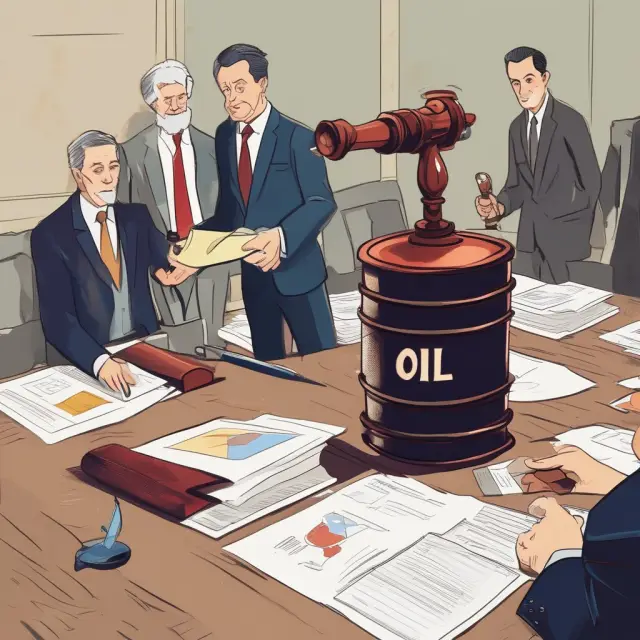
Regulations and Government Policies Impacting Petroleum Industry
Governments have a significant influence on the petroleum industry through various regulations and policies that impact production, distribution, pricing, and environmental concerns. Understanding these regulations can help institutional investors make informed decisions when investing in this sector.
One of the most significant ways governments regulate the petroleum industry is through taxes. For example, in the United States, the federal government imposes an excise tax on gasoline and diesel fuel production and importation. Additionally, many states impose their own state-level taxes on these fuels. In Europe, countries like France and Norway have implemented a carbon tax on petroleum products to encourage the use of alternative energy sources and reduce greenhouse gas emissions.
Another way governments regulate the petroleum industry is through production quotas and regulations on drilling and extraction processes. For example, in OPEC countries, production quotas are used to manage the supply of oil and maintain stable prices. In the United States, regulations on drilling and extraction processes aim to ensure safety and minimize environmental impact, such as those related to offshore drilling and hydraulic fracturing (fracking).
Environmental concerns have led to increased regulation in the petroleum industry. Governments around the world are implementing regulations aimed at reducing greenhouse gas emissions and addressing climate change. For example, the European Union has set a target of reducing greenhouse gas emissions by at least 40% below 1990 levels by 2030. In response, many countries have implemented carbon pricing policies or are exploring alternative energy sources to reduce their reliance on petroleum.
Government policies and regulations can also impact the pricing of petroleum products. For example, subsidies on gasoline prices in some countries can create an artificially low price, while high taxes on diesel fuel in others can make it more expensive than gasoline. These pricing discrepancies can affect demand for different types of fuels and impact companies in the industry differently.
Government policies and regulations play a crucial role in shaping the petroleum industry. Institutional investors should stay informed about these regulations and how they may impact companies in the sector. By understanding the regulatory landscape, investors can make more informed decisions when investing in petroleum stocks, ETFs, mutual funds, or oil futures.
In conclusion, the petroleum industry is a significant contributor to the global economy and has far-reaching impacts on politics and world affairs. Understanding this complex industry involves exploring its formation, extraction and processing, investment opportunities, pros and cons, alternatives, and regulations. In this section, we focused on the role of government policies and regulations in shaping the petroleum industry. These regulations impact production quotas, drilling and extraction processes, pricing, and environmental concerns, making it crucial for institutional investors to stay informed about these regulations and how they may impact companies in the sector.
FAQs: Commonly Asked Questions About Petroleum
What is petroleum?
Petroleum, also known as crude oil, is a naturally occurring liquid found beneath the earth’s surface that can be refined into fuel for transportation and other uses. It is a non-renewable fossil fuel consisting mainly of hydrocarbons and used to generate electricity, heat buildings, and power industries.
**How is petroleum formed?**
Petroleum is formed from the decomposition of organic matter over millions of years under extreme pressure and high temperatures in the earth’s crust.
What are the advantages of using petroleum?
Petroleum provides a stable energy source with a high power ratio, easy to transport, and versatile uses, making it essential for various industries and everyday life.
What are the disadvantages of using petroleum?
The environmental impact of petroleum extraction, transportation, and usage poses risks to air quality, water sources, and wildlife habitats. Moreover, it is a non-renewable resource with finite supplies.
How is petroleum extracted?
Petroleum is extracted through drilling or mining processes. Drilling involves creating a well in the ground and using equipment to extract the crude oil from the reservoir beneath. Mining, on the other hand, involves extracting bitumen or other heavy oils by surface mining or open pit methods.
What happens after petroleum is extracted?
After extraction, petroleum undergoes refining and processing to turn it into various products such as gasoline, diesel fuel, jet fuel, heating oil, lubricants, waxes, and chemicals. This process also separates impurities like sulfur and water from the crude oil.
What are the different types of petroleum?
Petroleum is classified by its chemical composition, density, viscosity, and color. The various types include crude oil, condensate, natural gas liquids, bitumen, and synthetic fuels. Each type has specific properties and applications, which influence their production and usage.
What are the alternatives to petroleum?
Renewable energy sources like wind, solar, hydroelectricity, geothermal energy, and biofuels have emerged as potential alternatives to petroleum due to increasing concerns about its environmental impact and finite supplies.
How is investing in petroleum done?
Institutional investors can invest in petroleum through various investment vehicles such as stocks, exchange-traded funds (ETFs), mutual funds, or commodity futures. Investing in companies with strong financial performance and a solid growth strategy in the oil and gas sector can provide attractive returns.
What are the key players in the petroleum industry?
The largest international oil companies include ExxonMobil, Royal Dutch Shell, Chevron Corporation, BP plc, ConocoPhillips, and Eni SpA. These companies dominate the upstream, midstream, and downstream sectors of the petroleum industry and have a significant impact on global energy markets.
In conclusion, petroleum is an essential resource that powers modern societies and industries but comes with its challenges related to environmental concerns and finite supplies. Understanding the formation, extraction, processing, investment opportunities, alternatives, and implications of using petroleum is crucial for institutional investors to make informed decisions in their portfolios while minimizing risks and maximizing returns.
 Next entry · No. 3,973Understanding the Functionality and Importance of a Company’s Petty Cash Fund
See also
-
 No. 3,657
16 Apr 2025
20 min
Understanding Oil Fields: Discovering and Maximizing the Value of Fossil Fuels
Energy Finance
No. 3,657
16 Apr 2025
20 min
Understanding Oil Fields: Discovering and Maximizing the Value of Fossil Fuels
Energy Finance -
 No. 5,680
29 Sep 2025
17 min
Understanding Wellbores: A Comprehensive Guide for Institutional Investors
Energy Finance
No. 5,680
29 Sep 2025
17 min
Understanding Wellbores: A Comprehensive Guide for Institutional Investors
Energy Finance -
 No. 3,658
16 Apr 2025
19 min
Understanding Oil Initially in Place (OIIP): An Essential Concept for Institutional Investors
Energy Finance
No. 3,658
16 Apr 2025
19 min
Understanding Oil Initially in Place (OIIP): An Essential Concept for Institutional Investors
Energy Finance -
 No. 3,605
12 Apr 2025
17 min
Understanding the Role and Significance of OAPEC: History, Structure, and Influence
Energy Finance
No. 3,605
12 Apr 2025
17 min
Understanding the Role and Significance of OAPEC: History, Structure, and Influence
Energy Finance -
 No. 2,266
23 Dec 2024
29 min
Understanding Hydrocarbons: Uses, Types, Impacts, and Alternatives
Energy Finance
No. 2,266
23 Dec 2024
29 min
Understanding Hydrocarbons: Uses, Types, Impacts, and Alternatives
Energy Finance -
 No. 5,345
01 Sep 2025
20 min
Upstream Oil and Gas Operations: Understanding the Exploration and Production Sector
Business Finance
No. 5,345
01 Sep 2025
20 min
Upstream Oil and Gas Operations: Understanding the Exploration and Production Sector
Business Finance