Understanding Delivered Ex-Ship (DES): A Defunct International Trade Term for Professional and Institutional Investors

Understand the historical significance of Delivered Ex-Ship (DES) in international trade and commerce. Learn about this obsolete term's definition…
Introduction to Delivered Ex-Ship (DES)
Delivered ex-ship (DES), also known as “delivered at ship,” was a trade term used in international shipping contracts that required the seller to deliver goods onboard a vessel at an agreed port of loading or discharge, with all risk and responsibility passing from the seller to the buyer upon delivery. This term applied mainly to sea freight transactions but could also be used for inland transportation and chartering services. The DES agreement stipulated that the seller was obligated to transport goods to the specified port, cover all costs related to loading, discharge, insurance, and freight until the point of transfer, while the buyer took responsibility for customs clearance, unloading, and further transportation from the designated port.
Incoterms, established by the International Chamber of Commerce (ICC), are a set of standard international commercial terms that facilitate global trade by defining common contractual obligations between buyers and sellers. DES was one of the obsolete Incoterms replaced in 2011 with delivered at terminal (DAT) and delivered at place (DAP). Understanding these terms, their differences, and how they affect trade relationships is crucial for professional and institutional investors involved in cross-border transactions.
What Exactly Is Delivered Ex-Ship (DES)?
Delivered ex-ship was an international commercial term used primarily in shipping contracts that stipulated the seller’s responsibility for transporting goods to a port of arrival, where the buyer took ownership and assumed all further risks and costs. DES required the seller to deliver the goods onboard a vessel at the agreed-upon port and bear the risk and costs until this point was reached. The transfer of ownership occurred when the goods were placed aboard the ship, with the seller’s responsibilities ceasing once the merchandise had been handed over to the buyer on the ship.
The exact definition of DES varied slightly depending on the specific agreement between the parties involved and could differ from country to country. However, it generally implied that the seller was responsible for all costs related to loading and discharge, freight, insurance, and any customs formalities until the point of transfer at the port. The buyer assumed all subsequent costs, risks, and obligations.
Applicability of Delivered Ex-Ship (DES) in Shipping Contracts
Delivered ex-ship applied to both sea and inland transportation contracts, particularly in chartering services, where the seller or lessor provided a vessel for transporting goods. The term was also used when the buyer wished to take delivery of the goods at the port rather than at the seller’s warehouse or premises. In such cases, the seller would arrange for the shipment, pay freight and insurance costs up until the transfer point at the port, and then hand over the merchandise to the buyer onboard the vessel.
Upon delivery, all risk and ownership transferred from the seller to the buyer, who was responsible for unloading, customs clearance, and further transportation of the goods from that point forward. This arrangement allowed the buyer to gain immediate access to the purchased merchandise while limiting their exposure to potential risks associated with long-term storage or handling at the seller’s premises.
Conclusion
Delivered ex-ship (DES) was an international commercial term used in shipping contracts requiring sellers to deliver goods onboard a vessel at an agreed port, transferring ownership and risk upon delivery. The exact definition of DES varied slightly depending on the context of the agreement but generally involved the seller bearing all costs related to loading, discharge, freight, insurance, and customs formalities up until the point of transfer at the port. Buyers assumed responsibility for unloading, customs clearance, and further transportation of the goods from that point forward.
Despite its widespread usage in international trade, DES became obsolete as of 2011. It was replaced by delivered at terminal (DAT) and delivered at place (DAP), two new Incoterms that better catered to modern global trading practices. Understanding the implications, differences, and applications of these terms is crucial for professional and institutional investors involved in cross-border transactions.

What is Delivered ex-ship (DES)?
Delivered Ex-Ship (DES) was an international commercial term, also known as an Incoterm, which denoted specific obligations and responsibilities for sellers and buyers regarding the delivery of goods in international transactions. The term was primarily used in contracts involving shipping, both inland and at sea. This section aims to provide a detailed explanation of Delivered Ex-Ship, its meaning, legal significance, and differences from other Incoterms, as well as real-world examples for better understanding.
Meaning and Definition
Delivered ex-ship (DES) is an international trade term used in sales contracts to define the point at which the risk and ownership of goods are transferred from the seller to the buyer. The seller’s obligations under this term include delivering the merchandise to a designated port or place aboard the ship, clearing it for export if necessary, and carrying out all transportation costs until the moment the goods have arrived at the agreed-upon port. Once the goods have been delivered on board the ship at the port of loading, DES signifies that the buyer assumes full responsibility for further transportation, unloading, importation customs clearance, and any other fees or charges associated with receiving the cargo.
Legal Significance
The term Delivered Ex-Ship is significant because it stipulates the specific points where the risks, responsibilities, and costs are shifted from one party to another in an international transaction. The seller’s obligations cease once the merchandise has been delivered on board the ship at the port of loading, while the buyer assumes all remaining responsibilities for importation clearance, unloading, and onward transportation. It is essential for sellers and buyers to understand the legal implications of this term as they can significantly impact the overall costs, risks, and timely delivery of goods.
Differences from Other Incoterms
DES should not be confused with other Incoterms like Delivered ex-quay (DEX) or Ex Works (EXW), which have different implications for sellers and buyers. Delivered ex-quay specifies that the seller must deliver goods to a wharf, quay, or any other named place at the destination port. In contrast, DES covers the delivery of merchandise aboard a ship at the port of loading, while the buyer assumes all costs, risks, and obligations from the point of arrival at the destination port. Another term, Ex Works (EXW), states that sellers are only obliged to make the goods available for pickup at their premises or a named place of delivery, while the buyers cover all transportation costs.
Real-world Examples
A seller in Germany contracts with a buyer in the United States to ship goods by sea. The contract stipulates that the seller is responsible for delivering the cargo aboard the ship at the German port and clearing it for export. Once the goods have been loaded on board the vessel, the risk and ownership are transferred to the U.S. buyer, who will bear all costs associated with importation clearance, unloading, and further transportation.
In conclusion, Delivered Ex-Ship (DES) is an essential international trade term that specifies the point where the responsibilities, risks, and costs for goods transfer from a seller to a buyer in shipping contracts. Understanding its meaning, legal significance, and differences from other Incoterms like Delivered ex-quay and Ex Works can help sellers and buyers make informed decisions when negotiating international sales agreements.
FAQs:
When is Delivered Ex-Ship (DES) used?
Answer: DES is used in contracts involving the shipment of goods, both inland and at sea.
Which party assumes the risk and responsibility for damages under Delivered Ex-Ship?
Answer: The seller assumes the risk and responsibility for any damages to the merchandise until it has been delivered aboard the ship at the port of loading. Once delivered, the buyer assumes all risks and responsibilities.
What happens if there is a delay in delivery under DES?
Answer: If there is a delay in delivery under Delivered Ex-Ship, the seller may be liable for damages caused to the buyer due to the delay, depending on the terms of the contract.
Does Delivered Ex-Ship cover importation customs clearance?
Answer: No, once the merchandise has been delivered aboard the ship at the port of loading under DES, the buyer is responsible for all costs and obligations associated with importation customs clearance.
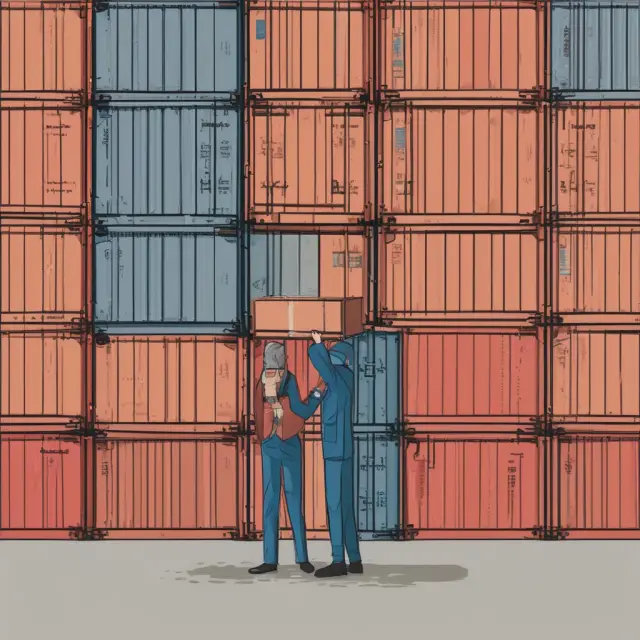
How did DES apply to international shipping contracts?
Delivered Ex-Ship (DES) is a term that once held significant importance in international shipping contracts. This term was an outdated and now-expired commercial term used primarily for both inland and sea transportation transactions under the International Commercial Terms (Incoterms). With the expiration of DES, it is crucial to understand how it functioned within shipping contracts.
The Delivered Ex-Ship term required sellers to deliver goods directly onto a ship or vessel at an agreed port of departure or loading point, without taking responsibility for unloading the cargo. The seller would assume all risks and costs associated with delivering the goods to this point. The buyer, on the other hand, was obligated to bear the cost and risk for any transportation from the port of arrival to their destination.
For instance, in a DES shipping contract, the seller’s responsibility would include arranging for the carrier to transport the goods to the agreed-upon loading port. They were also responsible for paying all freight charges and obtaining necessary insurance coverage to secure the cargo during transit. Once the goods had been loaded onto the vessel at the designated port, the seller’s obligations ended, and the buyer took over the responsibility for any further transportation costs and risk.
To illustrate this concept, consider a seller in Germany manufacturing automobiles. They would enter into a DES shipping agreement with an American buyer. The seller arranges for the vehicle to be transported to Hamburg Port in Germany, where it is loaded onto a vessel headed for New York. Once the vehicle has been successfully loaded onto the ship at Hamburg, all obligations and risks transfer from the seller to the buyer.
In charter shipping, DES applied when goods were shipped on the buyer’s or third-party vessels, meaning that the seller was required to deliver the cargo directly to the buyer’s vessel without assuming any responsibility for its further transportation. This arrangement provided a level of certainty and control to both parties as they could define their individual roles and obligations in the transaction.
In conclusion, Delivered Ex-Ship (DES) is an important historical term that played a significant role in international shipping contracts. By understanding how DES functioned within these agreements, we can appreciate its significance in transferring responsibilities between buyers and sellers, as well as the importance of clear communication and agreed terms to ensure successful transactions.

The Role of International Commercial Terms (Incoterms)
International trade and commerce often involve complex contracts that dictate various details about the transaction, from the time and place of delivery to payment terms, passing of risks, and freight and insurance costs. Delivered ex-ship (DES), as one type of these international contract terms, played a significant role in governing transactions related to shipping – both sea and inland. However, DES is now an obsolete term that was replaced by two new Incoterms: delivered at terminal (DAT) and delivered at place (DAP).
Incoterms, which stands for International Commercial Terms, are an essential tool developed and published by the International Chamber of Commerce (ICC) to facilitate global trade and commerce. These terms aim to clarify the responsibilities and obligations between buyers and sellers in international transactions by providing a set of standardized definitions and rules. Incoterms ensure clear communication on issues such as delivery, payment, freight, insurance, risk transfer, and custom clearance.
One essential aspect of understanding Delivered Ex-Ship (DES) is recognizing its relationship to Incoterms. While it was a legal term used in international trade, the exact definition of DES varied somewhat depending on national jurisdictions. Generally speaking, though, a seller’s obligations under DES extended up until the point of delivery at the agreed port of arrival.
In a shipping context, the seller was responsible for delivering the goods aboard the ship at the designated port. This included paying for the freight and purchasing insurance coverage for the goods while they were in transit. Once the goods had been delivered to the buyer at the port, all subsequent obligations, risks, and costs fell on the buyer.
It is important to note that DES was not identical to other Incoterms such as Delivered ex-quay (DEX). While both terms dealt with shipping, DEX specified that the seller would deliver goods to a wharf or quay at the destination port. In contrast, DES did not include coverage for wharves. Additionally, DES could be used in charter shipping contracts, while DEX was typically associated with contracts dealing with containerized cargo.
In conclusion, understanding Delivered Ex-Ship (DES) requires an appreciation of its role within the broader context of international commercial terms (Incoterms). These standardized terms are crucial for clarifying obligations and responsibilities in international transactions, providing a clear line of communication between buyers and sellers, and helping to foster a more efficient and effective global trading system.
As we’ve discussed, DES is now obsolete, having been replaced by DAT and DAP. These newer terms help ensure that the same level of clarity and standardization continues in international shipping contracts moving forward. By understanding the role of Incoterms like DES and their successors, professionals and institutional investors can effectively navigate the complexities of international trade and commerce.

Understanding Delivered ex-quay
Delivered ex-quay (DEQ) and Delivered Ex-Ship (DES) are two international commercial terms that may seem similar at first glance but hold distinct differences. While both deal with the delivery of goods, their responsibilities and implications diverge significantly. This section focuses on explaining how delivered ex-quay contrasts from DES.
Delivered ex-quay (DEQ), just like DES, was an Incoterm. However, instead of having the seller delivering goods to a port, DEQ specified that the seller must ship the goods to the wharf or quay at the destination port. This difference may not seem substantial, but it carried important implications for the responsibilities and costs involved in international shipping contracts.
Unlike DES, which ended when the seller delivered goods aboard the ship at the agreed-upon port, DEQ’s obligations persisted until the buyer received the merchandise at the destination quay or wharf. This difference made a significant impact on the risks, liabilities, and costs carried by both parties.
When it came to duties and taxes, DEQ could be specified as either paid or unpaid. If the seller was responsible for these fees under the contract, it would cover the cost of customs clearance in addition to shipping. However, if this responsibility fell upon the buyer, they would bear the burden of these costs once the goods were delivered at the quay or wharf.
Delivered ex-quay (DEQ) can be traced back to the 1936 International Chamber of Commerce’s first publication of international commercial terms. At that time, DEQ was one of the most widely used Incoterms for import contracts. However, like DES, it became obsolete with the introduction of newer terms in 2011. Today, two terms have replaced DES and DEQ: delivered at terminal (DAT) and delivered at place (DAP).
In summary, Delivered ex-quay (DEQ) represented a significant shift from Delivered Ex-Ship (DES), as it extended the seller’s obligations to cover duties, taxes, and customs clearance fees when specified in an international shipping contract. This change significantly impacted the division of responsibilities, risks, and costs for both parties involved in the transaction.

Replacements for Delivered Ex-Ship (DES)
Delivered ex-ship (DES) was a once widely used international trade term that required sellers to deliver goods to a buyer at an agreed port of arrival. The seller would bear all costs and assume the risk until the merchandise reached that point. Following the 2010 revision, DES became obsolete, replaced by two new terms: Delivered at terminal (DAT) and Delivered at place (DAP). Understanding these replacements sheds light on the importance of international commercial terms (Incoterms) in global trade.
Delivered at Terminal (DAT): An Alternative to DES
Under DAT, a seller is responsible for transporting and paying for goods until they are delivered and unloaded from the arriving means of transportation at the specified terminal. This term is an improvement on DES as it transfers responsibilities more clearly at the point of delivery, making it easier for both parties involved to understand their obligations.
Delivered at Place (DAP): The New Normal
In comparison, Delivered at Place (DAP) specifies that a seller bears all risks and costs up until the moment the goods are handed over to the buyer at their final destination. This term is more commonly used nowadays since it offers sellers a greater level of control and convenience in shipping and handling processes.
Comparing DAT and DAP with Delivered Ex-Ship (DES)
The key differences between these three terms lie in the transfer of risks, costs, and responsibilities during international transactions. DES required sellers to deliver goods to the port of arrival, while DAT and DAP determine the point at which buyers assume these obligations. Understanding the distinctions between these commercial terms can make a significant impact on the profitability and efficiency of a business engaging in international trade.
An example of how these terms differ: Seller X delivers goods to the port of arrival, but a storm damages or destroys the shipment before it is unloaded. Under DES, the seller would be responsible for the loss because they had not yet fulfilled their obligation by delivering the merchandise to the buyer. However, with DAT and DAP, the risk and cost transfer to the buyer once the goods are unloaded or delivered at the terminal or final destination, respectively.
Conclusion: Understanding the Relevance of Delivered Ex-Ship (DES)
Although Delivered Ex-Ship (DES) is no longer in use, it played an essential role in shaping the international trading landscape and fostering better understanding between buyers and sellers. The rise of new commercial terms like DAT and DAP further emphasizes the importance of keeping informed about changes in trade policies and practices to maintain a competitive edge and ensure successful business ventures in today’s interconnected world.

Comparing Delivered ex-ship with Ex Works
Delivered ex-ship (DES) and Ex Works are two distinct international commercial terms used in shipping contracts. While both terms specify various obligations of the seller and buyer, they differ significantly when it comes to risk and liability transfer. Let us first explore each term’s definition, followed by their key distinctions.
Delivered ex-ship (DES)
DES is an international commercial term that requires a seller to deliver goods to a buyer at an agreed port of arrival. The seller assumes full responsibility for all costs and risks in getting the merchandise from its origin to the designated port, including shipping, insurance, and export clearance fees. Once the goods are on board the ship, ready to be unloaded, the seller’s obligations under DES have been met. The buyer assumes all costs and responsibilities after the vessel arrives at port.
Ex Works (EXW)
In contrast, Ex Works is another international commercial term that specifies the seller’s obligation to make goods available for collection at their premises or warehouse. Under this term, the buyer bears all transport-related costs and risks from the point of pickup, including shipping, insurance, import duties, customs fees, and freight forwarding expenses. The seller has no obligations regarding the transportation, insurance, or delivery of the goods after they are made available for collection under EXW terms.
Comparative Analysis
To better understand the differences between DES and EXW, it’s helpful to examine their key features:
1. Responsibility for Costs and Risks
DES requires the seller to bear all costs and risks associated with transporting goods from the origin to the agreed port. Once the goods have arrived at the port, the buyer assumes responsibility for inland transportation, import duties, customs clearance fees, and other related expenses. In contrast, under EXW terms, buyers are responsible for all costs and risks involved in collecting the goods from the seller’s premises or warehouse, including transporting them to their destination.
2. Risk Transfer
The transfer of risk between the seller and buyer also varies between DES and EXW. Under DES, the seller bears responsibility for the merchandise until it is loaded onto the ship at the port of origin. After loading, risks are transferred to the buyer, who assumes all costs and responsibilities related to transporting the goods inland and clearing them through customs at their destination. With EXW terms, the seller’s responsibility ends when they make the merchandise available for collection at their premises or warehouse; the risk is then transferred to the buyer as soon as they take possession of the goods.
3. Applicability and Use Cases
DES is often employed in contracts involving international shipping, specifically charter parties. It is suitable when a seller wants to ensure that all costs related to transporting goods overseas are their responsibility. On the other hand, EXW terms are typically used when buyers want to minimize their transportation costs or have the flexibility to choose their preferred logistics provider.
In conclusion, while Delivered ex-ship (DES) and Ex Works (EXW) terms share similarities in their abbreviated nature as international commercial terms, they differ substantially regarding risk transfer, liability, and cost distribution between the seller and buyer. Understanding these differences is crucial for both buyers and sellers to ensure a smooth transaction and mitigate potential misunderstandings or disputes in the context of international trade.

Real-world Examples of Delivered Ex-Ship (DES)
Delivered ex-ship (DES) was a trade term that required a seller to deliver goods at an agreed port of arrival, marking the end of the seller’s responsibilities and the beginning of the buyer’s obligations. Understanding the practical implications of DES is essential for investors involved in international shipping and commerce. In this section, we explore some real-life scenarios illustrating how DES was applied, the consequences it entailed, and its impact on parties involved in an international transaction.
Consider the following example: Seller A enters into a contract to deliver 100 metric tons of soybeans to Buyer B at the port of Rotterdam in the Netherlands. The contract specifies that the sale is subject to the Incoterms DES. Seller A contracts with Shipping Company C to transport the soybeans from the port of origin, Buenos Aires, Argentina, to the agreed destination – Port of Rotterdam.
As per the terms of the agreement, Seller A is liable for all costs and risks associated with getting the goods from the point of origin to Port of Rotterdam, which includes freight charges, loading, and insurance coverage. Once the soybeans reach Rotterdam’s port, Seller A’s obligations cease, and the risk of loss or damage transfers to Buyer B.
However, during the shipment, a storm hits the North Sea, causing significant damage to the cargo. Before reaching the agreed delivery point, the ship carrying the soybeans is forced to return to the port of origin for repairs. In this instance, Seller A will sustain the financial burden of the damages due to the occurrence happening before the transfer of risk to Buyer B.
On the other hand, if the soybeans safely reach Port of Rotterdam, but a storm damages the cargo while it is still on the ship during unloading, Buyer B assumes the responsibility for the loss because they have taken possession of the goods at that point.
Another scenario could involve Seller D agreeing to sell 500 units of machinery to Buyer E using DES terms. The machinery is shipped from Mumbai, India, to Hamburg, Germany. If the ship carrying the machinery sinks due to unforeseen circumstances in the Baltic Sea before it reaches the agreed port of arrival, Seller D bears the financial consequences because they have not yet transferred ownership to Buyer E at that point in time.
In summary, DES provided a clear understanding of the roles and responsibilities for both parties involved in an international shipping transaction. Its application could vary depending on the circumstances, making it essential for investors to be well-versed in its implications and consequences.

Conclusion
The concept of Delivered Ex-Ship (DES), a term once widely used in international trade and commerce, may seem antiquated now as it was officially discontinued by the International Chamber of Commerce (ICC) effective 2011. However, understanding this defunct international commercial term provides valuable insights into the intricacies of international shipping contracts and their components, such as Delivered Ex-Quay and Ex Works.
DES was a legal term that represented an agreement between sellers and buyers for inland and sea transportation where the seller had total responsibility for delivering goods to a specified port. The seller bore all costs and risks until the merchandise arrived at the agreed-upon port, aboard the ship but not yet cleared for importation. Once the goods were delivered at the port of arrival, the buyer assumed all responsibilities and costs related to receiving, unloading, and clearing them through customs.
International Commercial Terms (Incoterms) were instrumental in defining DES as a legal term under international trade contracts, providing parties with clear guidelines on aspects such as risk, delivery, and payment. Understanding the significance of Incoterms like DES is essential for investors and businesses involved in international commerce to minimize risks, manage costs effectively, and navigate complex supply chains efficiently.
With the evolution of the international trading landscape, two new terms, delivered at terminal (DAT) and delivered at place (DAP), replaced DES. These contemporary commercial terms better cater to modern supply chain requirements and offer more streamlined and flexible solutions for both sellers and buyers.
A deeper look into these replacement terms reveals that DAP entails the seller’s responsibility for packaging costs, while the goods are shipped to the buyer’s location or final destination with a focus on safe delivery on time. DAT, on the other hand, stipulates that the seller is responsible for all transport costs until the goods are delivered and unloaded at the specified terminal. This shift in terminology highlights the importance of staying informed about international trade terms and their impact on businesses and investments.
The DES term can serve as a valuable learning experience for professional and institutional investors to better comprehend how international trade contracts function and the significance of each commercial term. While the term may no longer be relevant, its historical context provides invaluable insights that enable stakeholders to make informed decisions within their international business ventures.

FAQs: Frequently Asked Questions about Delivered Ex-Ship
What exactly was delivered ex-ship (DES)?
Delivered ex-ship (DES) was an international commercial term specifying that a seller delivers goods to the buyer at a port of arrival. The seller is responsible for transporting the merchandise to the agreed port, along with all associated costs and risks until the point of delivery. This term applied both to inland and sea shipping, as well as charter shipping contracts.
What’s the difference between delivered ex-ship (DES) and other Incoterms?
Compared to other international commercial terms like Delivered at Terminal (DAT), Delivered at Place (DAP), or Ex Works (EXW), DES required the seller to cover all expenses involved in transporting the goods up until they reached the agreed port. With other terms, the responsibility and risk transfer earlier in the shipping process.
How did delivered ex-ship impact international trade?
Delivered ex-ship played a significant role in international trade by providing a clear definition of the seller’s responsibilities in delivering goods to an agreed-upon foreign port. This term helped facilitate efficient logistics and risk management strategies, as sellers understood their obligations until the point of delivery.
What replaced delivered ex-ship (DES)?
Delivered at Terminal (DAT) and Delivered at Place (DAP) are now the preferred Incoterms to replace DES. DAT requires the seller to arrange and pay for transportation to the terminal, while transferring risk and responsibilities from there onward to the buyer. Meanwhile, DAP indicates that the seller’s obligations conclude once goods are delivered to a named place.
What was the significance of Delivered Ex-Ship in charter shipping?
In charter shipping, DES specified that a shipowner would be responsible for transporting cargo from the port of loading to the port of discharge. This arrangement was advantageous as it allowed shipowners to manage risks associated with marine transportation and any potential losses at sea.
What’s the difference between Delivered Ex-Ship and Delivered at Quay (DAQ)?
Although both terms involve delivery at a port, delivered ex-ship (DES) covers only the delivery of goods aboard the ship until it reaches the port of arrival. In contrast, Delivered at Quay (DAQ), also known as delivered quay side, requires that the seller is responsible for delivering goods to the wharf or quay at the destination. The difference lies in the point where the seller’s obligations conclude: onboard the ship in the case of DES and at the quay in DAQ.
What are the advantages of using delivered ex-ship?
The main advantage of using Delivered Ex-Ship was that it provided a clear definition of the seller’s responsibilities for delivering goods to an agreed-upon port, allowing sellers to manage risks related to marine transportation and any potential losses at sea. This term fostered efficient logistics and facilitated effective risk management strategies in international shipping contracts.
What are some examples of delivered ex-ship transactions?
Suppose a seller ships contracted goods from Portugal to the United States. The shipment encounters a storm during transit, causing damage or loss to the cargo before reaching the port. In this case, the seller would absorb the loss because the shipment had not yet arrived at the agreed-upon US port. If, however, the shipment safely reaches the US port, but the storm strikes after the point when the buyer has contractually taken possession of the products, then the buyer would be responsible for any losses.
 Next entry · No. 1,015Descending Triangle: Understanding This Bearish Chart Pattern and Its Trading Implications
See also
-
 No. 959
08 Jul 2024
22 min
Delivered Duty Unpaid (DDU): An International Trade Term for Buyers and Sellers
Business Strategy
No. 959
08 Jul 2024
22 min
Delivered Duty Unpaid (DDU): An International Trade Term for Buyers and Sellers
Business Strategy -
 No. 958
08 Jul 2024
23 min
Understanding Delivered-at-Place (DAP) in International Trade: Obligations for Buyers and Sellers
Business Strategy
No. 958
08 Jul 2024
23 min
Understanding Delivered-at-Place (DAP) in International Trade: Obligations for Buyers and Sellers
Business Strategy -
 No. 5,794
08 Oct 2025
16 min
Workout Agreements: A Mutual Solution for Borrowers and Lenders
Business Finance
No. 5,794
08 Oct 2025
16 min
Workout Agreements: A Mutual Solution for Borrowers and Lenders
Business Finance -
 No. 5,550
18 Sep 2025
15 min
Understanding Voting Trust Agreements: A Powerful Tool for Corporate Control
Business Finance
No. 5,550
18 Sep 2025
15 min
Understanding Voting Trust Agreements: A Powerful Tool for Corporate Control
Business Finance -
 No. 5,252
24 Aug 2025
16 min
Unilateral Contracts: Understanding One-Sided Agreements in Finance and Investment
Business Finance
No. 5,252
24 Aug 2025
16 min
Unilateral Contracts: Understanding One-Sided Agreements in Finance and Investment
Business Finance -
 No. 5,248
23 Aug 2025
19 min
The Uniform Prudent Investor Act (UPIA): A Modern Approach to Trustee Investment Duties
Business Finance
No. 5,248
23 Aug 2025
19 min
The Uniform Prudent Investor Act (UPIA): A Modern Approach to Trustee Investment Duties
Business Finance