Understanding Hundredweight (CWT): Its Definition, Usage, and Importance

Learn the meaning, history, and importance of the hundredweight (CWT) unit of measurement, including its use in various industries, agriculture, and…
What Is a Hundredweight (CWT)?
A hundredweight, commonly abbreviated as CWT, is a traditional unit of measurement used for quantifying various commodities and goods, particularly in industries such as agriculture, shipping, and commodity trading. The term originates from the French avoirdupois weight system, which was introduced during the late Medieval era to provide a standardized method for measuring and trading goods between countries.
Definition and History
The hundredweight unit of measurement has undergone several transformations throughout history. While it is generally recognized as a measure equal to 100 units in modern usage, its origins reveal a more complex relationship with pounds and kilograms. In the United States and Canada, CWT signifies 100 pounds or approximately 45.36 kilograms. However, in the United Kingdom, this term denotes 112 pounds or roughly 50.8 kilograms. These varying definitions have led to some confusion, particularly in international trade.
Usage:
CWT has remained a preferred method of measurement for various industries that deal with large quantities and heavy commodities. For example, many agricultural products like cattle, grains, oilseeds, and livestock are often traded using CWT. Shipping companies offering less-than-truckload (LTL) services typically use hundredweight to calculate charges based on the weight of individual packages.
Commodity Trading
In commodity trading, CWT is commonly used for pricing large quantities of goods like livestock and grains. Futures markets, for instance, may quote prices per CWT for agricultural products or cattle. This allows buyers to enter into contracts based on the anticipated price fluctuations of a particular commodity over a specific period.
Agriculture:
The agriculture sector has long employed CWT in determining livestock prices and measuring crop yields. In the case of cattle, CWT is an essential measurement for pricing livestock futures and understanding the volume of traded animals.
Shipping:
LTL shipping companies often quote freight prices using the hundredweight metric, enabling them to charge based on the weight of individual packages. This can be particularly advantageous for businesses sending multiple smaller shipments to various destinations, as it simplifies the pricing process and reduces handling requirements.
Calculating CWT
To calculate CWT, simply divide the total weight in pounds by one hundred: for instance, 1,000 pounds equals 10 CWT (since 1,000 divided by 100 equals 10). It is important to note that different countries may use distinct definitions of CWT, leading to potential confusion when engaging in international trade. To avoid misunderstandings, it is advisable to clarify which definition – American or British – is being used.
Conclusion:
Though the usage of CWT has declined with the widespread adoption of the metric system and other standardized measurement methods, it remains a critical unit of measurement in specific industries and contexts. By understanding its origin, history, and application, we can gain a deeper appreciation for the role this venerable measurement has played throughout history and continues to play today.

Origin and History of CWT
The term ‘hundredweight’ (CWT), abbreviated for centum or cental weight, has been a unit of measurement since the late Medieval era for simplifying international trade. It was used to define the quantities of certain commodities bought and sold in Europe and is still relevant today in some industries like agriculture and commodities trading. The hundredweight’s origins can be traced back to the Avoirdupois weight system, which set a standard for measuring weight across countries. Initially, there was no clear definition for one hundredweight, with it sometimes being equal to 100 pounds or 108 pounds (approximately 48.26 kg). However, in 1340, King Edward III established a legal definition of one stone as 14 pounds, leading to the modern definition of one hundredweight as 112 pounds (50.8 kg) in the UK. In contrast, the American and Canadian usage fixes one hundredweight at 100 pounds (45.36 kg).
The hundredweight’s historical significance lies in its role in standardizing large-quantity commodity trades between countries. Traders used this unit to buy and sell goods like wax, sugar, pepper, and other bulk items more efficiently. In the UK, the hundredweight was defined as 112 pounds, while in the US and Canada it is equal to 100 pounds, resulting in a slight difference between American (short hundredweight) and British (long hundredweight) definitions.
Over time, as countries adopted the metric system more widely, the use of the hundredweight declined in favor of contract specifications in pounds or kilograms. Still, it remains relevant for commodities like steel, cattle, oil, seeds, grains, and other heavy goods that are traded in large quantities. Moreover, some shipping companies offer CWT pricing options for transporting smaller loads.
Understanding Hundredweight (CWT)
The term ‘hundredweight’ is derived from the Avoirdupois weight system, which was established in England during the late Middle Ages to provide a standardized measurement for commodities traded between countries. The hundredweight has been used as a unit of measure for trading large quantities of commodities and pricing smaller shipments of goods.
In North America, one hundredweight is equal to 100 pounds (45.36 kg). In contrast, the UK definition defines a hundredweight as 112 pounds (50.8023 kg), sometimes referred to as the ‘long hundredweight’ or ‘cental weight’. The use of CWT can be traced back to its origins in Europe, where it was used for measuring bulk items like grain and other commodities. The term has remained relevant due to its utility for simplifying large-quantity transactions and providing a common unit of measurement among various industries.
The hundredweight is most commonly used when trading livestock, such as cattle. In the futures markets, prices for cattle and other livestock are quoted in hundredweights, while prices for food items like coffee and sugar are priced by cents per pound. Additionally, CWT pricing options are often preferred by businesses that frequently send small packages to multiple destinations.
The potential confusion between the American and British definitions of hundredweight has led some industries, especially international trade, to adopt other measurement systems, such as the metric system or pounds. However, the utility of CWT in specific industries continues to ensure its relevance in the 21st century.

Understanding Hundredweight Measurements in North America and the UK
The hundredweight (CWT) is a unit of measurement with different meanings in North America and the United Kingdom. In the US, CWT equates to 100 pounds, whereas, in the UK, it is equal to 112 pounds. This difference in measurements can have significant implications for international trade and businesses dealing with both regions.
Origin of Hundredweight
The hundredweight originated from the French avoirdupois weight system, which was established in England during the late Medieval era. It aimed to provide a standard measurement, simplifying trading between countries, particularly when dealing with commodities traded in large quantities. The term “hundredweight” comes from the Latin centum, meaning one hundred.
American CWT vs. British CWT
Despite their shared origin, significant differences emerged between American and British CWT measurements:
- US: One hundredweight (CWT) is 100 pounds.
- UK: One hundredweight (CWT) is 112 pounds.
These differences can create potential confusion for businesses dealing with both regions, making it essential to understand the conversion between CWT and kilograms when working in international trade.
Converting CWT to Kilograms
To convert American CWT (100 pounds) to kilograms:
1 CWT = 45.36 kg
To convert British CWT (112 pounds) to kilograms:
1 CWT = 50.80 kg
Implications for International Trade
Understanding the differences between American and British hundredweights is crucial for international trade, as it impacts pricing structures, contract negotiations, and potential misunderstandings. Businesses that frequently engage in transactions with partners or customers from both regions must be well-versed in these measurement differences to avoid potential complications.
In conclusion, while the use of hundredweight (CWT) has declined in favor of standardized measurements such as pounds or kilograms, it remains a crucial unit of measurement for certain industries and commodities markets. Understanding its different meanings in North America and the UK is essential for businesses engaged in international trade to prevent misunderstandings and ensure successful transactions.

Commodities Traded by Hundredweight
Understanding the significance of a hundredweight (CWT) goes beyond its definition as a unit of measurement used to define the quantities of various commodities being bought and sold. It plays an essential role in pricing, particularly for large quantities, and is most commonly associated with industries like agriculture and shipping. In this section, we’ll delve deeper into the commodities commonly traded using hundredweights, exploring their relevance and the importance of this unit of measurement to their respective markets.
Livestock: Cattle, hogs, sheep, and other livestock are often priced in CWT for both spot market transactions and futures contracts. For instance, the Chicago Mercantile Exchange (CME) offers various live cattle futures contracts denominated in cents per pound and hundredweight. This method of pricing helps agricultural producers and buyers manage price risks more effectively.
Food Items: While less common than livestock futures, food items such as oil seeds, grains, and sugar may be priced using hundredweights. For instance, the European markets for rapeseed, soybeans, wheat, barley, and corn frequently trade in CWT. This unit of measurement simplifies price reporting, facilitates bulk transactions, and reduces potential confusion when dealing with large quantities.
Heavy Goods: Steel, as one of the most commonly traded industrial commodities, is often bought and sold using hundredweights or metric tons. The reason for this choice can be traced back to its high mass, making it more convenient for buyers and sellers to use a larger unit of measurement like CWT or tons when pricing.
The hundredweight’s importance is not limited to agriculture and commodities trading but extends to shipping industries as well. Less-than-truckload (LTL) freight shipments are often priced based on the number of CWT they occupy in a truck, simplifying the billing process for both carriers and customers.
In conclusion, the hundredweight unit plays an essential role in various industries by providing a convenient and standardized method to price, quantify, and manage large quantities of commodities. Its usage not only streamlines transactions but also helps reduce potential confusion when dealing with large, heavy goods like livestock, food items, and industrial products.

CWT in Agriculture
The unit of measurement known as a hundredweight (CWT) plays an essential role in the agricultural sector, particularly when it comes to pricing livestock futures and assessing crop yields. This historic measurement originated during the Medieval era and has since become an integral part of various industries dealing with large quantities of commodities, including agriculture.
In the context of agricultural commodities like cattle, CWT is frequently used as a unit of measure for determining the quantity being bought or sold in futures markets. It offers a convenient way to manage large volumes of livestock transactions and provides stability to farmers by enabling them to lock in prices for their inventory. This can be crucial during periods of market volatility, ensuring that they maintain profitability while minimizing financial risks.
The use of CWT extends beyond livestock to include various crops, such as oilseeds and grains. The unit’s application in the agriculture sector is a testament to its historical significance, with many farmers still quoting prices per bushel or ton in CWT.
When it comes to measuring crop yields, CWT can help provide valuable context. For instance, farmers might report their soybean yield as 50 bushels per acre, which equates to approximately 2,160 pounds or 10.8 CWT per acre. This information is essential for understanding the productivity of agricultural land and assessing potential profits based on market prices.
The adoption of the metric system has led to a decline in the usage of CWT in favor of more universally accepted measurement systems, such as kilograms or pounds. However, its continued relevance in the agricultural sector underscores the importance of understanding this unit of measure for farmers, commodity traders, and anyone interested in agriculture-related markets.
In conclusion, a hundredweight (CWT) is an ancient yet still relevant measurement that plays a vital role in various industries, including agriculture. Its use in determining livestock futures and assessing crop yields allows stakeholders to make informed decisions and manage risks effectively. With a clear understanding of CWT’s history, uses, and implications, readers can gain valuable insights into the world of commodities trading and agriculture.
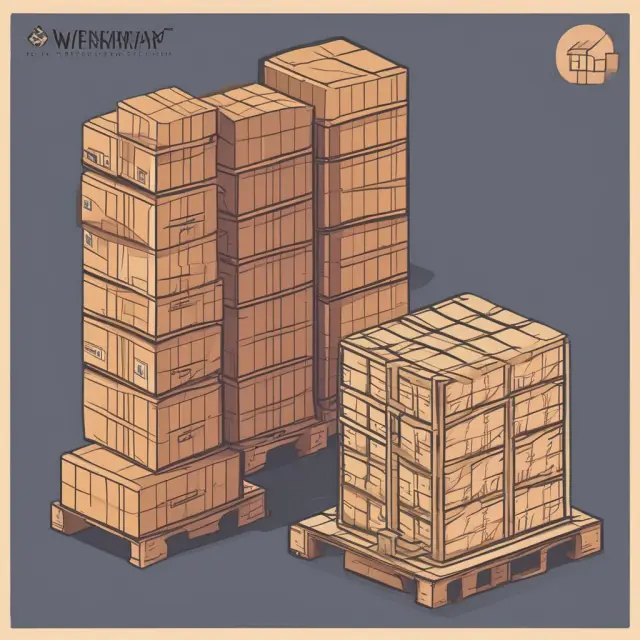
CWT vs. LTL Shipping
When it comes to transporting goods, various pricing options are available for companies handling smaller loads. Two of these options include hundredweight (CWT) and less-than-truckload (LTL) shipping. Understanding the advantages and disadvantages of each option can help businesses make informed decisions regarding their logistics needs.
Hundredweight Shipping
Specializing in carrying small loads for numerous clients, companies providing hundredweight shipping opt for this pricing method. This approach requires less handling since packages do not need to be loaded onto pallets for transportation. Hundredweight shipping is particularly beneficial for businesses frequently sending packages to multiple destinations or dealing with smaller shipments that don’t fill an entire truckload.
Advantages:
- Simplified handling as no need for palletizing and minimal packaging requirements.
- Suitable for small-scale operations that require frequent shipping to various locations.
- Efficient for consolidating multiple smaller shipments into a single delivery.
Disadvantages:
- May result in higher transportation costs due to the lower volume of cargo being transported.
- Limited capacity to accommodate heavy, large, or oddly shaped items that require palletizing.
- Lack of standardization and potential confusion when dealing with British and North American hundredweight units.
Less-than-Truckload Shipping
LTL shipping is an alternative option for companies transporting larger shipments or goods that cannot be easily loaded onto a pallet. This method requires packages to be loaded onto pallets, allowing them to be consolidated with other cargo heading to the same destination, which can help reduce overall transportation costs. LTL shipping is generally more cost-effective when dealing with heavier items and larger shipments that require dedicated truckloads.
Advantages:
- Reduced transportation costs due to sharing space on a single truck with multiple consignees’ shipments.
- More suitable for handling heavy or large items that cannot be shipped using the hundredweight method.
- Greater control and consistency in shipping times as packages are typically transported to a centralized warehouse before being delivered to their final destinations.
Disadvantages:
- Higher handling requirements due to the need for palletizing and packaging.
- Potential for increased transit time due to consolidating multiple shipments on a single truck.
- Possible limitations on flexibility, as LTL shipping generally requires more planning and coordination compared to CWT shipping.
In conclusion, understanding the differences between hundredweight (CWT) and less-than-truckload (LTL) shipping can help businesses make informed decisions regarding their logistics needs. Both options have unique advantages and disadvantages, depending on factors such as the size, shape, weight, and number of packages being shipped, as well as the distance covered. By carefully considering these elements, companies can choose the most suitable option for their specific requirements and optimize their shipping operations accordingly.

Advantages of Using Hundredweight (CWT)
The hundredweight, also known as CWT (centum or cental weight), is a valuable unit of measurement for businesses dealing with commodities trading and smaller shipments. This ancient measurement system has been in use since the late Medieval era and was adopted to simplify international trade by providing a standardized unit for bulk goods. While its usage has declined due to the widespread adoption of the metric system, it continues to hold significance in certain industries, particularly agriculture and commodities trading.
One significant advantage of using CWT lies in simplifying the process of pricing and measuring large quantities of goods, especially those that are heavy or bulky. This is particularly important for businesses involved in trading livestock, such as cattle, oil, seeds, grains, and other heavy items. By quoting prices per CWT rather than pounds or kilograms, traders can easily compare offers, understand market trends, and make informed decisions without the need to perform complex calculations.
Furthermore, using hundredweight pricing for shipping smaller loads is cost-effective for businesses that frequently send packages to multiple destinations. Hundredweight shipping typically requires less handling as multiple packages can be sent without being loaded onto pallets. This results in time and labor savings, making it an attractive option for companies dealing with a high volume of small shipments.
Additionally, the use of CWT helps maintain consistency within industries. For instance, in agriculture, the pricing of livestock futures and measuring crop yields is often quoted using this measurement system. This ensures that industry professionals can communicate effectively and make comparisons with ease.
Although there are some disadvantages to using CWT, such as potential confusion between American and British measurements, its advantages outweigh the challenges. As a result, businesses dealing in commodities trading or shipping smaller loads should consider the benefits of adopting this ancient yet effective measurement system.
In conclusion, understanding the hundredweight is crucial for companies involved in industries that deal with large quantities of heavy goods or small shipments requiring pricing by weight. By embracing this traditional unit of measure, businesses can streamline their processes, facilitate communication within their industry, and make informed decisions that contribute to their overall success.

Disadvantages of Using Hundredweight (CWT)
The use of hundredweight, while historically significant, presents several challenges for modern businesses and traders due to its inconsistent usage between North America and the UK. The potential for confusion between American and British measurements can lead to misunderstandings and errors, especially when conducting international transactions or managing complex supply chains.
First, it is important to understand that one hundredweight in the United States and Canada is equal to 100 pounds, while in the UK, a hundredweight is equal to 112 pounds. This discrepancy can lead to confusion when comparing or converting measurements. For instance, a shipment weighing 500 pounds would be considered five hundredweights (CWT) in North America but only four and a half hundredweights in the UK.
Second, the lack of standardization across industries and markets further complicates matters. In some sectors like agriculture, particularly livestock trading, CWT remains a popular measurement choice due to its historical significance. However, most industries have transitioned towards using pounds or kilograms as their primary units of measure. This inconsistency can make it challenging for businesses that need to deal with multiple partners or suppliers who use different measurement systems.
Finally, it is important to note that the use of CWT has declined significantly in recent decades due to the widespread adoption of the metric system across Europe and other parts of the world. As a result, many businesses have shifted away from using this measurement to avoid confusion and streamline their operations. This trend may continue as more countries adopt the metric system and international trade becomes increasingly globalized.
However, despite its challenges, CWT remains an essential unit of measurement for some industries and markets, particularly those that deal with large quantities of heavy commodities or livestock. By understanding both the advantages and disadvantages of using CWT, businesses can make informed decisions about whether to continue utilizing this historical measurement in their operations or adopt more modern alternatives.

Calculating CWT
Understanding how to calculate a Hundredweight (CWT) is crucial for those involved in commodities trading or shipping industries dealing with smaller packages that don’t fill an entire truckload. In this section, we will explain the conversion of pounds and kilograms into hundredweights using practical examples.
Hundredweight Conversion to Pounds
One hundredweight (CWT) is a unit of measurement equivalent to 100 pounds in North America. To calculate CWT from pounds, you simply divide the weight in pounds by 100. For instance, if you have 4536 pounds of cargo, you would calculate its corresponding CWT as follows:
CWT = Pounds / 100
= 4536 lbs / 100
= 45.36 CWT
Hundredweight Conversion to Kilograms
The conversion from hundredweight to kilograms can be a bit more complex as the number of kilograms in one hundredweight depends on its specific definition (short or long). In North America, a hundredweight equals 100 pounds and therefore 45.36 kg, while in the UK, it equals 112 pounds or approximately 50.8 kg.
Here’s how to calculate CWT from kilograms for both definitions:
North American CWT (Short Hundredweight)
CWT = Kilograms / 45.36
= 10,000 kg / 45.36
≈ 220.38 CWT
British CWT (Long Hundredweight)
CWT = Kilograms / 50.8
= 10,000 kg / 50.8
≈ 196.77 CWT
Practical Example
A shipment of 3,250 kg is being sent to a customer. Let’s determine how many hundredweights it represents according to both North American and British definitions.
North American CWT
CWT = Kilograms / 45.36
= 3,250 kg / 45.36
≈ 71.88 CWT (rounded)
British CWT
CWT = Kilograms / 50.8
= 3,250 kg / 50.8
≈ 64.29 CWT (rounded)
In conclusion, understanding how to calculate hundredweights from pounds and kilograms is essential for those involved in commodities trading or shipping industries dealing with smaller packages. By knowing the conversion formulas, you can easily determine the number of CWT for a given weight in various contexts, making your calculations more efficient and accurate.

FAQs About Hundredweight (CWT)
A. What Is a Hundredweight (CWT)?
Answer: A hundredweight, often abbreviated as CWT, is an ancient unit of measurement used primarily in the commodities markets and shipping industries. It represents a grouping or quantification of goods that weighs 100 pounds in North America or 112 pounds in the UK.
B. Origins and History of Hundredweight
Answer: The hundredweight unit of measurement originated from the European avoirdupois weight system during the late Medieval era. It was initially defined as a standard for measuring large quantities of goods, such as wool, grain, or wine, facilitating international trade by providing a clear and consistent way to express bulk weights. Over time, various countries adopted different standards for the hundredweight unit, leading to potential confusion in modern-day trading.
C. Differences between American and British CWT
Answer: The primary difference between the two measurements lies in their respective values. One American CWT is equal to 100 pounds, while one British CWT is equivalent to 112 pounds. It is important for international businesses to understand this distinction when conducting transactions involving commodities or freight shipping.
D. Commonly Traded Commodities
Answer: Hundredweight is commonly used in trading a variety of goods, including agricultural products such as livestock and grains, heavy industrial materials like steel, and certain food items. These industries frequently deal with large quantities that necessitate the use of this measurement for pricing and inventory management purposes.
E. Hundredweight in Agriculture
Answer: In agriculture, especially in North America, CWT is often used to price livestock futures and to measure crop yields when trading commodities like corn or wheat on various exchanges. This unit of measurement simplifies the process and provides a consistent benchmark for growers and investors alike.
F. Hundredweight vs Less-Than-Truckload Shipping
Answer: When comparing CWT to less-than-truckload (LTL) shipping, it’s essential to understand their distinct advantages. Hundredweight shipping is ideal for businesses that frequently ship smaller packages to multiple destinations, whereas LTL shipping is best suited for heavy or large goods being transported to a single location on a pallet.
G. Advantages of Using Hundredweight (CWT)
Answer: Utilizing the CWT measurement offers several benefits. It simplifies pricing and record-keeping in industries that frequently deal with large quantities, allowing for more efficient inventory management. Additionally, it provides a consistent standard for measuring bulk goods, making transactions easier to understand for all parties involved.
H. Disadvantages of Using Hundredweight (CWT)
Answer: Despite its advantages, CWT does have some drawbacks. The primary concern is the potential for confusion due to the varying definitions in different countries and industries. Additionally, as the world transitions towards a more universally accepted metric system, CWT may eventually become obsolete.
I. Calculating Hundredweight (CWT)
Answer: To calculate CWT from pounds, simply divide the weight in pounds by 100 for North American measurements or 112 for British measurements. This will provide you with the number of hundredweights equivalent to your given weight.
 Next entry · No. 2,258Understanding Hung Convertibles: A Unique Type of Convertible Security for Institutional Investors
See also
-
 No. 5,622
24 Sep 2025
19 min
Understanding the Warsaw Stock Exchange: A Comprehensive Guide for Institutional Investors
Business Finance
No. 5,622
24 Sep 2025
19 min
Understanding the Warsaw Stock Exchange: A Comprehensive Guide for Institutional Investors
Business Finance -
 No. 5,056
08 Aug 2025
20 min
Understanding the Transportation Sector: An Essential Investment Guide
Business Finance
No. 5,056
08 Aug 2025
20 min
Understanding the Transportation Sector: An Essential Investment Guide
Business Finance -
 No. 4,721
11 Jul 2025
23 min
Understanding the Dynamics between Spot Prices and Futures Prices: A Comprehensive Guide for Institutional Investors
Business Finance
No. 4,721
11 Jul 2025
23 min
Understanding the Dynamics between Spot Prices and Futures Prices: A Comprehensive Guide for Institutional Investors
Business Finance -
 No. 3,598
11 Apr 2025
18 min
The New York Board of Trade (NYBOT): History, Function, and Significance for Institutional Investors
Business Finance
No. 3,598
11 Apr 2025
18 min
The New York Board of Trade (NYBOT): History, Function, and Significance for Institutional Investors
Business Finance -
 No. 3,368
22 Mar 2025
20 min
NCDEX: Understanding India’s Leading Commodity Exchange for Agricultural Products
Business Finance
No. 3,368
22 Mar 2025
20 min
NCDEX: Understanding India’s Leading Commodity Exchange for Agricultural Products
Business Finance -
 No. 2,759
02 Feb 2025
23 min
Understanding the Concept of Land in Economics and Investment: A Valuable Factor of Production
Business Finance
No. 2,759
02 Feb 2025
23 min
Understanding the Concept of Land in Economics and Investment: A Valuable Factor of Production
Business Finance