Understanding Kurtosis: Measuring Tailedness and Investment Risk

Understanding Kurtosis: Measuring tailedness and assessing investment risk with a statistical measure
Introduction to Kurtosis
Understanding Kurtosis: A Measure of Tailedness and Its Importance for Investors
Kurtosis is a statistical measure that plays an essential role in evaluating the shape and distribution of data. In finance, it is particularly valuable when assessing risk levels in investment returns. By determining how much of the data lies outside the normal bell curve, kurtosis provides insights into whether an investment has been historically stable or prone to significant price fluctuations.
Understanding Kurtosis: A Measure of Tailedness
Kurtosis measures the ‘fatness’ of a distribution’s tails, which is a crucial aspect for investors since it reveals the extent of extreme price movements in an investment’s past performance. By assessing how far data points deviate from the mean and how frequently these deviations occur, investors can make more informed decisions about potential risk levels and returns when considering an investment opportunity.
Calculating Kurtosis: Simple Methods and Complexities
There are various methods to calculate kurtosis, including using spreadsheet software like Excel or Google Sheets. These tools provide a straightforward way to determine the kurtosis of a dataset by inputting the data into the respective formula. However, calculating kurtosis manually involves more intricate steps and is generally used for academic purposes.
Types of Kurtosis: Mesokurtic, Platykurtic, Leptokurtic, and their Implications
When evaluating the distribution of investment returns, it’s essential to understand the three types of kurtosis: mesokurtic (normal), platykurtic (less than normal), and leptokurtic (more than normal). Each type offers valuable insights into an investment’s risk level and historical price movements.
Using Kurtosis in Portfolio Management: Managing Risk and Enhancing Returns
Kurtosis is a powerful tool for managing portfolio risk and optimizing returns by providing investors with crucial information about individual investments or entire portfolios. By assessing the kurtosis of each asset within a portfolio, an investor can make informed decisions regarding asset allocation, diversification, and overall portfolio volatility.
Kurtosis vs Standard Deviation: Comparing Risk Measures in Investment Analysis
While related, Kurtosis and standard deviation differ significantly when evaluating investment risks. Standard deviation measures the dispersion of data around a mean, while kurtosis focuses on the distribution’s tails. Understanding both measures and their unique advantages can help investors make well-informed decisions in various contexts.
Kurtosis in Modern Portfolio Theory: Enhancing Risk Management and Return Optimization Strategies
Modern portfolio theory (MPT), a cornerstone of asset allocation strategies, does not directly account for kurtosis. However, incorporating kurtosis analysis can provide a more accurate assessment of investment risk by taking into account the probability of extreme price movements, ultimately improving overall portfolio performance and risk management.
Real-Life Applications of Kurtosis: Case Studies and Examples
Understanding kurtosis and its significance extends beyond theoretical concepts. Real-life applications demonstrate its value in various contexts, from analyzing historical stock market trends to optimizing investment strategies for individual investors and institutions. By examining case studies and examples, we can better understand the practical implications of kurtosis in investment analysis and decision-making processes.
Conclusion: Embracing Kurtosis: A Key Element in Investment Analysis and Portfolio Management
In conclusion, understanding kurtosis—a measure of tailedness in probability distributions—is essential for investors seeking to make informed decisions about risk levels and potential returns. By assessing the distribution of historical price movements for various investments or entire portfolios, investors can gain valuable insights into volatility, diversification, and overall portfolio management strategies.
Frequently Asked Questions (FAQ)
For more information on kurtosis and its applications in finance and investment, refer to the following frequently asked questions:
What is the difference between standard deviation and Kurtosis?
Answer: Standard deviation measures the dispersion of data around a mean, while Kurtosis focuses on the distribution’s tails.
What types of kurtosis are there, and how do they impact investment risk?
Answer: The three types of kurtosis include mesokurtic (normal), platykurtic (less than normal), and leptokurtic (more than normal). Understanding the implications of each type can help investors assess risk levels in various investments.
How do I calculate Kurtosis manually?
Answer: To calculate kurtosis manually, follow a multi-step process involving calculating the mean, variance, and fourth moment of the data. This process is more complex than using a spreadsheet software like Excel or Google Sheets.
Why is kurtosis an essential measure for investors?
Answer: Kurtosis provides valuable insights into investment risk levels by assessing the historical distribution of price movements, allowing investors to make informed decisions about potential investments and optimize portfolio performance.

Understanding Kurtosis: A Measure of Tailedness
Kurtosis is a valuable statistical tool that provides insight into the shape of a probability distribution and helps investors assess risk levels in their investment portfolios. In essence, kurtosis measures the degree to which a distribution deviates from a normal bell curve by indicating how much data lies beyond the mean. By evaluating an investment’s historical price movements using this measure, investors can anticipate potential risks associated with extreme volatility and tail events that may impact their returns.
Kurtosis: The ‘Fattness’ of Tails in Probability Distributions
A normal distribution is characterized by a bell curve where most data resides within three standard deviations of the mean. Kurtosis indicates the “fatteness” or heaviness of the tails that extend beyond these standard deviations, revealing whether the distribution has more or fewer outliers compared to a normal distribution (Figure 1).
Figure 1: Comparing Normal and Non-Normal Distributions
Investors are particularly interested in kurtosis as it relates to return distributions. A high kurtosis value suggests that an investment’s historical returns have exhibited significant extreme price movements, making it a riskier proposition for some investors. Conversely, low kurtosis implies a more stable and predictable distribution of returns.
The ‘Tailedness’ of Kurtosis: Measuring Extreme Fluctuations in Investments
Kurtosis is not to be confused with another statistical measure, skewness, which describes the asymmetry of a distribution around its mean. Instead, kurtosis focuses on the tails (Figure 2).
Figure 2: Comparing Kurtosis and Skewness
To calculate kurtosis, investors can use various methods including formulas available in spreadsheets or manual calculations based on the fourth moment of a distribution. The result of this calculation will indicate whether a distribution is mesokurtic (normal), platykurtic (less than normal), or leptokurtic (more than normal) (Section 3).
The following sections dive deeper into the concept of kurtosis, discussing its significance for investors and how it can be applied in portfolio management strategies. In the next section, we will explore the differences between mesokurtic, platykurtic, and leptokurtic distributions and their implications for investment risk assessment (Section 4).
Kurtosis: A Measure of Investment Risk and Return Volatility
Understanding kurtosis is essential for investors as it provides a valuable perspective on the risk and return potential of investments. High kurtosis can lead to high returns but also high volatility, making it a critical factor in assessing investment opportunities (Section 5). Additionally, kurtosis is a useful tool when managing portfolio risks by optimizing asset allocation strategies and implementing risk mitigation techniques (Section 6).
In the next sections, we will examine how kurtosis differs from other risk measures such as standard deviation and its role in modern portfolio theory (MPT) (Sections 7 and 8). Real-life examples and case studies will help illustrate the practical applications of kurtosis and its importance to investment analysis.

Calculating Kurtosis
Kurtosis is a valuable measure for investors as it provides insight into the distribution of returns and the degree of tail risk within an investment or portfolio. To calculate kurtosis, there are two primary methods: using Excel/Google Sheets formulas or calculating it manually. Let’s explore each method in detail.
Method 1: Using Spreadsheets
Assume you have a set of return data residing in cells A1 through A10 on your spreadsheet. To calculate kurtosis using Excel, simply input the formula =KURT(A1:A10). Google Sheets offers a similar calculation method; use the formula =KURT(range) where ‘range’ is the range of data to be analyzed. The result will represent the investment’s kurtosis value.
Method 2: Calculating Manually
Calculating kurtosis manually is more complex and time-consuming than using a spreadsheet. First, calculate the mean (mean = Σxi / n). Next, determine variance (standard deviation squared), which can be calculated by subtracting each data point’s mean from itself, then square that value for all points, sum those squares and divide by (n – 1). Finally, compute the fourth moment using similar steps. The kurtosis is given by k = m4 / (m2)2 – 3.
Interpreting Kurtosis values
The interpretation of kurtosis values depends on their relationship to a normal distribution with a kurtosis value of 3. A mesokurtic distribution has a kurtosis value equivalent to that of a normal distribution. Platykurtic distributions have a lower kurtosis value, suggesting fewer outliers and less risk compared to a normal distribution. Leptokurtic distributions have higher kurtosis values, indicating more extreme tails (outliers) than a normal distribution, signaling increased volatility and higher risk levels.
Investors can use kurtosis as a tool in portfolio management by evaluating the kurtosis levels of individual investments or asset classes within their portfolios to manage overall risk. By understanding an investment’s kurtosis level, investors can make informed decisions about diversification, asset allocation, and potential portfolio rebalancing.

Types of Kurtosis: Mesokurtic, Platykurtic, Leptokurtic
Kurtosis is a crucial statistical measure that sheds light on the shape and tailedness of probability distributions. For investors, understanding kurtosis can provide valuable insights into investment risk, particularly when evaluating the potential returns of various securities or portfolios. In this section, we will delve deeper into the three main types of kurtosis: mesokurtic, platykurtic, and leptokurtic distributions.
Mesokurtic Distributions (Normal Kurtosis)
A mesokurtic distribution is characterized by a normal bell curve shape with no significant difference from a standard normal distribution, which has a kurtosis of 3.0. In other words, this type of distribution implies that the data points have similar levels of tailedness as the normal distribution. Investments with a mesokurtic distribution exhibit moderate risk and stability, making them suitable for some investors seeking a balanced approach to portfolio construction.
Platykurtic Distributions (Sub-Normal Kurtosis)
Distributions with platykurtic characteristics have relatively light tails compared to the normal distribution, meaning there are fewer extreme values in their data sets. Platykurtic investments can be an attractive option for risk-averse investors as they tend to display less volatility and provide more consistent returns. However, this type of distribution comes with a trade-off: potentially lower returns due to the lack of significant extremes in the data.
Leptokurtic Distributions (Super-Normal Kurtosis)
A leptokurtic distribution displays tails that are heavier than those found in a normal distribution, suggesting a higher concentration of extreme values in the data set. Leptokurtic investments carry a greater degree of risk due to their increased volatility and potential for both large positive and negative returns. The allure of leptokurtic securities lies in the potential for significantly higher rewards compared to mesokurtic or platykurtic alternatives, although there is a higher likelihood of experiencing extreme market movements.
Assessing Kurtosis as an Investment Tool
Understanding kurtosis can help investors make more informed decisions regarding their portfolio construction strategies by providing insights into the risk-reward profile of various investments. By evaluating the kurtosis levels of different securities, investors can effectively:
- Diversify their portfolios by balancing investments with varying degrees of tailedness to manage overall risk exposure.
- Identify suitable investments based on risk tolerance and investment objectives (e.g., conservative, balanced, or aggressive).
- Monitor changes in kurtosis levels over time to adjust portfolio allocations as market conditions evolve.
In conclusion, kurtosis is a vital statistical measure for investors that offers valuable insights into the tailedness of probability distributions and their implications for investment risk. By distinguishing between mesokurtic, platykurtic, and leptokurtic distributions, investors can effectively construct well-diversified portfolios tailored to their risk preferences and investment goals.

Kurtosis in Investing: Implications for Risk Assessment
In the realm of finance and investments, it is crucial to understand the risk involved with various assets. One essential statistical tool that helps investors evaluate investment risks is kurtosis – a measure of a probability distribution’s shape. Kurtosis, specifically its tailedness, can provide valuable insights into an investment’s historical volatility and potential future price movements.
Kurtosis: A Measure of Tailedness
When evaluating the risk associated with an investment, understanding its kurtosis is vital. This statistical measure quantifies how much data lies outside a normal bell curve, indicating the degree to which extreme price fluctuations have occurred in the past. As an investor, being aware of this information allows you to make informed decisions based on the inherent risk levels of your investments.
High Kurtosis and Volatility
An investment with high kurtosis has a higher likelihood of experiencing significant price movements, both positive and negative, compared to an investment with low kurtosis. This characteristic can be advantageous for some investors seeking potentially high returns but comes with the added risk of increased volatility. Conversely, lower kurtosis investments offer more stable returns but may provide fewer opportunities for exceptional gains.
Using Kurtosis in Investment Decisions
Investors can benefit from understanding an investment’s kurtosis when making decisions regarding asset allocation and portfolio management. For instance:
1. Identifying Suitable Assets: By evaluating an investment’s historical kurtosis, investors can determine whether it aligns with their risk tolerance and return expectations. Those seeking higher returns may be inclined towards investments with high kurtosis, while those desiring a more stable investment profile would lean towards lower kurtosis alternatives.
2. Diversification: A well-diversified portfolio often contains assets with varying degrees of kurtosis. By balancing investments with differing levels of tailedness, investors can mitigate overall risk and potentially enhance returns.
3. Risk Management: Understanding the kurtosis of an investment can also help investors manage their risk through various strategies, such as stop losses, position sizing, or hedging techniques.
Kurtosis in Portfolio Optimization
By evaluating the overall kurtosis level within a portfolio, investors can make informed decisions to optimize their asset allocation and ensure an appropriate balance of risk and return. For instance:
1. Rebalancing: Periodic rebalancing based on an investment’s changing kurtosis can help maintain a consistent risk profile over time.
2. Asset Allocation: Dynamic asset allocation strategies that adapt to changing market conditions can benefit from regular kurtosis analysis to ensure an optimal balance of risk and return.
3. Tactical Investing: Kurtosis assessment can be employed in tactical investing strategies, such as trend following or contrarian approaches, to help manage overall portfolio risk and identify potential opportunities.
In conclusion, understanding the implications of kurtosis for investment risk assessment is a valuable tool for informed financial decision-making. By evaluating this critical statistical measure, investors can make better-informed choices regarding asset allocation, portfolio management, and overall risk exposure.
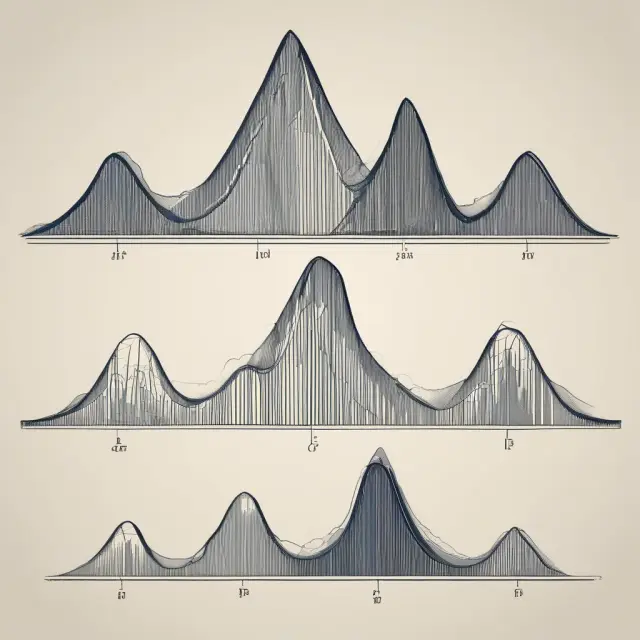
Using Kurtosis in Portfolio Management
Understanding the concept of kurtosis and its implications for risk assessment is crucial in managing a diverse investment portfolio. By measuring the ‘tailedness’ or ‘fatness’ of return distributions, investors can make informed decisions and manage their portfolio risks more effectively. In this section, we dive deeper into how to use Kurtosis in portfolio management, including various applications of this statistical measure in asset allocation strategies.
Kurtosis: A Risk Measurement Tool for Portfolio Management
The primary goal when managing a well-diversified investment portfolio is to balance risk and reward. However, accurately assessing an investment’s risk level can be challenging as most traditional methods like standard deviation only focus on volatility within a normal distribution. Kurtosis offers insight into the presence of extreme price movements (outliers) or ‘fat-tailedness,’ allowing investors to evaluate portfolio risks more comprehensively.
Three Types of Kurtosis and Their Implications for Investors
Kurtosis categorizes probability distributions as mesokurtic, platykurtic, or leptokurtic based on their tailedness properties (1). Understanding these types is vital in assessing investment risk because they can reveal how frequently extreme price fluctuations have occurred historically.
- Mesokurtic: A mesokurtic distribution resembles a normal bell curve with kurtosis close to 3, which signifies moderate risk. This type of distribution represents the average historical price movements for an investment or asset class.
- Platykurtic: A platykurtic distribution has shorter tails than a mesokurtic distribution. It suggests that extreme price swings are less frequent and indicates lower volatility, making this investment choice suitable for more risk-averse investors seeking stability.
- Leptokurtic: In contrast to platykurtic distributions, leptokurtic distributions exhibit longer tails or ‘fatter’ tails than a normal distribution. This suggests that extreme price movements occur frequently in the past, indicating higher volatility and risk levels. Investors seeking high returns may prefer this type of investment but should be aware of the potential for large losses.
Applications of Kurtosis in Portfolio Management Strategies
Investors can use kurtosis to manage their portfolio risks by focusing on various aspects, such as:
- Asset Allocation: By analyzing the kurtosis levels of different asset classes, investors can make informed decisions regarding their portfolio’s risk allocation. For example, if an investor determines that a particular sector or investment has high kurtosis, they might allocate fewer resources to that asset class and concentrate on those with lower kurtosis values.
- Diversification: A well-diversified portfolio is essential in managing risks effectively. Kurtosis analysis can help investors identify investments that may have underperformed in the past but still contribute to overall portfolio performance by balancing risk and return through their unique characteristics.
- Tail Risk Management: By understanding the kurtosis levels of different assets, investors can manage tail risks more effectively. For instance, they can use options contracts or hedging strategies to protect against potential downside risk in high-kurtosis investments.
- Performance Evaluation: Kurtosis analysis can help investors compare the performance of various investment choices by considering their historical price movements and risk levels. This information can be used to make informed decisions regarding asset selection and portfolio rebalancing.
- Risk Mitigation Strategies: High kurtosis indicates a higher probability of extreme events. By incorporating this knowledge into portfolio management strategies, investors can adopt risk mitigation techniques such as stop-loss orders or dynamic hedging strategies to minimize potential losses.
Kurtosis vs Standard Deviation in Portfolio Management: A Comparative Analysis
Both kurtosis and standard deviation are essential measures of investment risk, but they serve distinct purposes. While standard deviation measures the average dispersion from the mean, kurtosis quantifies the degree of ‘tailedness’ or the presence of extreme events in a return distribution. This comparison highlights their importance in providing complementary insights for managing portfolio risks effectively.
In conclusion, Kurtosis is a powerful statistical tool that can help investors better understand risk levels and make informed decisions regarding investment strategies. By assessing an investment’s kurtosis value, they gain valuable insight into its historical price fluctuations and potential future volatility. This information enables them to create well-diversified portfolios tailored to their risk tolerance and goals, effectively managing both expected and unexpected risks.

Kurtosis vs Standard Deviation: Comparing Risk Measures
While both kurtosis and standard deviation are essential risk measurement tools in finance, they serve different purposes and provide unique insights when evaluating investments. Kurtosis is a measure of the shape of a probability distribution’s tails, focusing on extreme events, while standard deviation illustrates the dispersion or spread of data points around the mean.
Understanding the Distinction between Kurtosis and Standard Deviation:
Standard deviation measures the extent to which individual values deviate from the average value (mean) in a dataset. The smaller the standard deviation, the closer the data points are to the mean. In contrast, kurtosis provides insights into the shape of a distribution’s tails, indicating how much data lies outside the typical range around the mean.
The Importance of Kurtosis for Investors:
Kurtosis is crucial for investors as it helps assess an investment’s historical risk profile and potential for extreme price movements. High kurtosis implies that a security has experienced significant price volatility, potentially leading to large returns or losses. Conversely, low kurtosis indicates stability in the investment’s pricing history, reducing the likelihood of extreme price swings.
Comparing Kurtosis and Standard Deviation:
Although both risk measures serve different purposes, it is essential to compare them for a comprehensive understanding of an investment’s risk profile. By examining the relationship between kurtosis and standard deviation, investors can make informed decisions regarding diversification and portfolio optimization. For instance, when building a well-diversified portfolio, one may seek investments with low standard deviations but varying levels of kurtosis.
For example, an investor might allocate funds to bonds (low volatility) and stocks (higher volatility). By investing in securities with diverse kurtosis levels, the overall portfolio risk is reduced while maintaining a balance between potential returns and stability. Additionally, kurtosis analysis can be useful for identifying investments that exhibit unusual price movements, potentially signaling changes in market conditions or underlying risks.
In summary, understanding both kurtosis and standard deviation as essential risk measurement tools in finance enables investors to assess an investment’s historical volatility, potential extreme price events, and overall risk profile. By employing a well-diversified portfolio strategy that includes investments with varying levels of both standard deviation and kurtosis, investors can mitigate risk and optimize returns.

Kurtosis in Modern Portfolio Theory
Modern Portfolio Theory (MPT) is a widely accepted investment framework that helps investors construct well-diversified portfolios based on expected returns and risk. It assumes an efficient market where each asset’s return can be predicted by analyzing its relationship with other assets. However, MPT has limitations when it comes to understanding the tails of the distribution – a crucial aspect for assessing investment risk. This is where kurtosis comes in.
MPT relies heavily on variance (the square of standard deviation) as a measure of risk. Kurtosis, as mentioned earlier, provides essential information about the “fatness” or “thickness” of the tails – something that variance doesn’t fully capture. By incorporating kurtosis into MPT, investors can gain a more nuanced understanding of their portfolio’s true risk and return profile.
The inclusion of kurtosis in Modern Portfolio Theory enhances its accuracy by providing a more precise assessment of the probability of extreme events occurring within an investment or portfolio. As we’ve discussed, high kurtosis indicates that a distribution has heavier tails and is more likely to experience extreme deviations from the mean. Conversely, a low kurtosis value suggests a relatively stable distribution with lighter tails, reducing the likelihood of such extreme events.
For instance, investors who follow a value investing strategy may prefer stocks with lower kurtosis as they typically have less price volatility and provide more stability to the portfolio. On the other hand, growth-oriented investors might be interested in high kurtosis investments since their potential for higher returns comes with an increased likelihood of experiencing extreme market movements.
Furthermore, understanding a portfolio’s overall kurtosis value can help investors identify asset classes that contribute disproportionately to the risk. By adjusting the portfolio’s composition accordingly, they can rebalance it to better align with their risk tolerance and investment objectives. Incorporating kurtosis into MPT thus empowers investors with valuable information about their portfolios’ inherent risk and helps them make more informed decisions based on the probability of extreme market movements.
In conclusion, Modern Portfolio Theory has significantly influenced investment strategies by promoting diversification and optimal risk-reward tradeoffs. By incorporating kurtosis – a measure of the distribution’s tails – into MPT, investors gain a deeper understanding of their portfolio’s true risk profile and make more informed decisions based on the probability of extreme market events.

Real-Life Applications of Kurtosis
Understanding the importance of kurtosis goes beyond theoretical concepts and calculations; it plays a vital role in assessing and managing investment risk in real-life scenarios. By examining historical data, investors can determine an investment’s likelihood of extreme price fluctuations and make informed decisions based on this insight.
One notable example comes from the world of options trading, where investors employ various strategies to profit from market volatility. Skew—a measure related to kurtosis—is commonly used in pricing options with non-normal distributions. When a distribution’s skewness and kurtosis are not equal to zero, it indicates an asymmetrical bell curve. In the context of option pricing, this imbalance can significantly impact the premiums investors pay for such instruments.
Another practical application lies in insurance companies that employ risk modeling to assess their exposure to various perils. By analyzing historical data and calculating the kurtosis level of potential risks, they can better understand and price their policies. For instance, in the case of natural catastrophes (earthquakes, hurricanes), where extreme events carry a significant financial impact, assessing the tailedness is crucial for determining adequate pricing and risk allocation strategies.
Investors in commodities markets can also benefit from understanding kurtosis to optimize their portfolios and manage risks effectively. Commodity prices often exhibit non-normal distributions, which necessitates considering the kurtosis level when allocating resources or implementing hedging strategies. For example, agricultural commodities like wheat, corn, or soybeans can have distinct seasonal patterns that introduce volatility into their returns. By examining historical data and evaluating the kurtosis levels, investors can better understand these price fluctuations and adjust their investments accordingly.
These are just a few examples of real-life applications demonstrating the importance of understanding kurtosis for managing investment risk in various scenarios. The ability to identify extreme price movements and assess potential risks using this statistical measure can ultimately lead to more informed decisions, improved risk management, and enhanced portfolio performance.

Conclusion: Importance of Understanding Kurtosis for Investors
Kurtosis is an essential statistical measure that describes the “fatness” of the tails found in probability distributions. It plays a crucial role in understanding the risk levels and potential returns of investments. By analyzing the kurtosis level of an investment, investors can gain insights into the frequency and magnitude of extreme price movements—an important consideration for managing portfolio risk.
Investors often use Kurtosis as a complementary measure to standard deviation when assessing investment risk. While both measures provide valuable information, they address different aspects of volatility. Standard deviation represents the dispersion or spread of data from an average value, while kurtosis highlights the presence and extent of extreme values.
Understanding Kurtosis can help investors make informed decisions regarding portfolio construction and asset allocation strategies. For instance, if an investor is risk-averse, they might prefer to allocate a larger portion of their portfolio towards investments with lower kurtosis levels, indicating a more stable return profile. Conversely, if an investor is willing to accept higher volatility in pursuit of potentially greater returns, they may consider allocating capital to assets with higher kurtosis levels.
Investors can calculate Kurtosis using various methods, including formulas found in spreadsheets like Excel and Google Sheets or by hand calculations. By employing this statistical measure in their analysis, investors can better assess the risk-reward potential of investments and effectively manage their portfolio’s overall risk profile.
It is essential to note that Kurtosis only provides historical information on investment behavior; it cannot predict future performance. However, by understanding past price movements, investors can develop a more comprehensive understanding of an asset’s inherent risks and expected returns. As such, Kurtosis remains a vital tool for investors seeking to make informed decisions in the ever-evolving financial markets.
In summary, Kurtosis is a crucial statistical measure that offers valuable insights into investment risk by quantifying the tailedness or “fatness” of historical price distributions. By harnessing the power of Kurtosis analysis, investors can more effectively manage their portfolio’s overall risk profile and make informed decisions based on a comprehensive understanding of an asset’s historical price behavior.

Frequently Asked Questions (FAQ)
What exactly is Kurtosis?
Kurtosis refers to a statistical measure that indicates the shape of a distribution’s tails relative to its overall shape. It quantifies the degree to which a dataset deviates from a normal bell curve by revealing how much data lies beyond the mean. In finance, kurtosis helps investors assess investment risk by examining the historical volatility and frequency of extreme returns.
What are the three types of Kurtosis?
There are three main categories of distribution shapes based on their degree of tailedness: mesokurtic (similar to a normal distribution), platykurtic (lighter-tailed than a normal distribution), and leptokurtic (heavier-tailed than a normal distribution). Mesokurtic distributions have kurtosis close to 3, while platykurtic distributions exhibit shorter tails, and leptokurtic distributions feature longer tails.
How is Kurtosis calculated?
The most straightforward way to calculate kurtosis is by using spreadsheet software like Microsoft Excel or Google Sheets. The formula for calculating kurtosis involves dividing the fourth moment of a distribution by the square of its second moment and subtracting 3. Calculating kurtosis manually is an intricate process, which involves summing various terms calculated from the data and applying complex mathematical formulas.
What does high Kurtosis imply for investment risk?
A high kurtosis level signifies that a given investment has experienced significant price fluctuations in the past, potentially leading to extreme returns. High kurtosis can mean either large positive or negative returns; thus, it’s crucial for investors to consider both potential outcomes and the associated risks when evaluating investments with high kurtosis.
How does Kurtosis help in portfolio management?
Kurtosis plays a critical role in managing investment portfolios by providing insight into individual assets’ risk profiles. By assessing the kurtosis of each asset, investors can identify those with higher volatility and build a well-diversified portfolio that balances risk and return expectations. Additionally, understanding kurtosis can help investors make informed decisions regarding rebalancing their portfolios to maintain optimal asset allocations over time.
What is the relationship between Kurtosis and Standard Deviation?
Both Kurtosis and Standard Deviation are essential tools for assessing investment risk. While they share similarities, such as quantifying volatility and uncertainty, there are significant differences between the two. Standard Deviation focuses on measuring the dispersion of data points around the mean, whereas Kurtosis examines the tails of a distribution and identifies extreme values. A well-diversified investment portfolio typically incorporates both measures to provide a comprehensive risk assessment.
 Next entry · No. 2,740Understanding the Valuable Kuwaiti Dinar (KWD) – A Currency Overview for Institutional Investors
See also
-
 No. 3,992
13 May 2025
24 min
Platykurtic Distributions in Finance: Understanding and Utilizing Negative Excess Kurtosis for Investment
Financial Data Analysis
No. 3,992
13 May 2025
24 min
Platykurtic Distributions in Finance: Understanding and Utilizing Negative Excess Kurtosis for Investment
Financial Data Analysis -
 No. 1,271
22 Aug 2024
23 min
Understanding the Empirical Rule in Finance: Probability Distributions and Investment Risk
Finance Policy
No. 1,271
22 Aug 2024
23 min
Understanding the Empirical Rule in Finance: Probability Distributions and Investment Risk
Finance Policy -
 No. 693
22 May 2024
20 min
Understanding the Capital Market Line: Maximizing Risk-Adjusted Returns
Financial Tools
No. 693
22 May 2024
20 min
Understanding the Capital Market Line: Maximizing Risk-Adjusted Returns
Financial Tools -
 No. 1,064
22 Jul 2024
18 min
Understanding Dispersion: A Measurement of Risk and Volatility in Finance
Financial Data Analysis
No. 1,064
22 Jul 2024
18 min
Understanding Dispersion: A Measurement of Risk and Volatility in Finance
Financial Data Analysis -
 No. 4,490
22 Jun 2025
22 min
Rethinking Portfolio Allocation with Risk Parity: Advanced Investment Strategies for Institutional and Professional Investors
Business Finance
No. 4,490
22 Jun 2025
22 min
Rethinking Portfolio Allocation with Risk Parity: Advanced Investment Strategies for Institutional and Professional Investors
Business Finance -
 No. 3,222
11 Mar 2025
18 min
Maximizing Portfolio Efficiency with Modern Portfolio Theory (MPT)
Business Finance
No. 3,222
11 Mar 2025
18 min
Maximizing Portfolio Efficiency with Modern Portfolio Theory (MPT)
Business Finance