Understanding Oil Reserves: Size, Importance, and Components
Learn about oil reserves: size, importance, components, and major holding countries in this comprehensive guide.
Overview of Oil Reserves
Understanding the concept of oil reserves is vital for anyone interested in the global energy landscape, particularly as we navigate increasing geopolitical tensions and climate change concerns. In simple terms, oil reserves represent an estimate of crude oil that can be extracted from a specific region with proven economic feasibility. The amount of proven reserves varies significantly across countries, shaping their influence within the international oil market.
BP Plc’s Statistical Review of World Energy Report estimates the global oil reserve total to be 1.73 trillion barrels (Bbl). Venezuela is home to the most significant oil reserves with an estimated 303.8 billion barrels, followed by Saudi Arabia (297.5 Bbl) and Canada (168.1 Bbl). It’s important to note that these figures only account for proven reserves; unattainable oil in deeper reserves is not considered part of a nation’s reserves.
OPEC holds approximately 80% of the world’s total oil reserves, making it a dominant player in global energy production and pricing. This powerful organization has the potential to significantly impact international energy markets through its production decisions.
One way to evaluate a country’s oil reserve position is by examining their reserves-to-production ratio (R/P). This calculation offers insight into the longevity of existing reserves based on current annual production rates. For instance, the Middle East currently holds approximately 80 years worth of oil reserves at current production levels, while North America has an estimated 30 years’ supply.
However, it’s important to recognize that the volume of reserves doesn’t always correlate with production figures. Venezuela’s share in overall oil production has plummeted due to internal strife despite having the largest oil reserves globally. Similarly, Middle Eastern countries have experienced a decline in their R/P ratios over the past decades as production rates have fluctuated and reserves become increasingly difficult to find.
Stay tuned for the next section where we delve deeper into how oil reserves are calculated and reported.
Global Oil Reserves
Understanding the significance of oil reserves in today’s global energy landscape begins with acknowledging their role as a vital source for meeting the world’s growing energy demands. Oil reserves represent an estimate of crude oil that can be extracted from known reservoirs under economically viable conditions. In this section, we delve into the current state of global oil reserves, key holding countries, and recent trends shaping the future of these valuable resources.
BP Plc’s Statistical Review of World Energy report (2021) estimates that there are approximately 1.73 trillion barrels of oil reserves worldwide. This figure comes from a proven probable basis, meaning that these reservoirs have been discovered and can be commercially extracted. Out of this total, three countries stand out for their significant oil reserves: Venezuela, Saudi Arabia, and Canada (see Table 1).
Table 1: Top Countries with the Most Oil Reserves
| Rank | Country | Oil Reserves (billion barrels) |
|——-|—————|——————————|
| 1 | Venezuela | 303.8 |
| 2 | Saudi Arabia | 297.5 |
| 3 | Canada | 168.1 |
With such extensive reserves, these countries hold substantial power in the global energy sector and geopolitical arena. For instance, OPEC—a cartel of oil-producing nations, including Saudi Arabia, Iraq, Kuwait, Iran, Libya, Nigeria, Qatar, United Arab Emirates, and Venezuela—accounts for approximately 80% of the world’s total oil reserves (BP, 2021).
Measuring oil reserves involves various methods and ratios, such as reserves-to-production and reserve life index. These metrics offer valuable insights into a country’s potential energy security and production sustainability. For instance, BP’s Statistical Review of World Energy provides an in-depth analysis of global oil reserves, including trends and regional comparisons (see Figure 1).
Figure 1: Reserves-to-Production Ratios by Country
Source: BP, plc.
As shown in the figure above, significant trends are observable in various regions regarding their oil reserves relative to production. For example, the South and Central American region has seen a massive increase in oil reserves since 2006 due to significant finds, particularly Brazil’s offshore pre-salt basins. These reserves could last over 150 years at current production levels (BP, 2021).
In contrast, Middle Eastern countries like Saudi Arabia, Iran, and Iraq have seen a decline in their reserves-to-production ratios due to increased production rates and the challenge of finding new discoveries. The Middle East’s collective reserves now stand at approximately 80 years (BP, 2021).
The North American region is also witnessing an aggressive push for increased oil production, which has resulted in a decreasing reserve-to-production ratio. However, the continent still holds significant reserves, estimated to last around 30 years based on current production rates (BP, 2021).
Oil reserves not only play a crucial role in shaping the global energy sector but also impact geopolitical relationships and international dynamics. Understanding the complexities surrounding oil reserves is essential for investors, policymakers, and anyone interested in the future of the global energy landscape.

Calculating Oil Reserves
The calculation of oil reserves has always been a complex process, requiring significant data analysis and estimates from various sources. Understanding how oil reserves are calculated is essential for investors, policymakers, and energy analysts to accurately assess the potential production capabilities of different countries and regions. This section will discuss industry reports, ratios used to measure the longevity of reserves, and government agencies involved in calculating and reporting oil reserves.
One of the most reliable sources for understanding global oil reserves comes from leading industry reports such as BP Plc’s Statistical Review of World Energy and ENI SpA’s World Oil Review. These reports provide valuable data about global oil reserves, allowing for comparisons between countries and trends over time. The Energy Information Administration (EIA) is another essential source of information regarding U.S. oil reserves, offering historical data dating back to 1900.
An important ratio used in measuring the longevity of reserves is the reserve-to-production ratio (R/P). This ratio estimates the number of years a reserve base will last at current annual production rates and is used by companies operating in the oil industry as well as oil-producing countries. The R/P illustrates the relationship between oil reserves and production and provides insight into the future supply potential for a given region.
BP’s statistical review reveals two significant trends in global oil reserves. First, the massive increase in South and Central American oil reserves relative to production since 2006 is evident, particularly in Brazil with its offshore pre-salt basins. With an estimated 150 years of oil at current production levels, this region holds a substantial share of the world’s reserves. Second, Middle Eastern countries have experienced a downtrend in their R/P ratios, with some countries like Iran and Iraq seeing significant declines due to political instability and the challenges of extracting resources from increasingly complex geological formations.
The volume of oil reserves does not always equate to production figures. For example, Venezuela’s oil production has drastically fallen in recent years despite having the world’s largest oil reserves, accounting for just 0.6% of overall production volumes. The reserve-to-production ratio for the Middle East currently stands at approximately 80 years, while North America experiences an aggressive increase in production and a corresponding decrease in reserves, estimated to last around 30 years.
When discussing oil reserves, it is important to consider their components as well. Petroleum reserves can be reported in the context of a reservoir, field, petroleum basin, or country as a whole. The Strategic Petroleum Reserve (SPR) is an essential component for the United States, serving as an emergency supply of crude oil that can be used to offset a severe oil supply shortage. Created in 1975, the SPR has become an important national security tool and provides the U.S. with a significant insurance policy against potential oil supply disruptions or economic crises.
An oil embargo in 1973 marked a turning point for understanding the importance of oil reserves. The Organization of Petroleum Exporting Countries (OPEC), led by Saudi Arabia, imposed an embargo on the trade of oil to several countries supporting Israel during the Yom Kippur War. This event caused a significant increase in oil prices and had far-reaching economic and political consequences. Understanding oil reserves and their calculation is crucial for investors, policymakers, and analysts as they continue to shape the global energy landscape.
Largest Oil Reserving Countries
The global energy landscape is dominated by oil reserves – a significant portion of the world’s proven hydrocarbon deposits. The distribution and size of these reserves have substantial impacts on both national economies and international relations. In this section, we explore the countries with the largest oil reserves and their implications for the global market.
According to industry leader BP Plc’s Statistical Review of World Energy report, Venezuela holds the largest oil reserves globally, with an estimated 303.8 billion barrels (Bbl). Saudi Arabia follows closely behind, boasting 297.5 billion barrels in reserves. Canada ranks third, with 168.1 billion barrels of proven reserves.
BP’s findings align with data from the Organization of Petroleum Exporting Countries (OPEC), which estimates that approximately 80% of the world’s oil reserves are held by its members. This includes countries like Venezuela, Saudi Arabia, Iran, Iraq, Kuwait, United Arab Emirates, and Libya.
However, it’s essential to understand that the volume of oil reserves does not directly translate into production figures. For instance, despite having the world’s largest oil reserves, Venezuela’s share of overall production has dwindled significantly due to internal strife. Similarly, Middle Eastern countries, which held impressive R/P ratios (Reserves-to-Production) in the 1990s, have seen a decline in their relative reserves as production rates fluctuate and reserves become harder to find.
The United States holds the ninth largest oil reserves, with an estimated 68.8 billion barrels. The Strategic Petroleum Reserve (SPR) is a crucial part of America’s energy security strategy, serving as an emergency supply of crude oil that can be used to offset severe disruptions in domestic or international supply. With a current capacity of approximately 714 million barrels, the SPR is one of the largest government-owned stocks of petroleum in the world and has been instrumental in maintaining stability in global oil markets during times of crisis.
The 1973 oil embargo serves as an essential historical reference point for understanding the significance of oil reserves. During this period, members of OPEC, led by Saudi Arabia, implemented an oil embargo targeting nations that had supported Israel during the Yom Kippur War. The resulting surge in oil prices and subsequent economic repercussions highlighted the importance of oil as a strategic resource and underscored the need for countries to maintain adequate reserves for energy security.
The ongoing shift towards renewable energy sources and concerns regarding climate change have intensified discussions around peak oil demand and the role of oil reserves in a decarbonizing world. Nonetheless, understanding the current landscape of oil reserves and their implications remains essential for investors, policymakers, and industry stakeholders alike as they navigate this complex and ever-evolving energy landscape.
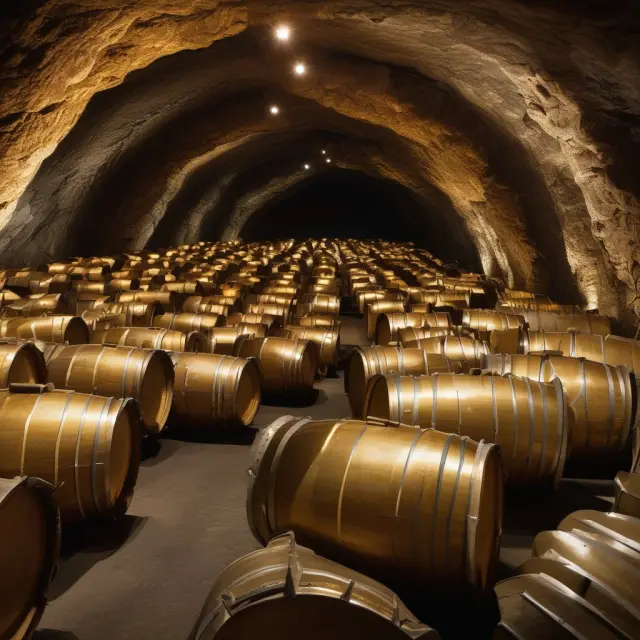
Importance of Oil Reserves to the US
In times of global instability and uncertainty, having a strategic reserve of crude oil can bring much-needed peace of mind. The United States holds one such emergency reserve called the Strategic Petroleum Reserve (SPR), which serves as a critical safeguard against potential supply disruptions or economic crises.
The SPR, established in 1975 following the oil crisis of 1973-1974, is a government-owned stockpile of crude oil kept in underground caverns located along the Gulf Coast. Its primary objective is to maintain a sufficient and stable supply of crude oil for the country in times of national security or economic emergencies.
During the 1973 oil embargo, OPEC, led by Saudi Arabia, imposed an embargo on countries that supported Israel during the Yom Kippur War. This event caused a sharp increase in crude oil prices and a significant impact on the world economy, highlighting the importance of having a strategic reserve.
The SPR currently holds approximately 635 million barrels of crude oil as of December 2021. The U.S. Energy Information Administration (EIA) estimates that this reserve could cover about 78 days of national oil consumption at an average daily rate for the year 2020.
Maintaining and expanding the SPR is crucial, as it ensures that the United States has a contingency plan in place to mitigate any potential disruptions affecting crude oil imports or domestic production. Furthermore, this reserve acts as a tool for the U.S. government to stabilize energy markets during times of crisis or geopolitical tensions.
For instance, the SPR was utilized twice in history – in 1991, after Iraq invaded Kuwait, and in 2005, when Hurricane Katrina disrupted Gulf Coast oil production. The U.S. released a portion of its strategic reserve during these events to stabilize the energy market and reduce price volatility.
In conclusion, understanding oil reserves plays a crucial role in comprehending the global energy landscape’s complexities. The Strategic Petroleum Reserve (SPR) is an essential national security asset for the United States, serving as a vital emergency supply of crude oil to counteract potential supply disruptions or economic crises.

History of Oil Embargo and its Impact on Reserves
The history of oil embargos significantly affected global oil markets and highlighted the importance of understanding the dynamics of oil reserves. In 1973, an event known as the “oil crisis” or “oil embargo,” took place when the Organization of Petroleum Exporting Countries (OPEC) led by Saudi Arabia imposed a ban on oil exports to several nations supporting Israel during the Yom Kippur War. The embargo caused an oil price shock, with crude prices rising nearly 300% within months and leading to long-term consequences on global politics and the economy.
The sudden halt of exports led to a drastic decrease in crude supplies worldwide. This situation highlighted the significance of oil reserves as a strategic resource and a potential tool for political leverage. The embargo’s impact on the global oil market created an increased demand for countries with substantial reserves, strengthened OPEC’s position in the oil industry, and ultimately set the stage for future geopolitical tensions around oil reserves.
The 1973 embargo demonstrated the importance of understanding oil reserves and their strategic significance. It also led to a greater emphasis on energy security, both for producing and consuming nations. As a result, many countries started building up their emergency oil reserves as insurance against future potential supply disruptions. Today, the world’s largest oil reserve holder, Venezuela, has approximately 303.8 billion barrels of proven oil reserves, while the United States holds the Strategic Petroleum Reserve (SPR), an emergency supply of crude oil to offset severe shortages or economic disruptions.
The 1973 oil embargo serves as a reminder that oil reserves are not just a commodity but also a strategic resource with geopolitical implications. Understanding the history and importance of oil reserves is crucial for investors, policymakers, and energy consumers alike. By delving deeper into the topic, we can gain insights into the complex dynamics of the global oil market and its potential future implications.

Components of an Oil Reserve
Oil reserves are essential components of a nation’s energy resources and play a significant role in the global economy. In understanding the importance of oil reserves, it is crucial to comprehend their various components and the way they are reported. This section will delve deeper into the composition of petroleum reserves.
Petroleum reserves can be categorized according to several criteria: reservoir, field, basin, or country as a whole. A reservoir refers to an underground geological structure that holds a quantity of oil and associated natural gas. For instance, the Ghawar Oil Field in Saudi Arabia is one of the world’s largest petroleum reserves, with estimated recoverable resources of 68-75 billion barrels.
A field, on the other hand, encompasses all the reservoirs that are economically linked and managed as a single unit. This could be a geographically contiguous region or a group of oil reservoirs in different locations. For example, the North Sea contains numerous oil fields, which together form the North Sea Oil Province.
Petroleum reserves can also be reported for an entire basin, which is a large geological area containing multiple fields and reservoirs. The Permian Basin in West Texas and New Mexico holds some of the largest oil reserves in the United States, with over 75 billion barrels estimated in place. This basin is so vast that it spans multiple states and has contributed significantly to the US oil production growth.
Lastly, petroleum reserves can be reported at the country level. As mentioned earlier, Venezuela, Saudi Arabia, and Canada are among the top three countries with the largest known oil reserves globally. According to BP Plc’s 2021 Statistical Review of World Energy report, there are 1.73 trillion barrels of oil reserves worldwide. The Organization of Petroleum Exporting Countries (OPEC) estimates a slightly lower figure of 1.25 trillion barrels, with OPEC members holding about 80% of the global reserves.
In conclusion, understanding the components of petroleum reserves is essential for investors, energy analysts, and policymakers alike. By categorizing oil reserves according to reservoir, field, basin, or country, we can grasp the significance of these resources in the global energy landscape and their potential impact on the economy and geopolitics.
FAQs
What are petroleum reserves?
Petroleum reserves refer to an estimate of the amount of crude oil that can be extracted from a particular economic region with proven methods.
How is oil reserve data reported?
Oil reserves can be reported in various contexts, including reservoir, field, basin, or country as a whole.
What are some examples of large oil reservoirs?
The Ghawar Oil Field in Saudi Arabia and the North Sea Oil Province are two notable examples of significant petroleum reserves.
How does the Strategic Petroleum Reserve (SPR) contribute to U.S. oil security?
The SPR is an emergency supply of crude oil that can be used to offset a severe oil supply shortage or economic disruption in the United States.
What countries hold the largest petroleum reserves globally?
Venezuela, Saudi Arabia, and Canada are among the top three countries with the most significant oil reserves worldwide.

Future Implications for Oil Reserves
Understanding the implications of oil reserves requires a look at geopolitical tensions, climate change, and technological advancements. The following discussions delve deeper into these areas and their potential impact on oil reserves.
Geopolitical Tensions and Oil Reserves
Oil reserves play a significant role in international relations and can lead to geopolitical conflicts between countries. One such example is the 1973 oil embargo, which showcased the power of oil-rich nations in controlling global energy markets and their potential impact on industrialized economies. More recently, tensions between Russia and Ukraine over natural gas supplies have highlighted the importance of securing access to energy resources. As oil reserves diminish, competition for the remaining deposits could intensify.
Climate Change and Oil Reserves
Another significant implication of oil reserves is climate change. The continued reliance on fossil fuels contributes significantly to greenhouse gas emissions, which contribute to global warming. In response, many countries are turning to renewable energy sources to reduce their carbon footprint. This shift may decrease the demand for traditional oil reserves and could potentially lead to stranded assets, meaning that oil reserves may become economically unviable.
Technological Advancements and Oil Reserves
Advancements in technology, particularly in the area of renewable energy and shale oil extraction, have significantly altered the landscape of global energy markets. Renewable energy sources like wind, solar, and hydroelectric power are becoming increasingly cost-competitive with traditional fossil fuels. Additionally, advancements in fracking techniques have enabled the United States to become a top producer of oil and natural gas. These technological innovations may change the way oil reserves are perceived and utilized.
In conclusion, understanding future implications for oil reserves requires an awareness of geopolitical tensions, climate change, and technological advancements. Geopolitical conflicts, driven by competition for dwindling resources, could intensify. Climate change and its potential impact on the demand for fossil fuels may result in stranded assets. Technological innovations like renewable energy and shale oil extraction could alter the way oil reserves are perceived and utilized. As oil reserves become increasingly valuable and finite, their implications on the global economy, international relations, and the environment will only continue to grow.

Conclusion
The understanding and importance of oil reserves go beyond mere numbers and statistics – they play a critical role in the global energy landscape, international relations, and national security. Oil reserves are not only essential for economic prosperity but also serve as strategic tools in maintaining geopolitical stability and ensuring energy security. With approximately 1.73 trillion barrels of oil reserves globally, countries like Venezuela, Saudi Arabia, and Canada hold the lion’s share, influencing market dynamics and setting global trends.
As the world transitions towards cleaner, more sustainable energy sources, it is crucial to recognize that oil will remain a significant component of the global energy mix for years to come. The decline in the reserves-to-production ratio, especially in the Middle East and North America, signals the need for alternative solutions as we navigate the complex relationship between oil, economic growth, and climate change.
In the United States, the Strategic Petroleum Reserve (SPR) stands as a vital emergency supply of crude oil to offset severe oil supply shortages or economic disruptions. Established in 1975, the SPR continues to play an essential role in maintaining national security and energy independence.
Understanding the concept of oil reserves sheds light on their importance in shaping our energy future while offering insights into the past, such as the 1973 oil embargo that dramatically impacted global politics and economies. As we continue to explore new ways to meet our energy demands and reduce greenhouse gas emissions, oil reserves will remain a topic of interest for policymakers, investors, and scholars alike.
FAQs (optional)
Q: What are oil reserves?
A: Oil reserves refer to an estimate of the amount of crude oil located in a particular economic region with the potential of being extracted. They’re crucial for economic prosperity, international relations, and national security.
Q: Who holds the largest oil reserves globally?
A: Venezuela, Saudi Arabia, and Canada hold some of the largest oil reserves worldwide. According to BP’s 2021 report, Venezuela leads with an estimated 303.8 billion barrels, followed by Saudi Arabia with 297.5 billion barrels, and Canada with 168.1 billion barrels.
Q: How is the Strategic Petroleum Reserve (SPR) important to the US?
A: The SPR is an emergency supply of crude oil that can be used by the United States in the event of a severe oil supply shortage or economic disruption. It was created in 1975 and plays a significant role in maintaining national security and energy independence.

FAQs
1. What exactly are oil reserves? Oil reserves refer to the amount of crude oil in a given region or country, estimated based on geological data and assessments of economic viability for extraction. This term is crucial within the context of the global energy landscape.
2. Which countries hold the largest oil reserves in the world? The top three countries with significant oil reserves are Venezuela (303.8 billion barrels), Saudi Arabia (297.5 billion barrels), and Canada (168.1 billion barrels). These figures highlight the importance of understanding these nations’ roles within the international energy sector.
3. How much oil is estimated to be in global reserves? BP Plc estimates that there are 1.73 trillion barrels of oil reserves worldwide, according to their 2021 report. This massive resource underscores the importance of oil in today’s energy landscape and global economy.
4. What is the reserve-to-production ratio (R/P), and why is it essential? The R/P measures the number of years a reserve base would last at current annual production rates. This vital metric helps analysts evaluate the longevity of reserves, providing important context for both companies and countries involved in oil exploration and production.
5. What are the primary components of an oil reserve? Oil reserves consist of hydrocarbon deposits predominantly located in subsurface geologic formations. They can be reported in various contexts, including reservoirs, fields, petroleum basins, or entire countries.
6. Why is the Strategic Petroleum Reserve (SPR) important to the United States? The SPR is an emergency supply of crude oil that can help offset a severe oil supply shortage in the U.S. This critical national security tool ensures America has adequate resources to maintain its energy security during times of disruption or conflict.
7. What was the 1973 Oil Embargo, and how did it impact oil reserves? During the 1973 Oil Embargo, OPEC members banned oil exports to several nations as retaliation for their support of Israel during the Yom Kippur War. The resulting oil price hike caused an international crisis that underscored the importance of oil reserves and their geopolitical significance.
 Next entry · No. 3,663Oil Sands: A Look into Canada’s Dense, Viscous Crude Oil Reserves and Their Extraction Processes
See also
-
 No. 3,549
07 Apr 2025
25 min
Understanding Nonrenewable Resources: Their Significance and Impact on Climate Change
Energy Finance
No. 3,549
07 Apr 2025
25 min
Understanding Nonrenewable Resources: Their Significance and Impact on Climate Change
Energy Finance -
 No. 5,680
29 Sep 2025
17 min
Understanding Wellbores: A Comprehensive Guide for Institutional Investors
Energy Finance
No. 5,680
29 Sep 2025
17 min
Understanding Wellbores: A Comprehensive Guide for Institutional Investors
Energy Finance -
 No. 5,169
17 Aug 2025
20 min
Understanding Unconventional Oil: From Fracking to Oil Sands
Energy Finance
No. 5,169
17 Aug 2025
20 min
Understanding Unconventional Oil: From Fracking to Oil Sands
Energy Finance -
 No. 3,972
11 May 2025
21 min
Understanding Petroleum: A Comprehensive Guide for Institutional Investors
Energy Finance
No. 3,972
11 May 2025
21 min
Understanding Petroleum: A Comprehensive Guide for Institutional Investors
Energy Finance -
 No. 3,700
19 Apr 2025
19 min
Understanding the Role and Impact of the Organization of the Petroleum Exporting Countries (OPEC)
Energy Finance
No. 3,700
19 Apr 2025
19 min
Understanding the Role and Impact of the Organization of the Petroleum Exporting Countries (OPEC)
Energy Finance -
 No. 3,658
16 Apr 2025
19 min
Understanding Oil Initially in Place (OIIP): An Essential Concept for Institutional Investors
Energy Finance
No. 3,658
16 Apr 2025
19 min
Understanding Oil Initially in Place (OIIP): An Essential Concept for Institutional Investors
Energy Finance