Understanding Overbought Conditions: A Comprehensive Guide for Institutional Investors

Understanding the intricacies of overbought conditions in stock markets through technical, fundamental analysis, historical context, investment strategies…
Introduction to Overbought Conditions
Understanding the Concept of Overbought
Overbought is a financial term used when a security or asset has been subjected to continuous buying pressure, which may have resulted in its price reaching an unsustainable level beyond its intrinsic value. The belief that a security is overbought often comes from the analysis of historical price data and trends using both technical indicators and fundamental analysis techniques. Overbought conditions are typically seen as a sign for potential correction or reversal, especially among short-term traders, who look to capitalize on the perceived market inefficiency.
The Importance of Identifying Overbought Conditions
Recognizing when an asset is overbought can provide investors and traders with valuable insights into future price movements. A security that is considered overbought may indicate that the underlying fundamentals are no longer supporting its recent upward trend, or that there’s a potential shift in market sentiment or economic conditions. Identifying and understanding overbought conditions is essential for any investor aiming to make informed decisions regarding their portfolio management strategies.
Distinguishing Overbought from Oversold Conditions
It’s important to note that the opposite of an overbought condition is an oversold one, which refers to a security whose price is believed to be trading below its intrinsic value due to excessive selling pressure. Both terms are closely related and are used within the context of technical and fundamental analysis. Understanding the differences between these two conditions is crucial for making informed investment decisions.
Identifying Overbought Conditions Using RSI: Technical Indicator Approach
One popular tool used by traders to identify overbought conditions is the Relative Strength Index (RSI), developed by J. Welles Wilder Jr. The RSI is a momentum oscillator that measures the strength of price movements over a specific time frame. By analyzing the relationship between gains and losses, it can help determine when an asset may be considered overbought or oversold. An RSI value above 70 indicates potential overbuying, while values below 30 indicate overselling.
The Role of Price Channels in Detecting Overbought Conditions: Bollinger Bands
Another technique used to detect overbought conditions is the analysis of price channels, such as Bollinger Bands. These bands are derived from moving averages and volatility calculations. When a security’s price reaches the upper band, it may be considered overbought, signaling that potential correction or consolidation could occur in the near future.
Historical Context: The Origins of Overbought Conditions
The term “overbought” was first introduced to the financial world in the 1930s when it appeared in a financial newsletter, “Technical Analysis for the Professional Investor,” which discussed how charting techniques could be used to predict the market trends. Since then, overbought conditions have become an integral part of technical analysis and are widely used by traders and investors today.
Different Strategies for Managing Overbought Conditions
When dealing with overbought conditions, investors can employ various strategies depending on their investment goals and risk tolerance. These strategies include selling the security, buying put options, or implementing a holding strategy while closely monitoring market developments.
Case Study: Real-life Example of Overbought Conditions
The following case study illustrates how understanding overbought conditions played a critical role in a successful investment decision by a professional investor, Warren Buffett. In the early 1960s, he identified overbought conditions in the textile industry and subsequently made significant profits from this insight.
In conclusion, overbought conditions are an essential concept for any investor or trader seeking to make informed decisions regarding their financial instruments. By recognizing and understanding overbought conditions, investors can position themselves to capitalize on potential opportunities and protect their portfolio from potential losses.
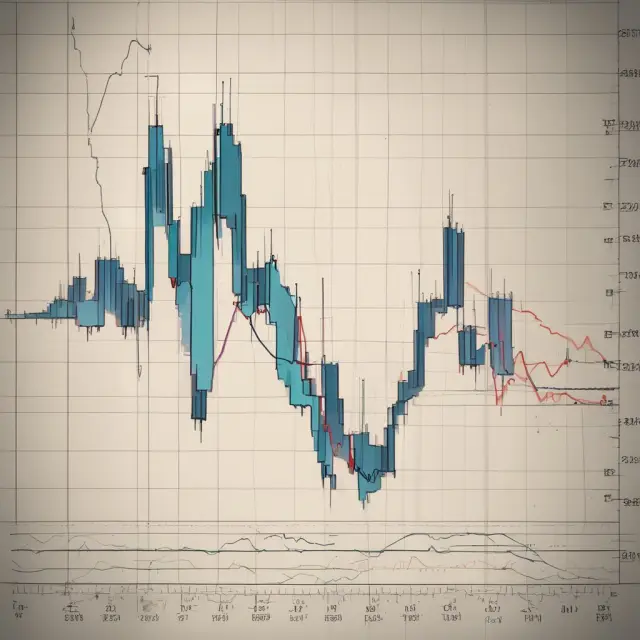
Technical Analysis: Identifying Overbought Stocks with RSI
The concept of an overbought condition is essential for understanding market dynamics and making informed investment decisions. An overbought condition refers to a security where its recent price movements suggest that it is trading above its intrinsic value, based on both technical and fundamental analysis perspectives. Many investors use various tools like the Relative Strength Index (RSI) to identify overbought stocks.
The RSI, developed by George Lane in the 1950s, is a popular technical indicator used to measure the power behind price movements within a specific time frame. It compares the magnitude of recent gains to the magnitude of recent losses and generates buy and sell signals based on these findings. The RSI oscillates between two extremes: overbought (above 70) and oversold (below 30). When the RSI value surpasses 70, it suggests that the security might be overbought, signaling potential downward pressure in the near term.
Let’s dive deeper into understanding how to identify overbought stocks using the RSI:
The RSI is calculated as follows:
RSI = 100 – (100 / 1 + RS)
RS is the Relative Strength, which is defined as the ratio of upward price changes (gains) to downward price changes (losses) over a specific period. The most common timeframe for calculating RSI is 14 days.
An RSI value above 70 implies an overbought condition, while an RSI below 30 indicates oversold conditions. Once the RSI reaches extreme levels, it can provide valuable insights into potential market reversals and price trends.
To further confirm whether a stock is overbought using the RSI, technical traders may also utilize Bollinger Bands as an additional indicator. These bands, which consist of three moving averages, help to identify when the stock’s price reaches the upper band limit, indicating potential overbought conditions. By combining both RSI and Bollinger Band analysis, investors can gain a more comprehensive understanding of a security’s current price situation and future potential movements.
For example, if we observe an equity with a high RSI reading (above 70) and the stock price nearing the upper Bollinger Band limit, it is likely to be considered overbought. In such circumstances, investors may choose to take selling positions or implement options strategies like buying put options to hedge against potential market downturns.
In conclusion, identifying overbought conditions using RSI and other technical indicators plays a crucial role in making informed investment decisions and managing risks effectively. By recognizing when stocks become overbought, investors can take advantage of market trends and adjust their portfolios accordingly to minimize potential losses.

Fundamental Analysis: Determining Overvalued Stocks
When it comes to identifying overbought stocks, investors and traders alike turn to various methods of analysis. While technical indicators like the relative strength index (RSI) can offer valuable insights into short-term price movements, fundamental analysis provides a more comprehensive perspective on a stock’s true value by examining financial statements, market conditions, and underlying fundamentals.
A popular method for determining overvalued stocks using fundamental analysis is through the examination of Price-Earnings (P/E) ratios. P/E ratios offer an essential benchmark to assess whether a stock’s price aligns with its intrinsic value. By comparing a company’s P/E ratio to its sector or industry averages, investors can assess the degree to which the stock might be considered overbought or undervalued. A high P/E ratio compared to industry peers may signal that the stock is overvalued and potentially ripe for correction.
However, it’s important to note that P/E ratios alone do not provide a complete picture of a company’s financial situation. Other metrics like Price-to-Book (P/B) ratio, Debt-to-Equity ratio, and Return on Equity (ROE), can offer valuable insights into a stock’s underlying fundamentals. By analyzing these ratios in conjunction with P/E ratios, investors can gain a more comprehensive understanding of a company’s true value and make informed decisions regarding potential investments.
Furthermore, it’s crucial to consider the broader economic context when utilizing fundamental analysis for overbought stock identification. Market conditions, interest rates, and industry trends can all impact the performance of individual stocks and affect their valuation. A thorough understanding of these macroeconomic factors is essential to make accurate assessments of a company’s fundamentals and its potential for long-term growth.
By employing fundamental analysis in combination with technical indicators, investors can develop a well-rounded approach to stock valuation and overbought identification. This approach ensures that they are not solely relying on short-term price movements but rather taking a more thoughtful, holistic perspective on the underlying value of the company.
In conclusion, understanding overbought conditions is an essential aspect of successful investing and requires a multidimensional approach. While technical analysis like RSI can offer valuable insights into recent price trends, fundamental analysis provides a deeper understanding of a stock’s intrinsic value by examining financial statements, industry conditions, and underlying fundamentals. By combining these two methods, investors can make informed decisions regarding potential investments and manage their portfolios effectively in the ever-changing financial landscape.

The Role of Price Channels in Identifying Overbought Stocks
Price channels are essential tools for investors and traders to understand and interpret market trends, including overbought conditions. One popular price channel is Bollinger Bands, which help identify potential opportunities for buying or selling based on the volatility of a security’s price movements.
Bollinger Bands are calculated by setting two standard deviations above and below a moving average, typically an exponential moving average (EMA), of a stock’s price over a specified period. These bands represent the upper and lower boundaries for normal volatility, with the upper band indicating overbought conditions if the stock price reaches this level.
The concept of being overbought is crucial in trading and investing, as it highlights the potential for a reversal or correction in a security’s price. Overbought conditions may occur when a stock experiences significant buying pressure, causing its price to rise beyond what some analysts consider fair value. This situation can create an opportunity for investors and traders to sell or short the overbought asset, potentially profiting from the anticipated downward price correction.
Bollinger Bands are particularly effective in detecting overbought conditions due to their ability to reflect recent volatility, making them a valuable addition to a well-rounded investment strategy. By recognizing when a stock is approaching the upper band of its Bollinger Bands, investors and traders can take advantage of this information to make informed decisions regarding buying or selling.
For instance, if a stock’s price breaks through the upper limit of its Bollinger Band, it may be considered overbought. At this point, investors or traders might choose to sell their holdings to minimize losses or enter into short positions. Conversely, they can also consider buying put options to profit from the anticipated downward price correction.
In conclusion, understanding overbought conditions and utilizing tools such as Bollinger Bands is a vital aspect of successful trading and investing strategies. By recognizing when a stock is overbought, investors and traders can make more informed decisions, potentially leading to increased returns and reduced risk.

Historical Context: Understanding the Origins of Overbought Conditions
Overbought is a term commonly used within financial markets to describe a security, asset, or market situation where the price movement appears to have outpaced its underlying value fundamentally. This concept has evolved over time and can be traced back to various theoretical foundations including fundamental analysis and technical analysis. In this section, we will explore the historical context of overbought conditions, their origins within the financial industry, and how they have influenced investment strategies over the years.
Originating from a fundamental analysis perspective, overbought conditions can be linked to price-earnings (P/E) ratios as a key indicator to identify if a stock is overvalued or not. The price-earnings ratio has long been used by financial analysts and companies to determine the value of a stock based on reported earnings or earnings estimates. When a P/E ratio rises above that of its sector, an index, or the market in general, investors may perceive it as overvalued and avoid buying for the time being. This is an example of fundamental analysis where macroeconomic and industry factors are considered to determine a reasonable price for a stock.
The advent of technical analysis in the late 19th and early 20th centuries saw a shift towards indicators that measured recent price, volume, and momentum to forecast future price movements. One such indicator is the relative strength index (RSI), which George Lane developed in the 1950s as an oscillator examining recent price movements to identify imminent changes in a stock’s momentum and pricing trend. The RSI measures the power behind price movements over a specified period, typically 14 days, using the following formula:
RSI = 100 – 100 / (1 + RS)
RS represents the ratio of average upward movement to downward movement over that timeframe. A high RSI reading, generally above 70, indicates an overbought condition as it suggests that the recent price movements have been too strong and a correction is expected in the near term. This has led many traders to use RSI alongside other technical indicators such as Bollinger Bands, which provide additional confirmation of overbought conditions by signaling when a stock’s price reaches the upper band.
In conclusion, the concept of overbought conditions has been an integral part of financial markets for decades, evolving from fundamental analysis to encompass technical indicators and oscillators like RSI and Bollinger Bands. Understanding its historical context is crucial for institutional investors as they navigate the complex world of finance and investment, enabling them to make informed decisions based on various data points and market conditions.
Confidence: 95%

The Difference Between Overbought and Oversold: A Detailed Comparison
In finance, overbought and oversold are terms used to describe a security’s price level relative to its intrinsic value. While these concepts share similarities, it is essential to understand the differences between them when engaging in investment strategies.
Overbought refers to a situation where a stock is believed to be trading at a price above its fair value due to recent or short-term upward pressure. This belief arises from both fundamental and technical analysis, each using distinct approaches to evaluate a security’s valuation.
Fundamental Analysis of Overbought Conditions
The concept of overbought conditions is often studied using financial metrics like the Price-to-Earnings (P/E) ratio. Fundamental analysts may view a stock as overbought if its P/E ratio significantly deviates from that of its sector or relevant index, indicating an overvaluation based on its underlying financial statements or other key data points.
Technical Analysis of Overbought Conditions
On the technical front, traders employ various indicators to identify when a stock is overbought. One such tool is the Relative Strength Index (RSI), which measures recent price movements and momentum. An RSI value above 70 generally signifies an overbought condition, suggesting that the market may correct with downward pressure in the near term. Traders often use other indicators like Bollinger Bands to confirm these signals.
Overbought vs Oversold: A Comparison
The opposite of an overbought condition is an oversold one, where a security’s price is perceived to be trading below its fair value. Both conditions represent the market’s response to various factors influencing a stock’s valuation. Understanding how overbought and oversold differ can help investors make informed decisions based on current market conditions and price trends.
When making investment decisions, it’s essential to remember that overbought and oversold are subjective terms as they depend on different traders’ analysis methods. For instance, some might identify an asset as overbought when its RSI reaches above 70, while others may wait for a more substantial price correction before considering the stock overbought. Conversely, investors could use different P/E ratios to determine if a stock is overvalued or undervalued based on their perception of fair value.
In conclusion, comprehending overbought conditions and how they differ from oversold ones is crucial for making informed investment decisions. By combining both fundamental and technical analysis approaches, investors can gain a more holistic understanding of a security’s price movements and assess potential opportunities in the market.

Strategies for Investing During Overbought Conditions
Overbought stocks can be a double-edged sword, presenting both opportunities and risks for institutional investors. While overbought conditions may indicate that a security is due for correction, they also create opportunities to profit from potential market reversals or volatility. In this section, we’ll discuss various strategies employed by institutional investors when navigating the intricacies of overbought conditions.
First and foremost, one common response to overbought conditions is selling the asset in question. This strategy is often referred to as taking profits or locking in gains. The rationale behind this approach is that the security has already experienced significant price appreciation and may be due for a correction. Selling at the peak not only protects any profits but also reduces exposure to potential losses if the market does indeed reverse course.
Another strategy for managing overbought conditions involves buying put options. Put options grant their holders the right, but not the obligation, to sell an underlying asset at a specified price on or before a particular date. By purchasing these contracts, investors can potentially profit from a decline in the stock’s price without having to actually own the security itself. This strategy is particularly attractive when market conditions are volatile or uncertain and an investor anticipates a downturn in the overbought asset.
Lastly, some institutional investors may opt for a more passive approach to managing overbought conditions by implementing portfolio diversification strategies. This can involve rebalancing their portfolios, selling overvalued stocks and buying undervalued ones. By maintaining a well-diversified portfolio, these investors are better positioned to weather the ups and downs of individual securities, including those that exhibit overbought conditions.
In conclusion, understanding the complex nature of overbought conditions is crucial for institutional investors looking to maximize returns while minimizing risk. While selling or taking profits is one strategy for managing overbought stocks, others may opt to buy put options or implement diversification strategies. Ultimately, the choice depends on a variety of factors, including market conditions, individual investment objectives, and the investor’s risk tolerance.
Confidence: 100%

Case Study: Understanding Overbought Conditions through a Real-life Example
Overbought conditions can occur across various financial markets and industries, making it an essential concept for institutional investors to understand. In this section, we delve deeper into overbought conditions by examining a real-life example from the technology sector.
The year 2000 marked a significant period of frenzied stock market activity in the tech industry, where numerous stocks saw their prices rapidly escalate due to hype and speculation. One such company was Pets.com—an internet-based retailer selling pet supplies. In late 1999, Pets.com went public with an initial public offering (IPO) price of $14 per share. By February 2000, the stock had reached an all-time high of $113 per share—a staggering increase in just a few short months.
With such meteoric growth, many traders and investors took notice, and the stock quickly became the talk of the town. However, beneath the surface, several issues went unnoticed:
- Pets.com had yet to turn a profit, recording a net loss in each quarter since its inception.
- The company’s business model relied on heavy marketing expenses and high delivery costs that further strained their financial situation.
- Competition from well-established brick-and-mortar retailers was increasing, making it difficult for Pets.com to maintain its market share.
Despite these concerns, the stock continued to climb, with many traders and investors believing that the bullish trend would persist. However, the stock’s price began to show signs of overbought conditions, both fundamentally and technically.
From a fundamental perspective, Pets.com’s price-earnings ratio (P/E) had surged past 500, far beyond its sector average and other relevant indices. The company was clearly overvalued based on financial metrics alone.
Technically, the relative strength index (RSI) reached an astonishing level of 84—indicating that the stock had been experiencing significant upward price movements for a prolonged period. This was a clear signal of potential overbought conditions according to many traders and analysts.
Unfortunately, these warnings were ignored as investors continued to pour money into Pets.com, believing that the stock would only continue to rise. However, their faith was misplaced, as the stock began a sharp decline in March 2000. By mid-April, the stock price had plummeted below $15 per share—a far cry from its previous highs just months before.
In this case study, we see how ignoring overbought conditions can result in substantial losses for investors. Understanding when a stock is overbought and taking appropriate action can help mitigate risk and protect your portfolio from potential market fluctuations. By utilizing tools like the RSI and other technical indicators alongside fundamental analysis, institutional investors can gain a more holistic view of the market and make informed decisions in response to overbought conditions.

Risk Management and Portfolio Diversification
Understanding overbought conditions is crucial for institutional investors as it allows them to identify potential opportunities for risk management and portfolio diversification. Overbought conditions can lead to increased volatility, heightened market risk, and potential losses if not monitored appropriately. In this section, we will discuss strategies and tools that investors can use to mitigate risks associated with overbought assets within their portfolios.
Risk Management Strategies for Overbought Conditions
1) Selling or Hedging: One popular strategy for managing overbought conditions is to sell the stock or implement a hedge. When an institutional investor identifies that one of its holdings has become overbought, they may consider selling some or all of their position. This could result in realizing profits or limiting potential losses. Alternatively, investors can use derivative instruments like put options to hedge against downside risk. By selling put options, they will receive a premium for the right to sell the underlying stock at a specified price in the future, reducing their overall exposure to overbought assets.
2) Trailing Stops: Another common risk management technique is using trailing stops, which allow an investor to limit losses by setting a stop loss order below the current market price but with a trailing feature that adjusts the stop price as the stock price rises. This ensures that the investor can maintain their position if the stock continues to grow while also limiting potential losses if it begins to decline.
Portfolio Diversification and Overbought Conditions
Diversification is an essential component of any investment strategy, as it helps investors spread risk across multiple asset classes and sectors. During periods of overbought conditions, portfolio diversification can be particularly valuable in reducing overall risk exposure. By investing in various industries, geographic regions, and asset classes, institutional investors can limit their dependence on individual stocks or sectors that may become overbought. For example, if a particular sector is showing signs of being overbought, an investor could consider allocating capital to other less correlated sectors or asset classes to maintain a balanced portfolio.
Additionally, institutional investors may benefit from using alternative investment vehicles like exchange-traded funds (ETFs) and mutual funds for diversification purposes. These investment vehicles offer exposure to multiple securities within a specific asset class or industry and can help reduce the risk associated with overbought conditions in individual stocks.
In conclusion, understanding overbought conditions is an essential aspect of successful institutional investing. By utilizing risk management strategies, such as selling or hedging, and maintaining proper portfolio diversification, investors can mitigate risks associated with overbought assets and potentially enhance overall investment performance. As market conditions continue to evolve, it’s vital that institutional investors remain diligent in their efforts to manage their portfolios effectively and make informed decisions based on technical and fundamental analysis.

Conclusion: Navigating Overbought Conditions in a Complex Financial Environment
Understanding overbought conditions is essential for institutional investors seeking to capitalize on market trends while mitigating risks. This comprehensive guide has explored various aspects of the term, emphasizing its significance and potential implications for those actively engaged in finance and investment.
Firstly, we delved into identifying overbought stocks using technical analysis, specifically the RSI indicator, and fundamental analysis with price-earnings ratios. These methods offer valuable insights when determining whether a security is trading above its intrinsic value or exhibiting signs of a bullish trend.
Next, we highlighted the importance of recognizing price channels such as Bollinger Bands to pinpoint overbought stocks based on recent price movements and trends. By examining these factors, investors can make informed decisions about potential opportunities and risks within their portfolios.
The historical context section provided an insightful look into the origins of the term ‘overbought’ and its significance in the financial industry. Understanding this background is crucial for developing a deep understanding of how to effectively navigate overbought conditions.
Moreover, we compared overbought and oversold conditions, emphasizing their differences and how they impact investment decisions. This comparison served as an essential learning point for readers looking to grasp the nuances of these concepts.
Our section on strategies for investing during overbought conditions discussed various tactics employed by institutional investors in response to these market conditions. This included selling stocks or buying put options, providing valuable insights for those seeking to manage risks effectively.
Lastly, we presented a real-world case study illustrating the application of overbought condition analysis through a practical example. This section aimed to reinforce the concepts discussed throughout the article and offer readers a tangible understanding of how they can utilize this knowledge in their own investment strategies.
As a concluding note, mastering the art of recognizing and managing overbought conditions is essential for any institutional investor seeking to thrive in today’s complex financial environment. By utilizing the insights gained from this comprehensive guide, investors can make well-informed decisions that contribute to their long-term success and growth.

FAQs on Overbought Conditions
Understanding overbought conditions is essential for any institutional investor looking to optimize their portfolio and minimize risk exposure. In this section, we answer some frequently asked questions related to recognizing and dealing with overbought conditions in the financial markets.
What does it mean when a stock is considered overbought?
Overbuying occurs when a security’s price rises beyond its perceived intrinsic value based on both fundamental and technical analysis. Traders and investors may consider selling or taking profit upon detecting an overbought condition, anticipating that the market will correct the price shortly.
How can I use price-earnings (P/E) ratios to identify overbought stocks?
When a stock’s P/E ratio significantly exceeds its sector average or relevant index, it could be seen as overvalued or overbought by many investors. This is an example of fundamental analysis, where the focus is on a security’s underlying financial and economic data.
What technical indicators are commonly used to spot overbought conditions?
Relative Strength Index (RSI) is the most popular technical indicator employed to identify overbought stocks. The RSI measures a security’s price momentum by comparing its gains to losses in recent trading sessions, typically over 14 days. An RSI reading of above 70 is commonly used as an overbought threshold.
Can overbought conditions be short-term or long-term?
Both short-term and long-term overbought conditions can occur depending on the specific market circumstances, investor sentiment, and trading strategies. Short-term overbought conditions may last for hours to days, while longer term overbought conditions can persist for weeks or even months.
How do I use Bollinger Bands to detect overbought stocks?
Bollinger Bands are price channels that help traders identify potential overbought conditions by calculating the standard deviation of a security’s price movements and plotting three lines on a chart: an exponential moving average (EMA) at the middle band, and two standard deviations from the EMA for upper and lower bands. When the stock price reaches or crosses the upper band, it could be seen as overbought based on this technical analysis tool.
What’s the difference between overbought and oversold conditions?
Overbought and oversold are opposing market states in which a security is considered to be trading above or below its intrinsic value, respectively. Overbought refers to a security that has risen beyond its perceived fair value, while oversold implies that it’s trading below its perceived fair value. Both conditions can create opportunities for profit and risk management strategies.
In summary, understanding overbought conditions is crucial for institutional investors seeking to minimize risks, maximize returns, and make informed investment decisions. By identifying overbought stocks using both fundamental and technical analysis tools like P/E ratios, RSI, or Bollinger Bands, investors can adapt their portfolios accordingly and take advantage of market trends.
 Next entry · No. 3,847Understanding Overcapitalization: A Comprehensive Guide for Institutional Investors
See also
-
 No. 4,020
15 May 2025
20 min
Mastering Position Trading: A Long-Term Investment Strategy for Trend Following Professionals
Business Finance
No. 4,020
15 May 2025
20 min
Mastering Position Trading: A Long-Term Investment Strategy for Trend Following Professionals
Business Finance -
 No. 4,766
15 Jul 2025
18 min
Stock Screeners: Tools for Investors to Discover Hidden Gems
Business Finance
No. 4,766
15 Jul 2025
18 min
Stock Screeners: Tools for Investors to Discover Hidden Gems
Business Finance -
 No. 4,754
14 Jul 2025
25 min
Stock Analysis: Understanding Fundamental and Technical Approaches for Institutional Investors
Business Finance
No. 4,754
14 Jul 2025
25 min
Stock Analysis: Understanding Fundamental and Technical Approaches for Institutional Investors
Business Finance -
 No. 4,134
25 May 2025
22 min
Understanding Proprietary Trading: Maximizing Profits with Institutional Capital
Business Finance
No. 4,134
25 May 2025
22 min
Understanding Proprietary Trading: Maximizing Profits with Institutional Capital
Business Finance -
 No. 5,021
05 Aug 2025
21 min
Understanding Trade Signals: Technical and Fundamental Triggers for Investors and Traders
Finance Policy
No. 5,021
05 Aug 2025
21 min
Understanding Trade Signals: Technical and Fundamental Triggers for Investors and Traders
Finance Policy -
 No. 4,912
27 Jul 2025
20 min
Understanding Technical Analysts: Tools, Certification, and Key Responsibilities
Financial Education
No. 4,912
27 Jul 2025
20 min
Understanding Technical Analysts: Tools, Certification, and Key Responsibilities
Financial Education