Understanding Oversold Conditions in Finance and Investment

Learn the ins and outs of understanding and utilizing oversold conditions in finance and investment through this comprehensive guide.
Introduction to Oversold Conditions
In finance and investment, the term ‘oversold’ is used to describe assets that have experienced a significant decline in value and are believed to be undervalued or underpriced relative to their fundamental value or historical price trends. An asset can become oversold due to various factors, including bearish sentiment, market volatility, or negative news affecting the underlying company or industry.
Understanding oversold conditions is crucial for investors, as these conditions present potential opportunities for capital gains and profitable trades. By identifying and responding appropriately to oversold assets, investors can benefit from buying at lower prices and riding the subsequent price recovery. In this article section, we’ll explore what oversold conditions mean in the context of finance and investment and discuss how they can be identified using both fundamental and technical analysis methods.
In essence, oversold conditions occur when an asset, such as a stock, bond, or commodity, experiences a sharp price decline that results in its price trading below its intrinsic value. This situation can create a buying opportunity for investors seeking to capitalize on the discounted asset price.
Fundamentally speaking, an oversold condition can be identified when the underlying asset’s valuation metrics, such as Price-to-Earnings (P/E) ratios or Forward P/E multiples, deviate significantly from their historical averages or industry benchmarks. This divergence between the current price and its fundamental value can indicate that the market has overreacted to recent news or events, creating a buying opportunity for those willing to invest based on fundamentals.
Technically speaking, oversold conditions can be identified using various indicators like Relative Strength Index (RSI), Stochastic Oscillator, Moving Average Convergence Divergence (MACD), or Bollinger Bands. These indicators measure the price momentum and trend of an asset and can help identify oversold conditions based on their readings and signals.
In the next sections, we’ll delve deeper into how oversold conditions can be identified using both fundamental and technical analysis methods. We’ll also discuss common misconceptions about oversold conditions and provide real-life examples to illustrate their implications for investors.
Stay tuned!

Fundamentally Oversold: Value Metrics and Undervaluation
In finance and investment, a condition of overselling refers to when an asset experiences a significant decrease in its trading price relative to its intrinsic value or perceived worth based on fundamental analysis. This can occur due to various reasons, such as unfavorable market sentiment, negative news about the underlying company or industry, or economic downturns. When stocks are fundamentally oversold, their Price-to-Earnings (P/E) ratios and forward P/E ratios often deviate considerably from historical norms, indicating that the securities may be undervalued.
Understanding fundamental analysis is crucial to evaluating whether an asset is fundamentally oversold. The primary goal of fundamental analysis is to assess a security’s intrinsic value by examining its underlying financial and economic attributes, as well as external market factors. By comparing the current values to historical data, investors can determine if the stock is trading at a significant discount or premium. For instance, if a company has historically maintained a P/E ratio between 10 and 15, but currently trades at a P/E of 5, an investor may view it as fundamentally oversold and potentially undervalued.
However, it is important to exercise caution when interpreting fundamental indicators, as there can be valid reasons for the current situation. For example, poor earnings reports or negative industry trends might contribute to a lower P/E ratio. Before making any investment decisions based on fundamental analysis alone, investors should conduct thorough research and carefully consider all available information about the company and market conditions.
Fundamental analysis can be particularly valuable during market downturns when oversold conditions are prevalent among various securities. By using this approach to identify undervalued assets, investors may benefit from long-term capital appreciation, as well as a more diversified portfolio that better withstands broader economic challenges.
Stay tuned for the next section, where we will explore how technical analysis is used to identify oversold conditions through various indicators and momentum.
Technically Oversold: Indicators and Momentum
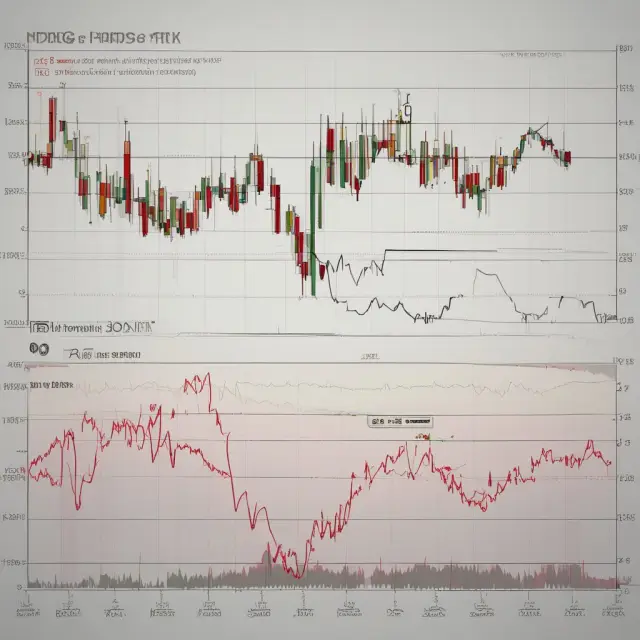
An oversold condition can be identified using technical indicators, which rely solely on historical price data without considering fundamental factors. Two popular indicators for detecting oversold conditions are the Relative Strength Index (RSI) and Stochastic Oscillator.
The RSI is a momentum oscillator that measures the magnitude of recent price changes to determine whether an asset is overbought or oversold. Generally, when the RSI falls below 30, an asset is considered oversold, while readings above 70 indicate an overbought condition. The RSI creates a line that oscillates between these two extremes, providing traders with insights into potential buying and selling opportunities. By waiting for the RSI to rise back above 30 before purchasing, investors can take advantage of a reversal in price momentum and potentially profit from a subsequent price increase.
Similarly, Stochastic Oscillator, developed by George Lane in the late 1950s, aims to measure the closing relationship between an asset’s price and its price range over a specific timeframe. The Stochastic Oscillator indicator moves within a range between 0 and 100. When the indicator falls below 20, an asset is considered oversold, while a reading above 80 indicates that the asset is overbought. A trader might consider purchasing when the Stochastic Oscillator rises back above the oversold threshold and starts to move upward, potentially signaling a bullish reversal in price momentum.
Another popular indicator used for detecting oversold conditions is Bollinger Bands. These bands are volatility envelopes that consist of three lines: an upper band, a middle band (simple moving average), and a lower band. The bands expand or contract based on the asset’s historical price volatility. When an asset’s price reaches the lower band, it may be considered oversold. Investors can wait for confirmation of a bullish reversal by observing the asset’s price action as it bounces back from the oversold level before entering a long position.
Although technical indicators can provide valuable insights into potential buying opportunities, investors should remember that they do not guarantee profits or protect against losses. It is essential to exercise caution when trading based on oversold readings and to employ proper risk management techniques such as setting stop-loss orders and maintaining a diversified portfolio.

Common Misconceptions About Oversold Conditions
Although the concept of an oversold condition can be a powerful tool for investors and traders, it is not without its misconceptions. One common misunderstanding is that oversold readings automatically translate to buy signals. Instead, they are merely indicators that a security may be undervalued based on historical trends or technical analysis.
Technically speaking, an oversold condition arises when a security’s price has fallen significantly below its recent average. This can occur for various reasons such as market sentiment, economic factors, or fundamental data. In the case of technical indicators like the Relative Strength Index (RSI) and stochastic oscillator, oversold conditions are identified when these indicators reach certain thresholds, often below 30.
Fundamentally, an oversold condition may be suggested by value metrics such as Price/Earnings (P/E) ratios or forward P/E ratios. When a security’s P/E ratio falls substantially below its historical average, it might indicate that the stock is undervalued. However, it is important to remember that oversold conditions do not guarantee that a rebound will occur immediately or even at all.
One significant misconception about oversold conditions is the assumption that they are guaranteed buy signals. In reality, an oversold condition does not automatically mean a price recovery is imminent. Many stocks have continued to decline despite showing signs of being oversold for extended periods. This can occur if investors perceive negative long-term prospects for a security, causing them to sell even when the security appears undervalued from a historical perspective.
Moreover, it’s important to note that oversold conditions can be influenced by market sentiment and trends. During market downturns or periods of heightened volatility, oversold signals may not provide accurate information since the market as a whole could be experiencing significant sell-offs. Thus, relying solely on oversold readings for trading decisions can result in missed opportunities or even losses.
In conclusion, understanding oversold conditions and their potential implications is crucial for investors and traders. However, it’s essential to recognize that these conditions do not necessarily equate to buy signals. Instead, they serve as indicators of potentially undervalued securities that warrant further investigation before making a purchase decision.

Identifying an Oversold Condition: Examples and Case Studies
Oversold conditions can provide valuable opportunities for investors, particularly when looking at both fundamental and technical perspectives. This section will present examples of how to identify such situations in various asset classes through a combination of value metrics and momentum indicators.
Example 1: Fundamentally Oversold Equities
Consider the case of XYZ Corporation, a mid-cap company whose P/E ratio dropped below its sector average during a market selloff. The drop was driven by concerns over regulatory issues that many investors perceived to be temporary in nature. As a result, the stock price fell significantly relative to its historical valuation. With the RSI indicator also dipping into oversold territory, XYZ might appear as an attractive prospect for long-term investors looking to capitalize on what they believe is an overreaction in the market.
Example 2: Technically Oversold Currencies
In foreign exchange markets, currencies can become technically oversold when their prices reach certain key support levels. For example, if the Swiss Franc (CHF) breaks below a crucial psychological level of CHF 1.05 against the US Dollar (USD), technical traders may view this as an oversold condition due to the currency’s historical tendency to rebound from such low points.
Example 3: Identifying Oversold Conditions in Commodities
Commodity markets, particularly precious metals like gold and silver, can also experience oversold conditions based on both fundamental and technical analysis. For instance, when gold reaches a historically low price of $1,200 per ounce but shows signs of bullish momentum through a bounce in the RSI indicator, traders may consider this as an opportunity to buy given the metal’s historical tendency to recover from oversold conditions.
In conclusion, understanding how to identify and respond to oversold conditions is crucial for investors seeking to capitalize on market dislocations and reap rewards from potentially undervalued assets. While oversold readings can be useful signals, it is essential not to blindly rely on them as definitive buy signals but instead wait for confirmation that the underlying trend has started to reverse before making an investment decision.

Buy-and-Hold Strategies vs. Active Trading: Oversold Conditions
Oversold conditions can be a double-edged sword for investors, appealing to both buy-and-hold and active trading strategies due to their potential undervaluation. Let’s explore how these two investment styles differ when it comes to exploiting oversold conditions.
Buy-and-Hold Strategy: The Long-Term Play in Oversold Assets
The buy-and-hold strategy is a popular approach for long-term investors seeking consistent growth through stocks, bonds, or other investment vehicles. In an oversold situation, the fundamental investor may see this as a chance to acquire undervalued assets that could offer excellent returns over time. By focusing on key value metrics like Price/Earnings (P/E) ratios and forward P/Es, these investors can pinpoint opportunities where the market has mispriced an asset relative to its intrinsic worth.
For example, if a fundamentally strong company experiences adverse short-term news or industry headwinds, its stock price might fall below its historical average P/E ratio. This oversold situation could offer a long-term value opportunity for buy-and-hold investors, as the underlying business remains solid and the market may eventually reprice the stock to reflect that.
Active Trading: Timing the Market with Oversold Conditions
In contrast to buy-and-hold strategies, active traders aim to profit from short-term price movements in various markets by employing technical analysis, momentum, and other strategies. Active traders may use oversold conditions identified through technical indicators such as RSI, stochastic oscillator, or Bollinger Bands to initiate trades with the expectation of a price recovery.
For instance, an active trader might wait for the RSI (Relative Strength Index) to dip below 30, signaling an oversold condition according to technical analysis. The trader could then enter a long position when the RSI starts to trend upwards, anticipating that the price will follow suit and potentially generate profits as the market recovers from the oversold state.
Understanding the Differences: Balancing Patience and Agility in Oversold Conditions
While both buy-and-hold and active trading strategies can benefit from oversold conditions, they require distinct approaches when it comes to execution. Buy-and-hold investors must exercise patience, waiting for the fundamental value of their investments to be recognized by the market, while active traders focus on short-term price movements to profit from the potential reversal.
Balancing patience and agility is crucial when navigating oversold conditions. The right strategy ultimately depends on an investor’s risk tolerance, investment horizon, and personal preferences. A strong understanding of both fundamental and technical analysis can help investors make informed decisions about which strategy suits their investment goals best.
In summary, oversold conditions offer valuable opportunities for buy-and-hold and active traders alike. While long-term investors might seek to capitalize on undervalued assets by employing fundamental analysis, active traders could potentially profit from short-term price movements using technical indicators. Regardless of the strategy chosen, careful consideration and a solid understanding of market dynamics are essential for maximizing gains while minimizing risk.

Risk Management in Oversold Market Conditions
When considering investments in oversold conditions, it’s crucial to employ robust risk management strategies. In volatile markets where assets might be significantly undervalued due to external factors or poor sentiment, investors can potentially reap substantial rewards. However, the potential risks also increase as the market remains uncertain about the direction of asset prices. This section will discuss risk management tools like stop loss orders and diversification when dealing with oversold conditions.
Stop Loss Orders
A stop loss order is a common risk management technique employed by investors to limit their potential losses. By setting a predetermined price point, traders can automatically sell their securities once the market reaches that level. This strategy helps protect investors from excessive losses in volatile markets. When dealing with oversold assets, stop loss orders can be particularly useful. They enable traders to set a minimum acceptable loss and exit the position if the asset continues to decline. By doing so, they can mitigate their risks while still benefiting from potential gains when the market recovers.
Diversification:
Another essential risk management tool is diversification. Investors should aim to spread their investments across various asset classes, sectors, and geographical regions. This approach reduces the overall volatility of their portfolio and shields them against significant losses in any single security or sector. When investing in oversold conditions, it’s vital to maintain a well-diversified portfolio. By doing so, investors minimize the risk associated with individual securities while still benefiting from potential gains when the market recovers.
Conclusion:
In conclusion, understanding and managing risks is crucial when dealing with oversold conditions in finance and investment. By employing effective strategies like stop loss orders and diversification, investors can mitigate their potential losses and maximize their opportunities for capital appreciation. When investing in oversold assets, a well-thought-out risk management strategy can be the difference between successful trades and costly mistakes.
In future articles, we’ll dive deeper into specific examples of oversold conditions in various asset classes and sectors, illustrating how these strategies can be applied in real-world scenarios. Stay tuned!

Case Study: The Role of Oversold Conditions in Market Bottoms
Oversold conditions play a crucial role when it comes to identifying market bottoms and subsequent recoveries, particularly for those who use technical analysis as their investment strategy. By recognizing an oversold condition, investors can capitalize on the potential price rebound that may follow. Let’s dive into some historical case studies showcasing instances where oversold conditions significantly impacted the markets.
Case Study 1: The Tech Bubble of 2000
The tech bubble in 2000, which saw the NASDAQ Composite Index plummet from a peak of 5,048 to a low of 1,114, offered an excellent example of oversold conditions. During this time, many stocks traded at unsustainable valuations and were eventually sold off en masse as the bubble burst. When the market finally hit rock bottom, numerous tech stocks had become significantly oversold.
One popular indicator to identify oversold conditions is the Relative Strength Index (RSI), which, during this period, often dropped below 30, indicating an extremely oversold condition. By using RSI readings and other technical indicators, some investors successfully bought these stocks when they started to recover from their oversold status. For instance, stocks like Cisco Systems (CSCO) and Microsoft (MSFT), which had both seen significant declines during the tech bubble, eventually rebounded strongly as their oversold conditions subsided.
Case Study 2: The Financial Crisis of 2008
The financial crisis in 2008 is another instance where understanding oversold conditions proved to be essential for investors. As the housing market collapsed and the global economy teetered on the brink of a recession, numerous stocks were trading at steep discounts due to their oversold status.
For example, the S&P 500 index lost more than half its value during this time frame. However, for those who closely monitored oversold conditions using indicators like RSI and Moving Average Convergence Divergence (MACD), certain opportunities emerged as the market began to recover.
By recognizing these oversold signals in individual stocks or sectors, investors were able to make informed decisions about when to enter the market, capitalizing on potential price rebounds. For instance, the banking sector saw a significant rally after the financial crisis, with stocks like Bank of America (BAC) and JPMorgan Chase (JPM) recording impressive gains as their oversold conditions improved.
In conclusion, understanding oversold conditions is crucial for investors who employ technical analysis or wish to time entries into the market. By closely monitoring indicators such as RSI, MACD, and Bollinger Bands, as well as assessing fundamental data, they can identify potential buying opportunities during periods of oversold conditions. These instances often coincide with market bottoms, making them valuable points for capitalizing on a potential price rebound.
Remember, while recognizing oversold conditions can be an essential tool in your investment arsenal, it is not a guarantee of future success. It’s crucial to conduct thorough research and analysis before making any investment decisions and consider the overall market context when implementing these strategies.

Conclusion and Future Outlook for Oversold Conditions
In summary, understanding oversold conditions in finance and investment is crucial for both fundamental and technical analysts as it provides valuable insights into potential undervalued assets. By assessing the disparity between current value metrics and historical trends or identifying divergences between price momentum and overall market sentiment, investors can effectively capitalize on opportunities presented by oversold assets.
However, oversold conditions should not be treated as definitive buy signals. Instead, they serve as indicators that an asset may be undervalued or trading at historically lower price levels. Proper analysis and due diligence are essential when considering investments in oversold conditions.
As markets continue to evolve, it’s crucial for investors to stay informed about emerging trends and challenges. For example, the increasing prevalence of algorithmic trading, high-frequency trading, and machine learning techniques can significantly impact how oversold conditions are identified and exploited by traders. As such, staying updated on new methodologies and advancements in fundamental and technical analysis is essential for maximizing returns in the ever-changing investment landscape.
Furthermore, it’s worth noting that oversold conditions can last for extended periods of time. Prudent investors will wait for a confirmation signal before making an entry into the market to mitigate potential risks. This may involve analyzing multiple indicators or waiting for a significant price rebound.
In conclusion, recognizing and responding to oversold conditions is a powerful tool in the investment arsenal. By understanding the nuances of oversold conditions and their implications on various asset classes, investors can make informed decisions that lead to long-term success in finance and investment. As the world of finance continues to evolve, staying up-to-date with emerging trends and best practices is crucial for navigating the complexities of the market and maximizing returns.
FAQs:
What does it mean when an asset is oversold?
Answer: An oversold condition occurs when an asset’s price has declined significantly, potentially indicating a buying opportunity based on its value metrics or technical indicators.
How can fundamental analysis be used to identify oversold conditions?
Answer: Fundamental analysis involves comparing current value metrics, such as P/E ratios and forward P/Es, to historical averages and industry benchmarks to determine if an asset is potentially undervalued.
Can technical indicators like RSI or Stochastic Oscillator be used to identify oversold conditions?
Answer: Yes, these indicators are commonly used in technical analysis to identify when an asset’s price is trading within its lower third of recent price range, which may indicate an oversold condition.
Is it safe to assume that an oversold signal will lead to a price rebound?
Answer: While oversold signals can be valuable indicators of potential buying opportunities, there is no guarantee that a price rebound will occur immediately. Prudent investors should wait for confirmation before entering the market to mitigate potential risks.
How long can an asset remain oversold?
Answer: Oversold conditions can last for extended periods of time, even if an asset appears undervalued based on fundamental or technical analysis. It’s essential to be patient and wait for a confirmation signal before making an investment.

FAQ: Common Questions About Oversold Conditions
What does it mean when an asset is oversold?
An asset is considered oversold when it has experienced a significant price decline, and technical indicators or value metrics suggest that the price may have reached an extreme level. This doesn’t necessarily imply a price rebound will occur soon or even at all.
How are fundamentals used to identify an oversold condition?
Fundamental analysis can be employed to determine if an asset is potentially oversold by comparing its current value metrics (such as P/E ratios, forward P/Es, and other fundamental data) to historical values. An undervalued stock based on these measures could represent a buying opportunity for long-term investors.
What role do technical indicators play in identifying oversold conditions?
Technical indicators like RSI, stochastic oscillator, and Bollinger Bands help identify oversold conditions by measuring price momentum or the relationship between the current price and prior prices. A low RSI reading (below 30) or a stock trading near the lower Bollinger Band may indicate that an asset is potentially oversold.
What should investors do when they encounter an oversold condition?
Awaiting for the price to base out and start trending higher before buying is a prudent approach when dealing with oversold conditions. This strategy mitigates the risk of entering a position too early, only to witness further price declines.
Is there a guaranteed profit when investing in an oversold condition?
No, there’s no guarantee of profits when capitalizing on an oversold condition as it doesn’t automatically imply that a rebound will occur. It is essential to conduct thorough analysis and consider market conditions before making investment decisions.
Are oversold readings always accurate?
Oversold readings can be valuable tools for identifying potential opportunities, but they are not infallible. Overreliance on these signals may result in missed gains or unnecessary losses. A combination of multiple indicators and a solid understanding of the underlying market dynamics is crucial when making investment decisions based on oversold conditions.
How long can an asset remain oversold?
Oversold conditions may persist for varying durations depending on market conditions, investor sentiment, and fundamental factors affecting the asset. It’s essential to be patient and not rush into a position too early due to an oversold reading.
What is the difference between oversold and overbought conditions?
While oversold conditions refer to an asset trading in the lower portion of its recent price range or near fundamental lows, overbought conditions mean that an asset is trading in the upper portion of its recent price range or near fundamental highs. Both are signals rather than definitive buying/selling points.
Can oversold conditions be a trap for traders?
Yes, oversold conditions can sometimes represent a trap for traders if they rely solely on these indicators and fail to consider other important factors such as the underlying fundamentals, market sentiment, and potential risks. A proper understanding of the market dynamics is crucial before making any investment decisions based on oversold readings.
What are the advantages of using oversold conditions for trading strategies?
Using oversold conditions as part of a trading strategy can help identify potentially undervalued assets, providing an opportunity to capitalize on potential price rebound opportunities. However, it’s essential to employ multiple indicators and consider various market factors when making investment decisions based on these conditions.
 Next entry · No. 3,873Understanding Oversubscribed Securities: Capitalizing on High Demand
See also
-
 No. 4,647
05 Jul 2025
22 min
Maximizing Profit with Short Puts: A Comprehensive Guide for Institutional Investors
Financial Education
No. 4,647
05 Jul 2025
22 min
Maximizing Profit with Short Puts: A Comprehensive Guide for Institutional Investors
Financial Education -
 No. 4,065
19 May 2025
20 min
Price Rate of Change (ROC) Indicator: Understanding Momentum in Finance
Financial Education
No. 4,065
19 May 2025
20 min
Price Rate of Change (ROC) Indicator: Understanding Momentum in Finance
Financial Education -
 No. 5,850
12 Oct 2025
18 min
Yearly Renewable Term Life Insurance: Understanding the Basics
Insurance
No. 5,850
12 Oct 2025
18 min
Yearly Renewable Term Life Insurance: Understanding the Basics
Insurance -
 No. 5,668
28 Sep 2025
18 min
Weighted: Understanding the Impact and Importance of Weighting in Finance and Investment
Business Finance
No. 5,668
28 Sep 2025
18 min
Weighted: Understanding the Impact and Importance of Weighting in Finance and Investment
Business Finance -
 No. 5,610
23 Sep 2025
17 min
Understanding Warehouse Lending: An Essential Financing Tool for Mortgage Lenders
Business Finance
No. 5,610
23 Sep 2025
17 min
Understanding Warehouse Lending: An Essential Financing Tool for Mortgage Lenders
Business Finance -
 No. 5,340
31 Aug 2025
18 min
Upside/Downside Ratio: A Powerful Market Breadth Indicator for Investors
Business Strategy
No. 5,340
31 Aug 2025
18 min
Upside/Downside Ratio: A Powerful Market Breadth Indicator for Investors
Business Strategy