Understanding the Kairi Relative Index (KRI): A Technical Analysis Tool for Buy and Sell Signals

Exploring the Kairi Relative Index (KRI): A technical analysis tool providing buy and sell signals for traders. Understand its formula, interpretation &…
Introduction to the Kairi Relative Index (KRI)
The Kairi Relative Index, or KRI for short, is a popular technical analysis tool that traders employ to discern potential buy and sell signals based on the price’s relationship with its Simple Moving Average (SMA). Developed in Japan during the mid-20th century, this technical indicator has stood the test of time despite being surpassed by more advanced metrics like the Relative Strength Index (RSI) in later decades.
The KRI functions by calculating the difference between a predetermined number of periods’ closing prices and their respective SMAs, subsequently expressing this value as a percentage. The resulting indicator displays whether the asset price is overvalued or undervalued compared to its moving average. Extreme readings in the KRI can signal significant buying or selling opportunities.
Let us dive deeper into the components of the KRI and how it provides traders with valuable information about market trends and potential trades.
How Does the Kairi Relative Index (KRI) Function?
To calculate the KRI, traders first determine a specific time period for their SMA – typically ranging between 10 to 20 days. Next, they compute an SMA using the most recent closing prices of the asset under evaluation during this chosen time frame. After establishing the SMA, the trader subtracts the SMA’s value from the most up-to-date closing price and divides the result by the SMA. The resulting number is then multiplied by 100 to generate a percentage representation of the difference between the price and its moving average.
For instance, if an asset’s current closing price is $50 and the 20-day SMA is calculated as $48, the calculation would be as follows: KRI = ((50 – 48) / 48) x 100 = 3.12%.
The KRI provides traders with a better understanding of the magnitude of the price’s deviation from its SMA and, consequently, a clearer perspective on potential buy or sell opportunities.
In the following sections, we will delve into interpreting extreme readings in the KRI as well as utilizing this valuable tool in real-life trading scenarios. Stay tuned!

How the Kairi Relative Index (KRI) Works
The Kairi Relative Index (KRI) is a technical analysis tool that calculates the relationship between an asset’s closing price and its Simple Moving Average (SMA). This index highlights potential buy and sell signals based on price deviation from the SMA. In essence, it measures the distance between these two values by using the following formula:
KRI = [(Current Close Price – SMA) × 100]%
where:
– Current Close Price is the most recent closing price.
– SMA represents the average of a chosen number of periods, such as 10 or 20 days.
To calculate the KRI for your asset, first determine its SMA using the most recent closing prices and the desired number of periods. For instance, if you want to use a 14-day SMA for Apple (AAPL), find the average of AAPL’s closing price over the last 14 days. Next, calculate the difference between the current close price and the SMA. Divide this value by the SMA, then multiply it by 100 to receive the KRI as a percentage.
This calculation is repeated for each new closing period. The KRI will fluctuate based on market conditions and trends, revealing potential buying or selling opportunities when its values reach extreme levels. For example, if the value is significantly lower than -20%, it may indicate an oversold condition that could signal a potential buy opportunity. Conversely, values above 20% could imply an overbought situation, suggesting a sell opportunity.
It is crucial to understand that KRI readings should not be solely relied upon for making trading decisions as they do not provide definitive buy or sell signals on their own. Instead, traders often use the KRI in conjunction with other technical indicators and price action patterns to confirm trends and identify potential trade entries.
While the KRI was originally developed in Japan and gained popularity in the mid-20th century, it has since been largely replaced by more sophisticated metrics like the Relative Strength Index (RSI). However, understanding its principles can still provide valuable insights for traders and investors seeking to apply a technical analysis approach to their investment strategies.

Interpreting KRI Extreme Readings
Understanding the Significance of Buy and Sell Signals
The Kairi Relative Index (KRI) is an essential tool for traders looking to make informed decisions based on market trends. By measuring the relationship between a security’s price and its Simple Moving Average (SMA), this technical indicator can help investors identify potential buy or sell opportunities. In particular, extreme readings in the KRI serve as significant indicators for potential entry or exit points.
Extreme Readings: Buy Signals
An extreme reading on the KRI signifies that the asset’s price has significantly deviated from its moving average, and this situation may provide traders with a buy signal when the price is below the SMA. In other words, if an asset’s KRI reaches a level far below -15 (for instance), it implies that the price has fallen significantly lower than its recent historical average, potentially creating a buying opportunity.
Extreme Readings: Sell Signals
Conversely, extreme readings on the upside can serve as sell signals. When an asset’s price moves far above its moving average (for example, an KRI reading greater than +15), it may indicate that the security is overbought and could be due for a potential decline. In this scenario, traders might consider selling their holdings or implementing short positions to benefit from the expected downward price movement.
Understanding Extreme Readings in Context
It’s essential to remember that extreme readings on the KRI are not definitive signals. Instead, they should be viewed as potential opportunities and confirmed through further analysis. For instance, traders can wait for confirmation from other technical indicators or price action before entering a trade based on an extreme KRI reading.
Comparing KRI to Other Indicators
The Kairi Relative Index shares similarities with other technical indicators such as the Relative Strength Index (RSI) and Moving Average Convergence Divergence (MACD). While each of these indicators serves unique purposes, understanding how they differ can help traders make more informed decisions when analyzing market data.
The key difference between KRI and other popular technical indicators lies in their calculation methods. The KRI measures the deviation of a security’s price from its moving average, while RSI evaluates the strength or weakness of an asset based on recent gains and losses over a specific period. Additionally, MACD uses two different moving averages to identify potential trend reversals.
The importance of Combining Indicators
No single technical indicator can provide a complete understanding of market conditions or predict future price movements with certainty. Therefore, it’s essential for traders to use multiple indicators and tools in conjunction with one another when making investment decisions. By combining the KRI with other technical analysis methods, traders can improve their ability to identify entry and exit points more effectively.
In conclusion, understanding how to interpret extreme readings on the Kairi Relative Index is an essential part of mastering this powerful technical indicator. By recognizing these signals as potential buy or sell opportunities, traders can make more informed decisions when navigating various market conditions. Always remember that while extreme readings offer valuable insights, it’s crucial to combine them with additional analysis and confirmation from other indicators before entering a trade.
Example: Utilizing KRI in Apple Inc. (AAPL) Trading
Understanding the power of technical analysis tools lies in their ability to identify trends and predict potential price movements. Among these valuable indicators is the Kairi Relative Index, or KRI. This index demonstrates the relationship between a stock’s closing prices and its Simple Moving Average (SMA) over a specified time frame, which can be particularly helpful when determining buy and sell signals. Let us explore how this technical analysis tool has been effectively utilized in trading Apple Inc.’s (AAPL) shares.
The KRI was created to provide traders with insights into whether an asset’s price is significantly deviating from its SMA, which can be a strong indication of potential reversals. In the case of AAPL, we will examine weekly chart data to assess extreme readings that have served as buy and sell signals throughout the years.
First, it is important to understand how the KRI is calculated. The formula for the KRI involves finding the difference between the current closing price and the SMA, dividing this value by the SMA, and then multiplying the result by 100:
Kairi Relative Index (KRI) = [(SMA n Close – SMA n)] × 100
Where:
– n is the number of periods averaged in the SMA.
– SMA refers to a Simple Moving Average.
Now, let us turn our focus towards Apple Inc.’s historical price data to better understand how the KRI can be applied.
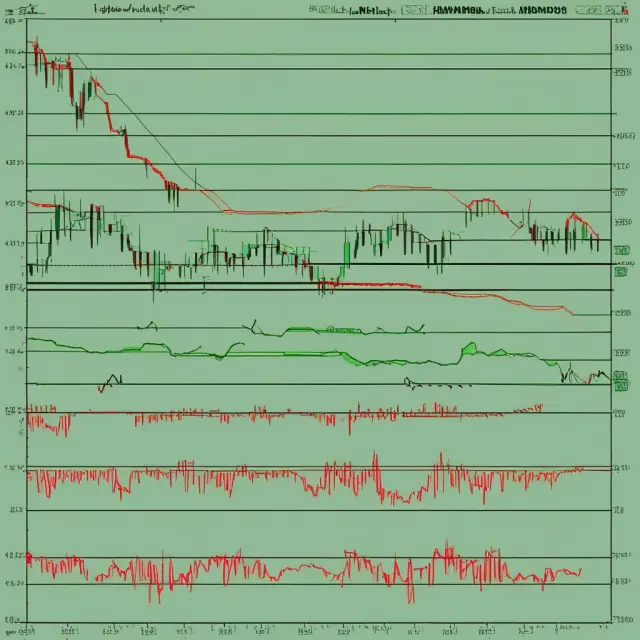
Extreme readings in the KRI for AAPL have typically ranged from -15 to 15, which represents significant price deviations from the SMA. As seen on the chart above, extreme readings below the zero line can be considered sell signals when the index reaches a low value. Conversely, extreme readings above the zero line are considered buy signals when the index achieves a high value.
In the chart above, we have marked some of these significant extreme readings with green lines representing buy signals and red lines representing sell signals. While this analysis does not guarantee profitable trades, it can serve as an essential tool in identifying potential entry and exit points based on historical trends.
It is important to note that the KRI is not a perfect timing tool and should be used in conjunction with other forms of analysis for more effective trade decisions. Combining the KRI with other indicators or price action can lead to better-informed trade entries and exits, as it reduces the likelihood of false signals.
In conclusion, the Kairi Relative Index (KRI) is a valuable technical analysis tool that can help traders identify potential buy and sell signals by analyzing the relationship between a stock’s closing prices and its Simple Moving Average (SMA). By examining historical trends and extreme readings within this index on Apple Inc.’s weekly chart, traders can gain insights into market trends and make informed decisions regarding when to enter or exit a position. However, it is crucial to remember that the KRI should not be used in isolation but rather as part of an overall trading strategy, combined with other indicators and price action to maximize potential success.
The Difference Between KRI and the MACD
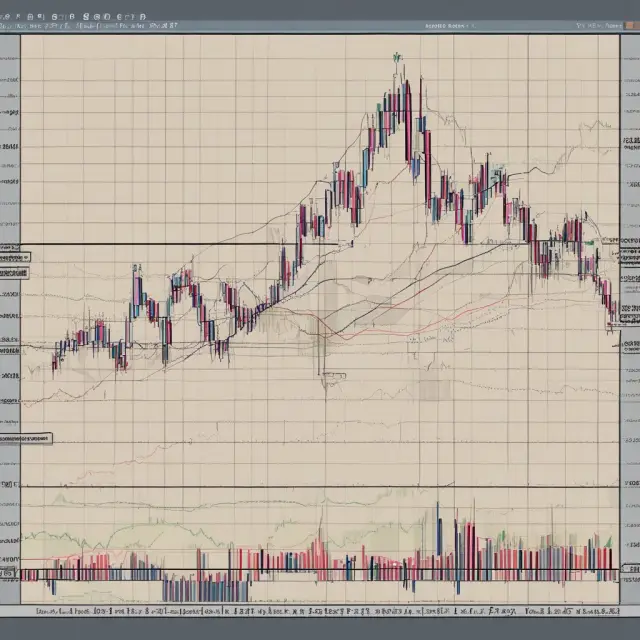
While both the Kairi Relative Index (KRI) and the Moving Average Convergence Divergence (MACD) are popular technical analysis tools, they differ significantly in their approaches and functionalities. The primary distinction lies in how each indicator measures price movements and provides trade signals to investors.
The KRI’s core focus is on the relationship between a security’s closing prices and its simple moving average (SMA). The index calculates the percentage difference between the closing price and the SMA for the selected timeframe, providing insight into overbought or oversold conditions.
On the other hand, MACD utilizes two exponential moving averages – short-term and long-term – to generate buy and sell signals. The MACD line (the 12-day EMA minus the 26-day EMA) and the signal line (9-day EMA) are plotted on a chart, allowing traders to assess momentum shifts in the security’s price trend.
Comparing their strengths:
- KRI: Easy to calculate and interpret with just one line on the chart, KRI offers clear buy and sell signals based on extreme readings. However, it may lack confirmations of price reversals since it solely relies on historical closing prices.
- MACD: Provides a more comprehensive insight into market trends by incorporating momentum through moving averages and a signal line. MACD can generate multiple signals – bullish or bearish crosses, divergence, and centerline crossovers – adding depth to the overall analysis.
However, it is important to note that no single technical indicator or tool can guarantee profitable trades consistently. Both KRI and MACD should be used as part of a well-rounded trading strategy in conjunction with other indicators and price action. The most prudent approach for any investor would be to combine these powerful tools, ensuring they complement each other’s strengths and mitigate their weaknesses.
When using both KRI and MACD together, one can employ a multi-layered strategy where KRI acts as a trend confirmation filter while MACD provides additional momentum signals. This combination allows traders to make more informed decisions based on accurate market trends and potential price reversals.

Limitations of Using the Kairi Relative Index (KRI)
The Kairi Relative Index (KRI) is an effective technical analysis tool for spotting buy and sell signals when analyzing financial assets such as stocks or commodities. However, it has its limitations that traders and investors need to consider before relying solely on this indicator.
Firstly, the KRI is primarily a trend-following indicator since it measures the difference between an asset’s closing price and its simple moving average (SMA) over a specified number of periods, typically ranging from 10 to 20 days. As such, it may not be suitable for traders who prefer mean reversion strategies or those looking for short-term trading opportunities.
Secondly, the KRI generates buy and sell signals based on extreme readings; however, these signals are not always accurate timing indicators. It is possible to experience false signals when the market undergoes strong trends, which may result in missed profits or unnecessary losses if traders act on these signals prematurely without confirming them with additional analysis methods or price action.
Thirdly, the KRI does not account for market volatility. Volatile assets will have more extreme readings compared to less volatile assets, potentially leading traders to overreact when they see a large deviation from the SMA. Consequently, it is crucial to assess each asset’s volatility and historical price movements while using the KRI.
Fourthly, the KRI can be influenced by market conditions that lead to trendless markets or range-bound prices. In such instances, the indicator may not generate any buy or sell signals for extended periods, leaving traders in a challenging situation without clear direction for their investments.
To mitigate these limitations, it is recommended to combine the KRI with other technical analysis tools and fundamental analysis methods. Utilizing multiple indicators can offer more comprehensive insights into market trends and provide better confirmation of potential trade setups. Additionally, incorporating price action techniques or studying candlestick patterns can help traders make informed decisions when analyzing the KRI’s signals.
In conclusion, understanding the Kairi Relative Index (KRI) limitations is crucial for successful technical analysis trading. By acknowledging these challenges and combining it with other tools and methods, investors and traders can optimize their strategies and enhance their overall performance in the financial markets.

Trading Strategies for Using the Kairi Relative Index (KRI)
While the Kairi Relative Index (KRI) can be an effective standalone tool for identifying potential buy and sell signals, it is often used more effectively in conjunction with other technical indicators or price action. By combining KRI with additional analysis tools, traders can improve entry and exit points, increase confidence in their trades, and minimize the impact of false signals.
One popular strategy is to use the KRI in conjunction with Bollinger Bands. This technique involves applying the 20-day Simple Moving Average (SMA) for the KRI, alongside a pair of Bollinger Bands set at a standard deviation of two. When an asset’s price crosses above or below the upper or lower Bollinger Band, it indicates potential trend reversals. By combining this information with KRI readings, traders can determine more precise entry and exit points.
For instance, when the KRI generates a sell signal (i.e., falls below -5%), but the price is still within the upper Bollinger Band, traders might wait for confirmation from other indicators or price action before executing a short position. Conversely, when a buy signal is generated, and the price is trading near the lower Bollinger Band, traders could employ a similar approach and wait for further confirmation before initiating a long position.
Another strategy involves combining KRI with moving averages of different periods to create multiple time frame analysis. For example, observing the divergence between the 10-day and 20-day moving averages can help traders identify potential trend reversals. When the shorter term moving average starts to cross below the longer term moving average, it may signal an impending downtrend. In this case, a confirmed KRI sell signal would add additional confirmation of an emerging bearish trend.
Lastly, many traders use price action and chart patterns alongside KRI signals for added accuracy. For example, when the KRI generates a buy signal and the price forms a bullish reversal pattern like a double bottom or hammer candlestick, it can provide a stronger foundation for entering a long position. Conversely, a sell signal combined with bearish chart patterns such as head and shoulders or a bearish engulfing pattern can be an effective signal to enter short positions.
It’s important to remember that no single indicator can be 100% accurate in predicting market trends or price movements. Combining KRI with other technical indicators or price action analysis can help improve the overall accuracy and consistency of your trading signals, making it a more robust tool for informed investment decisions.
Frequently Asked Questions about the Kairi Relative Index (KRI)
What Is the Kairi Relative Index (KRI)?
The Kairi Relative Index, also known as KRI, is a technical analysis tool utilized by traders to identify potential buy and sell signals based on an asset’s relationship with its Simple Moving Average (SMA). It measures the difference between closing prices and the SMA, helping to determine when an asset may be overbought or oversold.
How does the KRI work?
The formula for calculating the KRI involves first determining a simple moving average using a specified number of periods in the past. The current closing price is then subtracted from this SMA, with the result multiplied by 100 and divided by the SMA to obtain the percentage difference. This process is repeated as each new period closes.
What do extreme KRI readings signify?
Extreme positive readings in the KRI are considered bullish buy signals, indicating that the asset’s price is significantly above its moving average and may be poised for a potential upswing. Conversely, negative extreme readings point to bearish sell signals, implying that the price is far below its moving average and could potentially decline further.
Can I use KRI on any financial instrument?
The Kairi Relative Index can be applied to various financial instruments like stocks, currencies, indices, and commodities, among others. Keep in mind that different assets may exhibit varying degrees of volatility, influencing the interpretation of extreme readings.
What are some limitations of using the KRI?
While the KRI can serve as a useful indicator, it’s essential to recognize its limitations. One downside is that it doesn’t provide exact buy and sell signals, meaning traders should use other forms of analysis or price confirmation before making decisions based on this indicator alone. Additionally, strong trends can cause prices to move far away from their moving averages, potentially leading to false signals if not used with caution.
How is the KRI different from other technical indicators like MACD?
The primary distinction between the two indicators lies in how they calculate buy and sell signals. The KRI measures the difference between closing prices and the simple moving average, while MACD focuses on the relationship between two exponential moving averages. While both tools can provide valuable insights, their respective methods offer unique perspectives for traders.
By addressing these frequently asked questions, readers will gain a better understanding of what the Kairi Relative Index is, its importance as a technical analysis tool, and how to effectively use it within various trading contexts.

Advantages and Disadvantages of Using KRI in Trading
The Kairi Relative Index (KRI) is a powerful technical analysis tool for buy and sell signal generation, but it’s essential to understand its advantages and disadvantages when making trading decisions.
Strengths:
- Clear Buy and Sell Signals: The KRI provides investors with precise buy and sell signals by indicating when the price deviates significantly from its simple moving average (SMA).
- Versatility: This indicator can be applied to various timeframes, making it suitable for short-term and long-term trading strategies.
- Compatibility: KRI complements other technical analysis tools like Moving Average Convergence Divergence (MACD) and Bollinger Bands, enhancing overall market analysis.
- Customizable Time Frames: Investors can experiment with various moving averages to adapt the strategy for different assets and trading styles.
- Objective and Simple: The KRI is a straightforward indicator that doesn’t require any subjective interpretation like other indicators such as RSI or Stochastic Oscillator.
Weaknesses:
- Lagging Indicator: The KRI lags price movements since it calculates moving averages based on historical data. It may miss early trend reversals and generate false signals, especially during rapid market moves.
- Inaccurate Timing: KRI is not an accurate timing signal; traders should combine it with other indicators or confirmations before entering a position.
- Limited Diversification: The KRI primarily focuses on the price’s relationship to its moving average, making it less diverse compared to multi-indicator strategies.
- Overreliance: Investors may rely too heavily on KRI signals and overlook other important market factors, potentially leading to missed opportunities or excessive risk exposure.
To mitigate these weaknesses, traders can combine the Kairi Relative Index with other indicators or price action analysis techniques. By doing so, they’ll create a more comprehensive trading strategy that accounts for various market conditions and enhances overall trade entry and exit points.
In conclusion, the Kairi Relative Index is a valuable technical analysis tool for generating buy and sell signals, but it’s crucial to understand its strengths and limitations to maximize potential returns and minimize risks.

Conclusion: Understanding the Role of Kairi Relative Index (KRI) in Modern Finance
The Kairi Relative Index (KRI), a technical analysis tool created to identify potential buy and sell signals based on the relationship between an asset’s price and its Simple Moving Average (SMA), has remained a popular choice among traders. By measuring the deviation of a security’s closing price from the SMA, this powerful indicator provides valuable insights into the health and direction of market trends.
As we have discussed, the KRI is calculated by determining the difference between the SMA and the current closing price, multiplying that value by 100, and expressing it as a percentage. Extreme readings on either end of the scale can be used to generate buy or sell signals. When an asset’s price significantly deviates from its moving average, it may indicate a potential shift in market sentiment, which could lead to profitable trading opportunities.
It is important to remember that the KRI does not exist in isolation; instead, traders should consider it as a supplemental tool to be used alongside other technical indicators and fundamental analysis. While extreme readings can provide strong signals, they are not foolproof and may require additional confirmation before executing trades. This can include analyzing trend lines, support levels, and resistance zones.
The KRI was first introduced decades ago in Japan and gained widespread popularity during the 1970s. Since then, more sophisticated indicators like the Relative Strength Index (RSI) have emerged, leaving some traders wondering if the KRI still holds value in today’s market. Despite competition from newer tools, the KRI remains a valuable resource for those seeking to better understand price trends and make informed investment decisions.
One of the key advantages of using the KRI is its simplicity. The straightforward calculation method makes it easy to apply to various assets across different timeframes. Moreover, by focusing on price movements relative to an average, it provides traders with a clearer understanding of market momentum and potential trends. This can be especially helpful during periods of high volatility or when markets are trending strongly.
However, no indicator is without its limitations. One drawback of the KRI is that it may not provide accurate timing signals. In some cases, prices may continue to move in one direction despite extreme readings on the KRI. This highlights the importance of using this tool in conjunction with other indicators and fundamental analysis.
In conclusion, the Kairi Relative Index (KRI) continues to serve as a valuable resource for traders seeking insight into market trends and potential buy or sell signals. By measuring price deviation from simple moving averages and interpreting extreme readings as potential buying or selling opportunities, traders can make informed decisions that may enhance their portfolios’ performance. As always, it is essential to remember that no single indicator can guarantee profits, and it is crucial to use multiple tools and techniques when making investment decisions.
 Next entry · No. 2,670Maximizing Productivity and Efficiency: A Deep Dive into Kaizen
See also
-
 No. 3,035
23 Feb 2025
21 min
Understanding Moving Average Convergence/Divergence (MACD) in Finance and Investment
Financial Tools
No. 3,035
23 Feb 2025
21 min
Understanding Moving Average Convergence/Divergence (MACD) in Finance and Investment
Financial Tools -
 No. 3,941
09 May 2025
17 min
Understanding Pennants: A Technical Analysis Continuation Pattern
Financial Education
No. 3,941
09 May 2025
17 min
Understanding Pennants: A Technical Analysis Continuation Pattern
Financial Education -
 No. 3,446
29 Mar 2025
19 min
Understanding Net Volume: A Technical Indicator for Professional and Institutional Investors
Financial Data Analysis
No. 3,446
29 Mar 2025
19 min
Understanding Net Volume: A Technical Indicator for Professional and Institutional Investors
Financial Data Analysis -
 No. 3,269
15 Mar 2025
20 min
Understanding Morning Stars: Identifying Bullish Reversal Patterns in Finance
Business Finance
No. 3,269
15 Mar 2025
20 min
Understanding Morning Stars: Identifying Bullish Reversal Patterns in Finance
Business Finance -
 No. 3,896
05 May 2025
21 min
Understanding the Parabolic SAR Indicator: Identifying Trends and Reversals in Finance
Financial Tools
No. 3,896
05 May 2025
21 min
Understanding the Parabolic SAR Indicator: Identifying Trends and Reversals in Finance
Financial Tools -
 No. 1,104
28 Jul 2024
17 min
Understanding Doji: A Technical Analysis Tool for Identifying Price Reversals
Financial Tools
No. 1,104
28 Jul 2024
17 min
Understanding Doji: A Technical Analysis Tool for Identifying Price Reversals
Financial Tools