War Bonds: A Patriotic Investment for Military Funding

War Bonds: A Patriotic Investment for Military Funding - Learn about war bonds, their history, and implications in this comprehensive guide.
What is a War Bond?
War Bonds are debt securities issued by governments to finance military operations and spending during times of war or conflict. They represent an initiative by governments to borrow money from their citizens with an emotional appeal, often fueled by patriotic duty or other motivational appeals. War bonds were first introduced in the U.S. as Liberty Bonds during World War I, followed by War Bonds during World War II. These bonds are unique in that they function as zero-coupon securities, offering no interest payments throughout their lifetime but maturing to face value after a specific period. War bonds were sold at a discounted price, with the difference between the purchase price and the face value paid out to investors upon maturity.
Characteristics of War Bonds:
War bonds are essential tools used by governments to fund military initiatives during wartime. Issued as debt instruments, war bonds represent loans extended by citizens to their government. They are characterized by several unique features. War bonds are zero-coupon securities, meaning they do not generate interest payments throughout the life of the bond. Instead, investors earn the difference between the purchase price and the face value at maturity. Additionally, war bonds have a smaller par value or face value compared to standard bonds, making them more accessible to retail investors. They are also nontransferable, meaning only the bond purchaser can redeem it upon maturity.
War Bond Advantages and Disadvantages:
Governments issue war bonds to fund their military campaigns quickly, appealing to patriotic sentiments or other emotional motivators to sell the bonds at a lower rate of return than prevailing market rates. War bonds can also help reduce inflation by removing excess money from the economy. However, investors can speculate on war outcomes and profit if one side experiences a temporary military defeat. The risks associated with investing in war bonds include lower profits compared to competing securities, as well as the possibility of loss if the bond is sold before maturity or if the country defaults.
War Bond History:
The U.S., Canada, Germany, the United Kingdom, and Austria-Hungary are some of the countries that have issued war bonds. In the U.S., war bonds were promoted through various media channels such as radio stations, newspapers, magazines, newsreels in theaters, and even Hollywood stars like Bette Davis and Rita Hayworth. Governments raised substantial revenue from war bonds during both World War I and World War II. More recently, Ukraine issued war bonds to pay fighters and other military expenses following its invasion by Russia in 2022.
Understanding the Advantages and Disadvantages of War Bonds:
War bonds offer investors a unique opportunity to contribute to their country’s military efforts while potentially earning a return on their investment. However, they come with risks. In this section, we will discuss the advantages and disadvantages of investing in war bonds.
Advantages:
- Quick fundraising for military campaigns – War bonds enable governments to quickly raise substantial funds to finance military operations without resorting to heavy taxation or inflationary monetary policy.
- Patriotic appeal leading to lower yields compared to market rates – Governments can generate strong demand for war bonds by appealing to citizens’ sense of duty and patriotism, resulting in lower yields than prevailing market rates.
- Reduction of inflation during times of war – War bonds help reduce inflation by removing excess money from the economy, ensuring a stable currency and maintaining purchasing power for citizens.
- Opportunities for profit through speculation on war outcomes – Investors can speculate on war outcomes by buying the bonds of the losing side if they expect a quick reversal, potentially earning significant profits.
Disadvantages:
- Lower yields compared to market rates – War bonds typically offer lower returns than competing securities in the market due to their patriotic appeal and the government’s need for funds.
- Risk of loss if sold before maturity or country default – Investors assume the risk of losing their investment if they sell war bonds before maturity at a lower price than the purchase price, or if the issuing country defaults on its debt obligations.
Exploring War Bond Examples and Current Value:
In this section, we will discuss how to buy war bonds and provide examples of war bonds’ current value. We will also discuss how governments have utilized war bonds throughout history and explore different perspectives on their importance. Stay tuned for an in-depth look at war bonds and their impact on both individual investors and the global economy.

Characteristics of War Bonds
War bonds are unique financial instruments issued by governments during times of war or military conflict. Instead of receiving regular interest payments like standard bonds, these securities have a face value higher than their purchase price, which is paid at maturity. War bonds can be considered zero-coupon bonds, meaning they do not pay interest during the bond’s lifetime.
One essential characteristic of war bonds is that they are nontransferable and nonnegotiable, meaning only the original purchaser can redeem them when they mature. This feature was put in place to discourage speculation and maintain control over the bond market during wartime.
Additionally, war bonds were historically issued at a discounted price—typically between 50%-75% of their face value—making them accessible for a wider range of investors. For example, during World War II, U.S. Treasury War Bonds had maturities ranging from 10 to 30 years and provided an initial investment at a low cost, while the full face value was paid back when the bond matured.
War bonds played a significant role in financing military campaigns throughout history, allowing governments to raise substantial funds quickly without resorting to heavy taxation or inflationary monetary policies. The United States, Canada, Germany, the United Kingdom, and Austria-Hungary are just a few examples of countries that have issued war bonds.
Despite their historical significance in funding military efforts, war bonds present several advantages and disadvantages for investors. While they provide a sense of patriotic duty and pride, they may come with lower yields compared to the market rates during the bond’s lifetime. Additionally, there is a risk that investors could lose their investment if the country defaults or sells the bond before maturity.
In summary, war bonds represent an essential financial tool for governments seeking funds during times of military conflict. By offering face value at maturity with no regular interest payments throughout their life, they provide both advantages and disadvantages for investors who seek a patriotic investment opportunity while balancing risk and potential rewards.

Advantages and Disadvantages of War Bonds
War bonds present a unique financial instrument that has been used by governments to finance military efforts since World War I. While war bonds are considered an essential tool for raising capital during times of war, they come with distinct advantages and disadvantages for both the issuing government and investors.
One significant advantage of war bonds is their ability to raise funds quickly for military campaigns without having to resort to heavy taxation or inflationary monetary policy. This has been a crucial factor in ensuring that governments can meet the financial demands of wars while maintaining economic stability.
Another advantage is the patriotic appeal associated with war bonds. Governments have effectively used emotional appeals to persuade citizens to purchase war bonds, leading to lower yields compared to market rates. War bonds represent an opportunity for investors to contribute to their country’s efforts during times of conflict and potentially profit from the outcome of a war through speculation.
However, there are also disadvantages to investing in war bonds. The primary drawback is that they offer lower yields than other securities in the market due to their non-interest-bearing nature. Additionally, if an investor decides to sell the bond before maturity or if the issuing country defaults on its debt, there is a risk of loss.
War bonds are typically zero-coupon securities, meaning they don’t pay any interest over their lifetime. Instead, investors earn the difference between the purchase price and the face value at maturity. The exact maturity date depends on the year a war bond was issued. For instance, a bond issued during World War II could only be cashed out ten years later, while newer issues may have longer or shorter maturities.
Given these characteristics, it’s essential to weigh the potential advantages and disadvantages before investing in war bonds. While they offer an opportunity to contribute to national efforts and potentially profit from the outcome of a war, investors should be aware that lower yields and the risk of loss are inherent to this investment vehicle.
By understanding the unique features and implications of war bonds, investors can make informed decisions about whether or not this financial instrument aligns with their investment goals and risk tolerance.

History of War Bonds in the United States
War bonds were first introduced during World War I as Liberty Bonds. After raising an impressive $21.5 billion through their sales, these debt securities played a crucial role once again when the U.S. entered World War II in 1941. Renamed War Bonds, they became the largest single mobilization of peacetime resources in history, attracting over 80 million American investors and raising an astounding $180 billion for military financing. This section delves into the unique historical significance of war bonds during both World Wars I and II within the United States.
The First Wave: Liberty Bonds During World War I
The initial wave of war bonds, also known as Liberty Bonds, was launched in 1917 to support the U.S. participation in World War I. Aimed at raising $3 billion for the war effort, these bonds proved highly successful, eventually surpassing their target by a significant margin—bringing in $21.5 billion through the sale of 24.8 million bonds.
The Second Wave: War Bonds During World War II
As the U.S. entered World War II in 1941, war bonds resurfaced as a potent means to finance military expenditures. Renamed War Bonds, they went on to become an integral part of the mobilization effort. By tapping into the collective spirit of the American people, these debt securities brought in an unparalleled $180 billion through the sale of approximately 142 million bonds.
The Power of Propaganda and Media Campaigns
To drive sales and boost morale, war bonds were marketed using a powerful combination of propaganda and media campaigns. Patriotic appeals, Hollywood stars like Bette Davis, Rita Hayworth, and even Norman Rockwell’s paintings contributed to their success. The Girl Scouts even sold stamps valued at 10 cents each to help raise funds for war bonds.
A Lasting Impact on U.S. Financial History
The sale of war bonds significantly influenced the financial landscape in America. After World War II, War Bonds continued under the name Series E bonds until they were replaced by Series EE bonds in 1980. This period also marked the beginning of a tradition that continues to this day: encouraging citizens to save and invest for their future through various savings plans such as Individual Retirement Accounts (IRAs) and 401(k)s.

How to Buy War Bonds
Buying war bonds involves purchasing debt instruments issued by governments to fund military operations and campaigns during times of conflict or war. Unlike regular securities, war bonds typically do not pay interest during their lifetime but rather mature at a predetermined date with face value repayment to investors. War bonds originated in the United States during World War I and gained popularity due to emotional appeals made through media campaigns and patriotic messages from celebrities.
To buy war bonds, interested individuals can approach licensed brokers or banks for the transaction. The exact process may vary depending on the issuing government and the specific bond being purchased. For overseas investors, it is not clear if they can purchase war bonds as retail investors in countries other than their own.
The U.S., for example, oversaw war bond sales through the War Finance Committee during World Wars I and II. In contrast, Ukraine’s government recently issued war bonds to fund military expenses following the 2022 invasion by Russia. Interested buyers can approach licensed Ukrainian brokers or banks for purchasing these bonds.
Investing in war bonds offers unique advantages such as supporting national efforts during times of conflict and potentially profiting from speculation on war outcomes. However, investors must be aware of the risks involved, including lower yields compared to market rates, potential loss if sold before maturity, or country default. The process of buying war bonds may differ from regular securities transactions due to their unique characteristics, so it is essential for potential buyers to research thoroughly before making a purchase.
If you’re interested in investing in Ukrainian war bonds as an overseas retail investor, contact licensed brokers or banks that offer these opportunities to learn more about the process and requirements. By staying informed and understanding the risks involved, you can make a confident investment decision while supporting your preferred nation during times of conflict.

War Bond Examples and Current Value
When it comes to war bonds, one of the most intriguing aspects is their present-day value for investors who held these historical securities during past conflicts. War bonds, such as U.S. Series E bonds issued in 1942, can still be of interest today due to their unique characteristics and the potential financial gains that may be available to investors.
The United States War Finance Committee oversaw the sale of war bonds throughout history. War bonds were first introduced during World War I as Liberty Bonds, and they were reintroduced during World War II under the name War Bonds. These securities served an essential role in financing military campaigns by allowing governments to quickly borrow funds with the support of their citizens’ patriotism and sense of duty.
An example of a war bond that still holds interest today is a Series E bond, issued in 1942 with a face value of $100. As of September 2022, this particular war bond is valued at approximately $377.40.
War bonds were characterized by their zero-coupon feature and the difference between their purchase price and maturity value. This made them unique compared to traditional bonds that pay regular interest payments throughout their life. The maturity of Series E bonds ranged from 10 to 20 years, depending on when they were issued. In the case of the Series E bond mentioned above, its maturity date is September 30, 1965.
It’s important to note that war bonds have both advantages and disadvantages for investors. While they offered the satisfaction of contributing to a national cause during times of conflict, they typically featured lower yields compared to other investment opportunities in the market. Additionally, there was a risk of loss if an investor chose to sell their bond before maturity or if the issuing country defaulted on its debt obligations.
Despite these risks and considerations, war bonds remain a significant piece of history in both finance and military funding. Understanding their characteristics and current value can provide valuable insights into the role they played during times of conflict, as well as the potential financial rewards for investors who held onto them.

Countries Issuing War Bonds
War bonds have been issued by various countries throughout history, not just the United States, as a means to finance military operations and spending during times of war or conflict. While it is common knowledge that the U.S. government issued war bonds extensively during both World War I and II, other nations like Canada, Germany, the United Kingdom, and Austria-Hungary also took advantage of this financial instrument to fund their military campaigns.
In recent times, Ukraine has taken a similar approach by issuing war bonds in response to Russia’s invasion in 2022. The Ukrainian government announced its intention to sell war bonds to help pay for fighters and other military expenses. On March 1, just after the invasion began, the Ukrainian government raised $270 million from a one-year bond with an impressive yield of 11%. Ukraine continued to issue several additional bond issues, accumulating nearly $1 billion in funds.
The successful sale of these war bonds showcases the enduring appeal and usefulness of this financial instrument even in the modern era. By selling war bonds, governments can quickly raise substantial funds without resorting to heavy taxation or inflationary monetary policies. However, there is always a risk involved when assuming additional debt, and investors must weigh the potential rewards against the inherent risks before making an investment decision.
As with any security, it’s essential to understand the specific characteristics and features of war bonds before investing. War bonds are generally considered zero-coupon securities, meaning they do not pay interest throughout their life. Instead, investors purchase them at a discount, and the face value is paid in full when the bond matures. For instance, a $100 face value war bond may be purchased for $50 initially.
War bonds are typically non-transferable and non-negotiable, meaning they can only be redeemed by the original purchaser. Their unique features make war bonds an intriguing investment opportunity for those looking to contribute to their country’s defense efforts while potentially earning a return on their investment. Understanding the historical context of war bonds, their advantages and disadvantages, as well as the current trends and implications is essential before making any investment decisions.
In conclusion, war bonds have played a significant role in financing military operations throughout history. From the United States’ Liberty Bonds during World War I to Ukraine’s recent successful war bond sales, this financial instrument has proven its usefulness and enduring appeal as a means of raising emergency funds for countries during times of conflict. By understanding the unique characteristics and features of war bonds, investors can make informed investment decisions that align with their risk tolerance and goals.
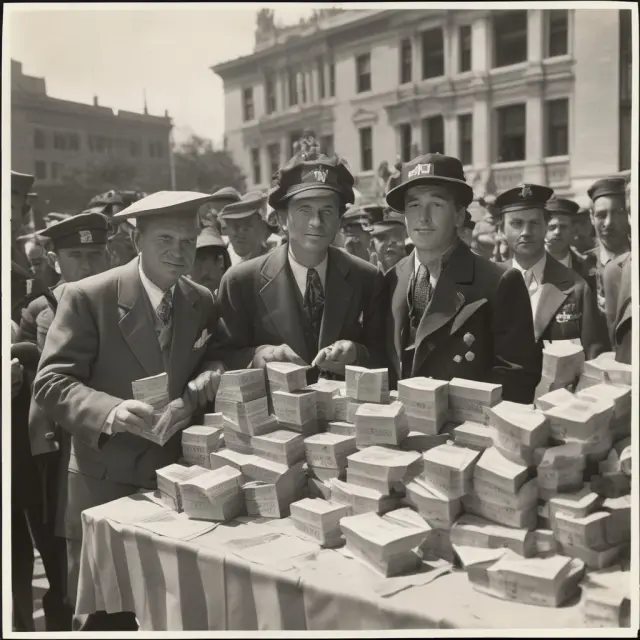
War Bond Propaganda and Media Campaigns
War bonds gained immense popularity during World Wars I and II through effective propaganda and media campaigns. Governments used emotional appeals to sell war bonds as a means of patriotic duty. In the United States, various media platforms such as radio stations, newspapers, magazines, newsreels in theaters, Girl Scouts, Hollywood stars, and even paintings by Norman Rockwell were utilized for promoting the sale of war bonds.
During World War I, Liberty Bonds gained massive support from the American public with the help of various media campaigns. The government’s War Advertising Council oversaw voluntary compliance with bond buying. People were motivated to purchase war bonds based on patriotic sentiments and a sense of duty. Hollywood stars like Bette Davis and Rita Hayworth embarked on national tours to promote war bonds. Contributions to war bonds could be made as small as 25 cents, or through Girl Scout stamp sales.
The United States continued its successful war bond campaigns during World War II with the issuance of War Bonds. The government extended the interest period to 40 years and offered various denominations ranging from $10 to $1,000 to accommodate various investors. War bonds were even featured in Norman Rockwell paintings as part of the advertising effort.
Recently, Ukraine employed a similar approach during its ongoing conflict with Russia by issuing war bonds to pay for military expenses and salaries for fighters. In March 2022, the Ukrainian government raised $270 million from a one-year bond with an 11% yield. The success of these campaigns can be attributed to effective use of media, celebrity endorsements, and emotional appeals.
War bonds offer investors the opportunity to contribute to their nation’s defense efforts while potentially earning profits through speculation on war outcomes. However, it is crucial for investors to understand the risks involved, such as potential losses if the bond issuing country defaults or if sold before maturity.

Investment Implications of War Bonds
War bonds present unique investment implications, characterized by lower yields compared to market rates and the potential risks associated with selling before maturity or in case of government default. However, war bonds also offer opportunities for profit through speculation on war outcomes.
Lower Yields
Given the patriotic appeal behind purchasing war bonds, they often come with lower yields than other investment instruments. The U.S. war bonds, for instance, typically offered significantly lower yields compared to market rates during times of war. Although the low yields may deter some investors, others find it an attractive way to contribute to their country’s efforts in times of conflict.
Risk of Loss
Investing in war bonds involves the risk of loss if sold before maturity or in case of government default. Since war bonds are essentially loans to a government, their value is contingent on the country’s ability to repay its debts. If the country suffers from a military defeat or faces severe financial difficulties, investors may experience a loss on their investment. For instance, during World War II, the U.S. government extended the interest that could be earned on war bonds to 40 years to help incentivize purchases and offset the lower yields.
Speculation Opportunities
The unpredictable nature of wars presents opportunities for profit through speculation on war outcomes. Investors can potentially benefit from buying war bonds of a country they believe will emerge victorious. However, this strategy requires careful analysis and a solid understanding of geopolitical risks. War bonds are not an investment choice for those who cannot tolerate risk or uncertainty.
Examples and Current Value
The current value of U.S. Series E war bonds can be determined using the government’s online tool to calculate their worth based on maturity dates. For instance, a Series E bond issued in 1942 with a face value of $100 is currently worth approximately $377.40 as of September 2022. This difference between the purchase price and the current value reflects the time value of money and interest accrual over the years.
In conclusion, war bonds offer investors a unique investment opportunity with lower yields but potential risks associated with selling before maturity or in case of government default. Despite these challenges, some investors are attracted to war bonds because they represent an opportunity to contribute to their country’s military efforts during times of conflict and potentially profit from speculation on war outcomes.

FAQs About War Bonds
What is the purpose of war bonds?
War bonds serve as an essential financial tool for governments during wartime by allowing them to issue debt securities and borrow large sums of money from their citizens, thereby reducing the need for heavy taxation or inflationary monetary policy.
How much are war bonds worth today?
The value of war bonds can be determined through various online tools provided by government agencies such as the U.S. Department of the Treasury. For instance, a Series E bond issued in 1942 with a face value of $100 would be worth approximately $377.40 today according to the U.S. Treasury’s War Bond calculator.
War bonds have been used extensively throughout history for various purposes and have unique features compared to other securities, making them a topic of interest for finance enthusiasts and history buffs alike. In the following sections, we will delve deeper into their characteristics, advantages, disadvantages, and historical context.
Section Title: Characteristics of War Bonds
War bonds are essentially long-term, noninterest-bearing obligations issued by governments during times of war or military conflict. These bonds are typically sold below their face value, meaning that investors pay less than the bond’s full value when purchasing it and receive the face value amount at maturity. They can also be considered zero-coupon securities because they do not pay any interest payments throughout their life. The maturity period for war bonds can range from 10 to 30 years or even longer, depending on the specific issue.
Section Title: Advantages and Disadvantages of War Bonds
War bonds offer several advantages for governments during times of conflict, including quick fundraising capabilities and the ability to tap into citizens’ patriotic emotions. However, they also carry risks for investors, such as potential loss if sold before maturity or country default.
Section Title: History of War Bonds in the United States
The concept of war bonds traces back to World War I when the U.S. government issued Liberty Bonds and raised a staggering $21.5 billion for military funding. During World War II, the government renamed these bonds as Defense Bonds and eventually War Bonds after the attack on Pearl Harbor in 1941. More than 80 million Americans contributed to war efforts by purchasing war bonds, raising over $180 billion in revenue.
In the modern era, war bonds have been issued by various countries such as Germany, the United Kingdom, Austria-Hungary, and even Ukraine during its ongoing conflict with Russia in 2022. Governments issue these bonds to finance military operations and support military personnel, often appealing to citizens’ patriotism or sense of duty.
Section Title: How to Buy War Bonds
To buy war bonds, investors typically need to approach licensed brokers or banks that deal with these securities, as they may not be readily available through traditional investment channels. However, it is essential to note that overseas investors’ ability to purchase war bonds as retail investors remains unclear.
 Next entry · No. 5,604Understanding War Chests in Corporate Finance: Building Cash Reserves for Opportunities or Defenses
See also
-
 No. 5,599
22 Sep 2025
18 min
The War Damage Corporation: Protecting Americans Against War-Related Property Damage during World War II
Insurance
No. 5,599
22 Sep 2025
18 min
The War Damage Corporation: Protecting Americans Against War-Related Property Damage during World War II
Insurance -
 No. 5,133
14 Aug 2025
19 min
Understanding Ultimate Mortality Tables: A Comprehensive Guide for Institutional Investors
Finance Policy
No. 5,133
14 Aug 2025
19 min
Understanding Ultimate Mortality Tables: A Comprehensive Guide for Institutional Investors
Finance Policy -
 No. 2,594
19 Jan 2025
19 min
Understanding JGTRRA: The Legacy of the Jobs and Growth Tax Relief Reconciliation Act on U.S. Economy and its Sunset Provisions
Finance Policy
No. 2,594
19 Jan 2025
19 min
Understanding JGTRRA: The Legacy of the Jobs and Growth Tax Relief Reconciliation Act on U.S. Economy and its Sunset Provisions
Finance Policy -
 No. 1,868
17 Nov 2024
19 min
Understanding the Various Types of Government Bonds: Treasuries, Municipal, U.S. vs Foreign
Finance Policy
No. 1,868
17 Nov 2024
19 min
Understanding the Various Types of Government Bonds: Treasuries, Municipal, U.S. vs Foreign
Finance Policy -
 No. 1,814
10 Nov 2024
21 min
Give-Up Trades: Understanding the Procedure and Its Significance for Institutional Investors
Finance Policy
No. 1,814
10 Nov 2024
21 min
Give-Up Trades: Understanding the Procedure and Its Significance for Institutional Investors
Finance Policy -
 No. 1,355
03 Sep 2024
18 min
Understanding the Complexities of Eurodollars: A Key Player in International Capital Markets
Finance Policy
No. 1,355
03 Sep 2024
18 min
Understanding the Complexities of Eurodollars: A Key Player in International Capital Markets
Finance Policy