Understanding Work Cells: The Concept, Benefits, and Case Study in Lean Manufacturing

Understand work cells, their significance in lean manufacturing, benefits, implementation strategies & real-life success stories
What is a Work Cell?
Work Cells are an essential element of lean manufacturing. Defined as the strategic arrangement of resources within a business environment, these cells contribute to value creation for customers by reducing waste and optimizing production processes. The concept of work cells emerged in the manufacturing industry, where they facilitate the efficient flow of goods from raw materials to finished products.
In simple terms, a work cell refers to a grouping of people, machines, and other resources dedicated to completing specific tasks or activities. By organizing resources in this manner, companies can achieve several benefits: improved efficiency, cost reduction, reduced error rates, and a more fluid production process. Work cells not only streamline manufacturing but also apply to office environments, where they foster better communication and resource utilization.
Originating from lean manufacturing principles, work cells have become increasingly popular in modern business practices due to their numerous advantages. By focusing on eliminating waste, improving flow, and empowering employees, work cells contribute significantly to the overall success of a company. In this section, we will delve deeper into understanding the benefits and implementation strategies for work cells.
Before discussing these benefits, let’s explore how work cells came about. Work cells are often implemented in manufacturing processes to reduce costs and increase productivity. This concept was first introduced by Taiichi Ohno at Toyota in the late 1940s. The idea of organizing machinery and resources into cells that can produce a specific product or family of products has since been adopted by many industries worldwide, from automotive to electronics manufacturing.
In the following sections, we will explore the benefits of work cells, how they are set up, and their applications in various industries, both manufacturing and office environments. We’ll also discuss best practices for implementing work cells and examine real-life examples of companies that have successfully adopted this approach to streamline their operations and improve their bottom line.
The Importance of Work Cells in Lean Manufacturing
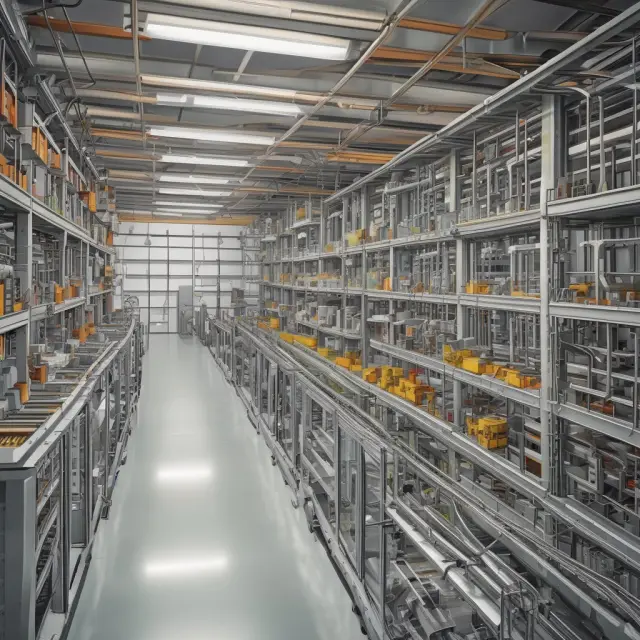
Work cells are an essential component of lean manufacturing principles as they contribute significantly to reducing costs, increasing efficiency, and eliminating waste. In the context of manufacturing, work cells refer to the organized arrangement of machines, people, and other resources aimed at completing a specific activity within the production process. Work cells facilitate the smooth progression of goods from raw materials to finished products by enabling seamless transitions between different stages of manufacturing.
The implementation of work cells is a fundamental aspect of lean manufacturing, which prioritizes value creation for the end customer and minimizing wastage. Lean manufacturing processes are designed to produce a wide range of similar items while maintaining quick turnaround times and minimal waste. Work cells play a crucial role in facilitating this goal by consolidating various production stages into smaller, self-contained units where resources can be allocated efficiently and waste can be minimized.
By organizing the manufacturing process around work cells, manufacturers are able to eliminate unnecessary steps, reduce lead times, and enable quick identification of issues or defects. This not only leads to cost savings but also results in a more agile production environment that can respond effectively to changing market conditions.
Work cells’ impact on productivity and error reduction is substantial as they encourage employees to collaborate within their teams, leading to improved communication and problem-solving abilities. Moreover, work cells make it easier for workers to acquire the necessary skills and expertise, as they are exposed to a greater variety of production processes and functions. This results in better-trained personnel who are more capable of adapting to new challenges and technological advancements within their industry.
In essence, work cells serve as the foundation for an efficient and responsive manufacturing system that is tailored to meet the evolving demands of modern businesses while remaining committed to delivering value to customers.

Benefits of Work Cells
Work cells offer numerous advantages to businesses implementing this strategic arrangement of resources in their operations. These benefits include reduced costs, increased efficiency, and error reduction. By organizing machines, people, and other resources into work cells, companies can create a more streamlined production process that minimizes waste and enhances productivity. In the manufacturing sector, work cells enable the smooth progression of goods from raw materials to finished products by arranging machinery in logical sequences. The benefits extend beyond cost savings; error reduction is also a significant advantage of work cells. By consolidating processes within a work cell, communication between team members becomes more efficient and issues can be resolved quickly.
Cost Savings: Work cells contribute to reduced costs through the elimination or minimization of unnecessary steps in production processes. This is achieved by grouping resources close together, reducing travel time between tasks, and optimizing the flow of materials. In turn, companies can save on transportation costs and the expense associated with maintaining large inventories.
Increased Efficiency: Work cells improve efficiency by reducing downtime and facilitating quicker cycle times. By arranging machines in logical sequences within a work cell, goods move smoothly from one stage to the next. This efficient flow of production results in fewer bottlenecks and improved overall throughput. Additionally, having team members dedicated to specific tasks within a work cell leads to increased focus and specialization.
Error Reduction: Work cells can lead to substantial error reduction by encouraging communication and collaboration between team members. With the consolidation of processes within a work cell, problems are easily identified, and solutions can be implemented swiftly. This results in fewer errors in production processes and ultimately leads to higher quality products for customers.
An example of how work cells can benefit a company is illustrated by an air-handling product manufacturer that faced high inventories and erratic delivery times. Prior to implementing work cells, the company used a traditional production line setup that required long setup times and logistics for large production runs. In response, they adopted lean methodology and established twelve small assembly work cells with one to three team members dedicated to each cell. This approach led to a 96% decrease in finished goods inventory, a lead-time of just 24 hours, and an overall productivity improvement of up to 30%. This case study demonstrates the significant impact that work cells can have on cost savings, increased efficiency, and error reduction within a manufacturing environment.

Setting Up a Work Cell
A work cell, also referred to as a workstation or production cell, is a strategic arrangement of resources that includes people, machinery, and other equipment in a business setting. The primary goal of organizing resources into work cells is to optimize process flow and increase efficiency in both manufacturing and office environments. Work cells are a fundamental principle within the broader framework of lean manufacturing, which prioritizes value creation for customers and waste reduction.
In a manufacturing context, work cells facilitate the efficient production of goods by arranging machines, people, and resources in a logical sequence to support seamless progression from raw materials to finished products. The primary objective is to minimize the costs associated with production while significantly reducing errors and improving productivity. To set up an effective work cell, manufacturers consider the following factors:
1. Machine Selection: Grouping machines that perform similar tasks or processes together in a work cell improves overall efficiency and reduces the need for extensive transportation of materials between cells. This arrangement ensures that goods flow smoothly from one stage to another without interruption.
2. Personnel Allocation: Assigning skilled workers to specific work cells enables them to develop expertise and deep knowledge of the production process within their area of responsibility. This results in improved quality, reduced errors, and increased productivity as team members become familiar with the equipment and processes they use daily.
3. Layout Design: Optimizing work cell layouts involves careful planning to minimize travel time between tasks, maximize floor space usage, and ensure easy access to essential resources and raw materials for each work cell. Effective layout design facilitates a smooth flow of production while reducing the need for extensive material handling or transportation.
4. Inventory Management: Implementing just-in-time (JIT) inventory management within work cells enables companies to minimize stock levels while ensuring that only the necessary resources and materials are available when needed. This approach helps to reduce holding costs, improve cash flow, and promote a leaner production process.
5. Continuous Improvement: Implementing continuous improvement initiatives within work cells encourages ongoing evaluation of processes and identification of opportunities for enhancing efficiency, reducing wastage, and improving overall performance. This culture of continuous improvement ensures that work cells remain adaptable and effective in the face of evolving market demands and business needs.
In office or administrative environments, work cells can improve communication flow and resource utilization by grouping employees working on similar projects or tasks together. The benefits of implementing work cells include reduced lead times, improved productivity, and lower costs due to optimized resource allocation.
Setting up a successful work cell involves careful planning, collaboration between various teams (operations, engineering, IT), and ongoing commitment to continuous improvement efforts. By aligning resources effectively, companies can streamline their operations, reduce wastage, and create value for their customers more efficiently than ever before.

Work Cells in the Manufacturing Industry
Work cells are a fundamental component of lean manufacturing that have gained significant popularity in the industry. In this section, we’ll dive deeper into how work cells operate within a manufacturing context. Work cells can be described as clusters or groups of resources that are strategically arranged to improve process flow and increase efficiency. These resources may include machinery, people, and other equipment, grouped together with the goal of producing specific products or parts.
By organizing resources in this manner, companies in the manufacturing industry achieve several benefits. Work cells facilitate a smooth transition from one stage of production to another. This is critical for minimizing wastage and reducing overall lead time. Additionally, work cells contribute to significant cost savings by allowing for better utilization of resources, such as machinery and labor.
Work cells in manufacturing are set up to complete a specific activity. For instance, machines used for cutting, forming, drilling, or welding would be arranged so that the goods being produced move from one stage to another with minimal interruption. This logical progression of production is made possible by organizing machines and equipment into work cells that complement each other.
A common misconception about work cells is that they are limited to large-scale manufacturing operations. However, even small businesses can reap the benefits of this lean manufacturing strategy. Work cells can be established with a few workers and minimal equipment. In fact, setting up work cells in smaller companies can lead to substantial improvements in productivity and quality.
Implementing work cells requires careful planning and preparation. The following are essential considerations:
- Clearly define the scope of production for each cell.
- Determine which machines or processes belong in each cell.
- Ensure that all necessary resources, such as raw materials and tools, are readily available.
- Establish effective communication channels among team members.
- Set up a system for tracking progress and monitoring performance.
As work cells become more widespread within a manufacturing organization, it is crucial to continuously evaluate their effectiveness and make adjustments as needed. Regularly reviewing performance data can help identify areas where improvements can be made. This might involve adding additional equipment or resources or reorganizing the layout of the cell for better flow and efficiency.
In conclusion, work cells are a powerful tool for enhancing productivity, reducing waste, and improving overall efficiency in manufacturing operations. By strategically arranging machines, people, and other resources into cells, companies can streamline their production processes and create a leaner, more agile organization that is well-positioned to meet the demands of today’s fast-paced business environment.
Example: Toyota Production System
One of the most famous examples of work cells in manufacturing is the Toyota Production System (TPS). TPS was developed by Taiichi Ohno, an industrial engineer at Toyota Motor Corporation, in the 1940s and 1950s. The system focused on continuous improvement, reducing waste, and standardizing processes to create a more efficient manufacturing process.
Ohno’s approach to work cells involved breaking down production into smaller workstations called ‘pits.’ Each pit consisted of a team of workers responsible for completing a specific task within the production process. The pits were arranged in a logical sequence, allowing parts to flow smoothly from one station to another.
The success of Toyota’s production system can be attributed to several key principles:
- Just-in-time manufacturing: Parts and resources are produced only when they are needed.
- Standardized work processes: Work is broken down into standardized tasks, making it easier for workers to follow a consistent process.
- Continuous improvement: Employees at all levels of the organization are encouraged to identify inefficiencies and propose improvements.
- Teamwork: Teams are responsible for managing their own workstations and collaborating to solve problems.
- Flexibility: The system is designed to adapt quickly to changing customer demands.
The Toyota Production System revolutionized the manufacturing industry and continues to inspire lean manufacturing practices across various industries today.

Creating Work Cells: Best Practices and Challenges
Work cells, which are also known as workstations or work units, are a significant component of lean manufacturing. The process of establishing work cells involves careful planning and implementation to optimize productivity and efficiency in various industries, including manufacturing and office environments. By understanding the best practices for creating work cells, organizations can minimize potential challenges during setup and reap the benefits of this strategic arrangement of resources.
The first step towards creating a successful work cell is determining which tasks will be included within it. This decision should be based on the process flow and the interdependencies between various tasks or machines. Identifying a logical sequence for the tasks enables smoother production and ensures that each cell can function independently, which is crucial to minimizing wait times and reducing overall cycle time.
When designing a work cell, it’s essential to consider the required resources, such as machinery, tools, raw materials, and personnel. Properly allocating these resources within the cell allows for efficient use and quick access when needed. Furthermore, organizing machines and equipment in a way that minimizes the distance between them reduces travel time and material handling costs.
One challenge faced during work cell setup is balancing the workload among team members to ensure an equitable distribution of tasks. Implementing cross-functional training empowers team members to learn and perform various tasks, enabling adaptability within the cell and reducing the risk of bottlenecks or idleness. This approach also fosters a culture of continuous improvement and knowledge sharing, which is fundamental to the success of lean manufacturing principles.
Another potential challenge lies in managing inventory levels and material handling within work cells. Effective inventory management systems like Just-In-Time (JIT) and Kanban help maintain an optimal inventory level, minimize lead times, and reduce stockouts while maintaining flexibility to meet customer demands. Careful consideration of these best practices can help organizations overcome challenges and establish successful work cells that contribute significantly to their overall efficiency and productivity.

Work Cells in the Office Environment
The concept of work cells is not limited to manufacturing industries only but can also be implemented in office environments. In administrative contexts, work cells can facilitate a more streamlined flow of communication and more efficient use of shared resources. Work cells in offices may consist of teams or groups that focus on specific tasks or functions. This approach allows for improved collaboration, increased productivity, and reduced errors.
In a traditional office setting, employees might be assigned to various departments to work on different projects or tasks. However, with work cells, staff members are organized into cross-functional teams designed to work together on tasks that require multiple skill sets. This setup can significantly enhance communication between team members, enabling them to better understand the requirements and objectives of their colleagues and work more collaboratively towards a common goal.
Additionally, work cells in offices enable a more efficient use of shared resources such as software tools or equipment. By having teams working together in close proximity, they can easily share information and resources, reducing redundancies and minimizing the need for duplicate investments. Furthermore, by having team members with diverse skill sets work together, problem-solving becomes faster and more effective, leading to quicker resolution of issues and improved overall performance.
Implementing a work cell structure in an office environment may require some adjustments to existing processes and organizational structures. Key considerations include defining clear roles and responsibilities for team members, setting up open lines of communication, and establishing guidelines for effective collaboration. However, the benefits of increased efficiency, improved communication, and reduced errors can lead to significant improvements in productivity and overall performance.
A well-executed work cell implementation in an office environment requires a commitment from all team members to collaborate effectively and adopt new ways of working together. With proper planning, clear objectives, and a focus on continuous improvement, work cells can become a powerful tool for enhancing communication, improving processes, and driving business success in administrative settings.
In conclusion, work cells have proven to be an essential component of the lean manufacturing process, providing numerous benefits in terms of increased efficiency, reduced costs, and improved quality. However, their application extends beyond manufacturing industries, as they can also deliver significant improvements in office environments by promoting better communication, increasing productivity, and reducing errors. By understanding the principles of work cells and implementing them effectively, organizations can transform their operations and gain a competitive edge in today’s fast-paced business landscape.

Cellular Manufacturing: A Subset of Work Cells
Work cells are a critical component of lean manufacturing that has gained significant popularity in various industries. Cellular manufacturing is a subset of work cells, focusing on optimizing the production process through group technology and reducing wastage. This section delves into the benefits and implementation strategies of cellular manufacturing within the realm of work cells.
Cellular manufacturing is an approach to manufacturing that streamlines production by arranging machines, processes, and personnel in a logical sequence to minimize waste and maximize efficiency. It is an extension of lean manufacturing principles, which prioritize value creation for the end customer and continuous improvement. The goal of cellular manufacturing is to create a smooth flow of materials and information within and between cells, enabling faster production times, reduced costs, and higher-quality outputs.
The main idea behind cellular manufacturing is the consolidation of processes required to produce a specific output into a single cell. These cells can be designed for various products or product families, allowing for quick adaptability and flexibility in response to changing market demands. Each cell is responsible for producing a complete part or subassembly, streamlining production by minimizing the need for transportation between workstations and reducing processing times.
By grouping machines, people, and other resources within cells, companies can achieve several benefits:
- Reduced set-up times: By organizing machines to produce similar parts in close proximity, changeovers between products or product families become more efficient. This results in quicker turnaround times and increased flexibility to adapt to changing customer requirements.
- Improved communication and collaboration: Cellular manufacturing encourages open communication and teamwork among employees within the same cell. Cross-functional teams work together to solve problems, improving overall productivity and job satisfaction.
- Reduced inventory levels: By producing goods in small batches and minimizing the need for transportation between cells, companies can significantly reduce their finished goods inventory. This results in more efficient use of resources and lower costs.
- Improved quality: With employees dedicated to a single cell or process, they become experts in their respective areas. This expertise leads to higher-quality outputs as team members are better equipped to identify and address issues within the production cycle.
- Enhanced responsiveness to market fluctuations: Cellular manufacturing enables companies to quickly respond to changing market conditions by enabling the easy reconfiguration of cells for different product families or customer demands, ensuring that businesses can meet customer requirements efficiently.
To effectively implement cellular manufacturing, it is essential to consider several factors:
- Grouping machines and resources: The first step in designing a cellular manufacturing system is to analyze the existing production process and identify opportunities for grouping similar processes or machines together. This analysis should include identifying the most frequent product families or order types and positioning machines accordingly.
- Training employees: As with any new implementation, training employees on the principles of lean manufacturing and cellular manufacturing is crucial to success. Ensure that employees understand the benefits of the system and are committed to continuous improvement.
- Designing work cells: The design of each work cell should prioritize efficiency, communication, and collaboration among team members. Considerations include adequate space, ergonomic design, and effective layout to minimize movement and optimize productivity.
- Implementing standardized work processes: Cellular manufacturing relies on the consistent application of standardized work processes to ensure that each cell operates efficiently and effectively. Develop clear guidelines for work processes, including setup procedures, inspection requirements, and quality control measures.
- Continuous improvement: The principles of lean manufacturing and continuous improvement should be at the core of any cellular manufacturing initiative. Regularly review and analyze performance metrics and make data-driven decisions to optimize processes and adapt to changing market conditions.
In conclusion, cellular manufacturing is an essential subcategory of work cells within the broader context of lean manufacturing. By implementing these principles in a strategic manner, businesses can reap significant benefits such as reduced costs, increased efficiency, and improved quality. Success stories from various industries demonstrate the power of this approach to transform operations, meet customer requirements, and stay competitive in an ever-changing market landscape.

Case Study: Success Stories in Work Cell Implementation
Work cells have proven to be a game-changer for many organizations, leading to increased efficiency, reduced costs, and error elimination. Let us explore some real-world success stories of companies that have effectively implemented work cells.
A prominent example comes from the world of manufacturing. Consider a firm specializing in the assembly of air-handling products. Traditional production lines resulted in high inventories and inconsistent delivery times for this company, which faced frequent demands for custom orders. To overcome these challenges and transition to leaner practices, they implemented work cells consisting of small teams of 1 to 3 individuals. Each team was dedicated to a specific task or product line. By organizing production in this way, the need for lengthy setup times was eliminated, and workflow became more streamlined. The results were impressive; finished goods inventory dropped by an astounding 96%, lead-time was slashed to just 24 hours, and productivity saw a significant boost of up to 30%.
Another case study comes from the office environment. A mid-sized marketing firm faced constant communication bottlenecks between departments, which led to missed deadlines and client dissatisfaction. They sought to address this issue by implementing work cells for their teams. Each cell consisted of a cross-functional group of employees responsible for specific projects or aspects of larger campaigns. This new organizational structure significantly improved communication flows, reduced redundancies, and increased overall efficiency. The marketing firm reported a 25% increase in project delivery speed and a 17% rise in client satisfaction rates, leading to a significant competitive advantage.
These case studies highlight the versatility of work cells and their ability to enhance productivity, reduce costs, and eliminate errors across various industries and contexts. By grouping resources, both human and technological, into strategic units, companies can streamline processes, improve communication, and drive innovation in a leaner, more efficient manner.

FAQs about Work Cells
What exactly is a work cell?
A work cell refers to a strategic arrangement of resources, including people, machinery, and other equipment, put in place to organize and improve process flow, increase efficiency, reduce costs, and eliminate wastage. Work cells are typically found in manufacturing and office environments, enabling the logical progression of goods from raw materials to finished products or facilitating better communication and efficient use of shared resources.
What is the origin of work cells?
Work cells emerged as a concept based on lean manufacturing principles, which focus on value creation for end customers and reduction of wastage. The idea behind work cells is to create an arrangement that minimizes the time it takes to move goods from one stage to another in the production process.
What are some benefits of implementing work cells?
Some primary benefits include cost savings through increased efficiency, reduced errors, improved communication, and a more streamlined production process. Additionally, work cells can be implemented both in manufacturing environments and office settings to optimize resource utilization and overall organizational productivity.
How does cellular manufacturing differ from traditional manufacturing methods?
Cellular manufacturing is a subset of lean manufacturing that focuses on creating multiple interconnected work cells in an assembly line fashion, allowing for quick identification of problems, minimizing waste, and encouraging effective communication among employees within each cell. This approach contrasts with traditional manufacturing methods, which may involve longer production runs and less efficient processes.
What is an example of a successful implementation of work cells?
A company that assembles air-handling products experienced high inventories and erratic delivery times using traditional production lines. By implementing lean methodology and organizing twelve small assembly work cells, the company was able to significantly reduce finished goods inventory (by 96%), decrease lead time to 24 hours, and improve productivity by up to 30%. This case illustrates the potential benefits of utilizing work cells to optimize production processes.
 Next entry · No. 5,777Understanding Work Tickets: A Comprehensive Guide for Professional Investors
See also
-
 No. 5,693
30 Sep 2025
24 min
Understanding White Label Products: Benefits, Types, and Real-life Examples
Business Strategy
No. 5,693
30 Sep 2025
24 min
Understanding White Label Products: Benefits, Types, and Real-life Examples
Business Strategy -
 No. 5,396
05 Sep 2025
17 min
Understanding the Role and Benefits of Value-Added Networks (VAN) in Modern Finance and Investment
Business Finance
No. 5,396
05 Sep 2025
17 min
Understanding the Role and Benefits of Value-Added Networks (VAN) in Modern Finance and Investment
Business Finance -
 No. 2,597
19 Jan 2025
19 min
Understanding Just-in-Time Inventory System: Advantages, Disadvantages, and Examples
Business Strategy
No. 2,597
19 Jan 2025
19 min
Understanding Just-in-Time Inventory System: Advantages, Disadvantages, and Examples
Business Strategy -
 No. 5,858
13 Oct 2025
17 min
Understanding Yield Variance and Its Impact on Manufacturing Operations
Manufacturing Finance
No. 5,858
13 Oct 2025
17 min
Understanding Yield Variance and Its Impact on Manufacturing Operations
Manufacturing Finance -
 No. 5,436
08 Sep 2025
18 min
Understanding Variable Overhead Costs in Manufacturing: A Comprehensive Guide
Manufacturing Finance
No. 5,436
08 Sep 2025
18 min
Understanding Variable Overhead Costs in Manufacturing: A Comprehensive Guide
Manufacturing Finance -
 No. 3,062
25 Feb 2025
26 min
Manufacturing 101: Understanding the Different Types, Techniques, and Processes
Manufacturing Finance
No. 3,062
25 Feb 2025
26 min
Manufacturing 101: Understanding the Different Types, Techniques, and Processes
Manufacturing Finance